Road Work and Traffic Alerts for July 28 – August 1, 2025
Motorists in Warren, Page, Shenandoah, Frederick, and Clarke counties should be aware of several highway work zones and traffic restrictions scheduled for the coming week. All scheduled work is subject to change due to weather conditions and material supplies.
Warren County
Interstate 66
Mile markers 0-15 eastbound: Right shoulder closures for repairs, 7:30 a.m. to 3 p.m. Monday through Friday
Mile markers 0-15 eastbound: Overnight single lane closures for bridge maintenance, 6 p.m. to 5 a.m. through July 31
Mile markers 2-0 westbound: Shoulder closures for I-81 widening project work, 7:30 a.m. to 3:30 p.m. through August 8
Mile markers 4-9: Right shoulder closures including Exit 6 off-ramps for sign work, 8 a.m. to 5 p.m. weekdays
Interstate 81
Mile markers 299-300: Overnight single lane closures for median barrier installation, 8 p.m. to 7 a.m. through August 7, with daytime shoulder closures for sign work
Mile markers 300-299 southbound: Right shoulder closures for sign work, 8 a.m. to 5 p.m. weekdays
Primary Roads
Route 340 (Stonewall Jackson Highway): Southbound right shoulder closures near Front Royal town limits for sign work, 8 a.m. to 5 p.m. weekdays
Route 340: Nighttime paving operations between Page County line and Route 674, 8 p.m. to 6 a.m. through September 5
Route 340/522 (Winchester Road): Single-lane closures for bridge painting between Route 637 and Route 655, 7 a.m. to 5 p.m. through July 27
Secondary Roads
Route 610 (Bucks Mill Road): Closed between Route 55 and Route 626 for bridge repairs through August 15
Route 619 (Rivermont Drive): Southbound shoulder closures near Route 618 intersection for sign work, weekdays
Route 647 (Dismal Hollow Road): Lane restrictions for I-66 overpass painting through August 31
Route 658 (Rockland Road): Possible lane closures for final bridge work through September 2025
Page County
Primary Roads
Route 211: Westbound right shoulder closures before Luray eastern town limits for sign work, 8 a.m. to 5 p.m. weekdays
Route 340: Bridge inspection north of Route 663, 8 a.m. to 5 p.m. Wednesday
Secondary Roads
Route 1989 (Reservoir Avenue, Luray): Lane restrictions for pole installation between First Street and Marye Lane, 9 a.m. to 2:30 p.m. Monday through Thursday
Shenandoah County
Interstate 81
Mile markers 268-269: Overnight single lane closures for North Fork Shenandoah River bridge maintenance, 8 p.m. to 7 a.m. through August 7
Mile markers 271-276: Right shoulder and Exit 273 off-ramp closures for sign work, weekdays
Mile markers 294-299: Overnight lane closures and daytime shoulder work for I-81 widening project through August 8
Primary Roads
Route 11 (Old Valley Pike): Single lane closures for tree removal between Route 650 and Route 657, 8 a.m. to 5 p.m. through August 14
Route 11: Overnight paving operations between Route 601 and Warren County line, 8 p.m. to 6 a.m. through August 29
Route 211 (Old Cross Road): Westbound left lane closures near I-81 for bridge maintenance through August 29
Secondary Roads
Route 720 (Wissler Road): Closed between Route 798 and Route 614 for Mill Creek bridge replacement through October 10
Frederick County
Interstate 81
Mile markers 300-302: Overnight work for I-81 widening project through August 7
Mile markers 308-310 northbound: Overnight Opequon Creek bridge maintenance, Sunday through Thursday nights
Mile markers 313-314: Early morning utility work with rolling roadblocks, 4-6 a.m. August 3
Mile markers 316-317: Survey work with alternating shoulder closures through August 4
Mile markers 322-325: Right shoulder and Exit 323 off-ramp closures for sign work, weekdays
Primary Roads
Route 7 (Berryville Pike): Eastbound right lane closures for utility work between Route 656 and Route 659, July 28 through August 22
Route 11 (Martinsburg Pike): Southbound lane closures for bridge painting past Route 37, July 28 through August 10
Route 50/17 (Millwood Pike): Overnight eastbound paving to Clarke County line through August 15
Route 522 (North Frederick Pike): Northbound overnight paving between Route 739 and Route 673 through Friday
Secondary Roads
Route 627 (Reliance Road): Turn-lane construction east of Route 11 through September 26
Route 649 (Springdale Road): Closed between Route 11 and Route 651; through traffic uses Route 873
Route 761 (Old Charles Town Road): Closed for Opequon Creek bridge replacement through November 2025
Clarke County
Primary Roads
Route 7 (Harry Byrd Highway): Paving operations between Route 653 and Frederick County line through August 1
Route 7: Overnight shoulder repaving between Route 601 and Route 612 through Friday
Secondary Roads
Route 761 (Old Charles Town Road): Closed for bridge replacement at Frederick County line through November 2025
Motorists should watch for slow-moving equipment during mowing operations and be alert to changing traffic patterns in work zones. For updated traffic information, call 511 or visit 511.vdot.virginia.gov.
Information from a Virginia Department of Transportation release. Edited by Dan McDermott.
Title IX violations found in Northern Virginia schools over gender identity locker room and sports policies
RICHMOND, Va. — Five Northern Virginia school divisions are under fire after the U.S. Department of Education’s Office for Civil Rights (OCR) found that their gender identity policies violate Title IX protections meant to ensure equal rights for students, particularly girls, in federally funded education programs.
Fairfax County, Loudoun County, Arlington County, Prince William County, and the City of Alexandria are accused of allowing students to access restrooms and participate in sports based on gender identity rather than biological sex. According to federal findings, the policies resulted in violations of student privacy, safety, and dignity—specifically affecting female students who reported discomfort, fear, and in some cases, inappropriate behavior in school locker rooms and bathrooms.
“These school divisions have been violating federal law, deliberately neglecting their responsibility to protect students’ safety, privacy and dignity, and ignoring parents’ rights,” Governor Glenn Youngkin said in a statement. “They got away with this behavior because the Biden Administration backed them up. Commonsense is back, with biological boys and girls in their own locker rooms and bathrooms, and boys out of girls sports.”
Youngkin added that his office previously requested an investigation into Loudoun County Public Schools after reports surfaced of school officials disciplining boys who objected to a biological female being present in the boys’ locker room.
Attorney General Jason Miyares said he had fought to stop the Biden Administration’s attempts to reinterpret Title IX in a way that, in his view, undermines protections for girls in schools.
“Those rules would have held federal education dollars hostage and forced Virginia’s public schools to submit to a radical, harmful, and ideologically driven agenda,” Miyares said. “Thankfully, we won that battle in court… Our daughters should have the same opportunities as our sons.”
Federal violations and policy findings
The OCR report indicates that students in the affected school divisions often avoid using restrooms altogether due to anxiety or fear caused by mixed-sex access policies. In some cases, girls reported seeing male students watch them undress or touch others inappropriately in locker rooms.
The U.S. Department of Education has offered each school division a chance to sign a Resolution Agreement within 10 days. If they refuse, the Department may escalate the issue to the U.S. Department of Justice for enforcement.
The proposed agreement mandates the following:
Rescind policies that allow access to bathrooms and locker rooms based on gender identity instead of sex; Direct schools to ensure all future policies comply with Title IX by maintaining sex-based separation in intimate facilities and sports; Define “male” and “female” according to biological sex in all Title IX-related policies.
Below is a breakdown of the specific violations and policy issues identified in each school division:
Arlington Public Schools (APS)
APS’s “Transgender Students in Schools” policy mandated access to facilities aligned with gender identity. In January 2025, a Tier III male sex offender reportedly used the girls’ locker room for months, exposing himself to a 9-year-old girl. Despite parental complaints, APS continued to allow the offender to use the facility.
Fairfax County Public Schools (FCPS)
FCPS Regulation 2603.2 guaranteed transgender students access to facilities matching their gender identity and prohibited requiring them to use private or single-occupancy alternatives. The division also:
Instructed staff not to seek parental consent when a student requested gender-related changes. Trained teachers to affirm students’ gender identity choices without parental involvement. Created a student code of conduct permitting suspension for misgendering, starting in fourth grade. Was sued by a Catholic student represented by America First Legal for alleged violations of her religious beliefs regarding pronouns and bathroom use.
Loudoun County Public Schools (LCPS)
LCPS Regulation 8040 instructed schools to allow restroom and locker room access based on “consistently asserted gender identity,” including identities outside the male/female binary.
In May 2025, three male students who raised concerns about a biological female using the boys’ locker room were themselves investigated. Reports indicated the female student recorded male students in the locker room with her phone. In a separate 2022 case, a male student wearing a skirt sexually assaulted two female classmates at two different schools. LCPS officials were later indicted for allegedly covering up the incidents.
Prince William County Public Schools (PWCS)
PWCS Regulation 738-5 allows access to facilities based on gender identity and affirms a broad spectrum of gender identities. There is no requirement for sex-based separation in locker rooms or restrooms.
Alexandria City Public Schools (ACPS)
ACPS policy allows students to use facilities that align with their gender identity. Students uncomfortable with this arrangement may use a “single-user” facility, but are instructed to “minimize lost instructional time,” effectively discouraging alternative options.
Critics of these policies, including parents and civil rights advocates, argue that the original intent of Title IX was to protect women’s rights in education, not to erase biological distinctions that affect safety and fairness in sports and private spaces.
The OCR’s actions signal a shift in how the federal government is interpreting Title IX enforcement—aligning, at least in this instance, with efforts by Virginia’s current administration to reassert sex-based policies in public education.
Information from a release. Edited by Dan McDermott.
Major meth and fentanyl supplier sentenced to more than 12 years
Andora Smith conspired to traffic drugs from Kentucky into Southwest Virginia
Edited by Dan McDermott
ABINGDON, Va. — A former Virginia schoolteacher who played a central role in trafficking large amounts of methamphetamine and fentanyl into Southwest Virginia has been sentenced to more than 12 years in federal prison.
Andora Lee Smith, 62, of Whitesburg, Kentucky, was sentenced Tuesday to 145 months in prison after pleading guilty to conspiracy to distribute and possess with intent to distribute 500 grams or more of methamphetamine, as well as one count of distribution of 50 grams or more of methamphetamine.
Federal prosecutors said Smith conspired with several others—including Eric Coffey, Daniel Hafemeister, Michael Hicks, Cody Rose, and Ashley Beverly Jr.—to bring over 20 kilograms of methamphetamine and fentanyl into the region. Most of the drug activity took place at Smith’s home in Kentucky, where she kept multiple pounds of methamphetamine and fentanyl on hand, distributing the substances in ounce or larger quantities.
In addition to operating from her residence, Smith also traveled to Virginia to deliver drugs and made routine trips to Louisville, Kentucky, to obtain supplies of fentanyl and xylazine—also known on the street as “black”—for further distribution.
Before her involvement in drug trafficking, Smith worked for 15 years as a teacher at Norton Elementary School and John I. Burton High School in Norton, Virginia.
The announcement was made by United States Attorney C. Todd Gilbert and Anthony A. Spotswood, Special Agent in Charge of the Washington Field Division of the Bureau of Alcohol, Tobacco, Firearms and Explosives (ATF).
The case was investigated by the ATF, Southwest Drug Task Force, Kentucky State Police, and the Wise County Sheriff’s Office. Assistant U.S. Attorney Lena Busscher prosecuted the case.
Melanie Gregory joins Warren Heritage Society board after decade of service
FRONT ROYAL, Va. — After more than 10 years of dedicated service as a volunteer and Visitor Coordinator, Melanie Gregory is stepping into a new role as a Director on the Board of the Warren Heritage Society.
Gregory, whose final day as Visitor Coordinator was July 10, has long been a central figure in the organization’s outreach and programming. Her new position on the board reflects her continued commitment to preserving and promoting local history.
“We could not be happier,” said Teresa Henry, President of the Board. “Melanie has a passion for history and deep roots in our community. She brings wonderful ideas and insight and will be a great asset to our board.”
The community is invited to celebrate Gregory’s contributions at an Ice Cream Social hosted by the Warren Heritage Society on Wednesday, August 13, from 5–6 p.m.
The Warren Heritage Society operates several historic sites and serves as a vital resource for the preservation of Warren County’s history through archives, exhibits, and events.
Edited by Dan McDermott.

Melanie Gregory (left), former Visitor Coordinator, has joined the Board of Directors at the Warren Heritage Society. She is pictured with Teresa Henry (right), President of the Board. Courtesy photo. REC Communications team earns national recognition for excellence in storytelling and outreach
FREDERICKSBURG, Va. — Rappahannock Electric Cooperative’s (REC) Communications and Public Relations team has earned national acclaim, bringing home eight awards for their work in digital engagement, storytelling, and member communication.
The honors include five Silver Awards from the National Rural Electric Cooperative Association’s (NRECA) 2025 Spotlight on Excellence Awards, which recognize the most effective and creative communications efforts by electric cooperatives nationwide. REC was recognized in a range of categories including best short-form video, digital engagement, and social media.
In addition, the Cooperative Communicators Association (CCA) awarded REC three honors in its 2025 Communications Contest, which highlights excellence in storytelling, video, and project promotion across cooperative industries in North America.
NRECA Spotlight on Excellence Awards:
Most Innovative Use of Digital Engagement – Prime Day Email Best Social Media Campaign – Reliability Campaign Best Short-Form Video – Girl Power Best Photo – Pole Replacement Best Digital or Print Ad – Reliability Ad
CCA Communications Contest:
Featurette, 1st Place – The Light After the Storm Promotional Video, 2nd Place – Girl Power Programs and Projects, 3rd Place – Employees Support Hurricane Helene Victims
“These awards are a testament to the passion and talent of our team,” said Casey Hollins, Managing Director of Communications and Public Relations. “Every campaign, every video, every story is created to strengthen the connection between REC and the communities we serve.”
The team’s projects ranged from uplifting stories of storm recovery to creative digital content and outreach initiatives aimed at educating and engaging members.
REC serves approximately 182,000 electric connections across 22 counties in Virginia, maintaining over 18,000 miles of power lines from the Blue Ridge Mountains to the Chesapeake Bay.
For more information about REC, visit www.myrec.coop. Follow REC on Facebook, X, Instagram, LinkedIn, and YouTube.
— Edited by Dan McDermott
Miyares joins call for NCAA to restore female athletes’ records
RICHMOND, Va. — Virginia Attorney General Jason Miyares has joined 27 other state attorneys general in urging the NCAA to reinstate records, titles, and awards earned by female athletes that were impacted by policies allowing biological males to compete in women’s sports.
In a letter sent to the NCAA, the coalition called for the restoration of honors they say were taken from female athletes under policies they argue undermine Title IX, the federal law prohibiting sex-based discrimination in education and athletics.
“Female athletes shouldn’t have to compete against biological males for podium spots, scholarships, or records they rightfully earned,” Miyares said in a statement. “The NCAA should immediately restore the titles and honors taken away from the outstanding female athletes.”
The attorneys general argue that the Biden administration’s 2024 attempt to redefine “sex” in Title IX to include “gender identity” has led to the erasure of biological distinctions in school athletics. In response, Virginia and five other states filed a lawsuit that led to a federal ruling in January 2025 vacating the administration’s interpretation nationwide.
Miyares signed the letter alongside attorneys general from Alabama, Alaska, Arkansas, Florida, Georgia, Guam, Idaho, Indiana, Iowa, Kansas, Kentucky, Louisiana, Mississippi, Missouri, Montana, Nebraska, New Hampshire, North Dakota, Ohio, Oklahoma, South Carolina, South Dakota, Tennessee, Texas, Utah, West Virginia, and Wyoming.
The full letter is available online.
— Edited by Dan McDermott
VSP investigating fatal crash in Page County
PAGE COUNTY, Va. — Virginia State Police is investigating a fatal single-vehicle crash that occurred at 12:52 a.m. on Tuesday, July 22, 2025, on Kite Hollow Road in Page County.
According to police, a 2023 Mitsubishi Mirage was traveling in reverse on Kite Hollow Road with the driver’s side door open when it veered off the left side of the roadway and down an embankment, striking a tree.
The driver, identified as Jennifer N. Atwood, 42, of Luray, Virginia, died at the scene. Police say she was not wearing a seatbelt.
The crash remains under investigation.
— Edited by Dan McDermott
Box tree moth detected in Virginia for first time
Invasive pest threatens boxwood plants in Clarke and Loudoun Counties
RICHMOND, Va. — The Virginia Department of Agriculture and Consumer Services (VDACS) has confirmed the presence of the invasive box tree moth (Cydalima perspectalis) at four sites in Clarke and Loudoun Counties, marking the first known detection of the pest in Virginia.
The box tree moth is an aggressive insect capable of severely damaging or even killing boxwood plants (Buxus species). Its caterpillars feed voraciously on the foliage, often leading to complete defoliation in cases of heavy infestation. VDACS announced that it will treat boxwood plants where the pest is confirmed.
Native to East Asia, the box tree moth has become a destructive pest in Europe and was first detected in the United States in 2021 by the U.S. Department of Agriculture’s Animal and Plant Health Inspection Service (APHIS) in New York. Since then, it has been identified in Delaware, Massachusetts, Michigan, Ohio, Pennsylvania, and West Virginia.
“Early detection and rapid response are vital for the management of any newly introduced invasive pest,” VDACS said in a statement. The agency has already surveyed the surrounding areas of the Virginia detections and plans to continue surveillance efforts.
Property owners are urged to report suspected boxwood damage using the VDACS Invasive Species Reporting Tool.
To assist the public in identifying box tree moth life stages and damage symptoms, VDACS has provided an identification guide available at:
www.pubs.ext.vt.edu/content/dam/pubs_ext_vt_edu/ENTO/ENTO-445/ENTO-445.pdfAdditional information can be found at:
USDA APHIS – www.aphis.usda.gov/plant-pests-diseases/box-tree-moth
VDACS Plant Industry Services – www.vdacs.virginia.gov/plant-industry-services.shtml
Or by contacting VDACS at 804-786-3515.Edited by Dan McDermott
Oh no! United Airlines changed our flight, and now we can’t make our connection
Travel Troubleshooter by Christopher Elliott
Brian Landmann books award tickets on Lufthansa through United Airlines. But when United changes his itinerary, he’s left with an impossible connection. Can he get United to fix this?
Q: My family and I booked flights from Berlin to Seattle on Lufthansa using United Airlines miles. Our initial itinerary had us flying from Berlin to Munich to Seattle. Lufthansa canceled the Munich to Seattle flight, rebooking us on a flight from Berlin to Frankfurt to Seattle, with a stopover in Frankfurt of only 1 hour and 25 minutes.
My daughter requires a powered wheelchair and a ventilator. This connection time was not enough time to make our flight.
I contacted United, and they rebooked us on a flight from Berlin to Frankfurt, with an overnight stay in Frankfurt to ensure we had enough time for our connecting flight from Frankfurt to Seattle.
But then United Airlines changed the flight, this time booking us with connecting flights from Frankfurt to Washington Dulles to Seattle. This is a much longer flight duration — at least 5 hours longer than the direct flight — and adds an extra connection, which will be very difficult for my daughter.
When I contacted United to complain, an agent who had rebooked our flights had mistakenly canceled the Lufthansa direct flight, and because there were no more award seats available, United rebooked us on the connecting flights. When I asked United to fix the problem, the airline only offered us a $75 voucher per person, which is unacceptable.
We need United to either book us on the direct Lufthansa flight or provide us with adequate compensation for this mistake. — Brian Landmann, Woodinville, Wash.
A: When an airline makes a mistake, the airline must fix it, not you. And this was quite a mistake, and an insensitive one at that. I can’t even make an international connection in Frankfurt in less than 1 ½ hours — at least I couldn’t the last time I tried. How do they expect someone in a wheelchair to make it?
Your case raises several questions. For example, are you considered a second-class citizen if you are redeeming miles for your flight? You probably felt that way. But actually, the opposite should be true. Your airline should be treating you better because of your loyalty. Someone should have ensured that you were booked on flights with reasonable connection times — after all, you’re one of United’s best customers.
Another question: Should United have gone the extra mile for a passenger with a disability? Clearly, yes. United has a dedicated department for special-needs passengers that should have been able to help. I didn’t see any correspondence with that department in your paper trail, but that might have been a shortcut to a solution.
You might have also tried reaching out to one of the United Airlines executives. I publish their names, numbers and email addresses on my consumer advocacy site, Elliott.org. Ultimately, when I look at your itinerary, I might have gone with an Icelandair flight with one stop in Reykjavik that would have gotten you to Seattle in about 12 hours. You could have saved your points for another flight.
I contacted United Airlines on your behalf. After reviewing your case, the airline agreed to rebook you on a flight from Berlin to Newark with a two-night layover in Newark, followed by a direct flight from Newark to Seattle. This new itinerary allows enough time for your daughter to comfortably transfer between flights. The airline also issued you a $350 voucher per person as compensation for the inconvenience caused by the changes to your itinerary.
While the new itinerary may not be perfect, it allows your family to travel comfortably and safely.
Christopher Elliott is the founder of Elliott Advocacy, a nonprofit organization that helps consumers solve their problems. Email him at [email protected] or get help by contacting him on his site.
© 2025 Christopher Elliott.

Illustration by Dustin Elliott Lynchburg grocery store owner indicted on federal food stamp fraud charges
LYNCHBURG, Va. — The owner of a Lynchburg grocery store has been indicted by a federal grand jury on charges related to food stamp and wire fraud, federal prosecutors announced Wednesday.
Rajan Babbar, 59, of Lynchburg, owns Taste of India, a medium-sized grocery store in the city. He faces one count of Supplemental Nutrition Assistance Program (SNAP) benefits fraud, three counts of wire fraud, and four counts of transacting in criminally derived property, according to the U.S. Attorney’s Office for the Western District of Virginia.
The indictment alleges that Babbar began defrauding the SNAP program — formerly known as the Food Stamp Program — several years after registering as an approved retailer. SNAP is a federal program designed to help low- and middle-income families purchase food.
According to prosecutors, Babbar submitted paperwork in 2016 to the U.S. Department of Agriculture’s Food and Nutrition Service (FNS), which approved Taste of India as a SNAP retailer in December of that year.
However, starting around April 2021, SNAP redemptions at the store began to surge, the indictment states. While the store averaged approximately $5,324 in monthly SNAP sales between 2018 and 2020, those numbers jumped to an average of $53,147 per month in 2021 and 2022, and further increased to an average of $60,385 per month in 2023 and 2024.
Federal authorities allege that Babbar allowed customers to exchange their SNAP benefits for cash by ringing up fake transactions for non-existent grocery items. In exchange, he would allegedly provide cash to the customers worth about half the value of the benefits redeemed.
In addition to the criminal charges, the indictment includes a notice of forfeiture seeking to seize approximately $383,232 in funds and a commercial real estate property located in Lynchburg.
The case is being investigated by the USDA Office of Inspector General, the FBI, and the Lynchburg Police Department. Assistant U.S. Attorney Lee Brett is prosecuting the case.
United States Attorney Christopher R. “Todd” Gilbert, USDA-OIG Special Agent in Charge Charmeka Parker, and Acting FBI Special Agent in Charge Stephen Farina jointly announced the indictment.
An indictment is a formal accusation and not evidence of guilt. All defendants are presumed innocent until proven guilty in a court of law.
Information from a release. Edited by Dan McDermott.
Trump administration moves to speed federal approval for data center projects
WASHINGTON — President Donald J. Trump on Wednesday announced a new effort to accelerate federal permitting for data center infrastructure, aiming to streamline the development of facilities critical to supporting the growing demands of artificial intelligence, cloud computing and other digital technologies.
The directive instructs federal agencies to prioritize and expedite the review process for data center projects, citing the need to strengthen American technology infrastructure, reduce permitting delays and encourage private investment. The initiative also calls for improved coordination among federal, state and local agencies.
“Data centers are the backbone of our digital economy and vital to national security,” Trump said in a statement. “My administration is cutting red tape to ensure the United States leads in AI, quantum computing, and next-generation technologies.”
The move is expected to ease permitting timelines for the construction, expansion and power needs of data centers, which require reliable access to large amounts of energy and water. The administration’s action builds on earlier efforts to reform the National Environmental Policy Act (NEPA) review process and reduce regulatory hurdles across infrastructure sectors.
Industry leaders have long cited permitting delays as a major challenge in building new data center capacity, especially in fast-growing regions like Northern Virginia — home to the world’s largest concentration of data centers. The administration says the new policy will help ensure these projects are approved faster while maintaining environmental safeguards.
The full White House fact sheet is available at: https://www.whitehouse.gov/fact-sheets/2025/07/fact-sheet-president-donald-j-trump-accelerates-federal-permitting-of-data-center-infrastructure/
Edited by Dan McDermott
VSP identifies victims in double fatal crash in Augusta County
AUGUSTA COUNTY — Virginia State Police have identified the two individuals who died in a single-vehicle crash early Tuesday morning on Interstate 64 eastbound near the 89-mile marker.
According to police, a 2026 Freightliner TMA crash truck was traveling eastbound around 6:19 a.m. on July 22 when it overcorrected, ran off the right side of the interstate, went through the guardrail, down an embankment, struck a tree, and overturned on its side.
Both the driver and passenger were pronounced dead at the scene.
The driver has been identified as Georgeanna L. Hardesty, 51, of Iron Gate, Va. The passenger has been identified as Sabrina L. Harris, 50, of Covington, Va. Both were wearing seatbelts.
The crash remains under investigation.
Information from a release. Edited by Dan McDermott.
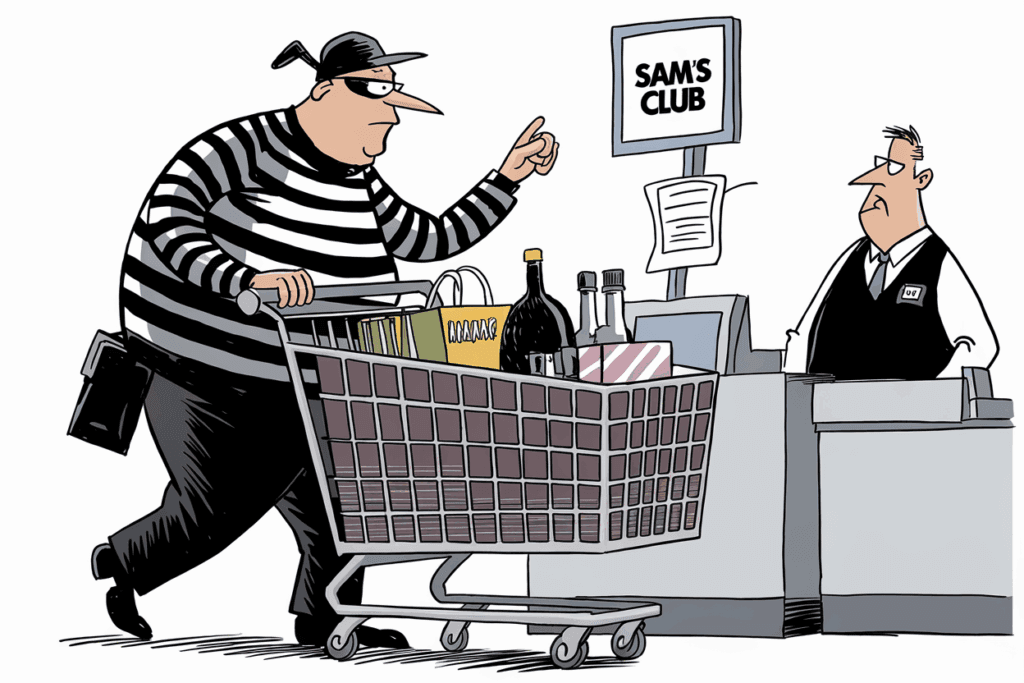
I didn’t make these Sam’s Club purchases — and I have the perfect alibi!
Problem Solved by Christopher Elliott
Barbara Bowman’s credit card was stolen and used at Sam’s Club. She wants a refund, and she has the perfect alibi: She’s never been a Sam’s Club member.
Q: My USbank Kroger credit card was stolen, and the thief charged $1,238 at a local Sam’s Club. The thief also used my stolen Capital One and Cabela’s credit cards to try and charge $1,032 and $1,238, respectively, all at the same Sam’s Club. Fortunately, the Capital One and Cabela’s charges were declined, and the companies issued new credit cards.
I reported the theft to USbank the next day, called Sam’s Club to report the fraudulent charges, and filed a police report. I’ve called US Bank at least once a week since this happened. I gave them the police report case number and the name and number of the supervisor at Sam’s Club who I spoke with. US Bank is still saying I must pay the $1,238.
I am almost 80 years old with excellent credit. Also, I have never been a Sam’s Club member. Please help me! — Barbara Bowman, Delphi, Ind.
A: You shouldn’t have to pay for this, but not for the reasons you think.
You did everything right by reporting the theft to your bank, the merchant, and the police. You also kept a detailed record of your communication, which is important.
It helps that you were never a Sam’s Club member, but unfortunately, that doesn’t prove your innocence. A quick review of Sam’s Club policies shows it accepts all major U.S. credit cards, but they do not have to belong to the member. So, for all Sam’s Club knows, you could have given your card to a friend who was a member, and the charges would have been legitimate.
Still, it’s unacceptable that US Bank refused to remove the fraudulent charges from your account. Under the Fair Credit Billing Act, your bank should have clawed back the money from Sam’s Club. You had a police report and all of your documentation was watertight.
You could have escalated your case in writing to one of the executives at your bank or at the retailer. I list the names, numbers and email addresses of the USbank executives and the Sam’s Club executives on my consumer advocacy site, Elliott.org.
Lately, I’ve noticed a lot of credit card disputes that are summarily dismissed because the bank is using artificial intelligence to determine if a claim is valid. I don’t know if that happened in your case, but if I had to make an educated guess, I would at least say that your bank didn’t review your dispute carefully enough.
You asked my advocacy team for help and I contacted Sam’s Club on your behalf. In response, you received a notice that USbank had closed your case and issued a full credit to your account. “This nightmare is finally over,” you told me.
Christopher Elliott is the founder of Elliott Advocacy (https://elliottadvocacy.org), a nonprofit organization that helps consumers solve their problems. Email him at [email protected] or get help by contacting him at https://elliottadvocacy.org/help/
© 2025 Christopher Elliott.
Illustration by Dustin Elliott Powering Our Future: Clarity, Responsibility, and Readiness
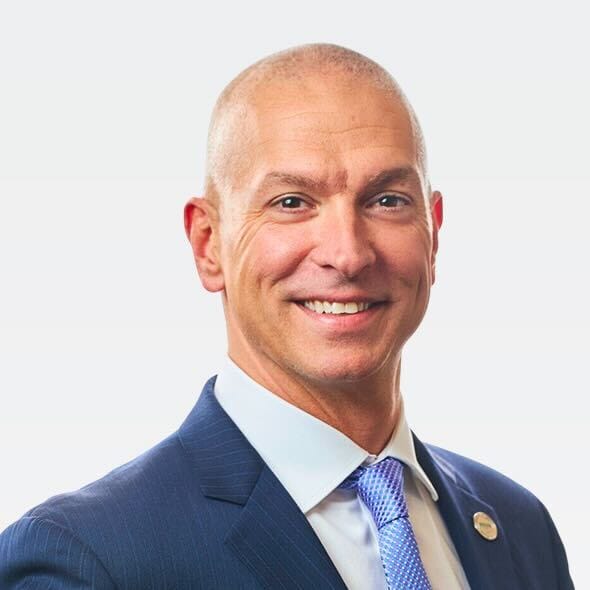
Opinion by John Hewa, President & CEO, Rappahannock Electric Cooperative
Across Virginia and the nation, energy demand is climbing — and fast. Virginia’s Department of Energy recently projected that annual demand growth for energy is increasing to 6.5%, up from a historic norm of 1.4%. Forecasts from the regional grid operator, PJM, show that electricity demand in Virginia alone will double by 2040. Knowing these forecasts, generation capacity in Virginia must increase rapidly. PJM recently indicated that power supply could run short as early as next summer if action isn’t taken.
Virginia has benefited greatly from economic growth fueled by data centers and new industries, but that growth brings an urgent need for strategic investments in power generation and transmission. At Rappahannock Electric Cooperative (REC), we’ve long understood that energy decisions made today will shape affordability and reliability for years to come. That’s why we take a proactive, member-first approach — one built on responsibility, transparency and care. We have a fundamental obligation to serve, and we intend to meet that obligation — responsibly, reliably and with care.
Let’s Talk About the Power Bill
While the nature of our industry requires long-term planning, we know many members are feeling the strains in the cost of living and rising electric bills. Please know we can provide information, answer questions or arrange flexible payment options when times are tough.
It’s important to understand that approximately 65% of your electric bill reflects the cost of power supply. These costs are rising because of factors like natural gas market volatility, higher capacity prices, and the need to invest in new generation and transmission to meet growing demand. Capacity charges — set by PJM — are necessary to ensure that power plants are available during the hottest and coldest days of the year.
While we can’t directly control power supply costs, we work hard to control the parts we can — the approximately 35% of your bill tied to REC’s distribution system of poles, wires and operations. We:
- Keep operations efficient and cost-effective
- Leverage technology to wisely plan system improvements, such as right-of-way maintenance
- Build resilience into the grid to perform better during storms and extreme temperatures — to avoid or delay equipment replacements
- Successfully pursue grants and outside funding to support REC’s needs
A Strategic Approach to Growth
Our service territory is growing rapidly — from new homes, small businesses, advanced manufacturing and hyperscale data centers.
To specifically manage the data center growth without exposing traditional members to risk, we created Hyperscale Energy Services — an REC affiliate company. Hyperscale was created to provide the data centers with market power from PJM. Hyperscale also allows us to manage financial risk effectively by ensuring that very large users pay their fair share of system costs. We’re proud to lead in this space, getting legislation passed that gives cooperatives more flexibility to serve these large accounts responsibly — aligning with independent recommendations from the Joint Legislative Audit and Review Commission (JLARC) to protect consumers.Standing Up for Members at Every Level
Recently, REC filed a new delivery rate proposal for large power users with the State Corporate Commission. This is a fairness- focused step to maintain long-term co-op financial strength, ensuring that every member benefits from a reliable, affordable grid.
Behind every pole, every substation, every innovation and every REC employee is one goal: to put members first.
Thank you for your continued trust and partnership.John Hewa
President and CEO
Rappahannock Electric CooperativeAbout Rappahannock Electric Cooperative:
REC provides electric service to 180,000 connections in parts of 22 Virginia counties. With its general office in Fredericksburg, Va., the Cooperative operates and maintains more than 18,000 miles of power lines through its service area, which ranges from the Blue Ridge Mountains to the tidal waters of the Chesapeake Bay. For more information about REC, please visit www.myrec.coop. Follow REC on Facebook, X, Instagram, LinkedIn and YouTube.

John Hewa is President and CEO of Rappahannock Electric Cooperative. Courtesy photo. Fake movie money circulating in Stephens City, police warn
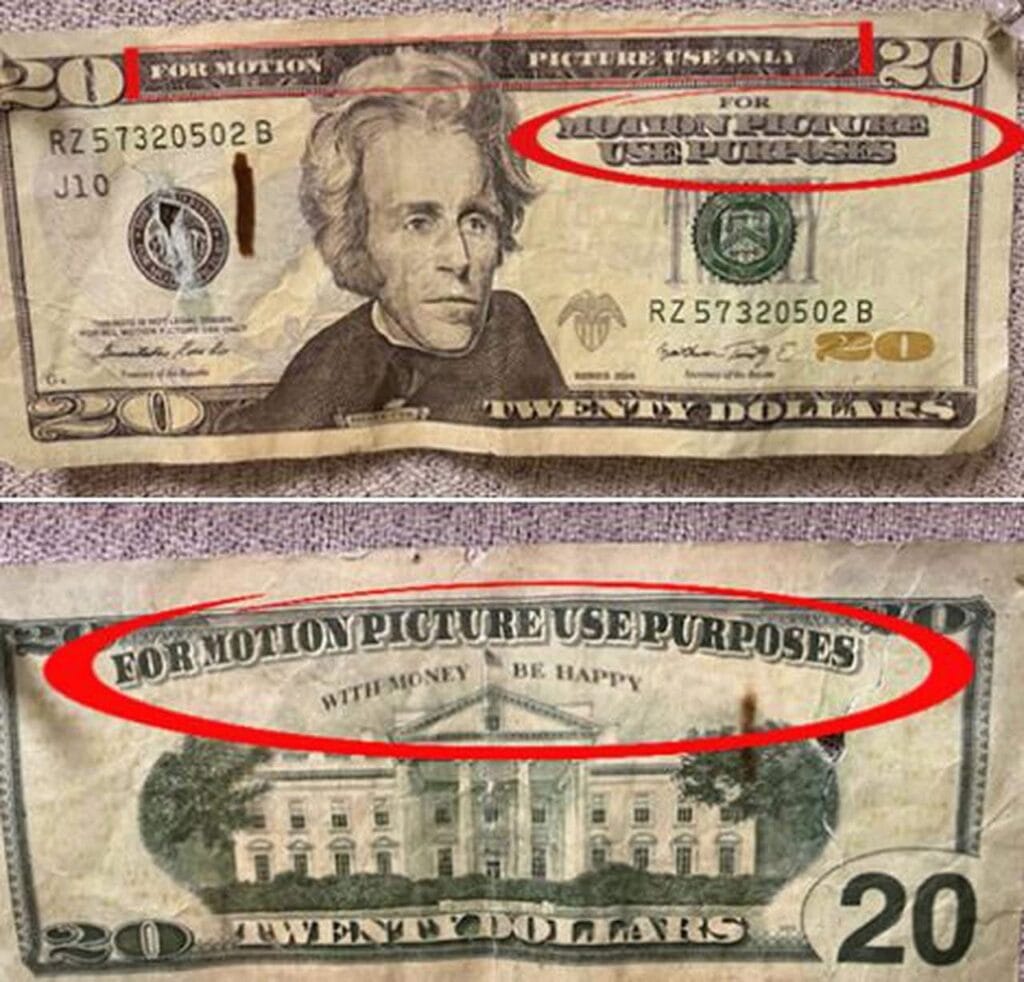
The Stephens City Police Department is warning residents and local businesses to be on the lookout for counterfeit currency labeled “For Motion Picture Purposes” or “Replica.” These fake bills, which resemble $20 and $100 denominations, have been reported in the area and can be easily purchased online.
“We want to raise awareness that these fake bills are out there,” the department stated in a social media post. “If you work in a field that receives cash payments, please use extra care to ensure the authenticity of all money exchanged.”
According to the release, the counterfeit notes include clear markings such as “FOR MOTION PICTURE PURPOSES” or “COPY” where official security features or legal tender markings would normally be.
Officials urge anyone who encounters these bills to refuse them and immediately contact their local law enforcement agency.
Edited by Dan McDermott

A $20 bill marked “FOR MOTION PICTURE USE PURPOSES” is among the fake currency circulating in Stephens City. Courtesy photo: Stephens City Police Department Worker revived after electrocution and 25-foot fall in Shenandoah Farms
A man was revived and flown to a trauma center after being electrocuted and falling from a ladder while working on a cable line in the Shenandoah Farms area on Thursday, July 18.
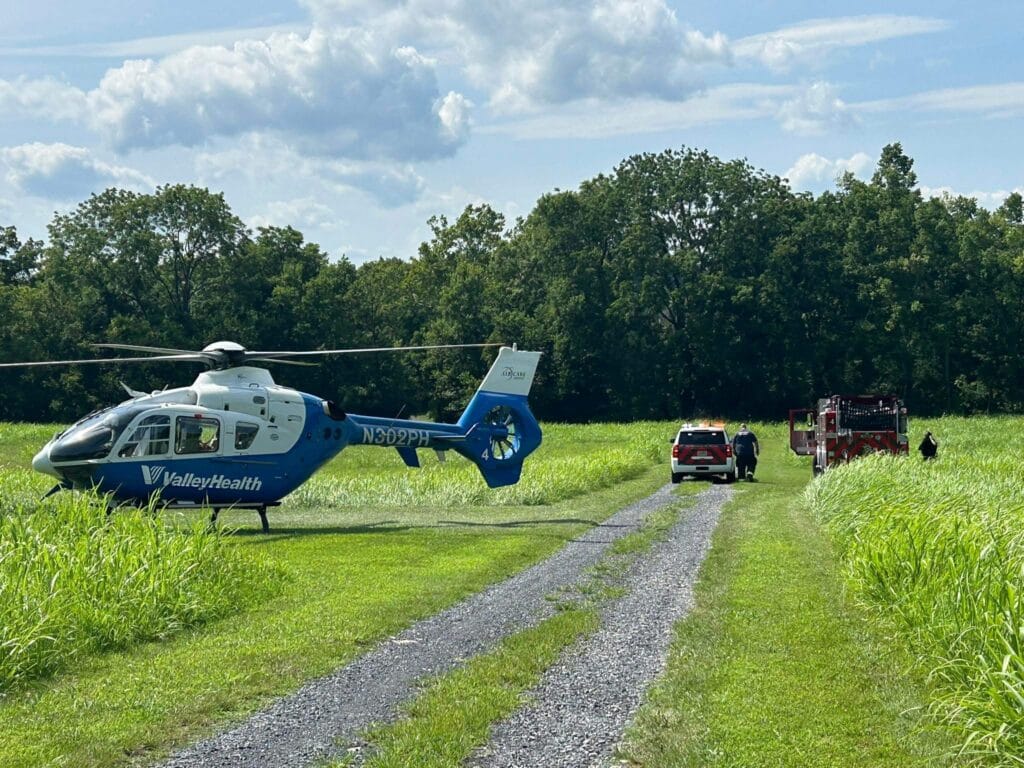
Warren County Fire and Rescue (WCFR) responded to the incident on Wendy Hill Road, where the worker was reportedly struck by electricity suspected to have arced from a nearby powerline due to high humidity in the air. The shock caused the worker to fall approximately 25 feet from the ladder he was using.
Coworkers quickly rushed to help and found the man in cardiac arrest. Bystander CPR was performed immediately, and when emergency medical personnel arrived, they were able to restart the man’s heart. EMS crews provided advanced life support at the scene and determined the patient needed trauma care due to the severity of his injuries.
AirCare 4, based in Front Royal, transported the patient to MedStar Washington Hospital Center.
“We applaud the quick actions taken by the patient’s coworkers. Without their help, the outcome probably would’ve been different,” said Fire Chief James Bonzano. “This incident highlights the critical importance of being CPR certified. Every second counts, and having the knowledge and skills to perform CPR can make the difference between life and death.”
Units responding to the call included Ambulance 6 (Shenandoah Farms), Engine 4 (Linden), Medic 10 (North Warren), and Battalion Chief 1.
WCFR offers monthly CPR courses, which can be found at www.warrencountyfire.com/635/events.
Information from a release. Edited by Dan McDermott.

AirCare 4 prepares to transport a worker to MedStar Washington Hospital after he was electrocuted and fell from a ladder in Shenandoah Farms. The man was revived by bystander CPR before EMS arrived. Courtesy photo. AstraZeneca to build largest global manufacturing facility in Virginia
RICHMOND — AstraZeneca has chosen Virginia as the site of its largest single manufacturing investment in company history, Governor Glenn Youngkin announced this week.
The global biopharmaceutical leader plans to build a state-of-the-art drug substance facility in the Commonwealth as part of its broader $50 billion U.S. investment strategy by 2030. Governor Youngkin was joined at the announcement by AstraZeneca CEO Pascal Soriot and White House National Economic Council Director Kevin Hassett.
“This project will set the standard for the latest technological advancements in pharmaceutical manufacturing,” Youngkin said. “It will create hundreds of highly skilled jobs and further strengthen the nation’s domestic supply chain.”
Soriot called the decision a reflection of Virginia’s workforce and life sciences ecosystem.
“It reflects the Commonwealth of Virginia’s desire to create highly skilled jobs in science and technology, and will strengthen the country’s domestic supply chain for medicines,” he said, adding that the investment will help AstraZeneca reach its goal of $80 billion in annual revenue by 2030.
The new facility will incorporate artificial intelligence, automation, and data analytics to support production in key therapeutic areas, including oncology, cardiovascular, renal, metabolism, respiratory, immunology, and rare diseases.
Virginia officials hailed the announcement as a major win for the state’s growing life sciences sector.
“This new partnership with AstraZeneca is an amazing opportunity for the Commonwealth,” said state Sen. Creigh Deeds. “It will transform our bioscience economy and reshore our critical pharmaceutical supply chain.”
AstraZeneca, headquartered in the United Kingdom, sells medicines in over 125 countries. The company focuses on developing treatments in oncology, rare diseases, cardiovascular, respiratory, renal, metabolism, and immunology.
Edited by Dan McDermott
Help! Someone stole 200,000 Chase points, and I can’t get them back

Illustration by Christopher Elliott By Christopher Elliott
What would you do if you logged into your Chase account and found 200,000 Chase Sapphire points were missing?
You’d freak out, right?
And what if Chase refused to return the missing points?
You’d be pretty steamed. I know I would be.
So the fact that Seth Bloom was as level-headed as he was when he reached out to my advocacy team — well, that says a lot about him. The points, which are worth $2,000, had been redeemed in one of the scammiest ways possible: as Apple gift cards sent to an unknown address.
“It’s ridiculous,” Bloom told me.
Bloom’s case raises several important questions:
- What should you do if your rewards points are stolen?
- How can you prove fraud when the evidence is digital?
- What rights do consumers have when their accounts are hacked?
So let’s cut to the right to the chase.
“I can’t prove a negative”
Bloom’s ordeal began a few months ago when his Chase Sapphire account was hacked. The thief used his rewards points to buy 20 $100 Apple gift cards. Bloom didn’t notice the fraud until a few days later, when he logged into his Chase app and saw the deductions.
“I was shocked,” Bloom said. “I’ve been a loyal Chase customer for 15 years. I pay a hefty annual fee for this card. I expected better.”
(He pays $95 a year for his Chase Sapphire Preferred card.)
Bloom immediately called Chase, reported the fraud, and had his card canceled and replaced. He also changed his account password. But when he asked Chase to restore his stolen points, the company refused, demanding “evidence” that he didn’t receive the gift cards.
“How do you prove you didn’t receive something?” he says. “I can’t prove a negative.”
Bloom spent weeks calling Chase, emailing executives, and even contacting Apple for proof that the gift cards were never sent to him. But Chase’s fraud department remained unmoved.
“They kept saying they needed more evidence,” Bloom said. “I felt like I was stuck in a loop.”
What should you do if your rewards points are stolen?
If someone steals your rewards points, time is your most valuable asset. Acting quickly can make the difference between recovering your points and losing them for good. Here are the steps you need to to take to protect yourself and increase your chances of a resolution:
Report the fraud as soon as possible. Contact your credit card company the moment you notice suspicious activity. Most companies have dedicated fraud departments to handle these problems. The sooner you report it, the better your chances of recovering your points.
Change your account credentials. Update your password and enable two-factor authentication (2FA) if it’s available. This adds an extra layer of security to your account and makes it harder for hackers to regain access. And they will try.
Collect evidence. Save emails, text messages and statements. If the company asks for proof, this documentation can strengthen your case.
Document everything. Keep a detailed record of all communications with the company. Note the dates, times, and names of customer service representatives you speak with. If possible, follow up with an email summarizing the conversation to create a paper trail.
Escalate the issue. If the frontline customer service team isn’t helpful, ask to speak with a supervisor or escalate the issue to the Chase executive team. Again, many companies have dedicated executive customer service departments that handle complex cases.
File a police report. While it may seem excessive, filing a police report can provide an official record of the fraud. Some companies require this step before they’ll investigate further.
One more thing: You’ll want to monitor your account carefully after a theft. Keep a close eye on your account for any additional unauthorized activity. Hackers may try to strike again if they still have access.
In Bloom’s case, he reported the fraud to Chase within days of discovering it. He also changed his password and documented his interactions with the company. But despite his quick action, Chase’s response was slow, and its demand for evidence left him frustrated.
“It felt like they were putting the burden of proof on me,” Bloom said. “I did everything I was supposed to do.”
How can you prove fraud when the evidence is digital?
Proving digital fraud can feel impossible, especially when the stolen assets — like rewards points — are intangible. But with the right approach, you can build a strong case to support your claim.
Take screenshots. Take images of any unauthorized transactions, including dates, amounts, and descriptions. They’ll serve as visual proof of the fraud and can be invaluable when disputing charges.
Gather third-party verification. Contact any companies involved in the fraudulent transactions. For example, if your rewards points were used to purchase gift cards, reach out to the retailer to document that the cards were never sent to you.
Check your account activity logs. Many online accounts track login attempts and IP addresses. If someone hacked your account, this information can help prove that someone else accessed it.
And if that doesn’t work, you may have to look for outside help. A complaint with the Consumer Financial Protection Bureau or a consumer advocate can help.
Bloom sent Chase screenshots of the fraudulent transactions. Despite this evidence, Chase refused to restore his points, demanding even more proof.
Here’s the frustrating reality: Companies often place the burden of proof on consumers, even when the fraud is obvious. Also, many disputes are never seen by a person but processed by an AI bot. These systems fail to adequately review the case or can’t see an obvious sign of fraud.
The key is to be thorough and persistent. Digital fraud may be hard to prove, but with the right evidence and a proactive approach, you can fight back.
What should you do if your credit card account is hacked?
Under federal law, consumers are protected from unauthorized transactions on their credit cards. The Fair Credit Billing Act limits your liability for fraudulent charges to $50, and many credit card companies offer zero-liability policies.
But rewards points are in a gray area. They’re not considered cash or currency, so they’re not always covered by the same protections.
In other words, if someone steals your loyalty points, there’s probably no law that specifically protects you. Instead, you need to lean on the bank or credit card company to fix the problem as a goodwill gesture. (Technically, the points don’t even belong to you; the bank owns them. I have details on this bizarre rule in my guide to loyalty programs.)
So are the 200,000 points lost forever?
I reviewed Bloom’s paper trail, and it looked like someone from Chase had assured him by phone that this was “obviously” fraud and then promised a refund of his points, but then reneged.
Something about this case seemed strange. I asked Bloom if he’d shared his password with anyone. He said he hadn’t. So unless his password had somehow been exposed in a breach, it seemed as if the hack happened on Chase’s side.
Chase must have also known that he had provided all of the evidence he could. Asking for more just seemed like another way of rejecting his case, even though it had initially promised a refund.
Enough was enough. I contacted Chase on his behalf. Separately, Bloom also wrote to the CEO of Chase and appealed his case.
“Great news!” he reported. “Chase has finally agreed to restore the award points to my account. I think your intervention must have helped.”
Christopher Elliott is an author, consumer advocate, and journalist. He founded Elliott Advocacy, a nonprofit organization that helps solve consumer problems. He publishes Elliott Confidential, a travel newsletter, and the Elliott Report, a news site about customer service. If you need help with a consumer problem, you can reach him here or email him at [email protected].
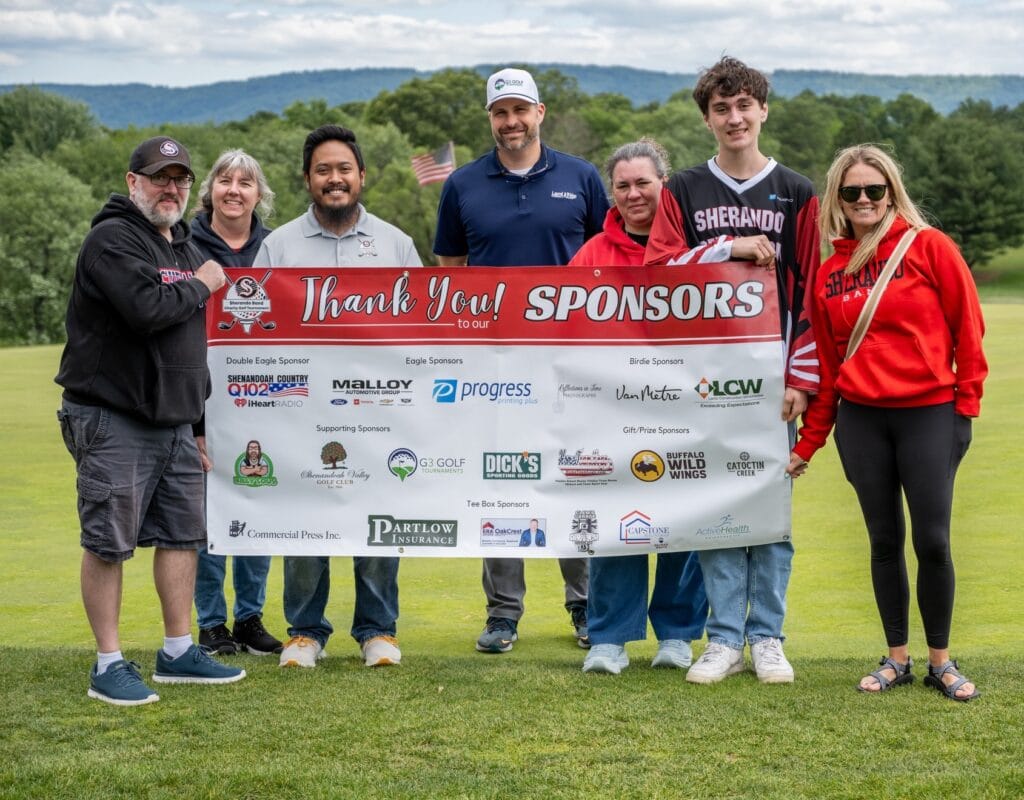
Sherando Band golf tournament raises over $10,000 for student musicians
STEPHENS CITY — The Sherando Band Boosters raised more than $10,000 in net proceeds through the 2025 Sherando Band Charity Golf Tournament, organizers announced.
Held earlier this year, the tournament brought together sponsors, volunteers, and community members in support of the high school’s music program. Funds will help pay for student instruments, music instruction, and travel opportunities.
Guy Curtis, who chaired the event, extended thanks to all who supported the effort, including hole sponsors, prize donors, and volunteers.
Major sponsors included Q102.5 Shenandoah Country (iHeartMedia) and Malloy Automotive Group, as well as a number of local businesses.
For more information or to support the program, visit www.sherandoband.org or email [email protected].
Edited by Dan McDermott.

Members of the Sherando Band Boosters and community partners hold a thank-you banner honoring sponsors of the 2025 Sherando Band Charity Golf Tournament. The event raised over $10,000 to support student musicians. (Courtesy photo) Winchester company joins Virginia’s international export accelerator program
WINCHESTER — A Winchester-based manufacturer is one of 13 Virginia companies selected to join an elite state program aimed at helping businesses expand into international markets.
Ashworth Bros., Inc., headquartered in the City of Winchester, has joined the Virginia Leaders in Export Trade (VALET) program, a two-year business acceleration initiative managed by the Virginia Economic Development Partnership (VEDP). The program provides participating companies with customized international sales strategies, access to a network of global experts, and direct introductions to potential partners overseas.
Ashworth Bros., a global leader in conveyor belting systems, is the only Shenandoah Valley business included in the latest cohort. The company designs and manufactures metal and plastic belting solutions for industries ranging from food processing to automotive manufacturing.
VALET is designed for Virginia companies with established domestic success that are ready to grow internationally. Participants receive support from a team of international service providers and market research consultants spanning more than 120 countries. The program also includes in-country matchmaking, educational seminars, and a customized plan to guide expansion efforts.
The announcement came as Governor Glenn Youngkin welcomed a new group of companies into the program while also recognizing 13 graduates that completed the two-year track.
Since its inception, 425 Virginia companies have completed the VALET program. Currently, 58 companies are active participants. According to VEDP, businesses in the program routinely report increased international sales and global partnerships that generate high-quality jobs across the Commonwealth.
Virginia exports approximately $70 billion in goods and services annually. In 2023, companies working with VEDP’s international trade division attributed $1.5 billion in overseas sales to its assistance, supporting more than 13,700 jobs.
Ashworth Bros. now joins that expanding network of Virginia businesses reaching global markets through the VALET program.
More information on the VALET program is available at vedp.org.
Local farmers encouraged to take part in agricultural conservation survey
WOODSTOCK, Va. — Farmers in Warren County and throughout the Shenandoah Valley are invited to participate in a new statewide survey aimed at documenting on-farm conservation efforts that protect soil and water quality.
The Virginia Farm Voluntary Agricultural Best Management Practices Survey is being conducted by Virginia Cooperative Extension and is open through June 30, 2026. The survey targets farmers in the Chesapeake Bay watershed region, including those in Warren, Shenandoah, Page, Frederick, and Clarke counties.
“This is about recognizing the work farmers have already done—often without government assistance—to protect natural resources,” said Robert A. Clark, Senior Extension Agent for Agriculture and Natural Resources in Woodstock.
The survey collects information on conservation practices such as cover cropping, no-till farming, stream exclusion fencing, nutrient management, and riparian buffer zones. Both cost-shared and non-cost-shared practices are eligible to be reported.
Organizers say the information gathered will help the state better understand the extent of voluntary conservation efforts and may inform future agricultural programs and funding priorities.
Farmers can complete the survey at:
https://vcuserl.co1.qualtrics.com/jfe/form/SV_enX1X0MetJJsWRE
More details are available at:
For questions or help completing the survey, farmers should contact their local extension office.
Virginia Cooperative Extension is a partnership of Virginia Tech, Virginia State University, the U.S. Department of Agriculture, and local governments. Participation in the survey is voluntary and open to all producers.

VDOT Road Work Update for July 21–25: Projects in Warren, Frederick, Shenandoah, Page, and Clarke Counties
STAUNTON — The Virginia Department of Transportation (VDOT) Staunton District has announced upcoming and ongoing road work scheduled for the week of July 21–25, 2025. Projects are set to impact key highways and secondary roads across several counties, including Warren, Frederick, Shenandoah, Page, and Clarke. Motorists are advised to be alert for changes in traffic patterns, flagging operations, lane closures, and posted detours throughout the region.
Warren County
Interstate 66
Mile marker 0 to 15, eastbound – Overnight single lane closures for maintenance to various bridges, 6 p.m. to 5 a.m. through the night of July 31. Mile marker 1 to 0, westbound – NEW Right shoulder closures for inspection of I-81 bridge, 8 a.m. to 3 p.m. Thursday. Mile marker 2 to 0, westbound – NEW Shoulder closures for road work related to I-81 southbound widening, 7:30 a.m. to 3:30 p.m. through August 8.
Interstate 81
Mile marker 299 to 300, northbound and southbound – UPDATE Overnight single lane closures for installation of median barriers and construction entrances, 8 p.m. to 7 a.m. through the night of August 7. Daytime shoulder closures continue through August 8. Left shoulder closures are in place 24/7.
Primary Roads
Route 340 (Stonewall Jackson Highway) – NEW Northbound and southbound single-lane closures near Route 605 (Poor House Road) for bridge inspection over Gooney Run, 8 a.m. to 5 p.m. Friday. – Flagger traffic control between the Page County line and Route 674 (Limeton Church Road) for paving, 8 p.m. to 6 a.m. through September 5. – Single-lane closures between Route 637 (Guard Hill Road) and Route 655 (Country Club Road) for painting work on Crooked Run and I-66 bridges, 7 a.m. to 5 p.m. through Sunday, July 27.
Secondary Roads
Route 610 (Bucks Mill Road) – Closed to through traffic between Route 55 (Strasburg Road) and Route 626 (Andrews Road) for bridge repairs, 8 a.m. to 4 p.m. through August 15. Route 647 (Dismal Hollow Road) – Flagger traffic control near Route 603 (Oregon Hollow Road) and FR-Route 285 (Gap Road) for painting I-66 overpass bridges, 7 a.m. to 5 p.m. through August 31. Route 658 (Rockland Road) – Now open to through traffic between Route 340/522 and Route 705 (Fishnet Boulevard) via a new bridge over the railway. Lane or shoulder closures expected through September 2025.
Frederick County
Interstate 81
Mile marker 301 to 300, southbound – NEW Right shoulder closures for bridge inspection, 8 a.m. to 3 p.m. Friday. Mile marker 302 to 300, southbound – UPDATE Overnight single lane closures for median barrier work and construction entrances, 8 p.m. to 7 a.m. through August 7. Daytime shoulder closures for sign installations through August 8. Left shoulder closures 24/7. Mile marker 308 to 310, northbound – NEW Overnight single lane closures for bridge maintenance over Opequon Creek, 8 p.m. to 7 a.m., July 27–31.
Primary Roads
Route 7 (Berryville Pike) – NEW Brief eastbound and westbound closures between Route 659 (Valley Mill Road) and Route 656 (Greenwood Road) for overhead utility work, Sunday, July 20, from 12 midnight to 9 a.m. Route 522 (North Frederick Pike) – Northbound overnight lane closures between Route 739 (Fox Drive) and Route 673 (Golds Hill Road) for paving, 8 p.m. to 6 a.m. through Friday night.
Secondary Roads
Route 627 (Reliance Road) – NEW Flagger traffic control just east of Route 11 (Valley Pike) for turn-lane construction, 7 a.m. to 3 p.m., July 23 through September 26. Route 649 (Springdale Road) – Closes Friday, July 18, between Route 11 and Route 651 for rail line work. Detour via new Route 873 (Renaissance Drive). Route 761 (Old Charles Town Road) – Closed between Route 666 and Route 661 for Opequon Creek bridge replacement at Clarke County line. Project completion expected November 2025.
Shenandoah County
Interstate 81
Mile marker 268 to 269, both directions – Overnight single lane closures for North Fork Shenandoah River bridge maintenance, 8 p.m. to 7 a.m. through July 30. Mile marker 283 to 291, northbound – UPDATE Right shoulder closures for repairs, 7:30 a.m. to 3 p.m., Monday to Friday. Mile marker 289 to 287, southbound – NEW Overnight single lane closures for bridge work over Route 625 (Harman Road), 8 p.m. to 7 a.m. Sunday through Thursday. Mile marker 294 to 299, both directions – UPDATE Overnight single lane closures for median barrier and construction entrances, 8 p.m. to 7 a.m. through August 7. Daytime shoulder closures for sign installations continue through August 8. Left shoulder closures 24/7.
Primary Roads
Route 11 (Old Valley Pike) – NEW Single-lane closures between Route 650 and Route 657 for tree removal, 8 a.m. to 5 p.m. through Friday. – Mobile lane closures between Route 837 and Route 42 for tree trimming, 6 a.m. to 4:30 p.m. through Tuesday. – Overnight paving with flagger control from Orchard Street in Strasburg to Route 601, 8 p.m. to 6 a.m. through August 22. – Overnight paving from Route 55 to the Warren County line, 8 p.m. to 6 a.m. through July 30. Route 211 (Old Cross Road) – Westbound left lane closures near I-81 for bridge maintenance, 7 a.m. to 5 p.m. through August 4.
Secondary Roads
Route 720 (Wissler Road) – Closed between Route 798 and Route 614 for Mill Creek bridge replacement. Completion expected October 10.
Page County
Primary Roads
Route 340 – NEW Flagger control between Route 770 and Route 658 for bridge inspections over Dry Run and Pass Run, 8 a.m. to 5 p.m. Monday. – Ongoing flagger control for paving, shoulder repair, and maintenance work. Mobile mowing operations also active.
Secondary Roads
Flagger traffic control for pipe cleaning and brush cutting continues districtwide on weekdays from 7:30 a.m. to 3 p.m.
Clarke County
Primary Roads
Route 7 (Harry Byrd Highway) – NEW Single-lane closures between Route 653 and Frederick County line for paving: eastbound from 9 a.m. to 9 p.m., westbound from 8 p.m. to 12 noon. Estimated completion August 1. – Westbound overnight alternating lane closures between Route 601 and Route 612 for shoulder work, 8 p.m. to 6 a.m. through Friday night.
Secondary Roads
Route 761 (Old Charles Town Road) – Closed between Route 666 and Route 661 for bridge replacement at Frederick County line. Completion expected in November 2025.
VDOT encourages motorists to drive with caution in all work zones and observe all posted signage and detours. For real-time updates, call 511 or visit 511virginia.org. To report hazards or ask questions, contact VDOT’s 24-hour Customer Service Center at 800-FOR-ROAD (800-367-7623) or visit my.vdot.virginia.gov.
Front Royal-Warren County Chamber of Commerce News
From a release:
Tuesday July, 22nd from 5–10pm, join On Cue for tacos with a purpose—because 25% of all taco sales will go straight to helping Garcia & Gavino keep positive through their difficult time. (and back in the kitchen in no time). Feeling extra generous? there will be donation buckets and Venmo links at each table to make giving easy. And rumor has it…Garcia may whip up something sweet for sale.
Jennerations Hair Studio & Spa is proud to reintroduce permanent makeup to their service menu. Sommer Love is a registered licensed esthetician and permanent makeup artist. Book your consultation and appointment for powder brows or lip blush today!
The Warren County Department of Fire and Rescue Services is excited to announce the return of its Citizens Fire Academy (CFA), beginning Wednesday, September 24, 2025. This free, seven-week program is open to adults living or working in Front Royal and Warren County who are interested in gaining an insider’s perspective on their local emergency services. Get details and register here.
Atlantic Union Bank invites you to discuss your business goals with their market experts on their Front Royal Business Solutions Day, Tuesday, August 5th. They’ll have local business experts on hand to discuss their customer-centricapproach, flexible financial solutions, and entrepreneurial innovation. Space is limited, contact [email protected] for more details and to reserve your spot.
Blake & Co. Hair Spa invites you to their “Sun Kissed & Self Care” Client Appreciation Party on August 7th, 6:30-8:30 pm. The evening will include one-night-only deals, local vendors, sips and snacks, and all the summer care vibes!
Posted by Dan McDermott.
Virginia sees slight job loss in June, but year-over-year growth continues
From a release
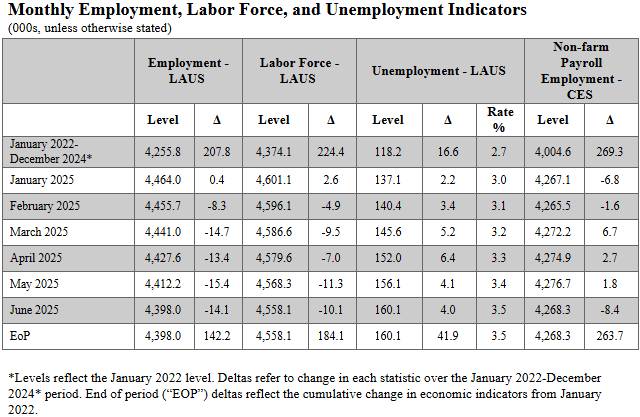
RICHMOND—Virginia’s seasonally adjusted unemployment rate rose to 3.5% in June, up 0.1 percentage points from May but still below the national rate of 4.1%, according to new data from the U.S. Bureau of Labor Statistics.
Nonfarm payroll employment declined by 8,400 jobs over the month, driven largely by reductions in federal and federal contractor positions. However, year-over-year employment remains up by 35,600 jobs since June 2024. Since January 2022, total nonfarm employment in Virginia has grown by 263,700.
Governor Glenn Youngkin noted that while federal job cuts were expected, the private sector and defense-related hiring continue to grow. “The growth in non-federal jobs over the course of the year, nearly 200,000 open and unfilled positions, and 80,000 new jobs tied to $120 billion in business investment will provide opportunities for those affected by federal reductions,” Youngkin said.
Virginia’s labor force shrank by 10,116 to 4,558,145 in June. The number of unemployed residents rose by 4,025 to 160,116, and the labor force participation rate dropped 0.2 percentage points to 65.0%.
Labor Secretary Bryan Slater said the state continues to expand access to job training and apprenticeships. Commerce and Trade Secretary Juan Pablo Segura emphasized long-term support for business growth and workforce development.
The BLS Local Area Unemployment Statistics (LAUS) and Current Employment Statistics (CES) programs measure employment using different methods. LAUS relies on household surveys, while CES counts payroll jobs and excludes business owners, the self-employed, and certain unpaid workers.
More data is available at https://virginiaworks.com.
Edited by Dan McDermott

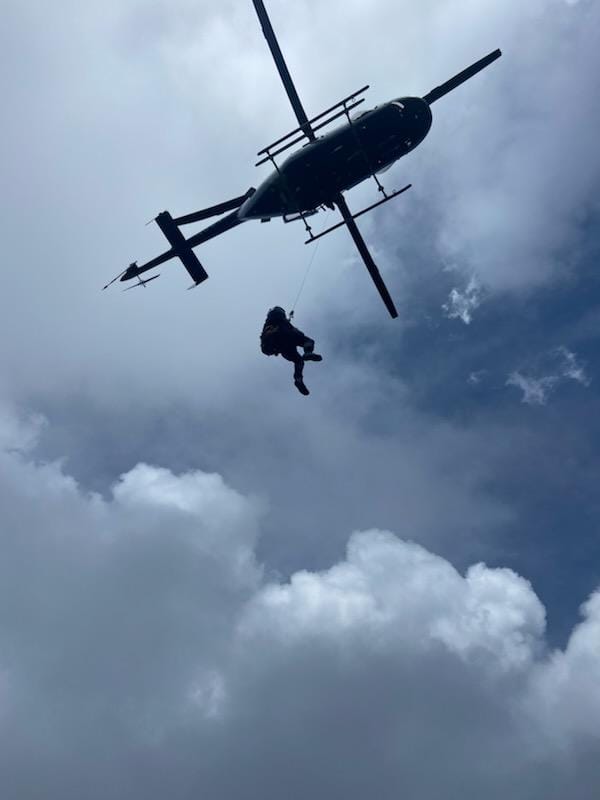
Med-Flight 1 crew rescues injured hiker from Old Rag Mountain in Madison County
From a release:
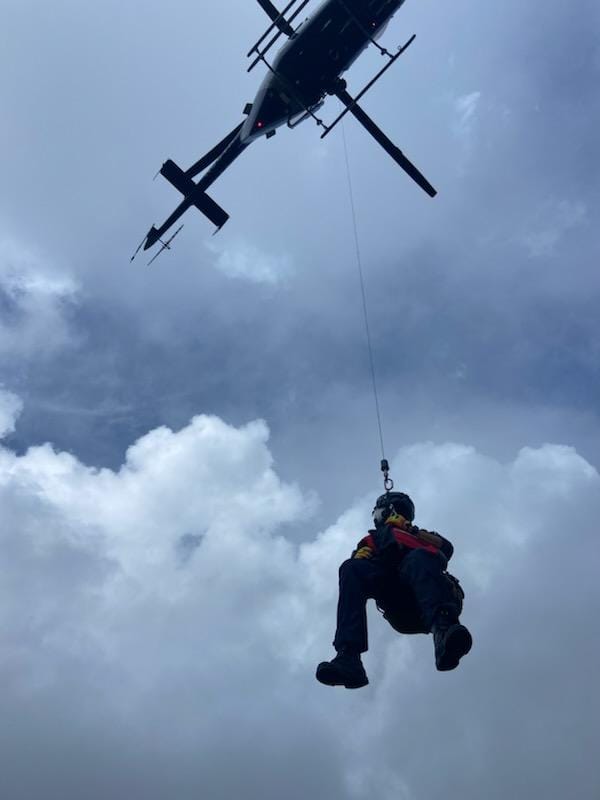
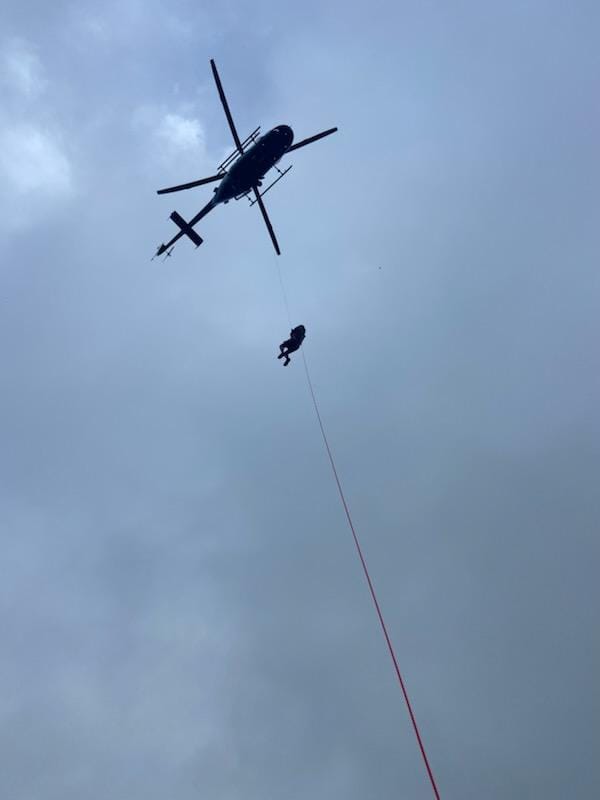
Med-Flight 1 conducted its fourth hoist rescue of the year on Wednesday, July 16, 2025, successfully airlifting an injured hiker off Old Rag Mountain in Shenandoah National Park, located in Madison County.
According to the Virginia State Police, the mission began around 1:30 p.m. when the National Park Service requested assistance for a hiker who had suffered a shoulder injury and could not make the descent from the mountain. Old Rag is approximately 80 nautical miles from Med-Flight 1’s base in Chesterfield, Virginia.
The rescue team—consisting of Virginia State Police First Sergeant Jeffrey Weber, Chesterfield Flight Paramedic Chris Orr, and Chesterfield Firefighter Michael Burnett—hoisted the injured hiker off the mountain and transferred them to waiting EMS crews at the base.
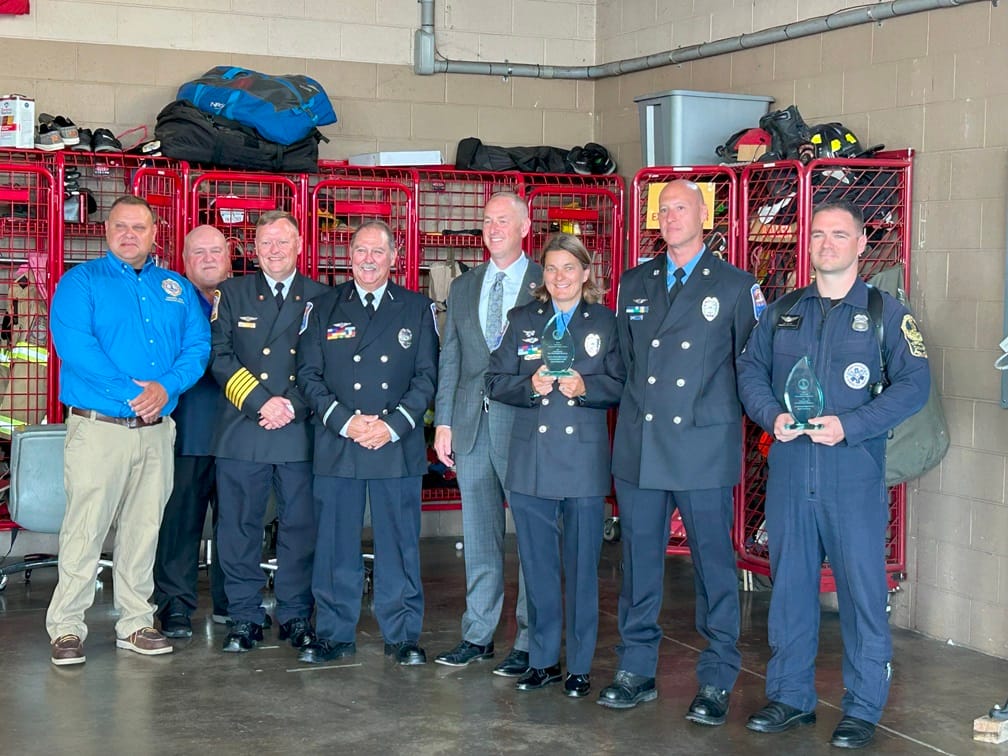
This marks the fourth hoist rescue by Med-Flight 1 in 2025. A previous rescue on Old Rag took place on March 31. Additionally, the crew was recognized on July 17 by the Virginia Department of Fire Programs for a hoist rescue carried out last August along Saint Mary’s Falls Trail in Augusta County.
Med-Flight 1 is a joint operation between the Virginia State Police and the Chesterfield County Fire and EMS Department.
Edited by Dan McDermott.

A Med-Flight 1 crew member is lowered onto Old Rag Mountain to assist an injured hiker. Photo courtesy of the National Park Service. The Med-Flight 1 helicopter hovers over Shenandoah National Park during the July 16 rescue operation. Photo courtesy of the National Park Service. A crew member is seen mid-air during the hoist extraction above Old Rag Mountain. Photo courtesy of the National Park Service. 
Med-Flight 1 team members receive recognition on July 17, 2025, for their life-saving efforts. Photo courtesy of the Virginia State Police. Bristol, Virginia Man Sentenced to 96 Months on Federal Drug Charges
ABINGDON, Va. – A Bristol, Virginia man, convicted of conspiring to distribute methamphetamine following a three-day jury trial in U.S. District Court in Abingdon in June 2025, was sentenced this week to 96 months in federal prison.
Christopher M. Sullivan, 31, was convicted in June of one count of conspiracy to distribute methamphetamine and one count of using a communication facility in furtherance of a drug trafficking crime. Sullivan is the final defendant in this 20-member conspiracy to be sentenced.
“Methamphetamine has ravaged Southwest Virginia for decades, causing cycles of addiction and misery in its wake,” United States Attorney C. Todd Gilbert said today. “We must be vigilant in attacking this issue at its source and bringing to justice those who profit off the addiction of others. I am grateful to our partners at the Drug Enforcement Administration and all of our local partners for their work on this case.”
“There has been a large increase in methamphetamine distribution in Virginia in recent years, especially the western part. Local gangs and drug trafficking organizations are not only mixing meth with other substances but are also transforming it into fake pill forms to enhance its marketability,” commented Shane K. Todd, Acting Special Agent in Charge of DEA’s Washington Division. “I want to express my gratitude to the DEA teams, USAO-WDVA litigators, and our local and state partners for their hard work in investigating, arresting, and prosecuting this individual, who was a clear public safety threat to Virginians.”
According to court documents and evidence presented at trial, Sullivan conspired with Christopher David Johnson – an inmate in a Georgia state prison – and numerous others to traffic and distribute kilograms of methamphetamine from Georgia into Southwest Virginia.
Johnson used smuggled cell phones to operate a large-scale methamphetamine distribution operation from his prison cell in Georgia. Johnson regularly communicated with his co-conspirators using Facebook, WhatsApp, Signal, phone calls, and text messaging to coordinate drug deliveries, set pricing, manage drug quantities, handle recruitment, intimidation, and sales.
Evidence showed that Sullivan regularly communicated with Johnson to accomplish the goals of the conspiracy. Sullivan also distributed methamphetamine for Johnson, wired money to Mexico at Johnson’s direction, and paid Johnson for methamphetamine.
In December 2024, Johnson was sentenced for his role in the conspiracy to 20 years in federal prison – to run consecutive to his state prison sentence – and ten years of supervised release. The eighteen other defendants received prison sentences ranging from three to fifteen years.
United States Attorney C. Todd Gilbert and Special Agent in Charge Ibrar A. Mian of the DEA Washington Division made the announcement.
The Drug Enforcement Administration and multiple law enforcement agencies in Georgia, Tennessee, and Virginia investigated the case, including the Bristol (Tennessee) Police Department, the Bristol (Virginia) Police Department, the Sullivan County Sheriff’s Office, the 2nd Judicial Drug Task Force, and the Georgia State Patrol.
Assistant U.S. Attorneys Whit Pierce and Corey Hall are prosecuting the case.
Passengers are missing their summer flights. Here’s how to avoid being left behind
Illustration by Dustin Elliott BY CHRISTOPHER ELLIOTT
Ever had this nightmare? You’re racing through the airport, dodging slow-moving travelers, swerving to avoid those annoying golf carts, only to arrive breathlessly at your gate just as the doors close.
Your flight is gone. Your trip is ruined.
Darrel Reid knows all too well the pain of missing a flight. Earlier this year, he and his wife arrived two hours early at Dallas-Fort Worth International Airport for a 7:05 a.m. flight to Los Angeles.
They thought they had plenty of time. But they didn’t.
“By the time we parked, took the shuttle, and got to the ticket counter, it was 6 a.m.,” says Reid, a salesman from Mesquite, Texas. “An airline representative told us we couldn’t check our bags because we’d missed the cutoff time. The gate agent couldn’t have cared less.”
Missing a flight isn’t just inconvenient. It’s expensive, stressful, and can take a wrecking ball to your travel plans. And it will probably happen more often than ever this summer. With record-breaking passenger numbers expected, airports are bracing for chaos. Delays, long lines, and overbooked flights are the new normal.
People are afraid. One survey by Faye Travel Insurance found that almost a quarter of air travelers (23 percent) were worried they would miss their flight.
Missing your flight can be expensive
Missing a flight can have a domino effect. If it’s your outbound flight, your airline could cancel your return. Miss a connection, and you could be stranded overnight. Add in the cost of rebooking fees, hotel stays, and missed reservations, and the price tag can easily run into the thousands.
For Reid, who had booked a vacation package to Disneyland with his family through Expedia, the solution was to spend more money.
Frontier wouldn’t put him on the next flight because it listed him as a “no show,” forfeiting his entire ticket. So he paid an extra $800 to get to Los Angeles so he could rescue his vacation. He tried to file a claim with his travel insurance, but it would not cover a missed flight.
“It was a real ordeal,” he says.
Anyone can miss a flight
Even the most experienced travelers can miss a flight. Often, it’s because airports are confusing places.
Nick Brennan recently missed a flight from Rome to London.
“I was at the wrong gate,” says Brennan, the CEO of a telecommunications company in London. “There were two flights to Gatwick leaving at the same time — one with Vueling, one with Wizz Air. I saw the right destination and time on the departure board, but I didn’t notice the airline. By the time I realized my mistake, it was too late.”
Another leading cause of missed flights: underestimating how long it will take to get to the airport. Amrita Bhasin missed her flight from New York to San Francisco because she underestimated New York traffic and then had to stand in a long security line.
“I’m used to SFO, where security takes two minutes,” says Bhasin, who runs a software company in San Francisco. “At JFK, it took forever. I’ll never make that mistake again.”
I’ve missed a few flights, too. Once I forgot my passport at home, and by the time I made it to the airport, the plane had left. Another time, I got stuck in a long security line. In both cases, I got lucky. The airline rebooked me on the next available flight at no extra charge. But it was embarrassing, and I should have known better.
How early should you get to the airport?
The cardinal rule of air travel used to be: arrive two hours early for domestic flights, three hours for international. Not this summer.
You’ll want to add an hour to that, especially during peak travel times, which is pretty much the entire month of August.
I know what you’re thinking. Three hours? Once you factor in the trip to the airport, it might be faster to just drive to your destination instead of flying. Good point. You might want to consider ditching your flight during the busy summer travel period and just driving — unless you’re headed abroad.
But if you must fly, here’s how to avoid missing your flight:
Book smarter flights
A 30-minute connection might work in theory, but it’s a gamble. Flights have minimum connection times, which are set by a joint airport and airline commission, but they are guidelines and they can sometimes be inaccurate. Choose a flight that gives you at least an hour to connect, and longer if you have to change terminals.
Note your airline’s baggage cutoff times
That’s where Reid went wrong. Most airlines require checked bags to be dropped off at least 30 to 60 minutes before departure. Some budget carriers, like Frontier and Spirit, have even stricter rules.
Use technology to your advantage
Download your airline’s app and enable push notifications. The app will alert you to gate changes, delays, and boarding times. Always double-check your gate on the app, not just the departure board. Otherwise, you could end up like Brennan — going to the wrong gate.
Pro tip: Pack a portable charger in your carry-on, not in your checked bag. A dead phone means no boarding pass, no flight alerts, and no way to rebook if something goes wrong.
Apply for the fast lane
If you’re a frequent traveler, consider applying for TSA PreCheck or CLEAR. PreCheck lets you breeze through security without removing your shoes, belt, or laptop. CLEAR skips the ID check line altogether.
Know your rights
If you miss a flight and it’s the airline’s fault (for example, insufficient connection time), the airline must book you on the next available flight. Even if it’s your fault, you can ask for consideration under the “flat tire” rule, an informal guideline that says if you made a good-faith effort to get to the airport on time, you’ll get on the next flight at no extra charge.
What should you do if you miss your flight?
Missing a flight isn’t the end of the world, even though it feels that way. If you’re at the gate, ask an agent about your options. (Don’t forget the flat tire rule, which could save you hundreds of dollars on a new flight.)
Whether your delay is the airline’s fault or your fault, your best course of action is always to use good manners. Don’t demand. Don’t snap your platinum card on the counter and declare, “Do you know who I am!” Instead, calmly ask if your airline can accommodate you on the next flight.
Before you book another flight yourself, make sure you’ve exhausted all of your options. That includes asking your travel agency — in Reid’s case, Expedia — or your travel insurance company for help. While it’s true that travel insurance generally doesn’t cover missed flights, your insurance company’s 24/7 concierge might be able to help you get to your destination with a minimum of headache and hassle.
I asked Expedia about Reid’s missed flight. “We are always available to advocate for our travelers and strive to find the best possible resolution, including speaking with the airline and requesting flexibility in such cases,” a representative told me. It also reiterated the advice to arrive extra early for your flight, especially this summer.
Missing your flight is the ultimate travel faux pas this summer. It’s costly and stressful. But use my tips and it’s almost completely avoidable.
Christopher Elliott is an author, consumer advocate, and journalist. He founded Elliott Advocacy, a nonprofit organization that helps solve consumer problems. He publishes Elliott Confidential, a travel newsletter, and the Elliott Report, a news site about customer service. If you need help with a consumer problem, you can reach him here or email him at [email protected].
Attorney General Miyares Stops Largest Toll Increase in Dulles Greenway Toll Road History
RICHMOND, VA — Attorney General Jason Miyares today announced a major victory for Northern Virginia commuters, following a unanimous decision by the Supreme Court of Virginia to uphold the State Corporation Commission’s (SCC) rejection of the largest proposed toll hike in Dulles Greenway history.
The Greenway’s private operator, Toll Road Investors Partnership II (TRIP II), sought to impose a staggering 40% toll increase, raising costs for daily commuters by over $1,100 annually. The Court sided with Attorney General Miyares’ Office in finding that the proposed tolls failed to meet basic legal standards of reasonableness and public benefit.
“This is an enormous win for hardworking Virginians who are already stretched thin by rising costs,” said Attorney General Jason Miyares. “No private company has the right to exploit a government franchise to gouge commuters, especially when public alternatives exist. My office stood up to defend Virginia consumers from the largest toll increase in Dulles Greenway history, and today, common sense prevailed.”
The Attorney General’s Division of Consumer Counsel intervened in the case alongside Loudoun County and hundreds of public commenters who strongly opposed the hike. TRIP II’s own projections showed that traffic volumes had never come close to what was promised when the Greenway was built, and the company has consistently relied on toll increases to make up for poor forecasting and mounting debt—now totaling over $1.1 billion.
Under Virginia law, toll increases must be reasonable to the user in relation to the benefit received. TRIP II’s proposed rate failed on multiple fronts. The Virginia Supreme Court upheld the Commission’s finding that the proposed tolls were unjustified and unreasonably burdensome on the public.
Read the decision HERE.
Warning: Travel insurance may not cover this
Illustration by Dustin Elliott BY CHRISTOPHER ELLIOTT
As summer travel heats up, so does the demand for travel insurance. But before you click “buy” on a policy, take a minute to read the fine print.
“There are certain exclusions that travelers may not be aware of,” says Chris Carnicelli, CEO of Generali Global Assistance (GGA).
Travel insurance, despite its promises, doesn’t always cover everything.
“Travelers are turning to travel insurance to help protect their trips,” says Beth Godlin, president of Aon Affinity Travel Practice. “But it’s important to understand that there are a few scenarios that may not be covered by their policy.”
That’s true. This summer is shaping up to be one of the busiest travel seasons on record, with airlines and airports bracing for delays, cancellations, and overbooked flights. As many as half of travelers will buy travel insurance to protect their trips.
“Circumstances that are known or foreseeable at the time a policy is purchased may not be covered under standard travel insurance policies,” warns Robert Gallagher, president of the US Travel Insurance Association, a trade group.
A surprising discovery on a European river cruise
Take Linda Prybil, who learned this lesson the hard way. She’s planning a European river cruise with AMA Waterways and decided to purchase travel insurance because of the steep cancellation penalties and her recent knee surgery.
“I was surprised to find out that even the best insurance doesn’t cover a full refund,” says Prybil, a retired teacher from Iowa City, Iowa. “Even with ‘cancel for any reason’ policies, the max seemed to be 80 percent, and not everything would be a cash-back refund.”
Prybil also discovered that if her flights were canceled and the airline issued a credit instead of a refund, her insurance wouldn’t cover the cost.
“I booked my British Airways flights through American Airlines because I fly with them often and could use a credit if needed,” she explains. “But the cruise cost was another story. If the cruise line issues a voucher, insurance won’t give you cash back. That was a big bummer.”
Prybil’s experience highlights a common misconception: travel insurance is a safety net for every possible scenario. In reality, it’s full of exclusions and limitations.
Here’s a short list of what most policies won’t cover — and what you can do about it.
1. Pre-existing medical conditions
If you have a medical condition before purchasing a policy, it likely won’t be covered unless you buy a waiver within a specific time period after booking your trip. “A lot of people assume pre-existing conditions are covered, but they’re usually excluded,” says Joe Cronin, president of International Citizens Insurance. “You need to purchase a policy with a waiver to close that gap.”
2. Civil unrest and political instability
Jackie Swayze, a remote work specialist from Austin, Texas, learned this the hard way when she canceled a trip to Peru because of an attempted coup and riots. “My policy covered war and terror attacks, but not civil unrest,” she says. “Now, I always buy ‘cancel for any reason’ coverage when traveling to volatile regions.”
3. High-risk activities
Love adventure sports? Some policies won’t cover injuries from high-risk activities like scuba diving, bungee jumping, or zip-lining. “I’ve had clients think they were covered, only to find out after an accident that their policy excluded those activities,” says David Giraldo, a tech expert who works for a website that sells mobile data plans.
4. Natural disasters
If a hurricane or tropical storm is named before you buy your policy, any cancellations related to it won’t be covered. “If a storm had already been named prior to purchasing your policy, you probably won’t be covered if it impacts your trip,” says Daniel Durazo, a spokesman for Allianz Travel Insurance. “If a natural disaster occurred at your destination prior to purchasing your policy, you probably won’t be able to cancel your trip because you no longer want to travel to that location.”
5. Scams and fraud
Falling victim to a scam, like booking a fake rental property or tickets, is another area where travel insurance may not be able to provide reimbursement (though your rental booking platform potentially can). “In most cases, travel insurance doesn’t protect you from scammers,” says Elad Schaffer, CEO of Faye Travel Insurance.
6. Terrorism
“Standard policies don’t cover cancellations or delays caused by acts of war or terrorism, though some offer specific riders,” notes John Rose, chief risk officer at ALTOUR, a global travel management company. If you’re headed to a place where terrorism is a possibility, like parts of Europe and the Middle East, check your policy carefully.
Is “cancel for any reason” insurance a workaround?
The most comprehensive solution may be to buy a “cancel for any reason” travel insurance policy. While it costs more — typically 10 to 12 percent of your trip’s prepaid, nonrefundable cost — it offers greater flexibility.
“Cancel for any reason coverage is the only way to ensure at least a partial refund in unpredictable situations,” says Giraldo.
Take advantage of the “free look” period
One of the biggest mistakes travelers make is waiting too long to buy insurance, say experts.
“The time to think about insurance is before you book your vacation,” says Steve Pritchard, founder of Cuuver, an insurance comparison site. “You usually have one to two weeks after booking to purchase a policy.”
Also, if you purchase your policy when you book a vacation, you can often qualify for a pre-existing conditions waiver. That means the policy will sometimes cover any existing medical conditions at no extra cost.
One more pro tip: Most policies have a “free look period” that lets you cancel within a certain time.
“One of the best ways travelers can ensure they have the right coverage is by taking advantage of the free look period,” says GGA’s Carnicelli. “This allows them to purchase a plan, review the coverage details, and cancel within the stated time. This flexibility ensures travelers can make an informed decision without feeling locked in.”
This summer, don’t let your travel insurance leave you stranded. Know what’s covered — and what’s not — before you hit the road.
Christopher Elliott is an author, consumer advocate, and journalist. He founded Elliott Advocacy, a nonprofit organization that helps solve consumer problems. He publishes Elliott Confidential, a travel newsletter, and the Elliott Report, a news site about customer service. If you need help with a consumer problem, you can reach him here or email him at [email protected].
Spanberger leads in new statewide poll, second-quarter finance reports drop
By Shirleen Guerra
The Center Square(The Center Square) – Democratic candidates are leading in all three of Virginia’s statewide races, according to a new Commonwealth Poll released Tuesday by the L. Douglas Wilder School at Virginia Commonwealth University.
The survey comes as candidates filed updated campaign finance reports for the second quarter.
In the governor’s race, Abigail Spanberger leads Republican Lt. Gov. Winsome Earle-Sears 49% to 37%. In the lieutenant governor’s race, Sen. Ghazala Hashmi is ahead of Republican John Reid 46% to 36%. In the attorney general’s race, former Del. Jay Jones leads Attorney General Jason Miyares 47% to 38%.
The poll was conducted June 19 through July 3.
Gov. Glenn Youngkin’s approval rating stands at 49% while the cost of living ranked as the top concern for voters, followed by women’s reproductive rights and immigration.
Around the same time, second-quarter finance reports show what each campaign raised and how much they had in the bank as of June 30.
Spanberger has raised about $4.3 million and reported $15.2 million in cash on hand. Earle-Sears raised around $2.4 million and had $4.6 million available.
In the lieutenant governor contest, Hashmi raised roughly $1.7 million and had $1.3 million left. Reid brought in about $129,000 and reported $163,000 in cash on hand, according to The Virginia Public Access Project.
In the attorney general race, Miyares raised nearly $4.8 million and had $7 million on hand. Jones raised about $2.2 million and reported $1.2 million available.
Totals reflect data from the Virginia Public Access Project, based on second-quarter filings with the Virginia Department of Elections.