Virginia school vaccine rules unchanged after Trump order
(The Center Square) – As students begin returning to classrooms across Virginia, the state says a new federal order on childhood vaccines will not change the immunizations required for school.
The Virginia Department of Health said Tuesday that President Donald Trump’s executive order does not change the commonwealth’s school immunization requirements or the its recommendations for childhood vaccines.
Virginia will continue recommending that children receive vaccines under the American Academy of Pediatrics’ 2026 childhood and adolescent immunization schedule.
Trump signed the executive order Monday, establishing new federal categories for childhood vaccine recommendations and directing federal health agencies to carry them out.
Under the order, some vaccines remain recommended for all children, while others are recommended for certain higher-risk groups or through shared decision-making between families and health care providers.
The order also advises states to review their vaccination laws and regulations, including school immunization requirements.
Virginia officials said the commonwealth’s requirements remain unchanged.
Students attending Virginia schools must provide documentation showing they have received required age-appropriate immunizations. Those requirements include vaccines for diseases such as polio, measles, mumps, rubella, hepatitis B and chickenpox.
Additional requirements apply as students get older. Tdap is required before seventh grade, and meningococcal vaccination is required before seventh grade with another dose before 12th grade.
Virginia also requires the HPV vaccine before seventh grade, but parents or guardians may choose not to have their child receive it after reviewing information about the vaccine.
“Virginia’s families should be able to trust that our vaccine recommendations are grounded in the best available science and focused on protecting the health and well-being of their children,” State Health Commissioner Dr. Cameron Webb said.
Virginia is also preparing for a broader review of access to childhood and emergency immunizations.
A workgroup created through the 2026 state budget is expected to meet for the first time later this month. It will include health care practitioners, insurance representatives and public health stakeholders who will review Virginia’s laws and regulations governing access to those vaccines.
This post was originally published on The Center Square.
Gov. Spanberger talks utility mega-merger on CNBC and more Virginia headlines
• “Virginia Gov. Spanberger on intervening in NextEra-Dominion merger: The deal should benefit the people of VA.” — CNBC
• “Congressional analysts predict Newport News Shipbuilding doesn’t have room to build Trump’s new battleships.” — WHRO
• “Virginia tourism hits $36.2 billion as Roanoke among standout performers.” — The Roanoke Star
• “Vulgar clothing in storefronts remains at Virginia Beach Oceanfront one year after city resolution.” — WTKR
• “Stolen car pulled over in Virginia. Deputies find gold tied to multi-state fraud scheme.” — WTVR
This post was originally published on Virginia Mercury.
Va.’s vaccine recommendations, requirements won’t change after Trump order, officials say
After President Donald Trump signed an executive order Monday to alter childhood vaccine guidance, Virginia’s Department of Health on Tuesday reaffirmed the state’s requirements and recommendations for all children to be vaccinated.
VDH Commissioner Dr. Cameron Webb said that Virginia families should trust the state’s decisions to be “grounded in the best available science.”
“The evidence supporting the (American Academy of Pediatrics) immunization schedule is extensive, and we remain confident that following it is one of the best ways to protect children from serious, preventable diseases,” Webb said.
Trump’s order recommends all children receive immunizations for 11 diseases — measles, mumps, rubella, diphtheria, tetanus, pertussis, polio, Haemophilus influenza type B, pneumococcal disease, human papillomavirus, and varicella.
It also suggests high-risk populations get vaccinated for “respiratory syncytial virus monoclonal antibodies, hepatitis A, hepatitis B, meningococcal B, meningococcal ACWY, and dengue.”
The order lists vaccines for diseases like influenza and COVID-19 as immunizations “based on shared clinical decision-making.”
The move is consistent with theTrump administration’s public statements that patients and parents should decide whether to get certain vaccines, rather than treating them as required preventative measures.
Trump’s order also calls for splitting up the combined measles, mumps and rubella — or MMR vaccine — into three separate single-disease shots administered at different times, instead of one visit.
Single-disease shots of that nature are not currently available in the U.S., White House officials acknowledged in a call with media, but they suggested private sector development could make the options available.
Trump urges shift in childhood vaccine recommendations, calls for splitting up MMR vaccine
Measles, in particular, has been on the rise in Virginia this year, with the bulk of cases occurring in young children. Some parents have been more likely to follow anti-vaccine trends that emerged in the early 2000s and have resurfaced more recently.
When signing the order alongside Health and Human Services Secretary Robert F. Kennedy Jr., Trump connected vaccines with autism — a scientifically unproven claim Kennedy has championed for decades amid national anti-vaccine sentiments.
While the current order still notes the importance of certain vaccines, the administration previously sought to de-emphasize the importance of childhood vaccines.
Kennedy has previously recommended against the measles vaccine but he made comments in a recent Congressional hearing and to reporters this spring that he now recommends it.
State health departments set vaccine recommendations, but the federal government could challenge states in some cases for bucking the order.
The president said that the order directs the attorney general to “advance legal challenges against states that violate children’s rights to religious or medical vaccination exemptions.”
The order expressed commitment to “protecting religious liberty and parental authority.”
A Virginian workgroup will meet later this month composed of healthcare workers, insurance representatives and public health officials to review the state’s statutory and regulatory frameworks for access to childhood and emergency immunizations.
In the meantime, Virginia continues to follow the American Academy of Pediatrics latest immunization schedule.
“VDH will continue to follow the evidence, work with trusted clinical partners, and ensure families have access to the vaccines and reliable information they need,” Webb said.
This post was originally published on Virginia Mercury.
Lt. Gov. Hashmi hits the road to hear from Virginians on Dominion-NextEra merger
With the clock ticking on the six-month window for the State Corporation Commission to decide whether Dominion Energy should be allowed to merge with the Florida-based NextEra Energy, Lt. Gov. Ghazala Hashmi said this week she would host a statewide tour to meet with constituents, educate them on the case and hear their opinions.
Last month, Hashmi asked the utilities to provide more clarity on what the $67 billion merger will mean for Virginia ratepayers. The merger would create the largest utility company in the country.
Va. Lt. Gov. Hashmi calls on regulators to extend review period for NextEra-Dominion Energy merger
The listening tour will kick off in September and include five stops total, with meetings in Loudoun, Hampton Roads, Richmond, Charlottesville and Roanoke. Local leaders and energy experts will be invited to meet with community members, answer questions about the merger and show the public how to offer testimony in the SCC case.
“An acquisition of this size and significance requires a thorough, transparent review,” Hashmi said in a release. “Virginians deserve the opportunity to understand what this proposal could mean for their utility bills, their community, and our shared energy future.”
A recent poll of about 600 Virginians conducted by the environmental group League of Conservation Voters in the Northern Neck and Northern Virginia regions showed that even with sparse details about the case, 76% of respondents assumed that the merger would lead to their rates increasing.
The major implications of the merger drove Gov. Abigail Spanberger to take an unprecedented step last week, when she asked to formally intervene in the case.
If regulators agree, the governor’s administration would be allowed to question witnesses, file evidence and review sensitive case information throughout the regulatory process.
Additionally, there is a bipartisan push by multiple lawmakers for Spanberger to call a special session to allow the General Assembly to pass a measure to extend the SCC hearing process beyond six months.
Some state leaders feel the current half-year timeline is not enough time to thoroughly consider the implications of such a major merger.
The public is invited to RSVP for the listening tour events and learn more about how to get involved in the case at vaenergytour.com.
This post was originally published on Virginia Mercury.
Director Elections, Growth Updates Shape 2026 REC Annual Meeting

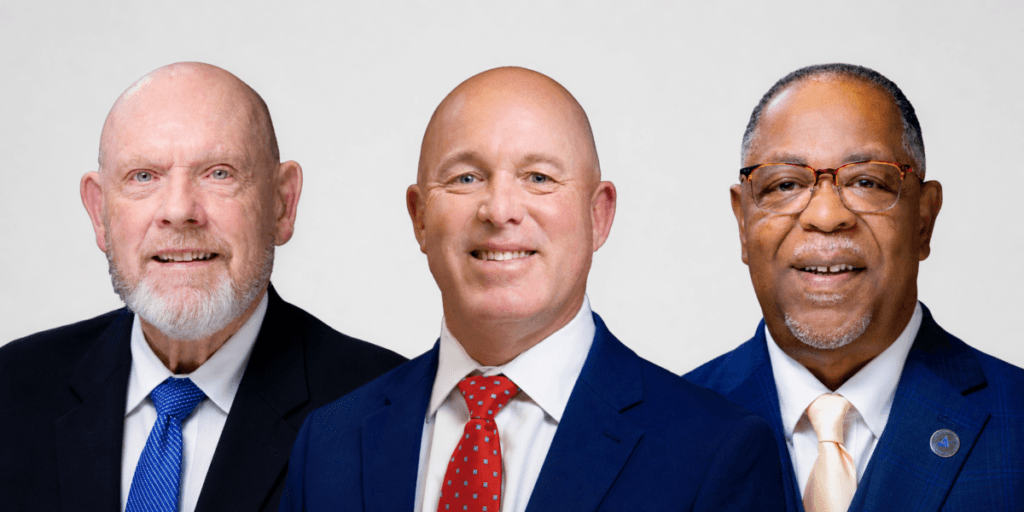
File image of Rappahannock Electric Cooperative directors Eugene “Gene” L. Campbell Jr., Randy Thomas and Sanford Reaves Jr. More than 16,500 Rappahannock Electric Cooperative (REC) member-owners participated in the 2026 director elections by designating their proxy or joining the virtual Annual Meeting on Aug. 5.
Member-owners elected three directors to REC’s Board of Directors:
• In Region IV, Sanford Reaves Jr. was re-elected. Region IV includes Culpeper and Orange counties.
• In Region V, Randy Thomas was re-elected. Region V includes Spotsylvania County.
• In Region IX, Eugene “Gene” L. Campbell Jr. was re-elected. Region IX includes Essex, King and Queen, and King William counties.During the Annual Meeting, REC President and CEO John D. Hewa and Board Chair Christopher G. Shipe reviewed the Cooperative’s work to provide safe, reliable, affordable and sustainable energy solutions while preparing for continued growth across its 22-county service territory.
Hewa highlighted REC’s ongoing grid investments, including major reliability projects, pole replacements, right-of-way maintenance and the use of drones and other technology to identify equipment concerns before they cause outages. He also discussed REC’s focus on affordability through efficient operations, careful cost management and long-term investments that support reliable service as well as member-focused programs like the Summer Savings Plan.
“Delivering safe, reliable electricity is our most fundamental responsibility,” Hewa said. “We take action throughout the year to strengthen our electric system before problems occur.”
REC leaders also shared updates on the Cooperative’s approach to growth, including new economic development projects and large energy users. Hewa emphasized that REC is using rates, business models and other safeguards intended to ensure the costs and risks of serving large loads are managed fairly and not shifted to existing member-owners.
Shipe thanked member-owners for participating in the election process and underscored the role they play in Cooperative governance.
“Our director elections are democracy in action,” Shipe said. “The directors you elect will represent you and help ensure that your interests remain at the center of every decision made by this Cooperative.”
Full election results and video from the 2026 Annual Meeting are available at myrec.coop/annualmeeting.
About Rappahannock Electric Cooperative
Serving more than 185,000 connections across portions of 22 Virginia counties, REC is a pillar in its communities, with over 18,000 miles of power lines extending from the Blue Ridge Mountains to the Chesapeake Bay. For more information about REC, please visit www.myrec.coop. Follow REC on Facebook, X, Instagram, LinkedIn and YouTube
What candidates have planned for Virginia’s coast could decide a key congressional race

Dominion Energy installed two test turbines to generate power 27 miles off the coast of Virginia Beach, seen here in 2021, as a precursor of the Central Virginia Offshore Wind Project, largest offshore wind project in the United States. (Photo courtesy Dominion Energy)
This article originally appeared on Inside Climate News, a nonprofit, non-partisan news organization that covers climate, energy and the environment. Sign up for their newsletter here.
With Virginia’s Aug. 4 primaries in the rearview mirror, the ballot is set in one of the nation’s most competitive congressional districts.
In the state’s second congressional district, Republican incumbent Jen Kiggans will fight to hold her seat against former U.S. Rep. Elaine Luria in a district that includes Virginia Beach and Hampton Roads, and abuts Norfolk. The Cook Political Report describes VA-2 as a swing seat.
In recent years, the area has faced severe blue-sky flooding and land subsidence from storm surges and extreme weather. It’s also adjacent to the Coastal Virginia Offshore Wind (CVOW) project, projected to power 660,000 homes once complete, according to operator Dominion Energy.
“We are undoubtedly one of the most impacted communities in the United States when it comes to climate change impacts,” Jay Ford, the Chesapeake Bay Foundation’s Virginia policy manager, said.
Since both Luria and Kiggans come from Navy backgrounds, reflective of the area’s proximity to the sprawling Naval Station Norfolk, their positions on ongoing offshore wind projects, coastal mining and flooding concerns could influence the district’s voters, said John Kotcher, the director of George Mason University’s Center for Climate Change Communication.
“When we actually experimentally tested and showed voters different political candidates and isolated the effect of being pro-climate or not even mentioning climate at all, they found that on the whole, it’s a vote winner,” Kotcher said.
The George Mason Center for Climate Change Communication, in collaboration with the Yale Program on Climate Change Communication, found that 55 percent of people in Virginia’s second congressional district think global warming affects flooding. With this, 51 percent say they support building wind farms in the area, while offshore drilling remains a polarized topic in the district.
Kotcher and his team also found that two-thirds of voters in VA-2 feel climate change impacts their home utility bills and 51 percent believe it is affecting the cost of home insurance.
Energy concerns and bolstering the economy are top of voters’ minds, Kotcher said, and are a mainstay in both candidates’ platforms and track record.

Elaine Luria, seen here in 2026, is running to reclaim her seat representing Virginia’s 2nd Congressional District. (Photo courtesy campaign) Luria, who held the seat from 2019 to 2023, told Inside Climate News that climate change poses both an economic and national security risk to the region because of Hampton Roads’ reliance on the Chesapeake Bay and rising energy prices across the state.
“When I’m elected again I’ll continue to lead efforts to combat the economic and national security impacts of climate change on our local community, invest in energy projects that create jobs and lower prices, and protect our clean air and water,” she said in a statement to Inside Climate News.
In 2021, Luria launched the congressional Offshore Wind Caucus to improve and invest in offshore wind technology and its workforce. She has voiced strong support for the CVOW project, the largest offshore wind project in the United States, located off the shore of Hampton Roads. Luria has said in the past that she supports the CVOW for clean, renewable energy, because it will lower energy costs, and continue to create good-paying jobs in the region.
Luria was a member of the New Democrat Coalition Climate Change Task Force that strongly opposed offshore drilling practices. She previously voted in favor of the Coastal and Marine Economies Protection Act in 2019 to block new offshore drilling in the Atlantic and Pacific coasts.
Like Luria, Kiggans has supported the construction of the CVOW because it will create local jobs and provide critical power grid upgrades for the Naval Air Station Oceana in Virginia Beach.
On her campaign website, Kiggans said she supports “common-sense solutions regardless of party that will help us ensure the health and prosperity of our treasured natural resources.” Her campaign did not provide a comment ahead of publication.

U.S. Rep. Jen Kiggans, R-Virginia Beach, speaks at a rally for presidential candidate Donald Trump on June 28, 2024 in Chesapeake. (Photo by Charlotte Rene Woods/Virginia Mercury) Trump attempted to pause construction on the CVOW in January, and in response Kiggans joined a group of House Republicans to send a letter denouncing the move and demanding an explanation from the administration rooted in fact.
Luria told the Associated Press that Kiggans’ attempts to advocate for offshore wind projects to the Trump administration “did nothing” and has been vocal against Kiggans’ actions to protect the CVOW, saying the letter was futile against the administration’s actions.
In September 2024, Kiggans introduced the Bolstering Ecosystems Against Coastal Harm (BEACH) Act, which “aims to protect Virginia’s coastline by approving new, expanded maps under the Coastal Barrier Resources Act (CBRA).” The bill passed the House unanimously. Another bill that sought to expand the National Flood Insurance Program failed to pass through committee.
Kiggans has yet to openly criticize the Trump administration’s most recent plans for coastal mining, but she has prioritized resilience projects and studies.
“Jen Kiggins is probably not going to win over too many votes by being soft on her opposition to offshore drilling,” Kotcher said.
The League of Conservation Voters gave Kiggans an 11 percent lifetime record of pro-environment votes in Congress. She has only had one pro-environment vote in the House this year, according to the organization, and she is currently endorsed by the ClearPath Action Fund, an organization that supports conservative lawmakers to push “conservative policies to accelerate American energy innovation.”
Luria has been endorsed by the League of Conservation Voters and has a 97 percent lifetime score from the organization. She only had three anti-environment votes in her tenure in the House, according to the League of Conservation Voters, and has secured endorsements in the past from Sierra Club and the BlueGreen Alliance. The two groups have yet to publicly endorse her campaign this election cycle.
Other local organizations have also highlighted issues they want the candidates to address.
Leaders at the Elizabeth River Project, a nonprofit dedicated to restoring the health of the Elizabeth River flowing near Hampton Roads, cannot formally endorse a candidate in the race because they are a 501(c)(3) organization, but hope the winning candidate will direct attention to the preservation of the Hampton Roads ecosystem as flooding and land subsidence continue to worsen.
“It’s a resource that we all need to take care of, and that goes to our residents, our local business, our military, and our legislators at the you know city, state, and federal levels,” said Lacy Shirey, the organization’s executive director.
Along with educational programs, the Elizabeth River Project also helps construct living shorelines on residential properties to give homeowners resilient methods to filter water, increase native plant populations and mitigate erosion. For that, they often rely on federal grants and contracts with local governments.
Hampton Roads and the greater Norfolk area have a relationship with the water unlike any other contested congressional districts this election cycle, said Ford. The district’s reliance on the Chesapeake Bay for aquaculture and its potential for offshore wind projects are key priorities that Ford and the Chesapeake Bay Foundation want to see considered.
“As we look to the congressional races, we hope that both of the candidates are taking that issue extremely seriously, as it could have tremendous economic impacts on our clean water industries,” Ford said.
The Chesapeake Bay Foundation wants to see Virginia transition to renewable energy to bolster the state’s already-stressed energy grid, and opposes seabed mining proposals that could have impacts on their aquaculture industry.
Both Shirey and Ford highlighted community concerns around potential federal removals of oyster reef protections that would open the bay to harvesting the population of oysters they fought for decades to restore.
“They have a huge benefit both to the water quality as well as the economic development side, and we are extremely nervous about this proposal to open up what has really become kind of a community asset in helping clean up people’s waters and drive the economy,” Ford said. “We hope that’s something that gets lifted up during this congressional campaign, and it’s something we’ll certainly be looking to the next member to show leadership on.”
Flood prevention remains a priority for the district as more severe storms hit their coast, Ford said. Storms, such as one on Aug. 4 that caused flash flooding, continue to take their city by surprise. Ford recounted seeing cars flood, people on kayaks at road intersections and even citizens jet skiing through their own streets.
“What we hear from partners, from local government to state agencies to other NGOs to just the average citizens, is we have to do something about this flooding,” Ford said. “The state has committed significant resources, but we are absolutely looking to the federal government and whoever the next member of Congress is to be a national leader on this.”
This story has been updated to reflect that Virginia’s second congressional district abuts Norfolk.
This post was originally published on Virginia Mercury.
Va. resident seeks answers from state education superintendent over genocide definition
A Virginia resident is asking a Prince William County district court to order the state’s superintendent of public instruction to demonstrate how the Virginia Department of Education defines the term “genocide” in the state’s K-12 history curriculum.
Prince William resident Gene Sokolowski filed a FOIA lawsuit in his county district court, alleging that Superintendent of Public Instruction Jenna Conway of the Virginia Department of Education could not identify the source material supporting the definition used in statewide history and social science standards, designed to ensure students master key subjects before graduation.
Sokolowski, a Polish-American, alleges that the state’s history standards incorrectly define groups that can be targeted for genocide, diverging from the 1948 Genocide Convention.
According to the petition, Sokolowski requested on Feb. 8 all records that “identify, cite, reference, or describe the source for the definition of the four victim groups of genocide as ‘racial, political, religious, or cultural.’”
Sololowski expressed concern that students are being taught a version of history lacking an authoritative source and one that’s not aligned with international law.
“I submit that it’s an objective assessment that there’s a deliberate effort to avoid mentioning the Genocide Convention,” said Sokolowski.
The Genocide Convention was adopted by the United Nations in 1948 and defines genocide as an international crime that member nations must avoid and prosecute. The treaty was spurred by World War II and the Nazi’s mass slaughter of Jewish people during the Holocaust.
“Genocide means any of the following acts committed with intent to destroy, in whole or in part, a national, ethnical, racial or religious group,” the treaty reads, followed by a list of eligible acts, including killing and seriously harming members of the groups.
“One of the reasons, obviously, would be that if (the UN definition) were included in the curriculum, students would immediately see that it conflicts with the definition of the four victim groups that were previously included by the department. And, by the way, that has been in the standards since 2008.”
Under Virginia’s History and Social Science Standards of Learning, specifically World History and Geography II standard WHII.12a, students are directed to apply history and social science skills to explain global changes during the late 20th and early 21st centuries.
Students must learn to identify modern-era genocides and crimes against humanity, including but not limited to Mao’s Cultural Revolution, the Stalin regime, atrocities in Armenia, Cambodia, Darfur, and Rwanda, Fidel Castro’s repressive authoritarianism in Cuba, and human rights abuses against China’s minority Uyghur population.
The teacher’s guide for this standard also states that The Holocaust “was an example of a genocide, a state-sponsored, systematic, and purposeful destruction of a racial, political, religious, or cultural group.”
After requesting a seven-day extension, the agency cited a cost estimate of $1,012 for the records Sololowski requested, which he paid.
On May 19, VDOE sent Sololowski 30 files labeled as “administrative materials such as rationale forms, public comments, meeting minutes, and other documents.”
Sololowski’s petition stated these documents were “unrelated” to the source of VDOE’s genocide definition or did not describe the source for VDOE’s victim group categories.
The petition also noted that VDOE did not produce the requested source record, did not invoke any FOIA exemption, nor did it state whether the record exists, as required by state law.
“VDOE did none of these,” Sokolowski wrote in the petition, “Instead, it produced a data dump of irrelevant documents, which does not satisfy FOIA.”
In a phone interview before his Aug. 11 hearing, Sokolowski explained that he tried to gain more transparency via FOIA after over four years of unsuccessful efforts to lobby state officials for curriculum corrections.
In 2023, after a lengthy process that faced criticism and required multiple revisions, the agency and the Board of Education adopted updated history standards. The instructional guides were added in 2025.
Sokolowski is asking the court to order VDOE to provide the record showing where it obtained its definition of genocide victim groups or officially confirm that no such record exists. He is also requesting that VDOE reimburse him $830 in FOIA fees and any other relief deemed appropriate.
The changed genocide definition has broader implications for educators and students, Sokolowski said.
“The teachers and students have been misled by this, and the point here is this is a fundamental misrepresentation. This is not a minor wording difference,” he added.
Tuesday’s hearing was continued until Sept. 8 because the Office of the Secretary of the Commonwealth, which handles service requests, has yet to respond to the service.
Sokolowski filed the request for service with Prince William General District Court, which sends out the services, on July 1. However, a clerk told Sokolowski that the service was not sent to the secretary’s office until July 27, and again on July 28 after it was returned.
The clerk, who spoke with Sokolowski on Tuesday, was unable to confirm whether the second attempt to serve the state secretary was successful.
Conway and the Virginia Department of Education did not respond to requests for comment on the case or Sokolowski’s FOIA.
This post was originally published on Virginia Mercury.
Albemarle County Student to Represent Virginia on NRECA Youth Leadership Council

Noreen Ndonde, a Rappahannock Electric Cooperative (REC) Youth Tour student from Albemarle County, introduced herself as Virginia’s Youth Leadership Council representative at the 2026 National Rural Electric Cooperative Association Youth Tour. Noreen Ndonde, a Rappahannock Electric Cooperative (REC) Youth Tour student from Albemarle County, has been selected to represent Virginia on the National Rural Electric Cooperative Association’s (NRECA) Youth Leadership Council.
The Virginia, Maryland & Delaware Association of Electric Cooperatives selected Ndonde for the yearlong leadership program, which brings together students who demonstrate leadership potential, strong communication skills, community involvement and an interest in serving others.
“We are thrilled that Noreen has taken on this important role,” said Casey Hollins, Managing Director – Communications and Public Relations. “Her selection is a proud moment for the Cooperative and a reminder that opportunities for young people can strengthen an entire community.”
As Virginia’s Youth Leadership Council delegate, Ndonde will participate in leadership development, public speaking and advocacy activities while expanding her knowledge of the energy industry and the cooperative business model. Her term includes additional leadership training in Washington, D.C., and virtual workshops throughout the year.
Ndonde said the opportunity is especially meaningful because leadership has long been important to her and she believes the experience will help her better serve her community.
“I’m really looking forward to continuing to grow my leadership skills while working with other leaders from different states and diverse backgrounds,” Ndonde said. “I’m excited to learn from people with experiences and perspectives that are different from my own, build meaningful connections and become a stronger leader through those experiences!”
Ndonde’s selection was announced during NRECA’s 2026 Youth Tour, held June 15-19 in Washington, D.C. Ndonde represented REC alongside Lincoln Stuart of Culpeper County, Maia Parks of Frederick County and Adrian Keyser of Spotsylvania County.
REC selected the four students from applicants across its service territory. They joined more than 1,800 students representing electric cooperatives nationwide to learn about government, U.S. history, community engagement and active citizenship.
About Rappahannock Electric Cooperative
Serving more than 185,000 connections across portions of 22 Virginia counties, REC is a pillar in its communities, with over 18,000 miles of power lines extending from the Blue Ridge Mountains to the Chesapeake Bay. For more information about REC, please visit www.myrec.coop. Follow REC on Facebook, X, Instagram, LinkedIn and YouTube.
Beat the Heat – Save on Your Energy Bill With These Tips

File image of suburban house exterior with central air-conditioning unit, windows, lawn and landscaping on a sunny summer day. As temperatures climb across the region, Rappahannock Electric Cooperative (REC) reminds members that a few simple changes can make a big difference, not just for comfort, but for your energy bill. With summer heat in full swing, now is the perfect time to take stock of your home energy use and find easy ways to use less.
Whether you’re looking to trim your monthly bill or reduce your energy footprint, REC has you covered with practical tips designed for real life in your home.
Keep Cool Smarter
Your cooling system is likely your biggest energy expense in the summer months. A few smart habits can go a long way:
- Set your thermostat to 78°F or the highest comfortable setting when you’re home and raise it several degrees when you’re away. Every degree of cooling adds roughly 3% to your cooling costs.
- Use a programmable or smart thermostat to automatically adjust temperatures based on your schedule, so you stop cooling an empty house.
- Run ceiling fans counterclockwise in summer to create a wind-chill effect. Just remember: fans cool people, not rooms, so turn them off when you leave.
- Schedule HVAC maintenance annually and replace air filters every one to three months. A dirty filter makes your system work harder and cost more.
Seal Out the Heat
A well-sealed home stays cooler naturally, putting less strain on your AC:
- Check weatherstripping and caulk around doors, windows and other openings to prevent cool air from escaping and warm air from sneaking in.
- Add insulation in your attic if needed. Heat rises, and in the summer, it pushes right down into your living space without adequate insulation to stop it.
- Close blinds and curtains during the hottest parts of the day to block out solar heat gain from south- and west-facing windows.
Cut Energy Use Room by Room
Small changes throughout your home add up fast:
- Switch to LED lighting throughout your home. LEDs use up to 75% less energy than traditional incandescent bulbs and they generate far less heat.
- Wash clothes in cold water and run full loads in both your washer and dishwasher. Heat-generating appliances can add significant load and cost during peak hours.
- Unplug electronics and chargers when not in use. Many devices draw “standby power” even when they’re off, quietly adding to your bill all summer long.
- Use your oven less: opt for grilling outdoors, slow cookers or microwaves to keep indoor heat and your AC workload down.
Take Advantage of Savings Programs
REC members can also sign up for the Summer Savings Plan, a demand-response program that helps reduce strain on the electric grid during peak periods while helping members save on their bills. Enrollment is quick and easy, and your comfort stays in your hands.
To explore more energy-saving tips, enroll in the Summer Savings Plan, and discover tools and resources to help manage your energy use, visit myrec.coop/save.
About Rappahannock Electric Cooperative
Serving more than 185,000 connections across portions of 22 Virginia counties, REC is a pillar in its communities, with over 18,000 miles of power lines extending from the Blue Ridge Mountains to the Chesapeake Bay. For more information about REC, please visit www.myrec.coop. Follow REC on Facebook, X, Instagram, LinkedIn and YouTube.
Trump urges shift in childhood vaccine recommendations, calls for splitting up MMR vaccine
WASHINGTON — President Donald Trump on Monday signed a sweeping executive order that aims to reshape guidance surrounding childhood vaccines, standing alongside Health and Human Services Secretary Robert F. Kennedy Jr., and was met with immediate pushback.
The order — which calls on federal programs and funding to “support maximal parental choice over childhood vaccines” — came as Trump continued to erroneously connect vaccines with autism during the White House event and his administration has sought to de-emphasize childhood vaccinations’ importance.
“This updated recommendation finally aligns the United States with other advanced and developed nations around the world,” Trump said during a signing ceremony in the Oval Office, joined by Kennedy, a longtime opponent of vaccines, as well as National Institutes of Health Director Jay Bhattacharya and “Make America Healthy Again” advocate Jayme Franklin, also founder and CEO of The Conservateur lifestyle brand, and others.
“More importantly, it aligns us with common sense and knowledge,” Trump added.
What the order can legally accomplish was unclear as it’s up to states to decide which recommendations to follow.
GOP Sen. Bill Cassidy of Louisiana, a physician and chairman of the Senate Health, Education, Labor and Pensions Committee, rebutted the new order on social media. “I’m a doctor. This executive order is wrong. The President does not have the expertise to make these changes,” Cassidy said. “Vaccines are overwhelmingly safe. Vaccines are effective. Vaccines DO NOT cause autism.”
Splitting up MMR vaccine
The order recognizes “gold standard childhood vaccine recommendations” and divides the childhood immunization recommendations into three categories.
The order recommends all children receive immunizations for 11 diseases, including for “measles, mumps, rubella, diphtheria, tetanus, pertussis, polio, Haemophilus influenzae type B, pneumococcal disease, human papillomavirus, and varicella.”
Immunizations recommended for certain high-risk groups or populations include: “respiratory syncytial virus monoclonal antibodies, hepatitis A, hepatitis B, meningococcal B, meningococcal ACWY, and dengue.”
The order also lists “hepatitis A, hepatitis B, rotavirus, meningococcal disease, influenza, and COVID-19” as immunizations “based on shared clinical decision-making.”
Trump’s executive order also calls for splitting up the combined measles, mumps and rubella, or MMR, vaccine into three separate single-disease shots and recommends that “all childhood immunizations should be administered at separate medical visits.” Such single-disease shots are not currently available in the United States, White House officials acknowledged on a background call, but said they believe work will occur in the private sector to make that option eventually available.
“For example, at one year, you should have five separate visits for vaccines rather than getting them all in the same day,” Trump said during the signing ceremony.
Trump said the order also directs the attorney general “to advance legal challenges against states that violate children’s rights to religious or medical vaccination exemptions.”
‘Uncertainty and fear and confusion’
Meanwhile, Dr. Andrew Racine, president of the American Academy of Pediatrics, told reporters Monday during a press briefing after the Trump event that “the only thing that I can see is going to happen as a result of the announcement from today is an injection of greater amounts of uncertainty and fear and confusion, when there doesn’t need to be any of that.”
Many states rely on the AAP, rather than the federal government, for guidance surrounding childhood vaccines, according to the health research organization KFF, following earlier moves on vaccines during the Trump administration.
Rep. Frank Pallone, ranking member of the House Energy and Commerce Committee, blasted Trump’s order, saying the effort “lets political appointees attempt to overrule decades of peer-reviewed science and dictate vaccine schedules to American families,” in a statement.
The New Jersey Democrat added that “parents deserve accurate, trusted medical guidance, not a White House-curated list designed to rubberstamp Secretary Kennedy’s radical anti-vaccine agenda.”
Democrats from a coalition of states filed suit earlier this year over Trump administration changes to the federal vaccine guidelines, as did medical groups, but White House officials said Trump’s recommendations were not related to the litigation and were within his authority.
This post was originally published on Virginia Mercury.
Virginia tourism generates $3.4B in state, local taxes
(The Center Square) – Tourism generated about $3.4 billion in state and local taxes in Virginia last year as visitors spent a record $36.2 billion across the Commonwealth.
Local governments accounted for about $2.1 billion of the tax impact, while $1.36 billion went to the state, according to an economic impact analysis by Tourism Economics for the Virginia Tourism Corporation.
The report estimates Virginia households would have had to pay an additional $1,020 each in state and local taxes to replace the revenue generated by visitor activity.
About $2.6 billion of the tax impact came directly from visitor activity. Another $812 million came from indirect and induced economic activity tied to tourism.
Property taxes accounted for the largest share of the estimated tax impact, at about $1.37 billion, with nearly all of that going to local governments. Sales taxes brought in just over $1 billion, followed by excise taxes and fees, personal income taxes and lodging taxes.
Visitor spending increased 3.1%, or about $1.1 billion, from the previous year, marking the fourth consecutive year of growth.
Food and beverage spending increased 5.7% to $10.5 billion, while recreation and entertainment spending rose 4.9% to nearly $4.8 billion.
Visitors also spent $10.5 billion on transportation, $6.8 billion on lodging and nearly $3.7 billion at retail businesses.
Virginia recorded 117.1 million visitors in 2025, up 2.2% from the previous year. That included a record 46.6 million overnight visitors.
Domestic travel drove the increase, while international visitation declined 11.1%. International visitors spent an average of $1,616 per person, compared with $300 for domestic visitors.
Tourism directly supported nearly 232,000 jobs and generated $10.6 billion in personal income. When the broader economic impact is included, those figures rise to more than 332,000 jobs and $16.7 billion in income.
Visitors spent an average of $99 million per day in Virginia.
Tourism Economics calculated the estimates using visitor surveys, industry and government data and an economic model that measures direct spending along with supply-chain and employee spending tied to tourism.
Locality-specific economic impact data for 2025 is expected to be available around Labor Day, according to the Virginia Tourism Corporation.
This post was originally published on The Center Square.
The main lesson from DEQ’s groundwater report: Va. must budget to live within environmental limits
The timing of the release of the Virginia Department of Environmental Quality’s report on groundwater availability last month was suspicious, given that it was completed in January but not made available to lawmakers or the public until several months after the General Assembly’s legislative session. The science presented in the report is impressive, while its findings are alarming.
Most of the attention it has received relates to data centers, but they weren’t the report’s main focus. It’s really about the importance of living within environmental limits. This lesson applies both to water and energy use.
Virginia senators request special session to act on ’deeply alarming’ groundwater report
First for the shocking news: Just one industry – and two individual plants – have disproportionate responsibility for groundwater depletion in eastern Virginia.
The largest single user of groundwater in the region is the Franklin paper mill owned by International Paper, drawing 15.3 million gallons of groundwater a day in 2024. Following close behind is the second largest user, Smurfit WestRock’s paper mill at West Point, which pumped 13.6 million gallons a day that same year.
Taken together, these two paper mills account for “43% of the total reported groundwater withdrawal across all aquifers and use types,” according to the DEQ. Reported groundwater withdrawals include those from municipal water systems, agriculture, and industry, but do not include residential wells, which are also a major draw on eastern Virginia’s groundwater.
Based on the EPA’s estimate that the average American consumes 82 gallons of water per day for household use, the combined groundwater withdrawn by these two industrial plants would sustain 354,000 people daily.
As another point of comparison found in the report: The third largest individual user of groundwater in Eastern Virginia is the utility that provides water to Chesapeake, which withdrew an average of four million gallons a day from the aquifer in 2024. This is several times less water than the amount withdrawn by either the Franklin or West Point paper mills, and it supplies H2O to over 250,000 Chesapeake residents, not just industry, each day.
These two industrial plants have been around for a long time. The Franklin paper mill was built in 1938 and the West Point facility first came online in 1914. They have used so much groundwater for so long that, according to the DEQ report, they have “altered the regional hydraulic gradients such that groundwater now tends to flow from the periphery inward, towards the persistent cones of depression centered on Franklin and West Point.”
These withdrawals, along with current and historic water pumping from across the Virginia coastal plain, combine to deplete groundwater levels while increasing land subsidence and saltwater intrusion.
This isn’t good. But things used to be even worse.
The Franklin paper mill, in fact, used to withdraw twice as much water each day before it closed down in 2010. When that happened, according to the report, groundwater levels rebounded. When the mill was repurposed and reopened in 2012, the levels of water in Virginia’s coastal plain aquifer system stopped increasing, but they at least remained stable.
Due to population growth and increasing industrial uses of water, the DEQ expects underground water levels to begin decreasing again in the near future.
This brings us to data centers. The report finds that, because underground water is limited, “it appears unlikely that a data center with evaporative cooling technology (or any comparable water user) would find a reliable, sufficient groundwater supply anywhere in the (Virginia Coastal Plain).”
DEQ study throws cold water on data center development east of I-95
But the implications for policy are much broader. The main lesson from the DEQ report is that our environment is finite. We have always known this at an abstract level. But the report makes this knowledge very concrete: There is only so much groundwater. If we go past a certain point, we damage the aquifer’s ability to store water in the future and risk contaminating drinking water supplies with salt.
The idea of a water budget is helpful. The available water in our aquifer system is like a bank account; if we manage things right, the amount we spend will be replenished by our income.
So how do we want to allocate our limited funds? Do we really want to use a disproportionate amount of our precious water on two paper mills, one making absorbent paper fluff for diapers (the Franklin mill), the other making kraft paper for packaging (the West Point facility)?
The budget idea is also useful for data center and energy policy. Some hyperscale data centers use huge amounts of water for evaporative cooling, but not all do because there are different ways to cool the technology. Each and every data center campus is, however, a massive electricity hog.
Just as one paper mill can use as much water as tens of thousands of people, a single large data center campus can use as much electricity as all the households in a small city, or even a small state. For this reason, we must not only budget for water, we must also budget for carbon.
More than half of electricity consumed in Virginia comes from fossil fuels, mostly natural gas, which produces carbon dioxide when burned. But there is a finite amount of our shared atmosphere that we can fill with carbon before it pushes us into very dangerous levels of global warming.
If we only have so much carbon that we can “spend,” we as Virginians and as a nation must make wise decisions about energy use. Ever-increasing numbers of new data centers will surely break the bank.
We here in Virginia can have very good lives while remaining within environmental limits, but we can’t have everything. Maybe we can find alternative ways to make diapers and use less packaging in order to preserve our aquifers and more judiciously use water resources? Maybe Virginia doesn’t need any more data centers beyond those already being built?
Environmental science, like that found in the DEQ’s eastern Virginia groundwater report, can inform us of how close we are to exceeding environmental limits. But Virginia’s state lawmakers, along with an informed and active public, will determine whether or not we live within those bounds.
This post was originally published on Virginia Mercury.
Voters will decide reproductive rights’ future four years after Roe and more Va. headlines
• “Amending Virginia: Voters will decide reproductive rights’ future four years after Roe.” — VPM News
• “Chiefs’ Eric Bieniemy returns to practice after wife’s shooting at their Virginia home.” — ABC News
• “Virginia communities race to get 1% sales tax for school construction on the ballot.” — Cardinal News
• “Unemployment ticks up in three Virginia metro areas.” — Radio IQ/WVTF
• “Late frost leaves Virginia peach crop uneven, but local flavor still shines.” — Smith Mountain Eagle
This post was originally published on Virginia Mercury.
More states ban child marriage, including Virginia, though it’s still legal in most of the US
After authorities rescued 16 children last month who had been confined to a single room in a home in rural Ohio, attention turned to their mother, who had been 15 and pregnant when she married their father.
The child endangerment case has recharged a national conversation around child marriage, which is defined by the United Nations as any marriage involving someone under age 18.
Earlier this year two Ohio state senators — one Democrat, one Republican — introduced a bill that would require Ohio residents to be at least 18 to get married. Current state law allows 17-year-olds to marry with court approval. The bill passed out of a Senate committee in June but didn’t get a full Senate vote before lawmakers adjourned for the summer.
Until the last decade, marriage under age 18 was legal in all 50 states. In 2018, Delaware and New Jersey became the first states to outright ban it. More states followed: Pennsylvania, Minnesota, Rhode Island, New York, Massachusetts, Vermont, Connecticut, Michigan, Washington, Virginia, New Hampshire, Washington, D.C., Maine, Oregon, Missouri and most recently, Oklahoma, have banned it since 2020.
Vinton County children endangerment case increases interest in bill to ban child marriage in Ohio
In May, Oklahoma passed a Republican-sponsored bill that removed all exceptions for a person under 18 to marry.
“Oklahoma children must be able to grow up free from coercion and exploitation, and it is our duty to guarantee those protections are enacted and enforced,” said Oklahoma state Sen. Warren Hamilton, a Republican who sponsored the bill, in a May statement.
Hamilton said the law protects minors from forced marriage and helps prevent child trafficking and exploitation, ensuring “that no minor, even those who are close to adulthood, is placed in a marriage that puts their safety or well-being at risk.”
In 33 states, marriage under 18 is still allowed with varying restrictions, such as requiring parental consent or court approval for marriage involving someone aged 15-17. Only three states — California, Mississippi and New Mexico — do not specify a minimum age for marriage.
As of 2021, the most recent year for which data is available, Nevada, Idaho and Utah had the highest rates of child marriage, according to a 2025 study by Unchained At Last, a nonprofit that advocates for the end of child marriage. Nevada’s rate — 6 per 1,000 minors — was nearly twice that of Idaho and Utah. Maine, New Hampshire and Rhode Island had the lowest rates, at less than 0.2 per 1,000 minors. The U.S average was more than 2 per 1,000 girls and 0.31 per 1,000 boys.
Between 2000 and 2021, nearly 315,000 children under age 18 were legally wed, according to the group. Most of those were girls wed to adult men.
Advocates for ending child marriage point to research that has found lifelong consequences for those involved, including greater vulnerability to sexual and domestic violence, worse health outcomes, higher likelihood of dropping out of high school, greater risk of poverty and higher divorce rates.
A 2022 study from researchers at McGill University found that the proportion of child marriages that met the definition of a sex crime varied across states from 1% to more than 50%.
Oklahoma’s bipartisan bill sailed through the Senate earlier this year but encountered fierce opposition in the House, where it passed by a single vote.
Some Republican lawmakers argued that the measure amounted to government overreach and would increase the number of babies born out of wedlock. One Oklahoma Republican lawmaker who opposed the bill said it would take away parents’ rights to give permission for a teen to marry.
Republican lawmakers in states including Missouri have made similar arguments. One Missouri Republican legislator said he believed banning child marriage would result in more abortions, reported the Missouri Independent.
Oklahoma Democratic state Rep. Michelle McCane told her colleagues earlier this year that she gave birth at 15 and that her life would have been far different if her mother had let her marry the person she “picked in eighth grade.” She pointed out that married minors can’t legally seek a divorce or stay at a domestic violence shelter.
“I don’t know about you all, but please think back to who you picked in eighth, ninth, 10th grade, and I think many of you would be very disappointed to be saddled with that person for the rest of your life,” McCane said.
Children under 18 typically lack the legal rights that give adults agency in a marriage, such as being able to file for divorce or to file court actions in their own name.
While Republicans have been divided recently on the issue, underage marriage bans have drawn criticism from liberal groups in the past. The American Civil Liberties Union and Planned Parenthood opposed a 2017 California bill to ban marriage before age 18, arguing it intruded on the fundamental rights of marriage.
This week, a bill in California that would raise the minimum marriage age to 18 with no exceptions is headed to a vote in the state Senate.
One of the advocates pushing for the bill this year in California is Courtney Stodden, a model and singer who, at age 16, married a 51-year-old actor.
“I cannot rewrite my childhood, but I can spend the rest of my life helping rewrite the future for children who deserve more freedom, more protection, and more choices than I had,” Stodden wrote on social media in a July post supporting the California bill.
Stateline reporter Anna Claire Vollers can be reached at [email protected].
This story was originally produced by Stateline, which is part of States Newsroom, a nonprofit news network which includes Virginia Mercury, and is supported by grants and a coalition of donors as a 501c(3) public charity.
This post was originally published on Virginia Mercury.
Amid major federal shifts, McMahon urges Va. universities to reform practices, restore public trust
As students prepare to return to class, U.S. Secretary of Education Linda McMahon is asking Virginia’s college and university presidents and governing boards to review how they operate and make changes, with a specific focus on whether universities are delivering affordable, high-quality education while maintaining free speech, academic standards, and accountability to the public.
McMahon wrote in a letter to leaders concerned that public trust in American higher education has “reached record lows” and asked them to publicly commit to reforms involving free speech, admissions, affordability, academic rigor, research security, and other issues.
How Va. leaders are working to strengthen and depoliticize public college governing boards
Higher education is currently undergoing significant reforms stemming from federal policy shifts engineered during McMahon’s tenure.
Virginia schools are navigating changes with student loans, college programs, accreditation, a shift to workforce-oriented education, and a federal crackdown on diversity, equity, and inclusion initiatives, most notably with investigations at the University of Virginia and George Mason University.
Ross Mugler, president and CEO of the Association of Governing Boards of Universities and Colleges, said the association supports increased accountability, but stressed institutional independence is paramount.
“Many of the priorities outlined in (the) letter from the Secretary of Education reflect shared goals across higher education. How those goals are achieved, however, is the sole purview of governing boards and institutional leaders exercising their fiduciary duties in alignment with their institution’s unique mission,” said Mugler, a longtime and former governing board member at Old Dominion University.
He added that the principles of board independence, institutional autonomy and mission-driven leadership have bolstered the U.S. system of higher education.
“It is vital that we protect these principles to ensure reforms are shaped by fiduciary responsibility and the long-term interest of our institutions and their students, not by political coercion,” Mugler said.
In her missive, McMahon said university leaders across the country have recognized the need to rebuild public confidence and trust, including Yale and Vanderbilt and Washington University, which were targeted by the federal education department for their admissions policies, DEI practices and alleged civil rights violations against certain students.
McMahon said university leadership must “seize this occasion to drive essential reforms—a process some began by adopting positions of institutional neutrality and improving policies related to campus protests.”
She asked universities to display their commitments to “rigorous teaching, pathbreaking research, and national service” on their websites by the end of the year.
“I encourage universities to respond concretely to these questions and provide full transparency to the American people,” McMahon said. “This forthright conversation with the American people is long overdue. And it is the essential first step toward rebuilding trust in the sector.”
Last spring, the Virginia Business Higher Education Council found that 90% of respondents in Virginia — both Democrats and Republicans — are proud of the colleges and universities in the commonwealth because they see a “strong connection” between the work on Virginia’s campuses, the prospects for the state’s economy to grow and for young people to succeed in the job market.
This post was originally published on Virginia Mercury.
Todd Blanche sworn in as attorney general after contentious Senate confirmation
WASHINGTON — Todd Blanche took the oath of office as U.S. attorney general at a brief ceremony in the Oval Office Monday, following the Senate’s narrow vote to approve his nomination as the nation’s top law enforcement official over the weekend.
Blanche, who served as acting attorney general and was President Donald Trump’s personal lawyer before joining the government, succeeds Pam Bondi — whom Trump ousted in April — as head of the Department of Justice. Trump announced Blanche as his pick to permanently lead the department in June.
U.S Circuit Judge Emil Bove, another of Trump’s former personal attorneys, administered the oath of office.
After the Senate voted, 50-49, to approve his nomination early Saturday morning, Blanche wrote on social media that he was “deeply honored by the trust and confidence President Trump has placed in me to lead the Department of Justice as our great nation’s 88th Attorney General.”
“To the dedicated public servants of the Department of Justice, thank you for your work each day to uphold the law and keep our country safe,” Blanche wrote.
Blanche’s nomination had drawn widespread concern and scrutiny from congressional Democrats, as well as some Republicans, over actions such as his role in establishing Trump’s “anti-weaponization fund.” The $1.8 billion Justice Department fund aimed to compensate those “who suffered weaponization and lawfare,” including many who faced prosecution related to the Jan. 6, 2021, attack on the U.S. Capitol.
Lawmakers of both parties have described it as a “slush fund,” and Blanche has stated that it will not move forward under his tenure as attorney general.
Asked if the fund has a future after an executive order signing ceremony Monday afternoon, Trump said that it “will be up to Todd Blanche.”
A contentious vote
In a vote early Saturday morning, every Senate Democrat voted against Blanche’s confirmation. Republican Sens. Lisa Murkowski of Alaska and Susan Collins of Maine broke ranks from their party and voted against him.
Blanche ultimately won over several holdout Republicans, including Sen. Bill Cassidy of Louisiana, who said Blanche had acknowledged his past “mistakes” and sought to halt the Justice Department fund. He also secured support from Sens. John Cornyn of Texas and Thom Tillis of North Carolina, both of whom are set to leave office after their terms end this January.
Speaking on the floor Friday evening before Blanche was confirmed, Republican Sen. Chuck Grassley of Iowa, the Senate Judiciary Committee’s chair, praised Blanche as a “tough, fair prosecutor dedicated to the rule of law.”
“Between his proven track record, his presentation in committee and the support he’s received from across the country, I am convinced that Mr. Blanche is the right choice to lead the Justice Department,” Grassley said. “A vote for Todd Blanche is a vote for the safety of the American people.”
Congressional Democrats quickly denounced Blanche officially taking over the department.
Rep. Jamie Raskin, a Maryland Democrat and ranking member of the House Judiciary Committee, blasted Blanche’s ascension as the nation’s top law enforcement official on social media earlier Monday afternoon.
“Republicans in Congress voted to turn Trump’s personal attorney, Todd Blanche, into Trump’s personal Attorney General,” Raskin wrote. “We need a DOJ committed to the rule of law, not the corrupt rule of a kleptocrat.”
This post was originally published on Virginia Mercury.
US Senate leaves town for recess after passing stopgap spending bill, blocking photo ID for voting
WASHINGTON — The U.S. Senate adjourned for its summer recess early Saturday after approving a stopgap spending bill but declining to advance legislation that would require photo ID for voting.
In a rare overnight session that began on Friday, senators trudged through a slew of measures, confirmed President Donald Trump’s nomination of Todd Blanche as attorney general and then departed the nation’s capital for the coveted August recess. The chamber is not expected to return to regular session until after Labor Day.
The Senate passed, 86-11, a major effort first proposed by the late GOP Sen. Lindsey Graham of South Carolina that would impose sanctions on Russian President Vladimir Putin, along with the country’s oligarchs and military leaders.
A bipartisan education bill — championed by GOP Sen. Susan Collins of Maine and Democratic Sen. Michael Bennet of Colorado — served as the vehicle for the Russia sanctions package.
Collins’ and Bennet’s bill would ensure that “early childhood educators can claim the same federal tax credit for out-of-pocket classroom supply purchases that is currently available to K-12 teachers,” per a press release.
Averting a shutdown
The Senate also passed a bipartisan measure on a 90-6 vote that would keep the federal government funded through Dec. 11. The House has passed a different version so the two would have to be reconciled.
Earlier in the day, senators had advanced the legislation, known as a continuing resolution, toward a final vote on another strongly bipartisan vote of 91-6.
Senators did not vote on a proposed blueprint that would unlock the complex budget reconciliation process and allow Republicans to move ahead on their third party-line bill.
Attorney general vote
The upper chamber also confirmed Blanche, the acting attorney general, to be the next U.S. attorney general.
Sen. Bill Cassidy of Louisiana marked the determinative vote amid GOP opposition from Collins and Sen. Lisa Murkowski of Alaska over Blanche’s bid, as well as the absence of Republican Sen. Mitch McConnell of Kentucky, who’s recovering from a health issue.
The Senate confirmed a batch of nominees earlier Friday, including Cameron Hamilton to serve as the next administrator for the Federal Emergency Management Agency, 51-47.
Voting and photo ID
The Senate failed to advance on a 52-46 vote a bill that would require a photo ID to vote in an election to federal office.
Related to the separate SAVE America Act, it was sponsored by Republican Sen. Jon Husted of Ohio. Sixty votes were required to move ahead on the measure, which was opposed by all Democrats voting.
Democrats have said in the past such a requirement would make it more difficult for all Americans to vote.
Sen. Mike Lee, R-Utah, a proponent of photo ID and the SAVE America Act who at one point had said he would hold up adjournment to obtain action, vowed afterward to continue pushing for it. “This fight’s not over. We’re just getting started,” he said.
Trump is an intense proponent of the SAVE America Act and urged the Senate to stay in town to pass it though Republican leaders have said repeatedly there are not 60 votes to do so. The SAVE America Act would require voters to show proof of citizenship when they register and a photo ID when they vote. Noncitizens are already barred from voting in state, federal and almost all local elections.
College sports
The Senate did not take a procedural vote before leaving town on a sweeping bipartisan bill that would set national standards for college athletes’ compensation.
GOP Sen. Ted Cruz of Texas and Democratic Sen. Maria Cantwell of Washington state — the top members of the Senate Commerce panel, which has jurisdiction over the matter — introduced the bill, with GOP Sen. Eric Schmitt of Missouri and Democratic Sen. Chris Coons of Delaware as original co-sponsors.
The bill underwent several changes after it was passed by the Commerce panel in June, and was able to ultimately garner the support of the formidable Big Ten and Southeastern conferences.
But the Congressional Black Caucus opposed the legislation in a statement earlier this week, noting that “at the very moment that Black political representation is under attack across the country, we will not be complicit in efforts to further exclude the interests of Black people by advancing legislation that will determine the economic future of Black athletes, their families, and their communities without their meaningful participation and engagement.”
President Donald Trump, who’s thrown his support behind the measure, urged the Senate earlier Friday evening to stay in town until the bill passes.
“Stop grandstanding, and try getting this done,” he wrote in a social media post.
This post was originally published on Virginia Mercury.
Virginia hemp businesses seek to block new THC rules
(The Center Square) – Seven Virginia hemp businesses are asking a federal judge to block new restrictions set to take effect Saturday, arguing the change will leave them with products they can no longer legally sell in the Commonwealth.
A hearing is scheduled Wednesday in Roanoke on their request for a temporary restraining order and preliminary injunction.
The lawsuit challenges a provision in Virginia’s new state budget that eliminates what is known as the 25-to-1 exception for hemp products.
Under current law, some hemp products can contain more than 2 milligrams of total THC per package as long as they contain at least 25 times as much CBD as THC.
That exception goes away Aug. 15. Hemp products manufactured or sold in Virginia will then be limited to 2 milligrams of total THC per package.
The restrictions were included in the state budget passed in June as lawmakers worked to avoid a government shutdown. The final budget package was approved without public committee hearings on the hemp changes, industry testimony or an opportunity for floor amendments.
The businesses argue the change gave them little time to adjust and will leave them with products that were legal when they were made or purchased but can no longer be sold in Virginia.
The lawsuit was filed July 31 in U.S. District Court for the Western District of Virginia by Northern Virginia Hemp & Agriculture and six other hemp businesses.
They argue the change violates their constitutional rights.
The businesses are asking U.S. District Judge Robert S. Ballou to stop enforcement while the case moves forward.
Ballou ordered expedited proceedings because the businesses are seeking emergency relief before the restrictions take effect.
The court has scheduled a hearing for 11 a.m. Wednesday.
Several businesses say they stand to lose significant amounts of inventory.
Northern Virginia Hemp & Agriculture says it has more than $735,000 in inventory that could become commercially worthless under the new restrictions, according to a sworn declaration filed by its owner.
Cypress Hemp II says about $1.43 million of its inventory is affected, while Pure Elkton Manufacturing says about $250,000 of its inventory is affected.
The figures were provided by the businesses in court filings.
The lawsuit names Gov. Abigail Spanberger, Attorney General Jay Jones, state agriculture officials, the Virginia Cannabis Control Authority and several Commonwealth’s Attorneys as defendants.
The other plaintiffs are Redfern Hemp Co., District Hemp Botanicals, Wellness Warriors and Simply Hemp.
This post was originally published on The Center Square.
Dominion-NextEra deal goes before Virginia communities
(The Center Square) – The proposed $67 billion combination of Dominion Energy and NextEra Energy is headed to communities across Virginia as the deal remains under review by state regulators.
Five public meetings are planned for September, giving Virginians an opportunity to ask questions and raise concerns about utility bills, reliability and other potential effects of the acquisition.
Lt. Gov. Ghazala Hashmi announced the Energy Costs Listening Tour Monday, the latest step in her push for greater scrutiny of the deal.
“An acquisition of this size and significance requires a thorough, transparent review,” Hashmi said. “Virginians deserve the opportunity to understand what this proposal could mean for their utility bills, their community, and our shared energy future.”
Stops are scheduled for Sept. 2 in Loudoun, Sept. 8 in Hampton Roads, Sept. 9 in Richmond, Sept. 14 in Charlottesville and Sept. 24 in Roanoke. Specific venues have not yet been announced.
Each meeting will include elected officials and energy experts, along with time for residents to ask questions and share concerns. Hashmi’s office said input gathered during the tour will help inform ongoing conversations about Virginia’s energy future and the review process.
The tour website also directs residents to the State Corporation Commission’s public comment process. Comments submitted directly to the commission become part of the official record in the merger case.
Hashmi has previously pushed for a broader examination of the acquisition. Before Dominion and NextEra formally filed their application, she urged regulators to require the companies to answer 64 additional questions covering customer rates, competition, financing, corporate governance and the potential benefits for Virginia customers.
Dominion and NextEra filed their joint application July 15. Under Virginia law, the SCC generally has 60 days after an application is deemed complete to issue a decision, with one extension of up to 120 days.
The companies have proposed $2.25 billion in bill credits for customers in Virginia, North Carolina and South Carolina over two years after the transaction closes. They have said the combination would improve access to capital, lower financing costs and support additional investment in generation, transmission and grid infrastructure.
The proposal has continued to draw scrutiny since the filing.
Gov. Abigail Spanberger moved last week to formally intervene in the SCC proceeding, giving her administration a direct role in the regulatory case.
This post was originally published on The Center Square.
Brace yourself for brutal, expensive campaigns in Va. congressional swing districts this fall
If you live in or near the media markets serving Hampton Roads, the Peninsula up to the Northern Neck and Richmond and its suburbs, prepare for the most acrid, expensive and desperate congressional campaigns you’ve ever endured.
Depending on how rancid the winds of current events blowing in from across the Potomac become, you could also see a comparable tooth-and-nail cage match in a wide swath of Southside from Charlottesville to the North Carolina border.
Expect it to be way over the top — candidates trying to make you believe that there’s no tomorrow if they lose — because that’s the dire mindset both parties take into this federal midterm, with control of the U.S. House of Representatives at stake.
The Democratic Congressional Campaign Committee and its counterpart, the National Republican Congressional Committee will flood those districts with media dollars. And opaque Super PACs that don’t disclose their donors will inundate voters with ads rife with hideously stretched truths and outright lies. Big-name proxies will be coming soon to a campaign event near you.
In some states, Democrats tired of the status quo nominated progressive, even socialist newcomers for House races. Virginia Democrats hued closer to the political center on Tuesday and went with more established names.
Virginia primary voters pick Mizusawa to face Warner, finalize key US House races
Two Virginia races in particular stand out as marquee contests that both parties consider critical to November’s existential battle for a ruling majority. By the time polls close at 7 p.m. on Nov. 3, campaign spending records will be obliterated in Virginia’s 1st and 2nd Congressional Districts and perhaps the 5th.
Virginia’s Senate race is not considered competitive. Democratic Sen. Mark Warner, our senior statewide elected official and the voluble ranking member of the Senate Intelligence Committee, is a prohibitive favorite to win his fourth term over little-known GOP challenger Bert Mizusawa.
Democrats are pinning their hopes for pickups on the 1st and 2nd. That’s not as ambitious as the gain of up to four of the five GOP seats in Virginia’s 11-seat delegation that Democrats envisioned in a mid-decade reapportionment scheme the courts voided in May.
The defunct gerrymander — a response to Trump-inspired purges of Democratic-held House seats in Texas and other MAGA-loyal states last year — would have left only southwestern Virginia’s indelibly “Fightin’ 9th” as the state’s lone GOP district.
In the 1st, Henrico County Commonwealth’s Attorney Shannon Taylor — runner-up to Jay Jones in last year’s Democratic attorney general primary — takes on Republican Rob Wittman, who first won the seat in a 2007 special election.
Taylor, a moderate, took 53% of the vote Tuesday over six other Democrats, including a Medicare-for-all progressive. Her district is split between rural, Republican-voting areas and Richmond’s Henrico and Chesterfield County suburbs that supported Kamala Harris over President Donald Trump in the 2024 presidential race.
In the Tidewater-based 2nd, former Congresswoman Elaine Luria wants to get her old job back from Rep. Jen Kiggans, the Republican who defeated her in the 2022 midterms when Democrats were burdened with a floundering President Joe Biden.
Now, shoes are on the other feet.
This midterm, with Trump’s popularity cratering, his submissive Republican Congress is forced to answer for its complicity in a botched Middle Eastern war of choice and the stratospheric fuel prices it triggered. It’s time for Democrats to take their best shot and for Kiggans and Wittman to play defense.
“The effect of midterm elections, historically under circumstances, suggests that the party out of the White House will pick up a significant number of seats,” said George Mason University political scientist Mark Rozell.
“When you add to that a distinctly unpopular president, people anxious about the economy, anxious about the war in Iran, it could be a far more difficult environment running as a Republican in a competitive district,” he added.
We’ve seen tectonic shifts in congressional control in much more settled times, Rozell noted, citing the midterm election midway through Bill Clinton’s first presidential term when the GOP flipped 54 seats and took House control for the first time in 40 years.
“In 1994 — the Republican Revolution — it took a mere 2% change in voting behavior between 1992 and 1994 to flip such a large number of House districts,” he said.
Like Gov. Abigail Spanberger’s wildly successful campaign fueled by affordability last fall, those issues are there for Democrats challenging GOP House incumbents this fall.
With rare, principled exceptions such as U.S. Sens. John Cornyn of Texas, Thom Tillis of North Carolina and Bill Cassidy of Louisiana, and U.S. Rep. Thomas Massie of Kentucky, congressional Republicans have bent like willows to Trump’s whims.
Cornyn, Cassidy and Massie felt Trump’s wrath for their impudence and lost their primaries to Trump acolytes. Tillis got a belly full and eschewed reelection. None of Virginia’s House Republicans — mindful of former 5th District Rep. Bob Good’s fate for his fleeting disloyalty to Trump — can be accused of standing up to Trump.
The 5th District has been firmly in GOP hands ever since Perriello lost his reelection after one term, won during the 2008 blue wave election that made Barack Obama the nation’s first Black president. Flipping it is a tall order for Periello, Rozell said, but if Democratic momentum is great enough, it’s possible.
The 5th’s current U.S. Rep. John McGuire — the Trump devotee who ousted Good in an acidic 2024 GOP primary after Good briefly endorsed Trump’s nomination rival, Florida Gov. Ron DeSantis — is the fifth Republican to hold that seat since Perriello last did.
This fall, McGuire tests whether the GOP brand has worn thin since Trump carried the district by about 12 percentage points in 2024, underperforming McGuire who had a 15-point cushion, according to the Virginia Public Access Project.
While Democrats have a better statistical shot in the 1st and 2nd, they’re not guaranteed any gains at all in Virginia.
Aggregate polling on a generic partisan ballot shows Democrats hold an edge of about 7 percentage points nationally. But generalized voter feelings don’t account for the strengths of candidates, the issues they raise and the resources they bring to individual races.
Nor do those generic polls consider how well self-identified Democratic-Socialist nominees in states such as New York, Michigan and Colorado will fare with a broader electorate in November.
They also can’t anticipate how much enthusiasm voters on the left will have to be part of a coalition that backs Democratic moderates in Virginia this fall.
Republicans are quite aware of the internal Democratic schism between moderates and their left flank, and they won’t hesitate to leverage it. Also, never underestimate the Democrats’ uncanny ability to squander a strategic advantage.
Whatever the next 84 days bring, boredom won’t be part of it.
This post was originally published on Virginia Mercury.
Former NextEra attorney, now head of SCC, to decide fate of NextEra-Dominion merger, more headlines
• “Virginia senators raise concerns as Todd Blanche confirmed as attorney general.” — WSET
• “Former NextEra senior attorney, now head of SCC, to decide whether NextEra-Dominion merger proceeds.” — WRIC
• “Data center politics shape Virginia scrutiny of NextEra-Dominion deal.” — E&E News by Politico
• “Virginia deputy killed in the line of duty: ‘Unimaginable loss.’” — WTVR
• “The ‘Woodstock of Bluegrass’ brought thousands of ‘Yankee hippies’ to Carroll County. The memories (some fuzzy) linger a half-century later.” — Cardinal News
This post was originally published on Virginia Mercury.
Governor seeks participants for new corrections council to help shape Va. prison reforms
Angel DeJesus spent much of his adolescence involved with Virginia’s Department of Juvenile Justice and a chunk of his adulthood in Virginia Department of Corrections facilities. He’s now a public speaker and youth mentor, after being pardoned by former Gov. Ralph Northam in January 2022.
When he learned that Gov. Abigail Spanberger is assembling a council on corrections, he applied to participate. Public service, DeJesus said, is important to him.
“I have a lot of lived experiences to be able to bring to the table,” he said.
The Governor’s Community Partnership Council On Corrections was announced in June, with applications open through Sep. 4.
The 18-person cohort will comprise formerly incarcerated people and their family members, corrections and probation officers, representatives from criminal justice reform organizations and faith-based organizations that work in prisons.
Spanberger unveils reformed practices for Va. prisons and council on corrections
Reentry specialists as well as police chiefs, sheriffs or regional jails representatives may also be selected.
Spanberger said that her administration looks forward to hearing the council’s perspective on “additional steps we can take to improve safety and transparency within VADOC facilities.”
Shawn Weneta, a policy strategist and formerly incarcerated person, said bringing a variety of voices together is “the best way to make meaningful improvements.” He’d also like to join the council to offer insight from someone who has lived behind bars.
Persistent corrections challenges
In recent years, VADOC facilities have been plagued by under-staffing and frequent lockdowns, and have faced allegations of racism and retaliation that a state watchdog probe didn’t confirm nor rule out.
By 2024 a handful of inmates at Red Onion State Prison, one of the more embattled facilities, burned themselves in protest of the conditions or to seek transfers.
While DeJesus spent his time in other facilities, he heard plenty of anecdotes from friends who’d been transferred out of places like Red Onion, Wallens Ridge or River North.
“I heard a lot of stories about those prisons and the racism there,” he said. “Most of the staff up there know each other, they live around each other, they’re family members, and they’re gonna stick together. It’s always 10 against one.”
When Sen. Mike Jones, D-Richmond, made a surprise visit in late 2024 to Red Onion, he said he saw so many of his constituents there, particularly Black Richmonders, he could have convened a town hall.
A 2023 report from the Prison Policy Initiative found that Black Virginians are incarcerated at a rate four times higher than white Virginians.
Alleged over-reliance on solitary confinement is another key concern about Virginia’s prisons.
‘Dangerously understaffed’: Inmates describe fear and violence behind Red Onion’s walls
State law formally refers to the practice of isolating inmates either for disciplinary reasons or for their safety as “restorative housing.” The law also outlines how long it can be utilized and mandates inmates receive some time out of confinement.
A class action lawsuit has been advancing through courts based on allegations of prolonged use of confinement and violation of the state’s policy that is meant to help people return to general populations within prison.
Recent reforms
While Spanberger’s administration gathers input on actions the state could take going forward, there have been recent efforts to improve aspects of VADOC for staff and residents.
Last week, the governor announced a reentry program at Red Onion. Designed for inmates whose sentences are nearing their completion, participants live in the same housing area and focus on workforce readiness, re-entering society and are connected to community resources.
From January to May of this year, Spanberger said that use of restorative housing had dropped by 20%.
She added that use of force across all VADOC facilities had dropped by 39%, serious inmate-on-staff assaults had declined by 56% and lockdowns had decreased by 27%.
Confirmed overdoses dropped 47% while suspected overdoses dipped 12%. Addressing drugs within prison walls is something DeJesus is hopeful more work can be done about.
Weeks into her role as governor, Spanberger’s Executive Order 12 entailed enhanced training for correctional officers.
VADOC also currently has an addiction recovery program in place for inmates that test positive for fentanyl.
Inmates respond to changes, advocates look ahead
In an email thread shared with The Mercury and state lawmakers, a group of prison reform advocates recently expressed gratitude to VADOC director Joseph Walters for visiting a facility that has been rife with complaints.
But according to other emails, the group is still sharing with state official wellness check requests or allegations of medical neglect to inmates.
The Mercury asked if members of the group plan to apply for the forthcoming corrections council but did not receive a response by the time of this publication.
DeJesus said the new council is another venue for Virginians impacted by incarceration to relay concerns and propose solutions, this time more directly to the governor.
“Everybody on the board is gonna have a lot to say,” he said.
This post was originally published on Virginia Mercury.
Hemp businesses ask federal judge to block Virginia’s new THC cap
Seven Virginia hemp businesses are asking a federal judge to block new restrictions on consumable hemp products, arguing the changes will wipe out much of their inventory, trigger layoffs and force some companies to close when they take effect on Aug. 15.
The lawsuit, filed July 31 in the U.S. District Court for the Western District of Virginia, challenges a new provision in the state budget that will eliminate an exception for products containing more than 2 milligrams of tetrahydrocannabinol (THC) per package when they also contain at least 25 times as much cannabidiol (CBD).
Without that exception, consumable hemp products sold in Virginia generally may contain no more than 2 mg of total THC per package and must remain within the state’s 0.3% total THC concentration limit.
Barbara Biddle, is founder and CEO of District Hemp Botanicals in Manassas and one of the plaintiffs in the case.
“It will bankrupt my business,” Biddle said in an email. “I took out loans and signed multi-year leases under this regulatory structure and won’t be able to meet my financial obligations once this goes into effect. I’m effectively facing bankruptcy and will have to lay off my entire staff.”
The lawsuit argues the restriction amounts to an unconstitutional taking of private property and violates the due process and equal protection clauses of the U.S. Constitution. The businesses are seeking temporary and permanent injunctions, damages, attorney fees and a declaration that the restriction is unconstitutional.
Gov. Abigail Spanberger, Attorney General Jay Jones, state agriculture and cannabis regulators and the commonwealth’s attorneys in the localities where the businesses operate are named as defendants.
Farmers, retailers worry as state and federal regs for hemp, marijuana shift
Businesses say transition leaves little time
Virginia businesses Nova Hemp & Agriculture, Redfern Hemp Co., Pure Elkton Manufacturing, Cypress Hemp II, Wellness Warriors and Simply Hemp are also part of the suit.
They argue Virginia encouraged investment under its existing regulatory system, but then changed the rules without providing a transition period, allowing businesses to sell existing inventory or offering compensation.
According to the lawsuit, the businesses received formal notice on July 6 that the exception would be eliminated, leaving about 40 days to reformulate products, redesign packaging, renegotiate manufacturing agreements and dispose of inventory that would no longer qualify for sale.
Biddle said any products remaining after this week’s deadline “will have to be destroyed; we won’t get any compensation or relief that I know of.”
According to the complaint, District Hemp has about $10,000 in affected inventory and more than $181,000 in outstanding obligations to creditors. The company has already reduced staff and expects to terminate the lease for its Leesburg store, the filing says.
Other plaintiffs describe even larger losses.
Cypress Hemp says products affected by the change account for about 95% of its revenue. Redfern Hemp of Caroline County estimates losses between $110,000 and $115,000, while Simply Hemp says restrictions could cost it roughly $225,000 in revenue this year and force the closure of its Collinsville store.
“By compelling an immediate, involuntary forfeiture of existing hemp products and assets, the enforcement of the new law creates instant economic and financial damages to plaintiffs,” the complaint states.
Travis Lane, operations manager at Nova Hemp in Middletown, said the company spent the last year and a half preparing to distribute beverages statewide and now has products that may become unsellable under the new restrictions.
“I have pallets of lemonade for example that will become a sitting duck,” Lane said in an email. “We are trying to figure out how to keep our staff on board because they are trained and it’s a big investment for companies to train employees. We don’t know what to do with them.”
Virginia adopted its current hemp framework in 2023 through legislation sponsored by then-Sen. Emmett Hanger, a Republican from Augusta County. The law established the 2-mg limit and the 25-to-1 exception while requiring child-resistent packaging, independent laboratory testing, warning labels and a minimum purchase age of 21.
Biddle disputed the state’s argument that eliminating the exception is necessary to protect children, saying the industry already operates under strict safeguards.
“This is not about safety – this is about corporate consolidation,” Biddle said, “Businesses invested millions of dollars into this industry just to be shut out without any formal hearings about the redefinition.”

Barbara Biddle, founder and CEO of District Hemp Botanicals, is among the Virginia hemp business owners challenging new restrictions on THC that take effect Aug. 15. (Courtesy photo) State says regulated cannabis market will replace current system
Virginia officials argue intoxicating hemp products have proliferated in vape shops, convenience stores and other retailers that are not subjected to the rules governing licensed marijuana dispensaries.
Only 60 acres of hemp were harvested in the commonwealth in 2025, according to the Governor’s Office, leaving the state largely dependent on products imported from elsewhere. Shifting state and federal policies have left hemp growers and retailers navigating an uncertain market.
A Spanberger spokesman said last week some businesses have exploited the gap between Virginia’s hemp and marijuana laws.
“For years, untested and highly-intoxicating products have flooded Virginia with little oversight, inadequate protections for kids and teenagers, and few tools for law enforcement to address the illicit market — all because of a loophole in state law that bad faith actors have exploited and pushed the limit of its intended use,” the spokesman said.
He said Virginia’s adult-use cannabis market will replace that system with a regulated framework designed to better protect consumers while creating new opportunities for small businesses and producers.
Under the budget approved in late June, recreational marijuana sales are scheduled to begin July 1, 2027. The Virginia Cannabis Control Authority will oversee the market and regulate hemp products under the new system.
Virginia legalized adult possession and home cultivation of marijuana in 2021 but did not establish legal retail sales. Previous efforts to create a recreational market either stalled in the General Assembly or were vetoed before lawmakers and Spanberger reached a budget agreement this year.
Chelsea Higgs Wise, executive director of Marijuana Justice, said Virginia risks repeating mistakes it made after legalizing marijuana possession, when consumers, businesses, local governments and law enforcement were left with little guidance about what the new law meant.
“No matter when hemp law changes occur, educating the public on these changes and their impact on consumers remains vital,” Higgs Wise said. “Since a replacement market for products with more than 2 mg of THC will not be available until July 1 of next year, the commonwealth urgently requires more comprehensive guidance.”
She said that the state also needs to explain what businesses should do with products they cannot legally sell after Aug. 15 and help communities prepare for the possibility that some products move into the illicit market.
“A true public health approach should incorporate a micro-plan allowing business owners to clear their inventory over a set period, strategies for parents and communities to monitor the illicit market, and widespread public education to ensure overall consumer safety,” Higgs Wise said.
Jones said he is prepared to defend the new retail market once it is set up.
“This new law creates clear standards for business participation in the marketplace, and sets up enforcement mechanisms to address the illicit market and protect consumers from dangerous products,” Jones said in a text message. “My office stands ready to defend this law that will keep Virginians safe.”
Virginia Attorney General Jay Jones, whose office is defending the state’s new hemp restrictions, is among the officials named as defendants in a federal lawsuit filed by seven Virginia hemp businesses. (Photo by Charlotte Rene Woods/Virginia Mercury) But the businesses argue the new standard focuses on the total amount of THC in a package without considering its concentration, serving size and intoxicating effect. They also contend the state will treat THC products differently depending on whether they are sold by a hemp business or through the coming licensed marijuana market.
“It doesn’t make sense that in 11 months a consumer will be able to buy a 100-mg, 12-ounce drink of THC with 10 servings in it, and right now a 12-ounce, 10-mg drink with 250 mg of CBD in it will be illegal,” Lane said. “The state of Virginia already has a group of responsible business owners that could help them start up the entire market for them. It didn’t need to be a blackout.”
States take different approaches
States have responded in different ways to the growth of intoxicating hemp products since the 2018 federal Farm Bill legalized hemp containing no more than 0.3% delta-9 THC by dry weight.
California imposed emergency regulations in 2024 prohibiting food, beverages and dietary supplements containing detectable THC or other intoxicating cannabinoids. State officials later reported inspectors found nearly universal compliance after visiting more than 11,000 businesses.
Minnesota instead chose regulation, allowing hemp-derived beverages and edibles containing up to 5 mg of THC per serving and 50 mg per package, along with age restrictions and testing, labeling and packaging requirements.
Texas, however, took a more restrictive path. A prohibition on delta-9 and other THC isomers took effect this summer after the Supreme Court of Texas upheld regulators’ authority to classify delta-8 as a controlled substance.
Separate from the Virginia dispute, federal rules are also poised to tighten.
Last year, President Donald Trump signed a government funding measure that redefines hemp and, beginning Nov. 12, limits finished hemp-derived cannabinoid products to 0.4 mg of total THC per container — well below Virginia’s new 2-mg cap. The change is expected to remove the most intoxicating hemp products from the federally legal market.
Since signing the measure, however, Trump has called on Congress to preserve access to full-spectrum CBD products and directed his administration to work with lawmakers on revising the federal definition of hemp.
The Virginia businesses are asking the court to preserve the 25-to-1 exception while the case proceeds. Biddle said an injunction would give lawmakers time to either reconsider restrictions or determine whether affected businesses should be compensated.
“We are hoping that a judge will rule the law change unconstitutional,” she said. “If an injunction is granted, it will buy us time and allow lawmakers a chance to either figure out just compensation for the industry or reevaluate the removal of the 25:1 ratio altogether. I’m leaning towards the latter.”
For Lane, the immediate request is more time for businesses to adjust before the new limit takes effect.
“We seriously would prefer an official transition period,” he said.
This post was originally published on Virginia Mercury.
Va. lawmakers consider digital protections for children as app store accountability debate continues
Emily Harrison, a mother of two in the city of Roanoke, said federal lawmakers have not updated the country’s law to protect children’s online privacy in nearly 30 years, even as technology has changed dramatically.
“We’re just looking, as parents, for the same level of protections in the digital world that we have in the physical world,” Harrison said in a phone interview.
On Wednesday, the Joint Commission on Technology and Science, made up of state lawmakers, accepted several policy options as guiding principles for future legislation but stopped short of cementing any new recommendations.
Harrison, the founder of Virginia Unplugged, a group of volunteer parents advocating for the well-being of children, said she plans to continue working with Virginia lawmakers to develop legislation addressing minors’ exposure to inappropriate content until a new federal law emerges.
Virginia lawmakers debate legislative options
Under the Children’s Online Privacy and Protection Act, the 1998 law only regulates data collection and how personal information is shared for children under 13. The privacy law does not cover app downloads or purchases, limiting how far current protections reach.
On Wednesday, lawmakers considered a measure that would further require app store providers like Google and Apple to independently audit their products’ age ratings and content descriptions.
This step would also require parental controls to be easy to find, understand, and configure, and require app stores to provide a clear and conspicuous mechanism to improve oversight.
Another idea the committee discussed was limiting parental consent to apps rated above the account holder’s age category and apps offering in-app purchases.
App store providers would also be required to give parents a centralized dashboard to set consent preferences by age rating or per download, and providers would collect and publicly report data on verification, consent requests, blocked downloads, purchases and complaints.
Sen. Chris Head, R-Botetourt, introduced legislation last session that would have created the App Store Accountability Act, requiring app store providers — not app developers — to verify account holders’ ages, obtain parental consent when needed and share that information with developers to shift responsibility.
The Senate General Laws and Technology Committee continued the proposal to the upcoming legislative session starting in January for further study by JCOTS, keeping the issue open for more review.
Committee members expressed interest in the proposal, but said they wanted to seek additional expertise to clarify the legal risks, including ones encountered in Texas, so that the legislation is drafted correctly and avoids litigation.
Five months after the committee met, the U.S. Supreme Court declined to block Texas from enforcing its app store age verification law.
Head argued in February that platform operators and developers should bear responsibility for preventing minors from accessing harmful content, making accountability a central issue.
Drawing a comparison to retailers that sell age-restricted products such as alcohol and tobacco, Head said app stores should be responsible for verifying users’ ages and face consequences when they don’t.
Head said framed the failure to protect young people from dangerous apps and online as a public safety risk.
“I think the same thing holds true for app stores,” Head said on Feb. 4. “They are carrying all of these products in their store, and they’re making them available to a lot of people, but they’re not screening who’s buying. And that’s really, really dangerous because there’s a lot of nefarious stuff that’s out there.”
Commission concerns
While the commission acknowledged youth are being exposed to potentially harmful content online, they raised concerns about the effectiveness, privacy and prematurity of Head’s proposal.
Age checks might not work since kids can bypass app stores, which could create privacy and security risks if sensitive age‑verification data about minors is collected and stored, they said.
Because a safe, workable age‑verification model has not been developed yet, lawmakers said they didn’t want to approve a law prematurely.
Jodi Kuhn, executive director for the commission, said staff will conduct more research, follow how other states are moving forward with their age verification proposals and see if there are better options in the future for the commission to consider.
“But for this year, we are not recommending anything specifically,” Kuhn said.
After the meeting, Harrison argued that Virginia should lead rather than follow other states especially after the law in Texas was upheld.
“Virginia should be a leader on protecting minors, not punting to see what other states are doing because it is our responsibility to protect Virginia kids,” Harrison said.
State lawmakers will have until the start of January to propose any legislation for the next session.
This post was originally published on Virginia Mercury.
Virginia confirms first locally acquired dengue case
(The Center Square) – Virginia health officials are monitoring for additional dengue cases after confirming the first documented infection acquired within the state.
Officials say there is no evidence the mosquito-borne virus is continuing to spread.
The Virginia Department of Health disclosed the case in a Tuesday letter to healthcare providers. The Northern Virginia resident had no known travel outside Virginia before becoming sick.
Health officials believe they know how the infection happened. The resident had been in close proximity to another Virginian who contracted dengue while traveling internationally and was diagnosed a couple of weeks earlier.
The Health Department said a local mosquito likely bit the person with the travel-related infection while that person was infectious and later transmitted the virus to the second resident.
“There is no evidence of continued transmission and no additional reports of locally acquired dengue cases at this time,” a statement from the Health Department said. “The potential risk for acquiring dengue virus in Virginia remains low.”
Still, state and local health officials are watching for additional cases.
The Health Department is working with the Fairfax County and Loudoun County health departments to monitor for infections and mosquitoes capable of carrying the virus.
Healthcare providers are also being asked to consider dengue when patients show symptoms consistent with the virus, even if they have not recently traveled.
Dengue is spread primarily through the bite of infected Aedes mosquitoes. Symptoms can include fever, severe headache, pain behind the eyes, muscle and joint pain, nausea, vomiting and rash. Symptoms typically last two to seven days, and most people recover in about a week, according to the state Health Department.
Severe illness is less common. The Health Department says about 1 in 20 people infected with dengue develop severe symptoms, which can include internal bleeding and shock.
Most dengue cases reported in the continental United States involve people infected while traveling internationally, according to the U.S. Centers for Disease Control and Prevention. Local transmission can happen because mosquitoes capable of carrying dengue are found in many parts of the country, but the CDC says the risk of widespread transmission remains low.
Limited local spread has previously been reported in Florida, Hawaii, Texas, Arizona and California.
Virginia health officials are urging residents to prevent mosquito bites and get rid of standing water around homes and businesses. Aedes mosquitoes can breed in water-filled containers as small as a bottle cap.
This post was originally published on The Center Square.
Judge: Shenandoah School Board violated students’ civil rights by reinstating Confederate names
A federal judge ruled Thursday evening that the Shenandoah County School Board broke federal civil rights laws when it brought back Confederate school names two years ago, and ordered the monikers be removed promptly.
The Virginia State Conference of the NAACP and families of six students had challenged the school board for renaming two schools after Confederate Gens. Turner Ashby, Robert E. Lee and Thomas “Stonewall” Jackson in 2024. The schools had been rebranded in 2021 to strip the Confederate names.
The Confederates seceded from the United States during the Civil War and fought to preserve Southerners’ rights to enslave Black people.
Judge weighs future of Confederate-linked school names in Shenandoah County
Last September, U.S. District Court Judge Michael F. Urbanski sided with the students, writing that the board violated students’ First Amendment rights and that Jackson’s name “is expressive as a symbol of racial exclusion in public schools.”
On Thursday, Urbanski said the school board also broke civil rights laws, including the 14th Amendment, the Civil Rights Act, and the Equal Educational Opportunities Act. He ordered the board to remove the names and adopt new ones on a “racially nondiscriminatory basis” to be completed “with all deliberate speed.”
“The decision to rename the schools after Confederate leaders cannot be divorced from racial discrimination,” Urbanski wrote. “Lee, Jackson, and Ashby fought to preserve a political system that enslaved Blacks, and their legacy was used as a tool to fight school desegregation. Had the Confederate cause succeeded, the United States would look much different today, and the plaintiffs may not have the very rights exercised in this lawsuit to petition the government to redress grievances.”
Urbanski stated that renaming the schools after Confederates put an unfair burden on Black students, causing them harm that white students did not face. He also said the board failed to remove the traces of segregation as the law requires.
He determined that race played a role in the board’s decision, as the schools were first named in 1959 and 1974 to resist federal rules requiring integration.
Urbanski concluded that the board’s stated reason for changing the school names in 2024 was not genuine, because the issue had already gone through a fair process in 2022.
At a June 1, 2022 special meeting, three of the six board members indicated that they no longer wished to proceed with a survey regarding the name change. Despite that decision, the board chair later introduced a motion at the June 9, 2022 regular business meeting to restore the original names.
The judge also said it was troubling that the board replaced its legal counsel just to help bring back the Confederate names, showing an improper motive.
The Washington Lawyers’ Committee, Covington & Burling LLP, and Holland & Knight LLP represent the NAACP’s Virginia chapter and students’ families.
“One after another, students presented heartfelt and unwavering testimony, describing how Confederate school names make them feel unwelcome, devalued and ultimately inferior to their white peers,” said Kaitlin Banner, deputy legal director at the Washington Lawyers’ Committee for Civil Rights and Urban Affairs, in a statement.
“The court acknowledged that such names inflict real, racially disproportionate harm. Just as the court found in Brown v. Board of Education, reinstating these names sends a message to Black students that they are not valued and diminishes their educational opportunities,” Banner continued.
Li Reed of Covington & Burling added that “Equal educational opportunity is not an aspiration; it is a legal right.”
“We commend our student plaintiffs whose tenacity has helped safeguard not only their own rights, but also the rights of the students who follow them,” Reed said.
The legal team representing the school board could not be reached for comment. The board is scheduled to tour the Charterhouse School in Edinburg on Wednesday at 6 p.m. and hold its closed session and business meeting starting at 5 p.m. on Thursday.
This is a developing story that will be updated.
This post was originally published on Virginia Mercury.
Engle’s Angle: “Like Riding A Bike”
By Kevin S. Engle
I never spent much time on a bicycle.
Growing up, I had one. A bright yellow one-speed.
It wasn’t until after we were married that I learned how to ride a 10 speed, although ‘learned’ isn’t really the right word. I’d pedal and my wife would tell me when to change gears and which one to be in.
We’d ride around our neighborhood to practice. Unfortunately, there were lots of cul-de-sacs and that meant going around bends. On at least two occasions, I was going a little too fast and decided the best thing to do was jump off the bike into the grass.
I survived and so did my bike.
Eventually, my wife thought it was safe to ride on an actual trail where I could pretty much go straight all the time.
I was fine with that.
A few weeks ago, I had my first-ever opportunity to try an electric bike (i.e. an E-bike). A brother-in-law gave us a quick lesson on how they worked. My wife took a short test drive first and then it was my turn. Although I made it back unscathed, I wasn’t feeling too confident. All three of us then went for a ride. The two of them on the E-bikes, me on the traditional 10 speed.
Last weekend we were there again. This time I manned up and rode the E-bike.
Disclaimer. My brother-in-law set the gear to one where I probably wouldn’t have to shift at all during our ride. And I didn’t. All I had to do was pedal and steer.
And that was enough.
Steering is a challenge for me.
For whatever reason, I find it hard to just go straight. I sway to the left and right.
When we rode through an old railroad tunnel with our lights on, I have no doubt the people coming toward me were on edge when they saw my light going this way and that.
And I didn’t like those yellow concrete posts we had to pass through at various points on the trail. What was probably a three foot gap between them seemed more like three inches to me.
As we were heading back, I couldn’t help but notice the sloping hillside and river off to my right and knew exactly what this trail needed. Guard rails. Better yet, padded guard rails like bumpers on bowling alleys that keep the ball out of the gutter.
Somehow, some way I made it back in one piece. No scrapes, no broken bones and most importantly, no damage to the bike.
One of our cars has technology to keep it from going off the road.
Can I get an E-bike with the same thing?
When the author hears someone say it’s like riding a bike, he knows he’s in trouble.

The Best of Engle’s Angle: A Humorous Slant on Life and our Wacky World (Book Cover) The Best of Engle’s Angle is available online or pick up a signed copy at a local bookstore.
FOIA FRIDAY: Data center debate sparks Franklin resident’s transparency concerns
One of the less noticed features of the Virginia Way is the long-running tendency of the commonwealth’s leaders to conduct their decision-making behind closed doors. While the Virginia Freedom of Information Act presumes all government business is by default public and requires officials to justify why exceptions should be made, too many Virginia leaders in practice take the opposite stance, acting as if records are by default private and the public must prove they should be handled otherwise.
In this feature, we aim to highlight the frequency with which officials around Virginia are resisting public access to records on issues large and small — and note instances when the release of information under FOIA gave the public insight into how government bodies are operating.
Franklin County officials have privacy agreements while deliberating a data center, resident FOIA shows
A Freedom of Information Act request by Franklin County residents revealed county officials entered into confidentiality agreements with an unnamed company related to a proposed data center project the local government is currently weighing.
WFXR reported that local residents said they felt left out of the approval process because it appears substantial discussion about the 150-acre project has happened behind the scenes, rather than at public meetings.
The response to the FOIA, obtained by resident Danae Crosby, shows a confidentiality agreement with participating parties’ names redacted except for Economic Development Director Danielle Poe.
The documents reference “Project Flash” and Summit View Business Park, where the data center would be housed if approved.
The large plot of land the project would require has prompted residents’ concerns over local infrastructure and the development’s utility needs.
Transparency in approval processes is the latest issue to emerge in local debates about data centers. The data center industry and its proponents say the projects generate millions in tax revenue for localities.
While Franklin’s data center is not yet reality, county Supervisor Dan Quinn explained that leaders’ behind-the-scenes discussion over projects is sometimes necessary.
“We have closed meetings when companies come to the county and they want to discuss business arrangements, commercial terms,” he told WFXR. “Those meetings are necessarily closed.”
Mineral town council members sue, alleging FOIA law violation
Town Council members Rebecca McGhee and Michelle Covert filed a suit in Louisa County General District Court seeking enforcement of FOIA law over alleged violations by Mineral town staff, The Central Virginian reported.
The suit said Mineral Mayor Pam Harlowe and FOIA Officer Teresa Newton did not abide by transparency standards, including “providing public notice of meetings, adopting and following agendas, complying with rules for electronic participation, and ensuring the committee meetings are open to the public.”
Covert and McGhee argued that the officials’ failure to take these steps prevented them from rightfully and fully participating in their own town government.
Town officials held a vote earlier this year to terminate the contract of the town manager on a vote of 4-3.
Covert and McGhee questioned whether that vote was legitimate, due to the council’s alleged lack of adherence to the town’s electronic meeting attendance policy. The termination was also not listed on the public agenda, the plaintiffs argue.
A special meeting between the council and planning commission concerning zoning is another issue named in the suit.
Covert and McGhee alleged that there was no agenda for the meeting prepared, adopted or published. During this meeting, the mayor accepted a resolution to declare that Mineral formally opposed the Valley Link Transmission Line project.
McGhee and Covert said leaders’ failure to operate transparently invalidated the resolution.
An allegation that a council member refused to share documents with local journalist Tammy Purcell of the Engage Louisa newsletter is also included in the lawsuit.
FOIA reveals Richmond uses people’s cell phone data to determine staffing, planning for public parks
A FOIA request by the Richmond Times-Dispatch revealed that Richmond’s Parks and Recreation department is engaged in a three-year agreement dating to 2024 with Placer.ai, a locational analytics platform that gathers cellphone geolocation data and sells it to governments, small businesses and large corporations.
City spokeswoman Tamara Jenkins said that the city uses the data to help determine how to best allocate public resources.
By exploring how often people are frequenting public parks and correlations between events that might be driving them there, Jenkins said the data informs the city’s choices on “planning, staffing, grant writing, maintenance and capital maintenance forecasting purposes.”
“Responsive records show that, between July 2025 and June 2026, William Byrd Park saw 1.4 million visitors. Joseph Bryan Park saw nearly 670,000, while Forest Hill Park saw around 385,000,” the newspaper reported.
While the data can also point to people’s demographics and where they may have gone after visiting a park, the newspaper said Jenkins stressed that information is for Parks and Recreation use only and not shared with Richmond police or other investigative entities.
Placer.ai staffer R.J Hottovy told the newspaper that the platform can track how many people access certain areas over given periods of time and track movement profiles, but it can’t determine exactly who people are because the platform doesn’t collect personal information.
Without legal standards, Christopher Newport University professor Steven Keener warned The Times-Dispatch, people can only take private companies’ word on how their data may or may not be protected.
“Once you start integrating locations with the profile data, your ‘anonymous data’ is becoming far less anonymous,” he said. “And these companies … make promises all the time. They say, ‘We won’t use it this way, we won’t use it to track women into Planned Parenthood clinics.’”
“But in reality,” Keener said, “if you don’t have strong legislative guardrails to prevent that from happening, the company can and will change that at any time that makes sense for them.”
Have you experienced local or state officials denying or delaying your FOIA request? Tell us about it: [email protected]
This post was originally published on Virginia Mercury.
Virginia launches playful push against cannabis-impaired driving and more state headlines
• “High? Relaxxxxx. Virginia launches playful push against cannabis-impaired driving.” — WTOP
• “As student loan repayments restart, Virginia sees increase in borrower defaults.” — VPM
• “A Democratic civil war? Not according to Virginia’s governor.” — Financial Times
• “Virginia leaders launch effort to help residents keep SNAP and Medicaid benefits ahead of federal changes.” — 13newsnow
• “‘First in the nation’ intensive reentry program introduced at Red Onion supermax prison.” — Cardinal News
This post was originally published on Virginia Mercury.
Spanberger takes unprecedented step to intervene in $67B Dominion-NextEra merger
Gov. Abigail Spanberger is stepping directly into the regulatory fight over the proposed $67 billion sale of Dominion Energy to Florida-based NextEra Energy, becoming the first Virginia governor to formally intervene in a case before the State Corporation Commission.
Clock starts for state regulators to review proposed Dominion-NextEra merger
Spanberger announced Thursday that she will seek intervenor status in the case, giving her administration the ability to question both companies, review documents and argue for conditions related to customer electric bills, Virginia jobs and the state’s energy future.
“The action of actually formally intervening, it is an unprecedented one as a governor, I do acknowledge that,” Spanberger told reporters during a Zoom call Thursday afternoon. “But frankly, the size and scope of this merger application is also unprecedented.”
Spanberger said she decided to intervene after reviewing the companies’ application and hearing from Virginians concerned about what the transaction could mean for the commonwealth. If approved, the deal would place Virginia’s largest regulated electric utility under the ownership of an out-of-state company.
The move does not give the governor the authority to approve, reject or rewrite the merger. Those decisions remain with the SCC, the independent regulatory body responsible for determining whether the transaction serves public interest.
“The decision to approve or deny, or potentially put a whole new set of parameters in place or offer a whole new set of parameters of a potential deal to Dominion and NextEra, that authority still lies with the SCC,” Spanberger said.
But intervening will allow her administration to submit questions and raise concerns that Dominion and NextEra must answer as the commission reviews the proposal, she said, a process that’s now underway with regulators expected to approve or reject the deal in about six months.
Other individuals and organizations may also seek intervenor status.
What Spanberger wants from the deal
Spanberger first disclosed her plans Thursday morning in an op-ed published in The Washington Post, writing that she is “deeply skeptical” that selling Virginia’s primary regulated electric utility to an out-of-state company would benefit the commonwealth.
“I have serious questions about what this deal would mean for us,” Spanberger wrote. “And as governor, I intend to get answers and be a voice for Virginians in the process.”
On the afternoon Zoom call, she said she’ll judge the process by three key questions: Whether it lowers customers’ electric bills, protects Virginia jobs and keeps the state moving toward reliable, locally produced clean energy.
Any approval, she said, should include a “substantial financial benefit” for customers. Rising electricity costs remain one of the most common concerns she hears from Virginians, she said.
She also said that protecting Dominion’s Virginia-based workforce — from lineworkers across the state to employees at the company’s headquarters in Richmond — will be central to her review.
Spanberger is also seeking assurances that a combined company would continue investing in projects already underway, including Dominion’s offshore wind development off the coast of Virginia Beach.
“Virginia is home to the largest offshore wind development that we are seeing on the East Coast,” she said. “That’s a point of pride for many Virginians, and any company that might be inclined towards buying Dominion Energy would have to ensure that they also prioritize extraordinary investments, but extraordinary projects like that one.”
Dominion and NextEra filed their merger application with the SCC on July 15, formally launching the commission’s review.
Under the all-stock agreement, NextEra shareholders would own 74.5% of the combined company, while Dominion shareholders would own the remaining 25.5%.
The merger would create the nation’s largest electric utility, serving roughly 10 million customers in Virginia, Florida, North Carolina and South Carolina. Together, the companies would control about 110 gigawatts of generating capacity and a large-load interconnection queue totalling another 130 gigawatts.
The companies have proposed $2.25 billion in shareholder-funded bill credits for customers across Dominion’s three-state service territory. Those credits are intended to offset merger-related costs for two years, although whether customers would see additional long-term savings remains unclear.
The transaction also requires approval from regulators in North Carolina and South Carolina, along with the Federal Energy Regulatory Commission and the Nuclear Regulatory Commission.
Last month, Republican Sen. David Suetterlein of Salem and Del. Joe McNamara of Roanoke County called for a special legislative session to consider extending Virginia’s review period. They argued the state could lose negotiating leverage if its regulators act before officials in other states complete their reviews.
Both lawmakers renewed their call following Spanberger’s announcement Thursday, arguing that her intervention alone would not give regulators enough time to scrutinize the deal.
Va. Lt. Gov. Hashmi calls on regulators to extend review period for NextEra-Dominion Energy merger
“Adding another party to a rushed decision doesn’t help Virginia’s working families,” they said in a joint statement, calling the governor’s plan “improvised and constitutionally uncertain” while noting that the SCC would still have fewer than 180 days to review what they described as the largest proposed utility merger in U.S. history.
Suetterlein and McNamara said Spanberger’s “best and plainest lawful option” is to call lawmakers back to Richmond to extend the review period, an approach they said has support from Republican and Democratic legislators, a former Republican governor and Lt. Gov. Ghazala Hashmi.
Linking the merger to affordability
Spanberger said Thursday her merger review fits into her effort to hold down energy costs, pointing to more than a dozen energy-related laws she signed this year.
Among them is a new energy-consumption tax intended to ensure data centers shoulder more of the costs associated with their enormous demand for electricity.
Her announcement came a day after the SCC directed Dominion to develop a new rate structure that would shift more of the cost for future transmission infrastructure onto data centers and large-load customers requiring those upgrades.
Spanberger’s administration had urged the commission to avoid placing those costs on residential ratepayers.
Dominion has more than 200 transmission projects planned or under construction as it expands Virginia’s electric grid to meet demand from the state’s more than 600 data centers.
Spanberger said she expects to formally intervene in the coming days before submitting questions and other filings for the SCC to consider.
“For me, the priority is to be able to build upon the work that I have been doing as it relates to energy affordability,” she said.
This post was originally published on Virginia Mercury.