Front Royal teen named top Young Marines grad

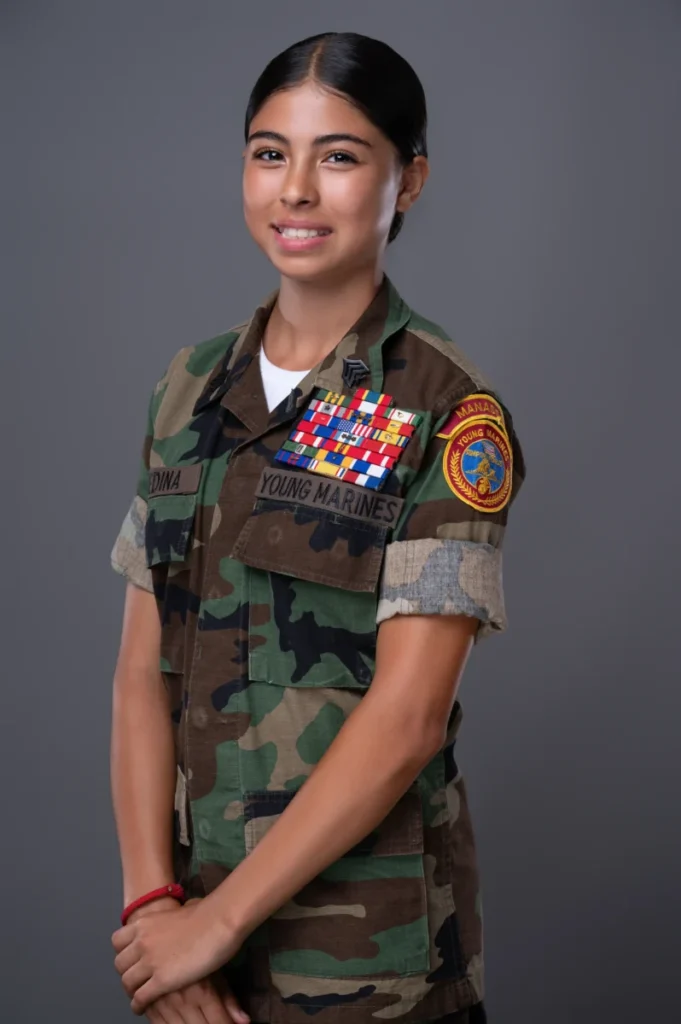
Young Marine Sergeant Olivia Medina from Front Royal, Virginia was named the one of the top three graduates of the Young Marines Senior Leadership School, held in Fort Dix, New Jersey. Courtesy photo. The Young Marines, a national youth organization, has announced the top three graduates of the 2026 Young Marines National Leadership Academy – Senior Leadership School (SLS) held at Fort Dix, New Jersey. Young Marine Olivia Medina of Front Royal, Virginia as one of the top three graduates for this year’s class. Demonstrating exceptional leadership qualities at the school and in her unit, she is a member of the Manassas Young Marines in Manassas, Virginia.
At SLS, held June 16-26, Young Marine Sgt Medina (YM/Sgt Medina) and other Young Marines from throughout the country were chosen based on their leadership, creative problem solving, self-discipline, and the ability to coach other Young Marines in their units. The goals of the school included leadership development, mentorship, management skills, and competition in physical challenges. After being evaluated on their knowledge, skills, and abilities, YM/Sgt Medina was named as one of the top three graduates.
YM/Sgt Medina,14, is a rising ninth grade student at Randolph Macon Academy. After high school, she plans to study fashion and achieve her goal of owning her own business.
The Young Marines is a national non-profit 501(c)(3) youth leadership and development program for boys and girls, age eight through high school graduation. The Young Marines promotes the mental, moral, and physical development of its members. The program focuses on teaching the values of leadership, teamwork, and self-discipline, so they can live and promote a healthy, drug-free lifestyle.
SLS is the second school in the National Leadership Academy. Junior Leadership School (first school) provided YM/Sgt Medina with invaluable experience in teambuilding, self-discipline, and character-building. SLS builds on these skills and works to grow and hone their skills exponentially.
“SLS provides a foundation these youth need to work well with others, have self-discipline in school and other activities they participate in, and begin to show some leadership traits,” said Col. William P. Davis USMC (Ret), national executive director and CEO of the Young Marines. “By teaching leadership development along with self-discipline, the academy shapes Young Marines like YM/Sgt Medina into capable, moral leaders prepared for the challenges of tomorrow.”
“Senior Leadership School was one of the most challenging and meaningful experiences I have had as a Young Marine,” said YM/Sgt Medina. “It taught me that leadership is not just giving directions, it is setting the example, earning trust, and helping others succeed. The lessons I learned at SLS will stay with me as I return to my unit, continue in school, and prepare for my future. I know this experience has helped shape the kind of leader and person I want to become.”
The top three graduates for the 2026 Young Marines Senior Leadership School are:
Honor Graduate YM/Sgt Kierra Pierre, Lancaster, California; Quartz Hill Young Marines in Quartz Hill
YM/Sgt Evy Quijano, Gordonsville, Tennessee; Music City Young Marines in Nashville, Tennessee
YM/Sgt Olivia Medina, Front Royal, Virginia; Manassas Young Marines, Manassas, VirginiaAbout the Young Marines
Young Marines History
Since the Young Marines’ humble beginnings in 1959 with one unit and a handful of boys, the organization has grown to over 200 units with over 5,000 youth and 1,950 adult volunteers in 40 states, the District of Columbia, Japan (Okinawa), and affiliates in a host of other countries.
For more information on the Young Marines, visit the website at https://www.YoungMarines.org.Apply Now for The Power of Change to Strengthen Your Community

REC’s Power of Change awards funding to local non-profits. FREDERICKSBURG, Va. — Apply today for funding to help bring meaningful projects to life in your community. The Power of Change fall application period is open, with applications accepted online through Aug. 10.
The Power of Change provides funding to 501(c)(3) nonprofit organizations operating in the Rappahannock Electric Cooperative (REC) service territory. Twice a year, member-owner donations are distributed to eligible nonprofits for projects related to food insecurity, housing and emergency crisis assistance, health care, senior programs, low-income support, veteran and first responder assistance, and other community needs.
“The Power of Change is a meaningful opportunity for nonprofits to receive support for projects that directly benefit local communities,” said Casey Hollins, Managing Director – Communications and Public Relations. “We encourage eligible organizations to apply and share how their work is making a difference for the people and communities REC serves.”
In the most recent grant cycle, The Power of Change awarded over $122,000 to 40 nonprofits across REC’s 22-county service territory. Recent recipients included the Fairy Godmother Project in Fredericksburg, Cars Changing Lives in Front Royal and Ruckersville Volunteer Fire Company.
“These grants help local organizations turn community-focused ideas into action,” Hollins said. “Whether a nonprofit is expanding an existing program or launching a new project, The Power of Change offers an opportunity to strengthen the services available to our friends, neighbors and communities.”
The Power of Change is funded by voluntary contributions from REC member-owners. Thousands of member-owners support the program through recurring monthly donations, one-time gifts or by rounding up their electric bills to the next whole dollar. The average round-up is 51 cents per month, but together those donations generate more than $200,000 each year for nonprofits serving low-income residents, senior citizens, veterans and others in need.
Since 2005, The Power of Change has given back more than $1.8 million to nonprofits across REC’s service territory. Nonprofits may apply online during two annual application periods: December through Feb. 10 and June through Aug. 10. Organizations may submit one application in a 12-month period. Funding decisions are made in March and September, with funds distributed in April and October.
Eligible nonprofits are encouraged to apply early at thepowerofchange.org. REC members can also visit the site to enroll as contributors and help support future grants.
About Rappahannock Electric Cooperative
Serving more than 185,000 connections across portions of 22 Virginia counties, REC is a pillar in its communities, with over 18,000 miles of power lines extending from the Blue Ridge Mountains to the Chesapeake Bay. For more information about REC, please visit www.myrec.coop. Follow REC on Facebook, X, Instagram, LinkedIn and YouTube.
Engle’s Angle: “Rock Stars and Astronauts”

Generated image for Engle’s Angle 20260707 by Kevin S. Engle
I haven’t written in a while. My apologies. I’ve been traveling all across the country with my band. We just did thirty-five shows in forty days.
Do you believe that?
You shouldn’t.
But my wife and I did go to a concert recently.
It took more than an hour to get there and back. We didn’t get home until about 12:30 in the morning. That’s waaaaaaaaaaaaaay past my bed time. And that made me realize something. I could never be a rock star. And here are (at least) ten reasons why not.
10. I’m a slow name signer. When you’re famous, people want your autograph. They want you to sign their shirt, a piece of paper, a part of their body. And when you sign lots of autographs, you have to do it fast. I can’t.
9. Rock stars spend a lot of time on the road traveling from town to town for their next gig. I’m not big on road trips. If it’s more than a few hours, it’s not for me.
8. When I go to sleep at night, I’d prefer my bed wasn’t moving at 65mph. The same for when I take a shower and go to the bathroom.
7. And speaking of going to bed, rock stars go too late. I’m a morning person. How many concerts have you been to before lunch? That’s when I’d have to be on stage. In the morning when I’m at my peak. Those who know me best would say I don’t have a peak.
6. How many rock stars are bald? Hmm.
5. I don’t have a band.
4. I don’t play an instrument. And not only that, I doubt I could ever learn how to.
3., 2. and 1. The biggest reason why I’m not and never will be a rock star is simple. I can’t sing. That’s a tough one to overcome.
Oh well. There’s more to life than being a rock star. How about an astronaut? I’ve been hearing a lot on the news lately about people one day living on the Moon. I wonder what it takes to be an astronaut? And then I remembered something.
I get motion sickness.
#####################################
As a young boy, the author always wanted to be a professional baseball player. He hasn’t given up on that yet.

The Best of Engle’s Angle: A Humorous Slant on Life and our Wacky World (Book Cover) The Best of Engle’s Angle is available online or pick up a signed copy at a local bookstore.
Make Your Voice Heard in Rappahannock Electric Cooperative’s Board of Director Elections
FREDERICKSBURG, Va. — Rappahannock Electric Cooperative (REC) member-owners now have the opportunity to participate in the Cooperative’s 2026 Director Elections. The proxy designation period is now open and all member-owners are asked to submit proxy designations by July 31, 2026.
Three seats on REC’s Board of Directors will be elected during the virtual Annual Meeting on Aug. 5 at 7 p.m. The Board helps guide the Cooperative’s future and represents the interests of the members who own REC.
Members have multiple ways to participate in the election:
- Assign your vote before the meeting by completing a Proxy Designation Form. Forms will be mailed to all members. Check your mail in early July.
- Complete the online proxy designation form using the email received if REC has a valid email on file. Or log in to your MyREC SmartHub account and click Vote Now.
Completed proxy forms must be received by 5 p.m. on Friday, July 31.
If you do not plan to register to attend the online meeting live, REC encourages you to assign your vote in advance through the proxy designation form. Members who prefer to vote live during the virtual Annual Meeting must register between 7 a.m. on Monday, July 27, and 5 p.m. on Friday, July 31. Only registered members will receive instructions to join the meeting and vote live on Aug. 5.
Candidates for the 2026 Director Elections are:
Region IV – Culpeper and Orange Counties
Sanford Reaves Jr. — incumbent
Letitia “Tish” SmythRegion V – Spotsylvania County
Randy Thomas — incumbentRegion IX – Essex, King and Queen, and King William Counties
Eugene “Gene” Campbell Jr. — incumbentLearn more about the candidates, Annual Meeting and election process at myrec.coop/annualmeeting.
About Rappahannock Electric Cooperative
Serving more than 185,000 connections across portions of 22 Virginia counties, REC is a pillar in its communities, with over 18,000 miles of power lines extending from the Blue Ridge Mountains to the Chesapeake Bay. For more information about REC, please visit www.myrec.coop. Follow REC on Facebook, X, Instagram, LinkedIn and YouTube.
Virginia State Police investigating three fatal I-81 crashes in Frederick and Shenandoah counties
Virginia State Police are investigating three recent fatal crashes on Interstate 81 in Frederick and Shenandoah counties, including two that occurred July 2.
The first crash occurred June 23, 2026, at 9:49 a.m. on I-81 northbound at the 309-mile marker in Frederick County.
According to Virginia State Police, a tractor-trailer was traveling southbound on I-81 when it ran off the interstate, crossed through the median and entered the northbound lanes. The tractor-trailer struck a second tractor-trailer head-on, causing a fire. The crash also forced both vehicles into a third tractor-trailer that was traveling northbound.
A northbound sedan swerved to avoid the crash and struck the guardrail.
The driver of the first tractor-trailer, which had been traveling southbound, died at the scene. The driver of the second tractor-trailer suffered life-threatening injuries. The driver of the third tractor-trailer was not injured.
State Police said identification of the driver who died is pending notification of next of kin.
A second fatal crash occurred July 2, 2026, at approximately 3:18 a.m. on I-81 northbound at the 286-mile marker in Shenandoah County.
The preliminary investigation indicates a 2013 Honda Crosstour was stopped in the right travel lane, possibly after becoming disabled. The driver, Dennis L. Marshall, 78, of Willow Spring, North Carolina, got out of the vehicle and was standing near the front of the Honda when it was struck by a 2011 Freightliner tractor-trailer.
State Police said the Honda then struck Marshall, and the tractor-trailer struck a bridge barrier and overturned.
Marshall died at the scene. A passenger in the Honda, Barbara A. Marshall, 77, of Willow Spring, North Carolina, was injured and transported to an area hospital. The driver of the tractor-trailer, Jautar S. Dhot, 53, of Phillipsburg, New Jersey, suffered minor injuries.
A third fatal crash occurred later that morning, July 2, 2026, at approximately 10:21 a.m. on I-81 northbound at the 318-mile marker in Frederick County.
According to the preliminary investigation, a 2002 Nissan SUV was traveling northbound on I-81 when it swerved to avoid an object in the road. The vehicle overcorrected, ran off the road, went down an embankment and struck a tree.
The driver, an adult female, died at the scene. State Police said her identification is pending notification of next of kin.
All three crashes remain under investigation by Virginia State Police.
Information from VSP releases. Edited by Dan McDermott.
Youth programs at Samuels Public Library – July 2026
Generated file image of children in library These are the events being presented by the Youth Services Department at Samuels Public Library during the month of July 2026. More information about Samuels Library and the programs and services available can be found at www.samuelslibrary.net or by calling (540) 635-3153.
Wednesday, July 1
10:15AM – Toddler Story Time.
11:00AM – Preschool Story Time.
Come in for an enjoyable hour filled with Shapes stories, exciting sing-alongs, finger plays, and a craft.
Thursday, July 2
10:30 AM – Grand Story Time. For ages 0-6. Come hear a grandparent read a few stories, say some nursery rhymes, and do a free form craft.
Saturday, July 4
The library will be closed for the holiday.
Monday, July 6
10:15 AM – Music & Movement for Babies (ages 0-23 months).
11:15 AM – Music & Movement for Toddlers (ages 2-5). Join our fun and joyful time with your little ones as we listen to music while learning some basic movements and multisensory activities designed to delight your baby or toddler.
Tuesday, July 7
10:30 AM – Time Capsule Ceremony. Join us for a ceremony to highlight everyone’s time capsule, sponsored by the Front Royal United Methodist Church! We will discuss what you decided to put in yours, talk about how the world has changed in the last 25 years and predict how it may change in the next 25 years. The Warren County Heritage Society and the library will also talk about various time capsules currently buried, or dug up, in Front Royal. Then we will inter our capsules in totes to be sealed and stored until 2051!
Wednesday, July 8
10:15AM – Toddler Story Time.
11:00AM – Preschool Story Time.
Come in for an enjoyable hour filled with On the Farm stories, exciting sing-alongs, finger plays, and a craft.
Thursday, July 9
10:30 AM – Grand Story Time. For ages 0-6. Come hear a grandparent read a few stories, say some nursery rhymes, and do a free form craft.
Friday, July 10
10:00 AM – Trail Buddies. For ages 2-6, with a parent. Join us and Warren County Parks & Recreation at Rockland Park. Ready for an adventure in nature and creativity? Explore our park trail and learn about learn about organisms that can remain dormant for a long while, such as waterbears. Each child will receive a Rose of Jericho plant. Registration is required.
Saturday, July 11
11:00 AM – Chess. For ages 10-18. Ready to make your next move? Whether you’re new to chess, looking to sharpen your strategy, or just want to enjoy a fun game with friends, join us at Samuels Public Library! All skill levels are welcome! Registration is required.
2:30 PM – Colonial Lights. For ages 8-14. Create a beeswax candle and learn the various ways the colonials lit their world! Registration is required.
Monday, July 13
10:15 AM – Music & Movement for Babies (ages 0-23 months).
11:15 AM – Music & Movement for Toddlers (ages 2-5). Join our fun and joyful time with your little ones as we listen to music while learning some basic movements and multisensory activities designed to delight your baby or toddler.
Tuesday, July 14
10:30 AM – Magic Pencil Bag: Curiosity Crew. For ages 6-11. Hear stories about air pressure and magic tricks, then try your own, poking pencils through a bag of water, but NOT spilling it! Registration is required.
Wednesday, July 15
10:15AM – Toddler Story Time.
11:00AM –Preschool Story Time
Come in for an enjoyable hour filled with Flower stories, exciting sing-alongs, finger plays, and a craft.
Thursday, July 16
10:30 AM – Grand Story Time. For ages 0-6. Come hear a grandparent read a few stories, say some nursery rhymes, and do a free form craft.
Friday, July 17
2:00 PM – Girl Who Cried Dragon. Fun for the family! Bo loves spending her days in the meadow caring for her sheep, until the sheep start disappearing! Journey with our young shepherdess as she travels far from her village home on a quest to find her missing sheep. Hammered dulcimer music evokes a soundscape of the middle ages and handcrafted puppets bring to life all the creatures that Bo encounters on her quest. In the end, she unearths a surprising truth beyond her imagination.
Saturday, July 18
10:00 AM, 10:20 AM,
10:50 AM, 11:10 AM Paws for Reading. For ages 6-18. Paw for Reading is a program where people read aloud to therapy dogs, which helps improve their reading skills, confidence, and attitudes toward reading. This program provides a non-judgmental and stress-free environment, as the dogs are calm, attentive listeners who don’t correct mistakes, making it less intimidating for children. Bring your own book or use one of ours! Registration is required.
2:30 PM – Ancient Artifact Builders. For ages 6-11. Become an archaeologist for a day—discover ancient secrets, create your own artifact, and imagine the story behind its maker. What will your artifact reveal about the people of the past? Registration is required.
Monday, July 20
10:15 AM – Music & Movement for Babies (ages 0-23 months).
11:15 AM – Music & Movement for Toddlers (ages 2-5). Join our fun and joyful time with your little ones as we listen to music while learning some basic movements and multisensory activities designed to delight your baby or toddler.
Tuesday, July 21
10:30 AM – Ice Cream: Curiosity Crew. For ages 6-11. Dive into the delicious world of ice cream! Join us for a fun story time, discover how your favorite treat is made, and roll up your sleeves to create your own ice cream masterpiece. Don’t miss this sweet adventure! Registration is required.
Wednesday, July 22
10:15AM – Toddler Story Time.
11:00AM –Preschool Story Time
Come in for an enjoyable hour filled with Community Helper stories, exciting sing-alongs, finger plays, and a craft.
Thursday, July 23
10:30 AM – Grand Story Time. For ages 0-6. Come hear a grandparent read a few stories, say some nursery rhymes, and do a free form craft.
Saturday, July 25
11:00 AM – Tales & Trails: Bugs and Beyond. For ages 6-11. Get ready to explore some of the littlest life from Shenandoah River State Park at Bugs and Beyond! We will meet several live insects and other small critters up close, learn fun facts about their habitats and behaviors, and discover why they are so important to nature. Registration is required.
2:30 PM – Teens Connect: Sand Art. For ages 12-18. Looking for a creative way to unwind? Join us for a relaxing afternoon with friends and craft your own stunning sand art jar! All supplies provided—just bring your imagination and enjoy a little time to connect and create. Registration is required.
Monday, July 27
10:15 AM – Music & Movement for Babies (ages 0-23 months).
11:15 AM – Music & Movement for Toddlers (ages 2-5). Join our fun and joyful time with your little ones as we listen to music while learning some basic movements and multisensory activities designed to delight your baby or toddler.
Tuesday, July 28
10:30 AM – Spinning Twirligig: Curiosity Crew. For ages 6-11. Ready for some hands-on fun? Create your own twirligig and watch vibrant colors spin and dance before your eyes! Join us for a creative adventure. Registration is required.
Wednesday, July 29
10:15AM – Toddler Story Time.
11:00AM –Preschool Story Time
Come in for an enjoyable hour filled with Rain Cloud stories, exciting sing-alongs, finger plays, and a craft.
5:00 PM – Special Needs Adaptive Books. Join us for an inspiring session on creating adaptive books for families with special needs! Discover practical tips, hands-on activities, and resources to make reading accessible and enjoyable for everyone. Empower your loved ones with the gift of inclusive storytelling. Registration is required.
Thursday, July 30
10:30 AM – Grand Story Time. For ages 0-6. Come hear a grandparent read a few stories, say some nursery rhymes, and do a free form craft.
Friday, July 31
2:00 PM – Campfire Ball: Reverse Story Telling. Fun for ages 5-12. Gather ‘round for Dinostories Join us for a one-of-a-kind storytelling show where YOU help shape the story. Every performance is unique—your ideas, memories, and imagination guide the adventure. Step into the spotlight, share your voice, and watch the story unfold in real time. Ready to be part of the magic? Don’t miss this interactive experience—where the audience is the heart of the tale! Registration is required.
Samuels Public Library Adult Programming- July 2026
You can find and register for all library events on our website, www.samuelslibrary.net.
Special Announcements:
Summer Reading 2026: Unearth a Story
May 30th to August 1st. Register in person, over the phone, or through our website!
Summer reading isn’t just for kids. Get ready to Unearth a Story™ this summer with our Summer Reading Club!
Embark on an adventure through history and around the world—60 minutes at a time. Every hour you read enters you into a bi-weekly prize basket drawing, and an end of summer reading raffle for a chance to win available prizes!
Participants will receive an Epilogue Bookstore coupon, as well as a magnet and coupon for Hyperbowling at Royal Family Bowling Center.Library Open House
Wednesday, July 1st from 10:00 AM to 1:00 PM
In person.
With joy & gratitude, we invite you to celebrate our library and the strong, vibrant community that keeps it alive!
- Race to the Finish Raffle Drawing- 12:00 PM
- Coffee & Donuts
- Tiny Art Exhibit
- Puzzles
- Scavenger Hunt
- Tour Studio 330
- Renew your library card
Tiny Art 2026: Unearth a Story- Digging Deep
The Tiny Art Show will be on display on the adult side of the library throughout the month of July. Come visit us and check out the creativity within your community!
New this year- some art may be available for purchase by donation to support your library! The artists on display will be given the opportunity to opt in to selling their pieces- any pieces sold will be available for pickup after the Tiny Art Show ends.
One-Time Events
Sewing 101
Wednesday, July 1st from 5:00 PM to 6:30 PM
In Person. Registration Required.
New to sewing? Sewing 101 is the perfect introduction for beginners to get comfortable with a sewing machine using our SINGER® Heavy Duty 4411 Sewing Machine. Learn how to thread, wind a bobbin, use an owner’s manual, and identify key machine components. We will create a simple project using basic stitches that you can take home.
*No food allowed in the studio and patrons between 13-17 must be accompanied by an adult.
Sewing 201- Pot Holders
Wednesday, July 8th from 5:00 PM to 6:30 PM
In Person. Registration Required.
Sewing 201 Pot Holders – Expand upon the basics with some practical stitching practice. If you have attended Sewing 101 or have basic knowledge of machine sewing, come refresh your basic sewing skills and get some advanced practice and complete a functional potholder for your collection.
*Must have completed Sewing 101 or have a basic working knowledge of using a sewing machine. Supplies and materials provided. Registration required.
*No food allowed in the studio and patrons between 13-17 must be accompanied by an adult.
Susan “Goldilocks” Tschirhart- Flipping the Tables
Wednesday, July 8th from 6:00 PM to 7:30 PM
In Person. Registration Recommended.
Join us as we hear from Susan “Goldilocks” Tschirhart about her experiences hiking the Appalachian Trail, and how she left the corporate world for life on the trail.
After four decades in the legal world, Susan Tschirhart traded the courtroom for the “Rule of Three”: balance, resilience, and intentional growth. Known on the trail as “Goldilocks,” Susan is the founder and lead guide of Next Bend Adventures and a passionate advocate for the transformative power of the wilderness. Having tackled 645 miles of the Appalachian Trail, she teaches that the most important things we carry aren’t in our packs, but in our perspectives. Susan combines deep technical expertise as a Wilderness First Responder with a heart for mentorship, empowering others to discover what’s waiting for them just around the next bend.
Part of the “SPL Hiking Series”
Mini Armchair Travels- Iceland
Thursday, July 9th form 6:00 PM to 7:00 PM
In person. Registration recommended.
Join us along with Tim French, former adjunct instructor of history at Laurel Ridge Community College for a trip across the world- from the comfort of your local library.
In Mini Armchair Travel session 2, Tim will share his experiences and adventures throughout his trips to Iceland- talking about the history, the geography of the land, the climate, flora, fauna, and how a large population of the country lives around one main city!
Sewing 201- Microwave Bowl Holders
Wednesday, July 15th from 5:00 PM to 6:30 PM
In Person. Registration Required.
Sewing 201 Microwave Bowl Holders – Expand upon the basics with some practical stitching practice. If you have attended Sewing 101 or have basic knowledge of machine sewing, come refresh your basic sewing skills and get some advanced practice and complete a functional microwave-safe bowl potholder that’s both practical and gift worthy.
*Must have completed Sewing 101 or have a basic working knowledge of using a sewing machine. Supplies and materials provided. Registration required.
*No food allowed in the studio and patrons between 13-17 must be accompanied by an adult.
Chair Yoga: Jessyca Eve from With Grace and Joy
Thursday, July 16th from 12:00 PM to 1:00 PM
In person. Registration Recommended.
Join us along with Jessyca Eve as she leads a group in modified stretches to fit those with limited mobility by incorporating chairs into yoga poses.
Chair yoga is yoga for every body — no mat required, no floor work, no limitations. Using a sturdy chair for support, this gentle practice guides you through breathing, stretching, and mindful movement that improves flexibility, circulation, joint health, and mental clarity — all from a seated or standing position. It is ideal for seniors, those recovering from injury, anyone managing chronic pain, or simply anyone who wants a softer, more supported entry into the practice. No experience necessary. Just show up and breathe.
Optional Materials:
Participants can bring a mat, 1-2 blocks, a strap, a blanket, and a small hand towel.
Wear comfy clothes, bring water to stay hydrated, and maybe even a friend!
Jessyca Eve is a sound healer, shaman, and internationally recognized yoga teacher with over 25 years of dedicated practice across five continents and more than 40 nations. She is the founder of With Grace and Joy — Front Royal, Virginia’s boutique wellness studio and retreat center, rooted in a charming log cabin on a legendary horse farm in the Blue Ridge. With 15,000+ hours of teaching experience, Jessyca is one of the most credentialed and well-traveled healing arts educators in the world.
Step It Up: Line Dancing! Beginner Session 2
Tuesday, July 14th from 6:15 PM to 7:30 PM
In person. Registration Required.
Join us for some fun with Step It Up: Line Dancing! This is our beginner friendly class where we will teach you beginner moves and dances. Whether you’ve never line danced before or want to learn something new, this class is for you! The Beginner classes will be held on the 2nd Tuesday of every month from June to September. Comfortable clothing and close-toed shoes are recommended.
Please note: This class is a series! Previous dances from prior sessions will be reviewed. While it is not required to take all classes, it is highly recommended so you don’t miss out! Some music may contain adult themes. Participant discretion is advised.
Glowforge: Dinosaurs
Thursday, July 16th from 6:00 PM to 7:30 PM
In person. Registration Required.
Join us for a hands-on session with our Glowforge Laser Cutter and Engraver! Unearth a Story, our summer reading topic is the inspiration for this program, at which we will be cutting out Dinosaurs! Images will be provided and patrons may choose one image to use on the Glowforge.
Registration required, supplies and materials provided.
Author Talk with Mills Kelly: A Hiker’s History of the Appalachian Trail
Wednesday, July 22nd from 6:00 PM to 7:30 PM
In person. Registration Recommended.
Join us along with local author Mills Kelly to discuss his book “A Hiker’s History of the Appalachian Trail”, which is about who proposed the trail, who built it, who maintains it, and the most famous hikers.
Mills Kelly is a historian, a podcaster, a hiker and backpacker, a photographer, an author, and an award-winning educator. He just retired from George Mason University where he taught for 24 years. He maintains one of the most historic shelters on the Appalachian Trail and is the archivist of the Potomac Appalachian Trail Club (PATC). And just because he doesn’t have enough connections to the trail, he is also a board member of the Appalachian Trail Museum. He has been hiking on the Appalachian Trail since 1971, which seems like a very long time these days. During those years he has logged more than 600 miles of the trail in 10 of the 14 states the trail traverses. Many sections he’s hiked several times just because he likes them.
Part of the “SPL Hiking Series”
Art Trading Cards- Patriotic Designs
Saturday, July 25th. Session 1- 12:00 PM to 12:45 PM. Session 2- 1:00 PM to 1:45 PM
In person. Registration required.
Create, Trade, Collect and Connect
Join us to design your very own Art Trading Card! Whether you have never made an ATC before or you have a collection to trade, this is the event for you. This program will have a patriotic theme- materials provided will be themed red, white and blue to let you create your own 250th anniversary themed piece of art (you may also bring your own materials as well!).
About the size of a baseball card- you will create your own cards to trade with other artists and new friends to grow or start your collection. This is a relaxed, self-guided creative session where you can bring your own ideas and make them come to life.
There will be 2 sessions on this date- if one time slot is full check the calendar to see if the other slot has availability!
Step It Up: Line Dancing! Advanced Session 2
Tuesday, July 28th from 6:15 PM to 7:30 PM
In person. Registration Required.
Take your line dancing skills to the next level with this Advanced Line Dancing session! Tried the beginner class and looking for more? Feel comfortable in your dancing abilities and looking to challenge yourself? Then this is the class for you! In these sessions we will cover faster-paced songs, more complex moves, and wider range of dances. The advanced classes will take place every 4th Tuesday of the month from June – September. Comfortable clothing and closed-toed shoes are recommended. Prior line dancing experience is recommended but not required.
Please note: This class is a series. Previous dances from prior sessions will be reviewed. While it is not required to attend all classes it is highly recommended so that you don’t miss out! Some music may contain adult themes. Participant discretion is advised.
Walkabout Wednesday: Proper Lighting – Keys to Success
Wednesday, July 29th from 10:30 AM to 11:30 AM
Last Wednesday of every month.
In person.
Join Extension Master Gardener Volunteers as they discuss and care for the indoor plants at the library!
This month, join us to learn about the proper lighting practices to best care for your plants!
Free Yoga Class — Taught by Graduating YTT Students: Jessyca Eve from With Grace and Joy
Thursday, July 30th from 11:00 AM to 12:00 PM
In Person. Registration Recommended.
This is yoga at its most alive — fresh, passionate, and overflowing with the energy of new teachers stepping into their calling for the very first time. Our graduating 200-Hour Yoga Teacher Training students will lead a free community class as part of their final practicum — and you are invited to be part of the circle that receives them. Come support the next generation of teachers, experience the joy of a practice taught straight from the heart, and celebrate what happens when someone says yes to their calling. Free and open to all — your presence is the gift.
Recommended Materials:
Participants can bring a mat, 1-2 blocks, a strap, a blanket, and a small hand towel.
Wear comfy clothes, bring water to stay hydrated, and maybe even a friend!
Jessyca Eve is a sound healer, shaman, and internationally recognized yoga teacher with over 25 years of dedicated practice across five continents and more than 40 nations. She is the founder of With Grace and Joy — Front Royal, Virginia’s boutique wellness studio and retreat center, rooted in a charming log cabin on a legendary horse farm in the Blue Ridge.
Trivia Night: Movies
Thursday, July 30th from 6:00 PM to 7:30 PM
In person. Registration Required.
Test your movie knowledge at Trivia Night!
Build your teams of up to 6 people and compete for bragging rights and fabulous prizes.
Snacks and drinks will be provided.
Registration required.
Recurring Programs
Love and Logic: Parenting with Empathy Session 3
Every Thursday, July 9th to August 13th from 5:00 PM to 7:00 PM
In Person. Registration Required. Sessions run for 6 weeks at a time.
Warren County Social Services partners with Samuels Public Library to present Love and Logic, equipping young people with character, compassion and problem solving skills.
Parents will gain practical and proven tools for raising respectful, responsible and happy kids.
To register for this session of class (or the next available session), or ask questions contact:
Lillian Johns at [email protected] or by calling 540-635-3430 ext. 3386
Bad Romance
Wednesday, July 1st from 6:00 PM to 8:00 PM
First Wednesday of every month.
In person. Do you consider yourself a hopeless romantic? Are bad romances a guilty pleasure of yours? Then you should join us for Bad Romance, where Samuels Public Library will have a themed discussion for the romance genre every month. July’s theme is Gods/Goddesses!
Indulge us with your favorite romance books, movies, music or other media related to the topic, and possibly discover a new treat in this awesome informal discussion! New members are always welcome!
Books & Beyond Book Club
Thursday, July 9th from 6:00 PM to 7:45 PM
Second Thursday of every month.
In person. Do you love books and sharing them as much as we do? Join us to delve into new worlds of conversation about new books at your community’s public library!
July’s them is War.
Scary Words Book Club
Saturday, July 18th from 2:30 to 4:30 PM
Third Saturday of every month.
In person. A horror book club for people who should be afraid of the dark. This month’s reading is any book about Baba Yaga.
Studio 330: Personal Archiving Series
Saturday, July 11th from 12:00 to 1:30 PM
Second Saturday of every month.
In Person: Discover practical, beginner-friendly ways to organize, preserve, and make accessible your photos, documents, videos, and memorabilia during our monthly Personal Archiving Series. Each month will feature a stand-alone topic including organizing photos, scanning and digitizing your media, and sharing your collections with family. Make sure to check our calendar for monthly features.
July’s Topic – The Power of Metadata for organizing your photo archives.
Studio 330: Genealogy Club
Monday, July 13th from 2:00 to 4:00 PM
Second Monday of every month.
In person. Interested in your family’s history? Already done extensive research and want to be able to share your finds? Join our genealogy club where both novices and experts alike can come together and talk about different genealogy topics.
Join our Genealogy Club in Studio 330 or attend virtually for a presentation with Annette Burke Lyttle, Certified Genealogist at Heritage Detective, LLC. Her presentation, How Research Plans Can Up Your Genealogical Game, will touch on research planning. Research is more effective and productive if we make a plan before we dive in. Without planning, we run the risk of overlooking or misunderstanding important records. Learn the steps and techniques of research planning that will save time and frustration and can even help break down brick walls.
Attend in person or via Zoom (link will be sent in advance of program to those who register).
Studio 330: Embroidery Club
Every Thursday from 10:00 PM to 12:00 PM
In person. Join us for Hand Embroidery Stitchers every Thursday morning! Bring your own needlework project to work on for a morning of crafting and socializing.
*No food allowed in the studio and patrons between 13-17 must be accompanied by an adult.
Studio 330 Walk-in Hours
Every Thursday from 12:00 PM to 4:00 PM
In person. Come tour Studio 330 or bring your project to work on. Walk-In hours are provided on a first come, first serve basis.
*Glowforge is not available during walk-in hours. No food allowed in the studio and patrons between 13-17 must be accompanied by an adult.
Studio 330: String Theory- A Fiber Arts Club
Every Saturday from 2:00 PM to 4:00 PM
In person. Welcome to a fiber arts community for experienced, novice, or first-time artists 13 and up looking to meet other artists, relax, and/or share their expertise! Bring your own knitting, crochet, weaving, or other project to Studio 330 on Saturdays 2pm to 4pm
*No food allowed in the studio and patrons between 13-17 must be accompanied by an adult.
What the Tech!
Every Tuesday from 2:00 PM to 3:30 PM
In person. Need help with technology? Come by the library’s Studio 330 where we will be going over computers and other technology basics. Having trouble with your phone, tablet, laptop, or other device? Bring it in, and we’ll help!
Information from a release.
Major Shenandoah Valley model railroad donated to Middletown association
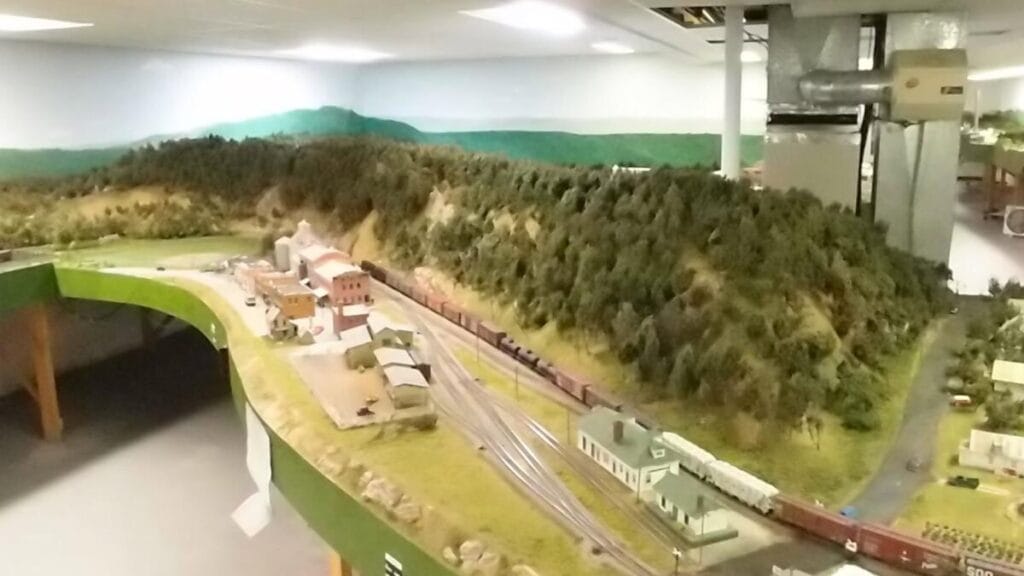
A portion of Jim Brewer’s detailed Norfolk & Western Railway Shenandoah Division model railroad layout, which is being donated to the Winchester and Middletown Model Railroad Association. Courtesy photo. Edited by Dan McDermott | route11news.com
A detailed model railroad portraying the Norfolk & Western Railway’s Shenandoah Division will have a new home in Middletown.
Jim Brewer, a recognized modeler of the Norfolk & Western Railway and a past editor of The Arrow, the magazine of the Norfolk & Western Historical Society, has announced that he is donating his large model railroad to the Winchester and Middletown Model Railroad Association, Inc.
The donation includes scratch-built models of Shenandoah Valley businesses, homes and landmarks, including portions of the former American Viscose plant in Front Royal, along with scenes representing Luray, Shenandoah, Waynesboro and other familiar Valley locations. The gift also includes a collection of model locomotives, freight cars and passenger cars.
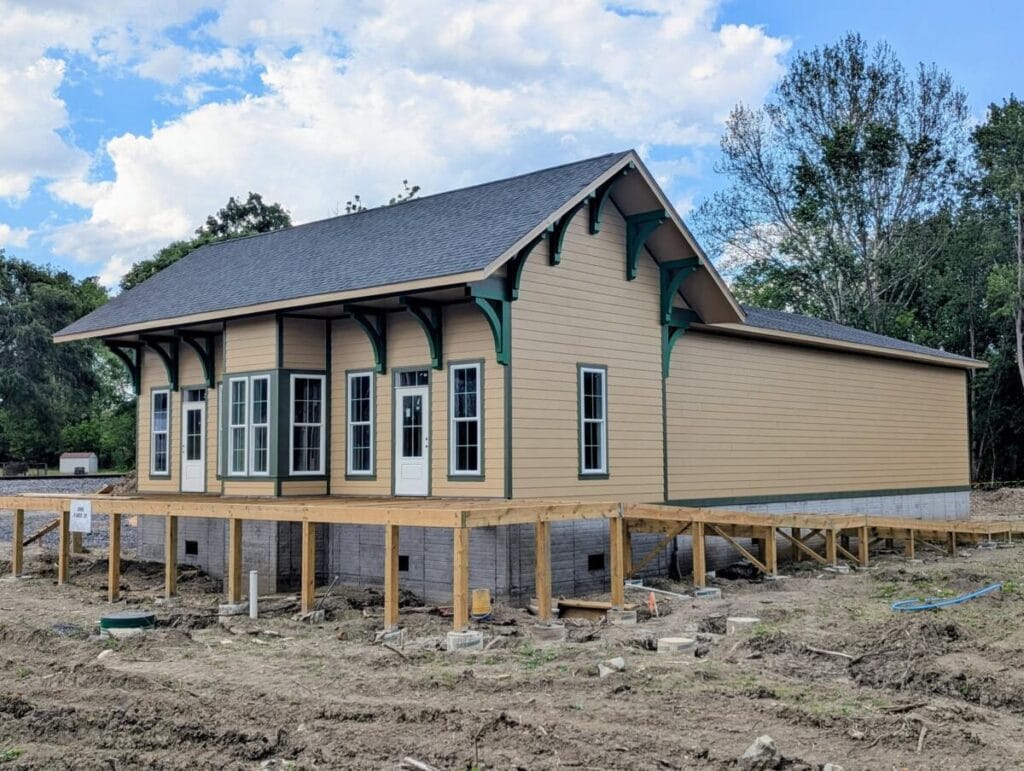
The association, working in partnership with the Town of Middletown, is building a full-size recreation of the railroad station that once stood in Middletown. The station, located at 2490 1st Street, is expected to include both a railroad museum and a large exhibition model railroad. Large portions of Brewer’s layout are planned to become principal features and a centerpiece of the new display.
“I am thrilled that the Winchester and Middletown Model Railroad Association will preserve and make available to the public the model railroad my friends and I worked so many years to build,” Brewer said in the announcement.
Jeff Jordan, president of the association, said the donation will help move the project forward.
“We are tremendously excited to receive this contribution, which will substantially accelerate our building of an outstanding display model railroad layout centered on familiar locations in the Shenandoah Valley,” Jordan said.
The exterior of the recreated Middletown station is nearing completion, with deck and railing installation, grading, landscaping and parking lot paving still to come. The announcement says Trex Company, Inc. has contributed decking and railings for the project. Interior work is underway by association members with help from several local building companies.
The station is expected to open to the public later this year. The association is continuing to seek donations of funds and materials to help complete the project.
The Winchester and Middletown Model Railroad Association is a 501(c)(3) educational nonprofit. Its mission includes displaying and operating a model railroad for the public, schools and other organizations, while using the layout to explain the role of railroads in the growth of the Shenandoah Valley and its industrial base.
People interested in learning more, contributing or applying for membership may contact the association by email at [email protected] or find it on Facebook at Winchester & Middletown Model Railroad Association.
Information from a release.

The recreated Middletown railroad station, located at 2490 1st Street, is nearing completion and is expected to become the new home of the Winchester & Middletown Model Railroad Association, a railroad museum and a large exhibition model railroad. Courtesy photo. DWR urges caution as drought, low-water conditions affect outdoor recreation

Generated file image of father and two kids looking at a low river The Virginia Department of Wildlife Resources is reminding Virginians to use caution outdoors as drought and low-water conditions continue to affect boating, fishing, paddling and public lands.
The agency says most DWR boating access sites remain usable, but boaters should check conditions before launching. Low water can expose the end of boat ramps, and backing a trailer too far down may cause trailer wheels to drop off the ramp surface, making it difficult to retrieve a boat.
Anglers and paddlers are also advised to plan ahead. DWR says fishing can still be good when water is low, but reduced flows can make some river sections difficult or impossible to float. On lakes, especially artificial lakes, low water can expose stumps, debris and shallow areas that may normally be underwater.
Boaters should reduce speed where appropriate and have a passenger watch for unmarked hazards, the agency said.
DWR also urges visitors to Wildlife Management Areas to remain alert to fire danger. WMAs remain open for wildlife watching, hunting, hiking and camping, but dry conditions can increase the risk of wildfires. Campfires are allowed on most WMAs, but rules can vary by property, and temporary fire restrictions may be posted if drought conditions persist.
Visitors are encouraged to check DWR’s website and the Explore the Wild app for current alerts before traveling to a department-managed property.
Written comments, where applicable to DWR regulatory matters, may be submitted through the department’s online public comment system or by email or mail according to the instructions provided by DWR.
Information from a release. Edited by Dan McDermott.
Eight REC-area students earn $14,000 in cooperative association scholarships
Generated file image of scholarship FREDERICKSBURG, Va. — Eight students from Rappahannock Electric Cooperative’s (REC) service territory have earned scholarships from the Virginia, Maryland & Delaware Association of Electric Cooperatives (VMDAEC) Education Scholarship Foundation, joining a select group of high school seniors recognized across the region for their academic achievements and future goals.
The students are among 92 seniors across the service territories of VMDAEC’s 16 member electric cooperatives selected to receive a combined $165,000 in scholarships this year. The awards support students pursuing college, technical or trade education.
“These students represent the promise and potential found throughout REC communities,” said Casey Hollins, Managing Director – Communications and Public Relations. “Their achievements reflect years of hard work, support from their families and schools, and the strength of the communities we are proud to serve. We are excited to see what they accomplish next.”
The VMDAEC Education Scholarship Foundation awarded the scholarships in April as the program marked 25 years of investing in students and communities served by electric cooperatives.
REC-area students receiving scholarships are:
Robert Groves of Culpeper County, a student at Culpeper County High School, $2,500
Lubabah Qazzaz of Frederick County, a home-schooled student, $2,000
Sumayah Qazzaz of Frederick County, a home-schooled student, $2,000
Lindsey Brown of Culpeper County, a student at Culpeper County High School, $1,500
Jaxen Carter of Frederick County, a student at Millbrook High School, $1,500
William Gladden of Hanover County, a student at Grace Christian School, $1,500
Asia Goodman of Spotsylvania County, a student at Riverbend High School, $1,500
Kameron Maith of Essex County, a student at Northumberland High School, $1,500Together, the eight students earned $14,000 in scholarships.
“For 25 years, our electric cooperatives have invested in the young people we serve,” said Brian Mosier, president and CEO of VMDAEC, in an April 14 news release. “This program reflects the cooperative principle of ‘concern for community’ while supporting future leaders — whether they serve on co-op boards, join our workforce, or pursue skilled trades that help keep the lights on. At a time of rising education costs and financial pressure in many rural communities, these scholarships help students build a strong foundation for the future.”
Since 2001, the foundation has awarded more than 1,350 scholarships totaling $1.4 million to graduating seniors pursuing college, technical or trade education. Scholarship recipients must live within the service areas of VMDAEC’s 16 member cooperatives, which include 13 in Virginia, two in Maryland and one in Delaware. Funds are paid directly to each student’s institution to help with tuition or room and board.
The scholarship program is supported by private donations and proceeds from the “Keeping the Lights On” commemorative Virginia license plate. Additional contributions to the foundation are tax-deductible, and all donations support student scholarships.
For more information, visit vmdaec.com/scholarshipfoundation.
About Rappahannock Electric Cooperative
Serving more than 185,000 connections across portions of 22 Virginia counties, REC is a pillar in its communities, with over 18,000 miles of power lines extending from the Blue Ridge Mountains to the Chesapeake Bay. For more information about REC, please visit www.myrec.coop. Follow REC on Facebook, X, Instagram, LinkedIn and YouTube.
Information from a release.
Public comment open for proposed fee increases and regulatory changes
Generated file image of dad with son and daughter fishing RICHMOND, VA – The Virginia Department of Wildlife Resources (DWR) 2026 regulatory cycle public comment period will open at 8 a.m. on July 7. This 30-day public comment period will close at 5 p.m. on Aug. 5. As part of the regulatory process, DWR solicits comments from the public on proposed regulations and provides an analysis of those comments to the Board of Wildlife Resources before any final action is taken.
This year, regulations related to wildlife, fisheries, and boating were proposed to the Board as well as fee increases related to hunting, fishing, trapping, and boat registrations.
Fee Increases:
The Department is proposing fee increases to many of the hunting, fishing, and trapping licenses, which have not increased since 2012. Additionally, fee increases to motorboat registrations are being proposed for the first time since 2019. Lastly, the Department is proposing to assess a fee of $10 to camp on Department-owned lands where a free permit is currently required.Wildlife:
Proposed changes include incorporating updated lists of federally threatened and endangered species as well as native and naturalized fauna species in Virginia, adjusting the start of bear hound training season, changing the release date for rehabilitated deer fawns via permittees, and adjustments to the elk special conservation license program.Fisheries:
Fishing regulatory proposals include a prohibition on stocking flathead catfish and rock bass, as well as changes to some local trout regulations.Though not a regulatory action, the Department is also soliciting comments on the Stocked Trout Management Plan, which will guide stocked trout management through 2035. Of note is a proposed change to how information on trout stocking is released, shifting to a system where all stocking plans will be announced in advance. Implementation of potential 25%, 35%, and 50% decreases to trout stocking is also outlined in the plan.
Boating:
Proposed boating regulations include clarifying language related to vessel operation and waterway markers, adoption of the federal requirement for children under the age of 13 to wear a life jacket when underway, and adoption of the federal requirement for the use of engine cut-off switches.For more comprehensive information on all the proposed regulations, fee increases, and Stocked Trout Management Plan, please visit the DWR Public Comment page.
While the Virginia Department of Wildlife Resources online comment system is the most efficient and effective way to submit your views, individuals may also submit comments by email at [email protected] or mail them to the department.
Virginia Department of Wildlife Resources
Attn: Regulatory Coordinator
P.O. Box 90778
Henrico, Virginia 23228Comments must be in writing and accompanied by the name, address, and telephone number of the party offering them. Comments submitted by means other than the online comment system must be received no later than 4 p.m., Aug. 5, 2026.
Information from a release. Posted by Dan McDermott.
Front Royal says 2025 drinking water met state and federal standards
Generated file image of clean tap water faucet The Town of Front Royal says its drinking water met all state and federal health standards during 2025, according to the town’s annual water quality report.
The report, formally known as a Consumer Confidence Report, covers testing completed from Jan. 1 through Dec. 31, 2025. According to the town, its water system “has not violated a maximum contaminant level or any other water quality standard,” and the town was in full compliance with water quality and reporting requirements for the year.
Front Royal draws its drinking water from three surface-water sources: the South Fork of the Shenandoah River, Happy Creek and Sloan Creek. The water is treated at the town’s water treatment facility before being sent through the municipal distribution system. Treatment includes oxidation, coagulation, flocculation, settling, filtration, ultraviolet disinfection, chlorine disinfection, corrosion control and fluoridation.
The town says water treatment plant operators conduct about 100 tests each day, checking items such as chlorine, pH, turbidity, alkalinity, hardness and fluoride.
The report does list several detected substances, as federal drinking-water reports are required to do. Detected substances included fluoride, nitrate/nitrite, barium, sodium, chlorine, total trihalomethanes, haloacetic acids, lead and copper. The report states that none of the listed detections resulted in a violation.
One item likely to draw attention is an October 2025 E. coli result. The report says E. coli was detected in one sample, but the result was not confirmed by additional samples and did not result in a violation. The town’s table lists the violation status for that item as “No.”
The report also notes that cryptosporidium, a microbial pathogen found in surface water, was detected in the town’s source water. The town says current testing methods do not determine whether the organisms are dead or capable of causing illness. The report advises people with compromised immune systems to consult their doctors about appropriate precautions.
Lead and copper testing shown in the report comes from the most recent monitoring period, September 2024. The 90th percentile lead value was listed as less than 2.5 parts per billion, below the 15 ppb action level. One sample exceeded the action level, but the systemwide 90th percentile did not. Copper was also below its action level.
The town also says it completed the initial federally required service line inventory in October 2024, updated it in December 2025 and has continued to update it since then. Residents may request the latest inventory from the Front Royal Water Treatment Plant.
Residents with questions about the report or drinking water testing may contact Water Treatment Plant Manager Matthew McDunn at 540-636-7474 or [email protected]. The town says copies of the report are available upon request.
Plain-English note: The basic takeaway is: the town says the water passed required standards in 2025. The report is not saying “nothing was detected.” It is saying the detected items were either below regulatory limits, not confirmed, or otherwise did not create a violation.
Edited by Dan McDermott.
Local Students Earn REC Community Scholarships
Generated file image of electric coop college scholarships Fredericksburg, Va. — Seventeen local students have earned a combined $20,000 in scholarships from Rappahannock Electric Cooperative (REC), supporting their plans to continue their education at colleges, universities and technical schools.
The students were selected through REC’s Community Scholarship program, which has supported students across the Cooperative’s service territory since 1996. Over that time, REC has helped more than 100 students pursue their educational and career goals.
The 2026 scholarship awards include two $2,500 scholarships and fifteen $1,000 scholarships. Recipients were selected based on academic achievement, extracurricular activities, community involvement and letters of recommendation.
“These students are bright young members of the communities REC is proud to serve, and their achievements and aspirations reflect the promise of our region’s future,” said Casey Hollins, Managing Director – Communications and Public Relations. “Their dedication, leadership and commitment to their goals stand out, and REC is honored to help support their next step. Particularly promising are our two $2,500 awardees, who are clearly on the path to a bright future.”
Miriam Oster of Hanover County, a $2,500 scholarship recipient, was valedictorian of Patrick Henry High School’s Class of 2026 and a previous West Point Leadership Award winner. She served as a leader in the JROTC program and was an avid and capable runner who also excelled in multiple Advanced Placement courses throughout her high school studies.
Khushi Mitchell of Frederick County is also a $2,500 awardee. She is a deans’ List student at the University of Wisconsin – Madison and has won multiple academic awards in both high school and college, including the President’s Education Award for Outstanding Academic Excellence. She is also active in her university’s research program as an undergraduate research assistant.
Applicants for the REC Community Scholarship must be high school seniors or currently enrolled college or trade school students whose parent or guardian is an REC member-owner. Eligible applicants must plan to enroll, or already be enrolled, in an accredited educational or training institution. REC selects scholarship recipients based on academic achievement, extracurricular activities, community involvement and letters of recommendation.
2026 scholarship awardees are:
Aidan Loucks, Hanover County, Patrick Henry HS
Aidan Parker, Frederick County, Virginia Tech
Ethan Lantz, King and Queen County, West Point HS
Evan Taylor, Greene County, William Monroe HS
Jacob Reichert, Clarke County, Clarke County HS
Josephine Austin, Frederick County, Sherando HS
Kayleigh McFarren, Spotsylvania County, Massaponax HS
Khushi Mitchell, Frederick County, University of Wisconsin – Madison
Kyndal Shuler, Fauquier County, University of Virginia
Lila Edwards, Greene County, William Monroe HS
Lilly Grimsley, Rappahannock County, Rappahannock County HS
Maya Tabor, Orange County, James Madison University
McKenna Condrey, Essex County, University of Lynchburg
Miriam Oster, Hanover County, Patrick Henry HS
Nigel Foster, Frederick County, Millbrook HS
Owen Yarrington, Louisa County, Louisa County HS
Paris Bacon, Essex County, Hampton University
About Rappahannock Electric Cooperative
Serving more than 185,000 connections across portions of 22 Virginia counties, REC is a pillar in its communities, with over 18,000 miles of power lines extending from the Blue Ridge Mountains to the Chesapeake Bay. For more information about REC, please visit www.myrec.coop. Follow REC on Facebook, X, Instagram, LinkedIn and YouTube.
Information from a release.
Virginia releases summary of 2026 laws taking effect this year
generated file image of state house with gavel The Virginia Division of Legislative Services has released its annual In Due Course guide, summarizing selected laws passed by the 2026 Regular Session of the General Assembly and signed by the governor.
Most of the new laws take effect July 1, 2026, although some provisions have later effective dates. The guide is intended to highlight legislation likely to affect the daily lives of Virginians, with topics ranging from agriculture, alcoholic beverage control and cannabis enforcement to housing, labor, public safety, taxation, technology and voting.
Among the major employment-related changes, Virginia’s minimum wage will increase in stages, reaching $13.75 per hour on Jan. 1, 2027, and $15 per hour on Jan. 1, 2028. Beginning in 2029, the rate will be adjusted annually based on inflation. A separate law will require most employees of private employers and state and local governments to accrue paid sick leave at a rate of one hour for every 30 hours worked, with certain provisions delayed until July 1, 2027.
The guide also notes new protections for job applicants and employees. Employers will be barred from seeking or relying on a prospective employee’s wage or salary history, and job postings will be required to include a wage, salary or salary range. Virginia also approved a paid family and medical leave insurance program, with benefits scheduled to begin April 1, 2028.
Several consumer and business provisions are included. A new law tightens requirements for automatic renewal and continuous service offers, requiring sellers to provide cancellation methods that are at least as easy to use as the method used to sign up. Another law establishes future licensing and operating rules for virtual currency kiosk operators, including fraud-prevention requirements, transaction limits and fee restrictions.
Public bodies subject to the Virginia Freedom of Information Act will be required to post proposed meeting agendas on their official government websites before meetings. The law also limits final action on items added after a meeting begins, unless the matter is time-sensitive or properly handled in a closed meeting. Another FOIA-related change prohibits the Virginia Lottery from disclosing information about individual winners unless the winner consents.
In housing, one new law removes the cap on certain local grants for employees, school board employees and constitutional officer employees to buy homes in their locality. Another law, effective Jan. 1, 2027, allows certain religious organizations and nonprofit tax-exempt organizations to develop affordable housing on their property by right, subject to conditions including a requirement that at least 60 percent of units be affordable and remain so for at least 30 years.
Criminal justice changes include a process for sentence modification for certain marijuana-related offenses committed before July 1, 2021, as well as expanded expungement eligibility for certain charges where a person was not ultimately convicted. The guide also summarizes new laws addressing sexual extortion, gift-card fraud, failure to appear and restrictions on certain offenders being near playgrounds, athletic facilities and similar places.
Other changes include a prohibition on using credit cards to fund sports betting accounts, new enforcement tools for illegal marijuana and hemp-product sales, expanded regulation of retail tobacco products under the Virginia Alcoholic Beverage Control Authority, and new rules affecting nursing homes, contraceptive coverage, landlord-tenant notices, child protective services intake and state data privacy.
The full In Due Course: 2026 Changes to Virginia’s Laws document is available as a PDF and provides brief summaries of selected legislation by subject area.
Information from a release. Edited by Dan McDermott.
REC Named a 2026 Top Virginia Employer for Interns
Fredericksburg, Va. — For the third consecutive year, Rappahannock Electric Cooperative (REC) has been recognized as a Top Virginia Employer for Interns by the State Council of Higher Education for Virginia. This honor reflects REC’s ongoing investment in developing future talent through meaningful, hands-on experiences that prepare students for success in the workforce.
REC was among 161 employers honored statewide as part of the 2026 Top Virginia Employers for Interns Awards. The annual award recognizes Virginia employers that provide exceptional internship experiences through mentorship, leadership engagement, hands-on learning and career development opportunities.
Through its InternConnect program, REC provides students with hands-on experiences across the Cooperative and its affiliates allowing them to contribute to real projects while gaining exposure to careers in the energy industry. In 2026, REC welcomed eight interns who served in the Office of the President, Communications & Public Relations, Finance & Accounting, Human Resources, Vegetation, Clean Energy, and Regulatory Affairs &Compliance.
Interns contribute to projects that support REC’s mission of connecting members and communities with safe, reliable, affordable and sustainable energy solutions while gaining experience alongside employees serving communities across the Cooperative’s service territory. Since 2020, REC has hosted 26 interns in areas ranging from Human Resources, Cybersecurity, Clean Energy & Energy Solutions and Data Analytics to Communications & Public Relations, Regulatory Affairs & Compliance, Operations and Construction.
“Being recognized as a To Virginia employer for Interns for the third consecutive year reflects our commitment to developing the next generation of professionals,” said Fafa Baker, director — Organizational & Workforce Development, Human Resources. “Through InternConnect, students gain meaningful, real-world experience while contributing to projects that support our members and communities. We are proud to help prepare future leaders and continue building pathways to careers in the energy industry.”
REC has earned the Top Virginia Employer for Interns designation each year since 2024, underscoring the Cooperative’s continued commitment to workforce development and student career readiness.
About Rappahannock Electric Cooperative
Serving more than 185,000 connections across portions of 22 Virginia counties, REC is a pillar in its communities, with over 18,000 miles of power lines extending from the Blue Ridge Mountains to the Chesapeake Bay. For more information about REC, please visit www.myrec.coop. Follow REC on Facebook, X, Instagram, LinkedIn and YouTube.
Spring turkey harvest up from last year

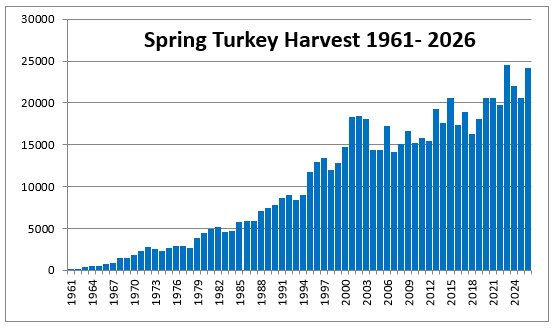
Spring Turkey Harvest (1961 – 2026) RICHMOND, VA – The Department of Wildlife Resources (DWR) announced a harvest of 24,105 turkeys during the 2026 spring turkey season. The harvest represented an increase of approximately 17% from the previous spring. Ryan Brown, DWR Executive Director, stated “Hunters enjoyed another very productive year in the spring turkey woods, taking advantage of the favorable weather conditions, especially during weekends throughout the season.”
The increased harvest was likely a result of ideal hunting conditions, with few days of rainy or cold weather. Clear weather keeps turkeys active and keeps hunters in the field longer. Much of the increase in harvest this season took place on opening weekend, when 25% of the overall harvest occurred.
As in previous years, more birds were harvested east of the Blue Ridge (68%) than west of the Blue Ridge (32%). Adult gobblers (as defined in harvest records as those with a beard at least 7” in length) made up 90% of the total harvest, while juvenile gobblers, known as “jakes” (beard less than 7” in length), accounted for 9% of the harvest. There were 70 bearded hens (0.3% of total harvest) taken during the season. Turkey harvests occurred overwhelmingly in the morning (94%) versus the afternoon (6%).
The majority of the spring turkey harvest took place on private lands (92%). Public land hunters (both federal and state) accounted for 8% of the total spring harvest, very similar to last season. National Forest lands accounted for the majority of public land harvests and approximately 5% of the total harvest, representing a 47% increase on National Forest lands.
While the harvest across the Commonwealth continues to be very robust, there are areas of the state where turkey population metrics are falling below the objectives set in DWR’s Wild Turkey Management Plan. Habitat improvements that enhance brood and nesting success will be the key to sustaining robust turkey populations.
Additional information about the turkey harvest and turkey management in Virginia, can be found at: https://dwr.virginia.gov/wildlife/turkey.
Image from a release. Edited by Dan McDermott.
Virginia Rest Areas Offer Travelers a Safe Place to Stop and Recharge
VDOT file image of rest area VDOT operates 43 rest areas and welcome centers serving more than 36 million visitors each year
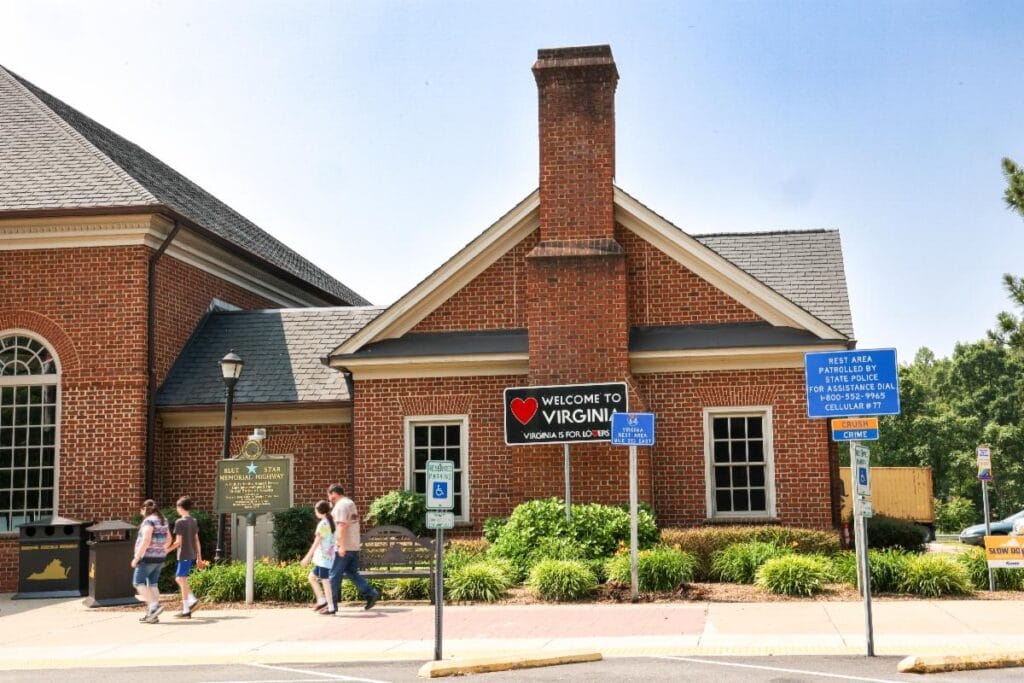
Virginia travelers looking for a safe place to take a break can find rest areas along several of the state’s busiest highways, offering everything from restrooms and vending machines to pet areas, picnic tables and travel information.
The Virginia Department of Transportation operates 43 safety rest areas across the state, including five truck-only locations and 11 rest areas with welcome centers. The facilities are located along Interstates 64, 66, 77, 81, 85 and 95, as well as Route 13.
More than 36 million people visit Virginia’s rest areas each year. The facilities are open 24 hours a day, every day of the year.
For drivers on long trips, rest areas provide a place to use the restroom, have a snack, walk a dog, stretch their legs, dispose of trash or simply step out of the vehicle for some fresh air before returning to the highway.
“Safety rest areas are more than just a place to pull over to use the restroom or eat a snack,” said Allen Campbell, state program director for Virginia Safety Rest Areas. “For people making long drives and becoming drowsy, rest areas provide a location to pull over and take a break to encourage safer travel to their destination.”
Amenities vary by location but may include accessible restrooms, family restrooms, baby-changing stations, drinking water, vending machines, trash receptacles, travel brochures, picnic tables and grills.
Many locations also include designated areas where travelers can exercise leashed dogs.
Rest areas are particularly useful for motorists driving recreational vehicles or towing trailers, which may be difficult to maneuver through crowded gas stations, restaurants and commercial parking lots. The larger parking areas give those travelers a more convenient place to stop, walk pets and take a break.
Some Virginia rest areas also provide opportunities to learn about the state’s history and culture.
Historical markers at certain locations identify significant people, places and events. Welcome centers operated by the Virginia Tourism Corporation also feature exhibits and information about regional attractions and history.
Travelers can pick up a Virginia 250 Passport at participating welcome centers. The passport highlights historic locations across the commonwealth, with some sites offering discounts during the observance of the 250th anniversary of the signing of the Declaration of Independence.
VDOT is also asking visitors to provide feedback about their stops. “Rate Your Experience” signs at rest areas direct travelers to online surveys that the agency uses to monitor conditions and identify ways to improve the facilities.
Travelers can locate rest areas and review the amenities available at each location through VDOT’s website or the Virginia 511 travel information system at 511.vdot.virginia.gov.
Information from a release. Edited by Dan McDermott.
VDOT Lifts Lane Closures To Help Travelers Celebrate 250 Years Of Independence This July Fourth

VDOT image RICHMOND — America’s 250th anniversary is expected to bring Virginians out to enjoy fireworks, cookouts and events across the commonwealth. As people prepare to travel for the holiday, the Virginia Department of Transportation (VDOT) is working to keep traffic moving smoothly and reminding everyone that the safest way to join celebrations is by driving responsibly.
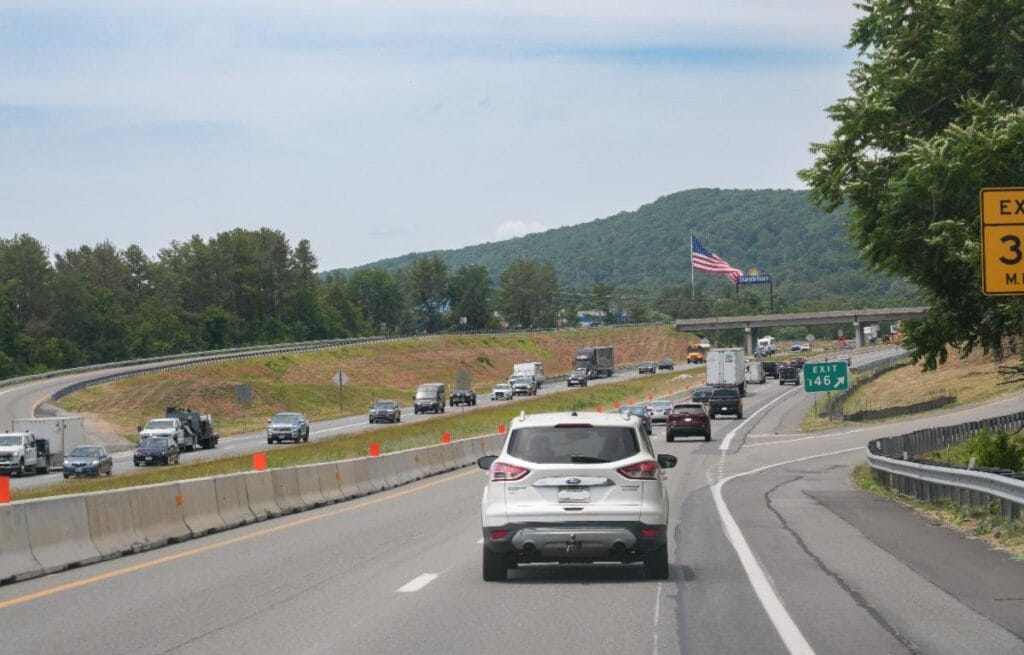
As part of VDOT’s annual July Fourth holiday travel accommodations, many highway work zones will be suspended and temporary lane closures on interstates and other major roads will be lifted from noon on Thursday, July 2 until noon on Monday, July 6.
While lane closures will be lifted in most locations, motorists may encounter semi-permanent work zones that remain in place during this time. Check VDOT’s Travel Advisories for the latest travel alerts in your area and around the state.
Special events are taking place across the commonwealth all year, with major celebrations for America’s birthday happening July Fourth weekend. Signature events, according to Virginia’s American Revolution 250 Commission, include Williamsburg, the capital city of revolutionary Virginia, where a daylong celebration on July 4 concludes with a drone and fireworks extravaganza. Additionally, Founding Father Thomas Jefferson’s Virginia estate, Monticello, will have festivities, including a naturalization ceremony. Separately, Washington, D.C., is also hosting July Fourth celebrations.
To help people navigate the influx of travelers in Virginia, VDOT offers several resources to help plan their trip ahead of time.
PLAN AHEAD WITH 511 VIRGINIA AND VIEW THE TRAVEL TRENDS MAP
VDOT’s free mobile 511 app offers information about traffic, incidents, congestion and construction as well as access to traffic cameras, weather, electric vehicle charging stations and more. By calling 511 from any phone in Virginia, use 511’s “speak ahead” option for hands-free and eyes-free audible traffic alerts for incidents and construction along your route. Traffic information is also available at 511.vdot.virginia.gov.
The 511 Virginia website also includes a travel trends map for the Fourth of July holiday timeframe, showing peak congestion periods anticipated on Virginia interstates during the upcoming holiday travel. While it cannot precisely predict when congestion will occur this year, it can help motorists avoid travel when traffic has historically moved the slowest. Using the menu at the top of 511.vdot.virginia.gov, click “Holiday Travel” to select the map. Travelers are advised to plan for extra time to get to and from the many events across the commonwealth to mark America’s 250th anniversary.
NORTHERN VIRGINIA EXPRESS LANES SCHEDULE AND OTHER INFORMATION
Find directional schedules for the reversible I-95 and I-395 Express Lanes, and information for the I-495 Express Lanes at expresslanes.com.
HAMPTON ROADS TUNNELS AND OTHER INFORMATION
Travel to Virginia Beach — Peninsula traffic to Virginia Beach is encouraged to use the I-664 Monitor-Merrimac Memorial Bridge-Tunnel (MMMBT) as an alternative to the Hampton Roads Bridge-Tunnel (HRBT) during construction. If traveling to Virginia Beach, take I-664 south to the MMMBT. Then take the Portsmouth/Norfolk exit (exit 15A) to I-264 east to Virginia Beach.
Travel to Outer Banks — Traffic to the North Carolina Outer Banks should use I-664 and the MMMBT as an alternative to the HRBT to save time during construction. From I-664 south, take I-64 west (exit 15, Chesapeake/Virginia Beach) to exit 291B [Chesapeake Expressway (Route 168)/Great Bridge/Nags Head]. Continue south on Route 168 to the Outer Banks.
STAY SAFE
Here are some additional tips for safely navigating the roadways during the holiday travel period:
- Put your phone down and don’t drive distracted.
- If you plan to drink, have a designated driver. If you see an impaired driver on the road, call 911 as soon as it is safe to do so.
- Always wear your seat belt — it’s your best defense against impaired and distracted drivers.
- Use caution and stay alert as more pedestrians and cyclists are outdoors enjoying the holiday weekend.
- On long drives, consider stopping at one of VDOT’s 43 rest areas to stretch and properly dispose of trash from your vehicle.
- Obey the “Move Over” law, requiring motorists to move over one lane, if possible, for all vehicles with flashing lights, flares, or warning signs stopped on the side of the road. If drivers are unable to move over, they should reduce their speed and use caution.
For questions or to report hazardous road conditions, contact VDOT’s 24-hour Customer Service Center by visiting my.vdot.virginia.gov or calling 800-FOR-ROAD (367-7623).
MSolar to Invest $23.8 Million in Shenandoah County Manufacturing Facility
File illustration of solar panel manufacturing facility MSolar Manufacturing plans to invest nearly $23.8 million in a new solar-panel manufacturing facility in Mount Jackson, creating an estimated 150 jobs in Shenandoah County.
The Virginia-based company will establish a 56,000-square-foot facility designed to manufacture high-efficiency solar modules for utility-scale and commercial energy projects across the United States.
The operation is expected to produce more than 500,000 heterojunction, or HJT, solar panels annually once it is fully operational.
MSolar said the Mount Jackson facility will support several stages of production, including solar glass, silicon cells, HJT cells and the final assembly of completed solar modules. The company described the project as the first step in a broader effort to expand domestic solar manufacturing.
“We’re building the foundation of a vertically integrated solar manufacturing platform here in Virginia,” MSolar CEO Michael O’Connor said. “This factory represents the first step in our long-term strategy to expand domestic solar production and deliver high-performance technology for energy projects.”
O’Connor said the company expects the solar industry to place increasing emphasis on performance, domestic production, energy security and customer service.
“We’re excited to grow alongside the Commonwealth as we scale our platform,” he said.
Founded in 2018, MSolar is a Virginia-based solar-panel manufacturer pursuing a vertically integrated production model. The Mount Jackson facility will give the company the ability to produce several of the main components used in its panels rather than relying entirely on outside suppliers.
Shenandoah County officials said the project strengthens the county’s manufacturing sector, which has been identified as a priority in its economic-development plans.
“Shenandoah County is strategically positioned as a great location for manufacturing, as is evident through MSolar’s decision to locate their facility in Mount Jackson,” Shenandoah County Board of Supervisors Chairman Tim Taylor said.
Taylor said the company will add to the county’s existing mix of businesses and support its goal of attracting additional manufacturing investment.
Shenandoah Valley Partnership Executive Director Jay A. Langston said the project reflects the region’s workforce, supply chain and ability to support advanced manufacturing.
“MSolar’s decision to grow in the Shenandoah Valley is a testament to our region’s strong workforce, supply chain and ability to serve the next generation of American manufacturing,” Langston said.
State Sen. Timmy French said the project would create manufacturing jobs and support domestic energy production, while also emphasizing the need to protect agricultural land.
“Supporting domestic manufacturing and energy independence is important, and we must continue balancing that growth with responsible land-use policies that protect Virginia farmland and our agricultural economy,” French said.
Del. Justin L. Pence also distinguished between solar manufacturing and the use of farmland for large-scale solar projects.
“While I remain opposed to the loss of productive farmland to large-scale solar development, this investment is an important step toward ensuring that the technology powering America’s energy is made here in the United States rather than overseas,” Pence said.
The Virginia Economic Development Partnership worked with Shenandoah County to secure the project. MSolar will also receive support through the Virginia Jobs Investment Program, which provides recruitment and workforce-training assistance to companies creating new jobs.
Information from a release. Edited by Dan McDermott.
Middletown names Gary Clem Citizen of the Year and Detective Sandy Seabaugh Employee of the Year
The Town of Middletown has named longtime farmer and community volunteer Gary Clem its 2026 Citizen of the Year and Detective Sandy Seabaugh its 2026 Employee of the Year. The Town of Middletown has named longtime farmer and community volunteer Gary Clem its 2026 Citizen of the Year and Detective Sandy Seabaugh its 2026 Employee of the Year.
Both honorees will be formally recognized during Middletown’s America 250 Independence Day Celebration.
Gary Clem named Citizen of the Year
The Middletown Town Council selected Clem in recognition of his decades of volunteer service and the extensive behind-the-scenes work he performs for town events, community organizations and local residents.
Clem has helped prepare for Middletown’s Fourth of July festivities, coordinated logistics for Christmas parades, maintained town decorations and assisted the fire department. He is frequently among the first volunteers to arrive and the last to leave.
Many of his contributions take place outside the public spotlight but have become an important part of the town’s annual traditions.
Residents who nominated Clem described him as someone who “never says no” when his neighbors or the town need assistance. He has provided trucks, tractors, wagons, hay and storage space and has spent countless hours hauling equipment, storing banners and preparing materials used during community celebrations.
His work has included everything from helping with Santa’s mailbox and parade lineup numbers to transporting supplies and maintaining decorations.
“Oftentimes farmers get overlooked for civic awards, and it is important that we acknowledge their valuable contributions to our community,” Mayor Charles Harbaugh IV said. “We are so thankful for what Gary does behind the scenes to make Middletown such a special place. His dedication, generosity and humility embody the spirit of this award.”
Clem was born and raised in the Middletown area and graduated from James Wood High School in 1973.
He spent 40 years working in the grocery industry, including leadership positions with Grand Union and Safeway. He and his wife, Tina, married in 1978 and raised two children before eventually returning to the family farm.
Clem continues to farm the property and is often seen driving his tractor through town.
A lifelong baseball player, he also continues to share his love of the game with his grandchildren. At one point in his younger years, he played on five teams at the same time.
Town officials said Clem’s reliability, generosity and willingness to work without seeking recognition made him a particularly deserving recipient of the Citizen of the Year award.
Sandy Seabaugh named Employee of the Year
Middletown selected Detective Sandy Seabaugh as its 2026 Employee of the Year in recognition of her law-enforcement service, professional accomplishments and commitment to the community.
Seabaugh immigrated to the United States from El Salvador with her mother in 2001, when she was 10 years old, after her father’s application for asylum was approved.
She faced the challenges of adjusting to a new country, language and culture and later pursued a career in public safety.
Before becoming a police officer, Seabaugh worked as a security officer at Lord Fairfax Community College, which is now Laurel Ridge Community College.
After receiving encouragement from Chief Roy, she attended the police academy and later served as a police officer at the college’s Middletown campus.
She subsequently joined the Middletown Police Department, where she has served for the past six years and risen to the rank of detective.
While continuing to work full time, Seabaugh has also pursued additional education. She is currently working toward a doctorate in law and policy at Liberty University.
Harbaugh described Seabaugh as a positive influence and role model.
“Sandy is a beacon of positivity and a wonderful role model for young women to aspire to be,” Harbaugh said. “She represents the very best of Middletown and is truly a gem of an employee.”
Frederick County Sheriff Lenny Millholland also praised Seabaugh’s dedication to public service.
“Your dedication as a police officer and your unwavering commitment to serving others truly set you apart,” Millholland said. “You consistently go above and beyond the call of duty, making a positive difference in the lives of those around you.”
Middletown Police Chief Gary Benedict Jr. said Seabaugh’s work made her deserving of the recognition.
“I was very pleased to hear that Detective Seabaugh was selected as Middletown’s Employee of the Year,” Benedict said. “She does great work and is very deserving of this award. I know she will be honored and appreciative to receive this recognition.”
Town officials said Seabaugh’s personal journey, continued education and work with the police department reflect her determination and commitment to the safety and well-being of Middletown residents.
Clem and Seabaugh will be honored during Middletown’s America 250 Independence Day Celebration. Town officials said their stories reflect two different forms of public service: Clem’s generations-deep connection to the community and Seabaugh’s perseverance and pursuit of a career serving others.
Information from a release. Edited by Dan McDermott for route11news.com
Virginia State Police investigating fatal crash in Warren County

Police emergency lights flash red and blue at night. Photo: Scott Rodgerson / Unsplash Virginia State Police is investigating a fatal single-vehicle crash that occurred at 11:30 a.m. Sunday, May 31, 2026, on Interstate 66 westbound at the 10-mile marker in Warren County.
A 2006 Suzuki GSX-R1000 motorcycle was heading west on Interstate 66 when it ran off the right side of the road, struck a guardrail and caught fire. The motorcyclist was thrown from the motorcycle by the impact.
The driver of the motorcycle, Tyler C. Santos, 34, of Woodbridge, Va., suffered serious injuries. Santos was transported to an area hospital, where he later succumbed to his injuries. Santos was wearing a helmet at the time of the crash.
The crash remains under investigation.
Information from a release.
REC Earns Tree Line USA Recognition for 26th Consecutive Year
Fredericksburg, Va. — For the 26th consecutive year, Rappahannock Electric Cooperative (REC) has earned Tree Line USA recognition, a distinction that highlights the Cooperative’s commitment to reliable service, effective vegetation management and environmental responsibility.
Trees are the leading cause of local power outages, accounting for approximately 70% of outages across REC’s service territory. To help reduce that risk, REC prunes approximately 20% of its 7,500 miles of overhead power line each year and responds to about 3,000 tree-related inquiries annually from member-owners.The Arbor Day Foundation Tree Line USA program recognizes utilities that follow industry best practices in tree care, employee training, public education and vegetation management. REC’s recognition reflects its long-standing efforts to balance electric reliability with the health and value of trees across the communities it serves.
REC also uses field observations, satellite imagery, geographic information system (GIS) mapping and circuit analytics to identify potential problem areas and guide proactive trimming. These tools help improve reliability, enhance public safety and support healthy tree growth near electric infrastructure.
“Being recognized as a Tree Line USA utility for the 26th consecutive year reflects our commitment to excellence in vegetation management,” said Cindy Devlin Musick, senior director — vegetation management. “Trees provide tremendous benefits to our communities, including wildlife habitat, shade, cleaner air and water and energy savings, but they also account for most power outages. Managing them responsibly helps us maintain reliable service while preserving the many benefits trees provide.”
About Rappahannock Electric Cooperative
Serving more than 185,000 connections across portions of 22 Virginia counties, REC is a pillar in its communities, with over 18,000 miles of power lines extending from the Blue Ridge Mountains to the Chesapeake Bay. For more information about REC, please visit www.myrec.coop. Follow REC on Facebook, X, Instagram, LinkedIn and YouTube.
Virginia Tech rector refuses to resign after Spanberger’s dismissal
A view from outside of Virginia Tech’s Athletics Facilities on its campus in Blacksburg, Virginia (Photo by Nathaniel Cline/Virginia Mercury) By Nathaniel Cline | Virginia Mercury
Virginia Tech governing board member John Rocovich has refused to resign after Gov. Abigail Spanberger removed him last week after 16 years.
Rocovich stated in a four-page letter addressed to the Secretary of the Commonwealth that he will not resign before his term ends on June 30, 2027. There was no sign of him at the board’s committee meetings on Monday in Blacksburg.
Spanberger’s decision is the latest effort by her administration to shake up governing boards at Virginia’s colleges and universities, amid concerns within the higher education community about the politicization of public university governing bodies. She recently appointed four new members to Tech’s governing board.
Spanberger removed Rocovich, citing “misconduct” in a letter sent last Wednesday, but the letter did not specify the details of Rocovich’s alleged violations, only stating that the findings provided “sufficient cause” for his removal. Rocovich pushed back on that claim.
“I was appointed to serve a term, I have served that term faithfully, and I intend to fulfill my obligations to the students, faculty, and people of Virginia who depend upon the proper governance of this great university,” Rocovich wrote. “Governor Spanberger’s letter failed to state my specific cause, as the law requires. I am confident she will find no such grounds.”
Board member Will Holtzman, who was appointed by former Gov. Glenn Youngkin and will complete his term next year, said he was “disappointed” with the governor’s decision.
“I think all of us were disappointed because I think it’s a unanimous feeling of our group that he has done a phenomenal job, and I didn’t understand at all why she removed him, and I don’t think there was any cause for it,” Holzman said.
Lawmakers have also urged the governor to explicitly state her reasons for the termination.
Senate Republican Caucus Chair Mark Obenshain, R-Harrisonburg, said Rocovich deserves “fairness,” and emphasized that transparency is “not optional” concerning the governor’s decision to boot Rocovich from the board.
“What makes this decision especially disappointing is that Governor Spanberger campaigned on a promise to depoliticize higher education governance and to reduce executive involvement in the affairs of Virginia’s universities,” Obenshain said in a statement on Friday. “Removing the sitting rector of Virginia Tech without publicly stating a lawful basis appears inconsistent with those commitments.”
Edward Baine, executive vice president of utility operations and president of Dominion Energy Virginia, who was appointed to replace Rocovich, attended the first committee meeting on Monday.
He did not comment on his appointment on Monday morning, but asked Provost Julie Ross about the university’s efforts to address enrollment, which the board expressed interest in growing.
Rocovich’s dismissal followed the board’s vote to grant an exception allowing him to serve a third one-year term as rector during the search for Virginia Tech’s next president, following Tim Sands’s departure in April, Cardinal News reported last month.
The board minutes noted that Rocovich was elected rector because no other nominees were available and he was willing to serve.
A native of Roanoke and a Virginia Tech graduate, Rocovich founded a law firm and specializes in taxation as well as trusts and estates law. He served on the board of visitors from 1997 to 2005, was appointed for a term from 2010 to 2014, and was rector from 2002 to 2004.
According to the Virginia Public Access Project, Rocovich has donated to several Republican campaigns and candidates, including formerRepublican gubernatorial nominee and Spanberger rival Winsome Earle-Sears.
In his letter, Rocovich criticized the termination and the governor, expressing his “disappointment” with her use of a “subordinate“ to deliver the message, which he said was the opposite of the respect he showed Spanberger by calling her directly to discuss the board.
“Virginia Tech deserves better than to be made a political football,” Rocovich wrote. “I have given too much of my life to this institution to stand by silently while its independence is threatened—regardless of which party holds the governor’s office.”
The governor and attorney general’s offices did not immediately respond for comment on whether they will enforce the termination.
The board’s committee meetings continued on Monday. The board will have a full meeting on Tuesday. The body will vote on a new rector and vice rector to replace Rocovich and Sandy Davis, who died on March 17.
Kratom product sales to be regulated in Virginia

A variety of kratom and 7-OH products — including capsules, cartridges and wellness shots — are on display at a smoke shop in Buffalo, N.Y. States have led the way in regulating kratom, and last year, federal officials moved to ban 7-OH, a powerful compound found in some kratom products. (Photo by Amanda Hernández/Stateline) By Charlotte Rene Woods | Virginia Mercury
Del. Joshua Cole, D-Fredericksburg, never expected social media posts about a recreational drug would inspire a new consumer protection law, which he sponsored and was approved by Gov. Abigail Spanberger last month.
Spanberger ceremonially signed Cole’s House Bill 360 on Tuesday, which creates new safeguards for the sale of kratom, a legal substance often used as a stimulant, sedative or pain management tool that critics say can be as addictive and detrimental to health as illicit drugs.
The measure requires products containing kratom not be sold to people under 21, and mandates they must be stored behind counters or locked up by store clerks. Labels must indicate risks associated with the herb, according to the new law, which also bans products that contain a particular chemical found in kratom called 7-hydroxymitragynine, or 7-OH.
“I think it’s just key for people to understand how important it is to understand what you’re putting in your body,” Cole, who met Virginians negatively affected by kratom while crafting his bill, said.
Kratom is an herb from a tropical tree native to southeast Asia that can produce stimulant effects in low doses — such as focus and energy — and sedative effects in higher doses.
It can also lead to dependence and potentially psychotic effects, according to the U.S. Drug Enforcement Agency. Though kratom is not classified as an illegal substance, the DEA lists it as a “Drug and Chemical of Concern.”
Cole hadn’t known about the herb before seeing “public service announcement”-style videos on TikTok depicting people standing outside of gas stations asking others to buy them a drink called Feel Free.
The small tonic includes kratom leaf and one of many products including the herb that are often found at gas stations, convenience stores and smoke shops.
Curious, he and his staff began researching the compound to learn both its touted benefits and its potential drawbacks. Along the way, Cole met Dean Francis, a Chesterfield County resident whose son accidentally became addicted to the substance despite trying it as an alternative to other addictive products.
A college athlete on the “cusp of a four-minute mile,” Francis said, Cameron avoided alcohol and any substance that might hinder his ability to train.
Eventually he tried kratom as an alcohol alternative when attending parties with friends, where it was touted as a “social tonic” that didn’t come with downsides.
“It improved his focus in school and his energy for the workouts until it didn’t,” Francis said.”It took a while before we finally figured out that kratom was converting in the body to an opioid and binding to the same opioid receptors as heroin.”
Cameron seemed to be on a “downward spiral,” Francis said, until one night he had to go to the emergency room. A physician suspected he was on drugs due to his withdrawal symptoms. At that point, the young man had become addicted to kratom.
“Once you’re addicted, you may as well get on your hands and knees and attempt to climb Mount Everest, because it is that difficult and challenging,” Francis said. “You lose years of your life.”
As of the Tuesday bill signing, Cameron is doing better, his father said. But it hasn’t been easy; he’s undergone treatment and still needs support for a challenge the family never suspected they would face.
The ordeal is why Cole’s House Bill 360 will require a warning label to disclose that kratom has potential to cause “dependence and opioid-like withdrawal.”
The “opioid-like” description did not sit well with associations that represent kratom companies or advocates.
After the bill passed the legislature this past spring, the American Kratom Association spearheaded a draft email for people to contact Spanberger with the request she veto the bill or amend it by striking that language and replacing it with: “Kratom may be habit forming.”
She did neither and signed the bill into law as it had been sent to her.
Varying views on kratom’s detriments, benefits
While kratom turned out to be addictive for Cameron and triggered an opioid-like withdrawal, people recovering from opioid addiction have used kratom to help manage their withdrawal symptoms, according to an National Institutes of Health study.
The practice, known as harm reduction, helps those with substance use disorders make incremental behavioral changes, ranging from reducing drug use over time — with a goal of sobriety — to embracing alternative substances in a safe way.
Still, the herb has faced increasing scrutiny from state and federal government in recent years, with a handful of states seeking regulations or outright bans.
Cole’s bill isn’t the first time Virginia has addressed kratom. The state’s pharmacy board in 2024 rebuffed a Hampton Roads-based pharmacist’s request for the state to treat it as an illicit drug.
“The Board did not feel it possessed sufficient evidence at the meeting to determine that kratom has no medicinal value,” the body’s decision read. “The Board may, however, research and review this matter at a future meeting.”
Quintuple fatal in Virginia renews focus on English language in CDL licensures

Virginia State Police photos show the scene of a multi-vehicle fatal crash on Interstate 95 southbound in Stafford County. State police said the crash occurred May 29 near the 146-mile marker as traffic was slowing for an upcoming work zone. By Alan Wooten | The Center Square
(The Center Square) – Jing Dong, a U.S. citizen after immigrating from China, was charged with involuntary manslaughter in the quintuple fatal crash early Friday morning, State Police in Virginia say.
Dong drove a motor coach for E&P Travel, headquartered in Kings Mountain, N.C., from New York to North Carolina. A family of four traveling from Massachusetts to South Carolina for a Sunday wedding were killed; a woman from Massachusetts, in the first vehicle hit by the motor coach, was the fifth fatality in the crash on I-95 in Stafford County.
Forty-four others were taken to area hospitals, three in critical condition. The bus carried 34 people, authorities said.
Transportation Secretary Sean Duffy said Dong could not speak English.
“He received his commercial drivers license from New York state in 2024,” Duffy wrote in a social media update on the crash. “Unacceptable. This is exactly why we are holding states accountable, enforcing the rules of the road, and cracking down on drivers who can’t speak English.
“If you can’t be properly trained, read our road signs, or communicate with law enforcement, you have no business driving a bus.”
He said any company, trainer or school that contributed to putting an unqualified driver on the road “will face intense scrutiny.”
Additional charges are pending.
Investigators say the bus “failed to slow for traffic,” hitting a Suburban and causing a chain-reaction crash of the stopped vehicles. The fatality in the Suburban was Priscilla Mafalda, 25, of Worcester, Mass.
The Suburban then hit an Acura, starting a fire. Killed were Dmitri Doncev, 45; Ecterina Doncev, 44; a 13-year-old girl; and a 7-year-old boy. The family lived in Greenfield, Mass. The parents immigrated from Moldova in 2008 and held jobs, respectively, as a nurse at Holyoke Medical Center and as a hairstylist.
Surveying the wreckage of the vehicles towed from the scene, Federal Motor Carrier Safety Administrator Derek Barrs in a network interview said, “The four people killed in that crash, when I looked over on the side of the vehicle that was on the trailer, the only thing I could see was a car seat that was there. It just puts things into perspective of how important that it is to make sure that you’ve got the most qualified people behind the wheel of a commercial motor vehicle or a commercial bus.
“It’s unacceptable. If you’re tired, or you don’t have the proper person behind the wheel, get out of the business or just don’t be behind the wheel of a vehicle. People’s lives are at stake.”
New York has been in hot water with federal agencies already, losing $73 million last month by the Federal Motor Carrier Safety Administration for failing to revoke “illegally issued nondomiciled commercial learner’s permits and commercial driver’s licenses.
North Carolina isn’t immune either. An eastern North Carolina Baptist church, the Head Start program and a community college are among the entities hit with involuntary closures of CDL training programs.
Congressional action includes at least a half-dozen proposals related to CDL licensures. The Transportation Department in February instituted a rule requiring CDL tests to be English only.
“You take the test in English,” Duffy said at the time. “You can’t speak English; you can’t read English – you’re not going to do well on the test.”
Most signage in America, including electronic emergency messaging, is in English.
After the crash, Barrs said, “We have to take these bad actors off the roadway.”
Barrs said the bus crashed into stopped vehicles at 2:30 a.m. in a work zone.
“Stopped, and just plowed right through,” Barrs said.
Dong, 48, is in custody while being treated at the hospital. A magistrate has approved holding him without bond until he’s released from the hospital for a first court appearance.
Paid sick leave law signed in Virginia
By Shirleen Guerra | The Center Square
(The Center Square) – Virginia workers will begin receiving required paid sick leave under legislation signed Wednesday by Gov. Abigail Spanberger, with the first phase of the law set to take effect next year.
The new law requires employers to provide one hour of paid sick leave for every 30 hours worked, with employees able to earn up to 40 hours each year.
The requirement applies to all covered employees regardless of hours worked.
The law will roll out in phases based on employer size. Businesses with at least 50 employees must comply starting July 1, 2027. Employers with at least 25 workers must comply by Jan. 1, 2028, and all employers will be covered by Jan. 1, 2029.
Spanberger had proposed amendments that would have exempted airline pilots and flight attendants, but lawmakers rejected those changes before she signed the original version passed by the General Assembly.
According to the governor’s office, about 1.2 million private-sector workers in Virginia currently do not have access to paid sick leave.
“Virginia is making clear that a fair day’s work comes with the dignity of being able to stay home when you are sick or need to care for a sick family member,” Spanberger said in a statement.
Workers can use the leave for illness, mental health needs, caring for a family member, medical appointments, or situations involving domestic violence, sexual assault or stalking.
A state fiscal impact statement estimated the Department of Labor and Industry could receive about 10,000 inquiries and 3,500 complaints each year tied to the new requirements, resulting in funding for 14 additional enforcement and compliance positions.
The law also allows Virginia’s labor commissioner to issue civil penalties of up to $150 for a first violation, $300 for a second violation and $500 for subsequent violations.
The Virginia Retail Federation warned earlier this year the policy could increase payroll and administrative costs for employers already dealing with higher wages, insurance costs and other labor requirements.
The group estimated the policy could increase payroll-related costs by roughly 3.3% to 3.7%, depending on the employer.
Polling released earlier this year by Christopher Newport University’s Wason Center found 80% of Virginia voters supported requiring employers to provide paid sick leave.
More Virginia prosecutors oppose gun ban enforcement
By Shirleen Guerra | The Center Square
(The Center Square) – A growing number of Virginia prosecutors and sheriffs are publicly signaling they do not plan to enforce or prosecute certain violations under the commonwealth’s new assault firearms restrictions before the law takes effect July 1.
The expanding list of statements follows earlier opposition from several commonwealth’s attorneys after Gov. Abigail Spanberger signed Senate Bill 749 and House Bill 217 in May.
The law prohibits the future import, sale, manufacture, purchase or transfer of assault firearms and magazines capable of holding more than 15 rounds. Existing owners are grandfathered under the law.
Violations are punishable as a Class 1 misdemeanor carrying up to 12 months in jail and fines up to $2,500. A conviction also carries a three-year prohibition on possessing, purchasing or transporting firearms.
Since The Center Square’s earlier reporting on the issue, additional prosecutors and sheriffs across Virginia have issued public statements, formal memorandums and joint letters raising constitutional concerns and signaling they may decline prosecution under portions of the law.
In Clarke County, Sheriff Travis M. Sumption and Commonwealth’s Attorney Matthew E. Bass issued a joint statement saying charges and prosecutions under the new statutes “will not be enforced in Clarke County against nonviolent offenders, where no other criminal conduct is alleged.”
The statement cited constitutional concerns, pending litigation and limited local resources.
In Warren County, Commonwealth’s Attorney John S. Bell issued a formal memorandum stating his office would not prosecute law-abiding citizens for the possession, purchase, sale, transfer or transportation of firearms, ammunition or magazines that were lawful before the legislation took effect, pending constitutional challenges.
Bell also wrote his office would not devote resources to prosecuting charges brought solely under the assault firearms ban or related public carry restrictions.
Goochland County Commonwealth’s Attorney John Lumpkins Jr. similarly wrote that his office would “decline to initiate or pursue prosecutions” based on alleged violations of Senate Bill 749.
In Appomattox County, Commonwealth’s Attorney Leslie Fleet wrote in a public statement that he and the county sheriff were “in total agreement” they would not enforce the assault weapons and public carry bans because they believe the laws are unconstitutional.
Patrick County Commonwealth’s Attorney Dayna Kendrick Bobbitt also publicly raised constitutional concerns and cited prosecutorial discretion under Virginia law in a May 29 statement to residents.
Other prosecutors previously identified by The Center Square included officials in Powhatan, Spotsylvania, Pulaski, Smyth and Scott counties.
Democrats and statewide officials have criticized the pushback.
Democratic Attorney General Jay Jones previously said commonwealth’s attorneys are expected to enforce Virginia law when the restrictions take effect July 1.
“Gun violence is a key driver of violent crime, and the leading cause of death for young people in our Commonwealth,” Rae Pickett, a spokeswoman for Jones’ office, previously told The Center Square. “The General Assembly passed critical legislation to reduce violent crime and protect our communities and the Governor signed it into law. Commonwealth’s attorneys are elected to enforce our laws, which is what we expect them to do when these laws take effect on July 1.”
Multiple lawsuits seeking to block the firearms restrictions before July 1 remain pending in both state and federal court.
Gun rights organizations including the Firearms Policy Coalition, Gun Owners of America, Virginia Citizens Defense League, National Rifle Association and National Shooting Sports Foundation have filed separate legal challenges arguing the law violates constitutional protections under the Second Amendment and the Virginia Constitution.
Virginia GOP procedural vote sparks backlash
By Shirleen Guerra | The Center Square
(The Center Square) – A weekend vote by the Republican Party of Virginia’s governing board sparked frustration and confusion among some conservatives after party leaders delayed taking an official position on three proposed constitutional amendments expected to appear on Virginia ballots this November.
The issue came during Saturday’s meeting of the Republican Party of Virginia’s State Central Committee, or SCC.
According to public statements shared by SCC members and local Republican committees, members approved a procedural motion 32-30 to send the amendments to the party’s Resolutions Committee for more review instead of immediately holding a direct vote on the amendments themselves.
The proposed amendments deal with abortion access, same-sex marriage language in Virginia’s constitution and automatic restoration of voting rights for people who have completed felony sentences.
Confusion spread online after Del. Karen Hamilton, R-Culpeper, posted Saturday that the SCC had “voted to remain neutral and abstain from taking a position” on the amendments.
“You may have varying opinions on these but the official party creed would demand a NO vote on all three,” Hamilton wrote on social media.
The post quickly drew criticism from conservatives who said the Republican Party should have formally opposed the amendments immediately instead of delaying action.
Hamilton later posted that she had been told the issue could come back before the SCC during another meeting in June. She also encouraged supporters to contact SCC representatives and push for a recorded vote if the issue returns.
The Loudoun County Republican Committee later posted online that the SCC “did not vote on the substance of the amendments” and said the only vote taken Saturday was procedural.
“As a result, no official position was taken by the Republican Party of Virginia last night on the proposed constitutional amendments,” the committee wrote.
Daniel Brubaker, a 10th Congressional District representative on the SCC, criticized the procedural move and said conservatives were “a single vote short” of blocking the referral motion.
“And the really sad part is that, judging by the debate on the original motion, I believe it would have passed quite handily by the committee if it had not been derailed by this procedural move,” Brubaker wrote online.
According to statements shared publicly by party officials and committees, the issue could return before the SCC during a future meeting.
The Center Square was unsuccessful prior to publication getting comment from Hamilton and Republican Party of Virginia Chairman Jeff Ryer.
June 23 Public Hearing for I-81 Widening and Exit 317 Improvements in Frederick County

VDOT image of I-81 over Route 11 at exit 317 STAUNTON – The Virginia Department of Transportation will host a public hearing in Frederick County concerning the widening of Interstate 81 from about mile marker 317 to 319, and improvements to the I-81 exit 317 interchange with Route 11 (Martinsburg Pike). The open-house meeting will take place between 4 p.m. and 6 p.m. Tuesday, June 23, in the library of Millbrook High School, 251 First Woods Drive, Winchester, VA 22603.
Citizens can come in anytime during the meeting hours and discuss the project on a one-on-one basis with VDOT officials and designers. Submit written comments at the meeting or within 10 days after the meeting date to Jennifer Hoover, P.E., VDOT Project Manager, 811 Commerce Road, Staunton, VA 24401-9029. Oral comments can be recorded at the meeting with the assistance of a court reporter.
These projects make multiple improvements on I-81 and nearby roadways in Frederick County just north of Winchester. The projects will be bundled under a single design-build contract.
I-81 will receive a third lane northbound and southbound. This includes replacement of the bridges over two railways and over Route 11 at exit 317. These bridges will improve vertical clearance for large truck traffic on Route 11.
The project bundle includes construction of a diverging diamond interchange at exit 317. This design will enhance safety and minimize congestion on I-81 and Route 11. The northbound I-81 off-ramp will be realigned to the current location of Route 661 (Redbud Road), which will be relocated prior to reconstruction of the interchange. A new shared-use path will be built along Route 11 near the I-81 interchange.
Route 661 (Welltown Road) and Crown Lane will be converted to a pair of one-way roads near their approaches to Route 11. Northbound traffic will use the existing Welltown Road, and southbound traffic will use Crown Lane, partly on a new alignment. A new park-and-ride facility will be constructed near the Welltown/Crown intersection.
These bundled projects will be coordinated with the planned widening of I-81 between about mile marker 312.2 and 317, which is in the early stages of design.
More information is on the VDOT website: vdot.virginia.gov/I81WinchesterNorthProjects.
The total estimated cost for these bundled projects is $253.7 million including $13.2 million for preliminary engineering, $10.7 million for right of way and utility relocation, and $229.8 million for construction.
The exit 317 diverging diamond interchange was selected for funding under Virginia’s SMART SCALE process for prioritizing transportation projects.
The interstate widening project is part of the I-81 Corridor Improvement Program (CIP). The nearly $4 billion CIP includes 65 construction projects plus operational improvements along I-81 in Virginia to enhance safety, reduce congestion and unlock the region for further economic growth. Find out more at Improve81.org. The website includes interactive maps, videos and podcasts, and details about upcoming and current projects.
The VDOT Customer Service Center operates 24/7 to help roadway users report potential hazards, make service requests or get information related to Virginia’s transportation network. Use its mobile friendly website or call 800-367-7623.
Find the VDOT Staunton District on Facebook and X and follow VDOT statewide social media accounts. News releases, travel tips and project updates are on the VDOT website.
The VDOT Staunton District serves Frederick, Shenandoah, Clarke, Warren, Page, Rockingham, Augusta, Highland, Rockbridge, Alleghany and Bath counties.
Information from a release.
Samuels Public Library announces June 2026 adult programs
Samuels Public Library has announced its adult programming schedule for June 2026, including art, wellness, job resources, author talks, sewing classes, hiking programs, book clubs, technology help and Studio 330 activities.
Registration and additional information for all library events are available at www.samuelslibrary.net.
Tiny Art 2026: Unearth a Story — Digging Deep
Samuels Public Library will host its fourth annual Tiny Art Show, with materials available for pickup beginning June 1. Artwork must be returned by June 30.
Participants are invited to create and submit work using supplies available from the Adult Reference Desk or their own materials. Any type of media may be used as long as the work is 4 inches or smaller in any direction. Submissions should be family-friendly, as the artwork will be displayed in a central area of the library.
This year’s theme is “Unearth a Story — Digging Deep.” The free activity is open to everyone, regardless of skill level. Submitted artwork will be on display during the month of July.
One-time events
Sound Healing: Jessyca Eve from With Grace and Joy
Tuesday, June 2, from 6:30 to 7:30 p.m.
In person. Registration required.Jessyca Eve from With Grace and Joy will lead a sound healing session featuring singing bowls, gongs, chimes and ancient instruments. Participants may lie down or sit comfortably during the one-hour session.
The program is designed to promote relaxation, reduced anxiety, emotional release, mental clarity, relief from physical tension and rest. No prior experience is needed. Participants are asked to bring a yoga mat, cushion, pillow and/or blanket.
Eve is a sound healer, shaman and internationally recognized yoga teacher with more than 25 years of dedicated practice across five continents and more than 40 nations. She is the founder of With Grace and Joy, a boutique wellness studio and retreat center in Front Royal.
Community Resource Fair
Wednesday, June 3, from 2 to 5 p.m.
In person.The Community Resource Fair will give residents an opportunity to learn about resources available in the community, ask questions, speak with participating organizations and receive free items.
Sewing 101
Wednesday, June 3, from 5 to 6:30 p.m.
In person. Registration required.Sewing 101 is an introductory class for beginners who want to become comfortable using a sewing machine. Participants will learn how to thread the library’s SINGER Heavy Duty 4411 sewing machine, wind a bobbin, use an owner’s manual and identify key machine components.
Participants will create a simple project using basic stitches that they can take home.
Author Talk with Derick Lugo: “A Fabulous Thru-Hike”
Wednesday, June 3, from 6 to 7:30 p.m.
In person. Registration recommended.Author Derick Lugo will visit Samuels Public Library to discuss his experiences and his newest book, “A Fabulous Thru-Hike,” about hiking the Continental Divide Trail. The program will include time for questions and answers, as well as a book signing.
Lugo is also the author of “The Unlikely Thru-Hiker,” a memoir about his six-month journey along the Appalachian Trail. He has contributed to outdoor magazines and written short stories for several publications.
Resume Workshop with Virginia Career Works
Thursday, June 4, from 1 to 2:30 p.m.
In person. Registration required.Virginia Career Works will present a resume workshop for job seekers, students and others preparing for employment opportunities. The program will offer tips for building and improving resumes.
Job Fair
Thursday, June 4, from 1 to 4 p.m.
In person.Participants are encouraged to come prepared to meet employers who are hiring. Those who need help reviewing a resume before the job fair may email [email protected]. Questions may be directed to 540-678-7079, option 8.
Step It Up: Line Dancing! Beginner Session 1
Tuesday, June 9, from 6:15 to 7:30 p.m.
In person. Registration required.The beginner line dancing class will teach basic moves and dances for those who have never line danced before or who want to learn something new. Beginner classes will be held on the second Tuesday of each month from June through September.
Comfortable clothing and closed-toe shoes are recommended. The class is part of a series, and previous dances from earlier sessions will be reviewed. While attendance at every class is not required, it is recommended. Some music may contain adult themes, and participant discretion is advised.
Sewing 201: Flag on a Hanger
Wednesday, June 10, from 5 to 6:30 p.m.
In person. Registration required.Participants will create a handmade fabric flag for a hanger while refining basic sewing skills. Participants must have completed Sewing 101 or have a basic working knowledge of using a sewing machine. Supplies and materials will be provided.
Mini Armchair Travels: Greece
Thursday, June 11, from 6 to 7 p.m.
In person. Registration recommended.Tim French, former adjunct instructor of history at Laurel Ridge Community College, will lead a virtual trip to Greece from the comfort of the library.
French will share experiences from his travels in Greece, including information about ancient Greek cities and structures, natural areas, religions that have been prevalent in Greece throughout history and ruling powers that occupied Greece at various times.
Sewing 201: Zipper Pouch
Wednesday, June 17, from 5 to 6:30 p.m.
In person. Registration required.Participants will build on basic sewing skills by working with zippers and completing a zipper pouch project. Participants must have completed Sewing 101 or have basic knowledge of machine sewing. Supplies and materials will be provided.
Step It Up: Line Dancing! Advanced Session 1
Tuesday, June 23, from 6:15 to 7:30 p.m.
In person. Registration required.The advanced line dancing session is designed for those who have tried the beginner class, feel comfortable with line dancing or want a greater challenge. Sessions will include faster-paced songs, more complex moves and a wider range of dances.
Advanced classes will be held on the fourth Tuesday of each month from June through September. Comfortable clothing and closed-toe shoes are recommended. Prior line dancing experience is recommended but not required.
The class is part of a series, and previous dances from earlier sessions will be reviewed. While attendance at every class is not required, it is recommended. Some music may contain adult themes, and participant discretion is advised.
Walkabout Wednesday: Overwatering — No. 1 Plant Killer
Wednesday, June 24, from 10:30 to 11:30 a.m.
In person.Extension Master Gardener Volunteers will discuss and care for the indoor plants at the library. This month’s program will focus on how overwatering can harm plants.
How to Hike with Susan “Goldilocks” Tschirhart
Wednesday, June 24, from 6 to 7:30 p.m.
In person. Registration recommended.Susan “Goldilocks” Tschirhart will present a program on hiking for beginners, families with young children, experienced hikers and people with limited physical abilities.
The program will cover planning and preparation, hiking with children and inclusive tips for all abilities.
Tschirhart is the founder and lead guide of Next Bend Adventures. She has completed 645 miles of the Appalachian Trail and is a Wilderness First Responder.
Slate Plate Design in Studio 330
Friday, June 26, from 10:30 a.m. to 12:30 p.m.
In person. Registration required.Participants will create a decorative slate plate using Mod Podge during a craft program in Studio 330.
Movie Night at Claude A. Stokes Jr. Community Swimming Pool
Friday, June 26, from 8 to 11 p.m.
In person. First come, first served. No registration. Off site.Samuels Public Library will host a special movie showing at the Claude A. Stokes Jr. Community Swimming Pool, located at 1000 Stadium Drive in Front Royal.
Movie details will be announced. The film will be rated PG-13. Capacity is limited to 200 people, and attendance will be first come, first served. Children 13 and younger must be accompanied by an adult age 18 or older. Lifeguards will be present, and all normal pool rules must be followed.
Recurring programs
Love and Logic: Parenting with Empathy Session 2
Every Thursday, May 14 through June 18, from 5 to 7 p.m.
In person. Registration required. Sessions run for six weeks.Warren County Social Services partners with Samuels Public Library to present Love and Logic, a program designed to equip young people with character, compassion and problem-solving skills. Parents will gain practical tools for raising respectful, responsible and happy children.
To register for this session or the next available session, contact Lillian Johns at [email protected] or 540-635-3430, ext. 3386.
Bad Romance
Wednesday, June 3, from 6 to 8 p.m.
First Wednesday of every month. In person.Bad Romance is a monthly informal discussion for fans of the romance genre. June’s theme is mermaids. Participants are invited to share favorite romance books, movies, music or other media related to the theme.
Studio 330: Genealogy Club
Monday, June 8, from 2 to 4 p.m.
Second Monday of every month. In person.The genealogy club welcomes both beginners and experienced researchers to discuss family history and genealogy topics.
June’s topic is “Organizing and Citing Your Research — Zotero 101.” Zotero is a free tool for collecting, organizing, annotating, citing and sharing research sources.
Books & Beyond Book Club
Thursday, June 11, from 6 to 7:45 p.m.
Second Thursday of every month. In person.Books & Beyond Book Club invites readers to discuss books and share conversation at the library. June’s theme is pride and/or hubris.
Studio 330: Personal Archiving Series
Saturday, June 13, from noon to 1:30 p.m.
Second Saturday of every month. In person.The Personal Archiving Series offers beginner-friendly ways to organize, preserve and make accessible photos, documents, videos and memorabilia. Each month will feature a stand-alone topic, such as organizing photos, scanning and digitizing media, and sharing collections with family.
Phoenix Project: Hope for New Beginnings
Tuesday, June 16, from 2 to 4 p.m.
Phoenix Project advocates are available to serve members of the Front Royal and Warren County community who have experienced or are currently experiencing domestic violence or sexual assault. Services include crisis intervention, supportive counseling, safety planning, information, education and more. Services are free, confidential and trauma-informed.
Scary Words Book Club
Saturday, June 20, from 2:30 to 4:30 p.m.
Third Saturday of every month. In person.Scary Words is a horror book club. This month’s reading is “Hex” by Thomas Olde Heuvelt.
What the Tech!
Every Tuesday from 2 to 3:30 p.m.
In person.Participants who need help with technology may visit Studio 330 for assistance with computer and technology basics. Those having trouble with a phone, tablet, laptop or other device are encouraged to bring it in for help.
Studio 330: Embroidery Club
Every Thursday from 10 a.m. to noon
In person.Hand Embroidery Stitchers meet every Thursday morning. Participants may bring their own needlework project for a morning of crafting and socializing.
No food is allowed in the studio, and patrons ages 13 to 17 must be accompanied by an adult.
Studio 330 Walk-in Hours
Every Thursday from noon to 4 p.m.
In person.Visitors may tour Studio 330 or bring a project to work on during walk-in hours. Walk-in hours are available on a first-come, first-served basis.
The Glowforge is not available during walk-in hours. No food is allowed in the studio, and patrons ages 13 to 17 must be accompanied by an adult.
Studio 330: String Theory — A Fiber Arts Club
Every Saturday from 2 to 4 p.m.
In person.String Theory is a fiber arts community for experienced, novice and first-time artists ages 13 and older. Participants may bring their own knitting, crochet, weaving or other fiber arts project to Studio 330.
No food is allowed in the studio, and patrons ages 13 to 17 must be accompanied by an adult.