Virginia creates voter protection section ahead of election
(The Center Square) – With Election Day three weeks away, Virginia’s attorney general’s office has created a section to investigate voter intimidation, improper registration removals and other barriers to voting.
Attorney General Jay Jones announced the Voter Protection Section on Tuesday. It will enforce existing election laws and review proposed election changes that could affect voters.
The announcement did not include a budget or staffing count. The Center Square asked whether the section will use existing employees or new hires, require additional taxpayer funding and change the office’s existing work.
Ajay Saini, the section’s chief, said its responsibilities include examining polling place changes, voter intimidation, discriminatory redistricting and improper voter registration cancellations. He also identified language access and barriers facing students, voters with disabilities and military voters.
The office said the section will also enforce laws against improper absentee ballot denials.
“This work now has a permanent home, and a team focused every day on defending voting rights and enforcing Virginia law,” Jones said in the announcement.
The Voting Rights Act of Virginia already prohibits racial discrimination in voting and local election methods that weaken protected groups’ ability to elect candidates of their choice. Certain localities must also provide election materials in minority languages.
The law gives the attorney general a role in reviewing some local election changes. Localities changing election districts, moving polling places or making other covered changes must follow a public notice and review process or seek a certification of no objection from the attorney general.
Saini said the section will work with the Department of Elections and the attorney general’s Federal Accountability Unit. He said its responsibilities will extend throughout the year.
Jones’ office said he created the section in response to what it described as weakened federal voting rights protections and efforts by the Trump administration to impede ballot access.
The announcement did not identify specific court rulings or administration actions behind those concerns.
The federal Voting Rights Act of 1965 protects against racial discrimination in voting and is separate from Virginia’s law.
This post was originally published on The Center Square.
Study provides a remedy for coal dust in Newport News. Good luck getting terminal operators to pay.
Coal dust, a decades-long scourge for thousands of residents of Hampton Roads cities where mammoth coal terminals operate, could be less of a menace in Newport News if local officials and businesses follow the recommendations in a new study.
But getting funding from the wealthy terminal operators? Don’t hold your breath.
Dust Solutions Inc., a South Carolina-based company that designs and manufactures equipment to battle the residue, recommended erecting an 80-foot-tall, semi-porous fence in Newport News to block wind from blowing dust off the terminals’ massive coal piles near Interstate 664, WHRO recently reported.
Kinder Morgan and Dominion Terminal Associates separately own the two Newport News coal terminals.
The study, sought by city officials but paid for by private donors, noted that a fence could reduce the amount of some particles escaping the piles by 89%. Kinder Morgan currently uses wet suppression to lower dust – basically hosing down the towering piles with water. Dominion Terminal Associates didn’t respond to my questions about its operations or the study.
Coal dust has long been a nuisance – and a possible threat to human health – for residents of the Southeast Community, a largely African-American neighborhood also known as the East End.
The price tag for the fencing is a not-insignificant $12 million to $22 million, WHRO reported. Nor did either terminal company tell me they were willing to foot the bill – though that amount is a relative pittance to their bottom lines.
That means taxpayers would have to pick up the cost if the city or state eventually oversees the construction.
I’m usually wary of studies in which the authors might benefit financially from the prescribed solution. That poses a conflict of interest in the study’s design and conclusion.
Yet, it’s reasonable to think anything that could significantly lower the dispersal of dust would be a good thing. Some residents attribute their family’s health problems, especially cancer or pulmonary-related conditions, to the proximity of coal terminals and the uncovered trains that transport the stuff.
“The clouds of dust contain heavy metals such as arsenic, lead, and mercury, as well as silica,” the Southern Environmental Law Center noted in an article in May. “The dust is known to cause and worsen respiratory issues such as asthma, COPD, and to increase the risk of cancer.”
Yugonda Sample-Jones, founder and CEO of the East End Civic Association in Newport News, believes her son’s asthma years ago was linked to the terminals.
“We see the coal terminal over there … It’s the backdrop of all our health issues,” Sample-Jones, 47, told me in an interview.
“We’re not benefiting from this billion-dollar industry,” she added.
“I wipe coal dust off my mailbox often,” said Joni Ivey, a local resident and retired chief of staff for U.S. Rep. Bobby Scott, D-Newport News.
Coal from Appalachia has been coming to Hampton Roads since the 1880s. As news articles and businesses note, the terminals in Newport News and at Lamberts Point in Norfolk together export more coal than anywhere else in the country.
If the terminal owners wanted to be better corporate citizens, they could certainly pay for this solution or an alternative. They seem more concerned, though, about their shareholders than the residents they’ve impacted negatively for so many years.
Kinder Morgan, with its 11,000 employees and 136 terminals across North America, has an enterprise value of nearly $102 billion. (“Enterprise value” measures a company’s total value by combining its market capitalization with debt and subtracting the cash.)
Dominion Terminal Associates’ website says it operates as a Virginia limited liability partnership. However, it’s owned by Alpha Metallurgical Resources and Core Natural Resources. AMR’s enterprise value is nearly $2 billion; Core Natural’s enterprise value is just under $4.6 billion.
It’s not just that the dust is a nuisance. Concerns about health are always near the surface for residents living near the terminals.
As a Virginian-Pilot editorial noted last month: “Health studies suggest residents suffer from asthma at a significantly higher rate than elsewhere in the region or state. Other chronic diseases are also found at noticeably high rates.”
Residents, though, complain there have been more than enough studies over the decades; I found one that the state conducted 39 years ago. How many are needed?
Besides, residents know folks who have gotten sick, and they know how much coal residue lands on their homes, cars and in their air filters.
Nor should the Virginia Department of Environmental Quality evade scrutiny. Activists have long considered the agency too timid in enforcing current air and water quality regulations and being too deferential to Big Business at the expense of residents’ health. A 2019 report said the agency’s programs had been hamstrung by outdated state regulations.
Environmental activists often battled with David Paylor, agency director from 2006-2022, saying he regularly sided with polluters over the environment. They also criticized the agency for its minimal $27,000 fine against Norfolk Southern in 2020 for an earlier train derailment. The derailment caused 16 boxcars to spill almost 1,400 tons of coal into the Roanoke River.
DEQ is finally embarking on a long-delayed project to study and reduce the potential health risks associated with dust coming from coal storage and transportation facilities in Newport News and Norfolk. It’s called the Tidewater Air Monitoring Evaluation project and will measure and analyze toxic metals and particulates in the air.
Regarding the Newport News coal terminals, Irina Calos, a DEQ spokeswoman, said by email that Dominion Terminal Associates has one air permit, issued July 17, 2012, and Kinder Morgan has two air permits, issued Sept. 12, 2013, and April 29, 2021.
“Both facilities are classified as synthetic minor sources, and permits for minor sources remain effective until there is an event that would require a change to a permit, e.g., the facility makes a physical or operational change that would increase its air pollution or there is a violation of air quality standards,” Calos added.
Mark Sabath, senior attorney at the SELC, told me in an interview the permitting process should be more robust. “There are facilities all over the country and abroad that are doing more” to fight coal dust blowing off properties into neighborhoods, he said.
“It’s fair to call this an example of environmental injustice,” Sabath noted. The term refers to disproportionate hazards and pollution borne by minority and low-income neighborhoods.
Taylor Smith, a Kinder Morgan spokesman, told me the company continues to evaluate dust-control practices. “Third-party railcars received at the facility are unloaded within a fully enclosed building,” he said by email.
The company also remains “committed to operating in compliance with all applicable regulatory requirements.” If those requirements are weak, though, residents feel the fallout – literally.
The clincher: “We are not currently pursuing a wind-fence project at the facility,” Smith said.
As I said earlier, Dominion Terminal Associates never responded.
The proposed wind fence is no panacea. Some environmental advocates have acknowledged as much.
It would go a long way, however, to helping a long-suffering community fight coal dust. It definitely would lead to a better outcome than the persistent dust that now wafts over everyone in the Southeast Community.
This post was originally published on Virginia Mercury.
What happens to Virginia abortion laws if amendment passes and more headlines
• “If Virginia passes the proposed amendment on reproductive health, what happens to the state’s laws on abortion? Here’s what legal experts say.” — Cardinal News
• “Virginia releases statewide environmental literacy plan.” — Bay Journal
• “Virginia gun owners want assault-style firearm sales ban overturned.” — WDBJ 7
• “Renters in Virginia aren’t moving. Here’s what the data shows.” — CBS 19
• “October is Virginia Wine Month: Here are wines to try.” — The Virginian-Pilot
This post was originally published on Virginia Mercury.
US senators from both parties blast Trump order to import Russian diesel as illegal
The Trump administration’s order to allow import of Russian diesel violates a 2022 law banning Russian energy imports while the country’s war with Ukraine is ongoing, according to a bipartisan group of U.S. senators.
Following an Oct. 9 call between President Donald Trump and Russian President Vladimir Putin, the U.S. Treasury Department’s Office of Foreign Assets Control lifted sanctions against the “import sale, delivery, offloading, or importation” of Russian diesel. Prices of diesel have skyrocketed in recent months during Trump’s war in Iran.
The administration did not consult with Congress before lifting the sanctions, which is required by the 2022 law, six senators said Sunday in a statement.
Senate Foreign Relations Committee ranking Democrat Jeanne Shaheen of New Hampshire, Democrat Richard Blumenthal of Connecticut and Republicans Susan Collins of Maine, John Curtis of Utah, Lisa Murkowski of Alaska and Thom Tillis of North Carolina called on Trump to “immediately reverse course.”
“Congress explicitly banned Russian energy imports in 2022 to prevent American dollars from financing Putin’s brutal war against Ukraine,” they wrote. “Congress was clear: the U.S. should not import oil from Russia until it ends its aggression against Ukraine and ceases threats against our NATO Allies.
“President Trump’s decision to allow Russian diesel imports to the U.S. runs directly counter to that law,” the group added.
U.S. Rep. Lloyd Doggett, a Texas Democrat who sponsored the 2022 law blocking imports of Russian energy products, also said in a Monday statement the administration’s move was illegal.
“Trump is directly violating that law, lifting sanctions to permit the first Russian diesel imports into the United States since the law took effect, without satisfying the specific legal conditions it requires,” he wrote. “He illegally rewards his pal Putin while once again blaming Zelensky for not capitulating to Putin. Meanwhile, every day Putin murders more Ukrainian civilians.”
Broad support for law
The law passed the Senate unanimously and the House 413-9 before President Joe Biden signed it in April 2022, shortly after Russia invaded Ukraine.
It allows for the president to lift sanctions on Russian energy imports, after consultation with Congress, if Russia has withdrawn from Ukraine, recognized Ukraine’s right to independence and poses no immediate threat to any NATO members.
Throughout his second term, Trump has attempted to use trade policy, including an aggressive tariffs schedule, to extract concessions from foreign governments.

Gas and diesel prices in Forest Glen, Maryland, on Oct. 5, 2026. (Photo by Jane Norman/States Newsroom) But reopening Russian energy imports appears to break with that record. Trump did not announce any accommodation Russia provided to reenter the U.S. market, instead framing the move explicitly in domestic economic terms.
“Between our TOTAL CONTROL of the Strait of Hormuz, and this great announcement on Russian Energy, Diesel Prices for Americans and, indeed, the World, will be COMING DOWN, IN RECORD NUMBERS, AND FAST,” he wrote on social media Friday. “Lower prices for Americans, especially our Great Farmers, Ranchers, and Truckers, is my Greatest Priority. This is a very big and important announcement.”
The agreement is in effect until April 7, 2027.
The nationwide average price for a gallon of diesel last week was $6.20, according to the U.S. Energy Information Administration. That marks a $2.49 increase, or 67%, from a year ago.
The price of fuel, including diesel, and other consumer goods is among the top campaign issues for the Nov. 3 midterm elections.
Diesel prices are particularly important in farm states like Iowa, Kansas and Texas. Democrats in U.S. Senate races in those generally red states are polling unusually well this year.
Spokespeople for the White House and Treasury Department did not respond to messages seeking comment Monday.
This post was originally published on Virginia Mercury.
Data center backlash set to sway midterm elections
In the course of a single election cycle, the backlash against data centers has grown from an issue at local planning commission and city council meetings to become a flashpoint in state and federal races across the country.
Candidates who once touted data centers as an economic boon have backtracked, and voters in at least three dozen cities, counties and townships will consider ballot measures in November that could ban data centers in their communities. Analysts say the opposition to data centers has come from Republican and Democratic voters alike.
“The people are speaking, and they’re speaking in one voice in opposition to this infrastructure,” said Tatishe Nteta, provost professor of political science at UMass Amherst. “It is not something that people desire in any shape, form or fashion. This potentially could be the issue that gives you the status of a former member of a city council or a former member of Congress.”
Last month, UMass Amherst published a poll, directed by Nteta, showing that only 11% of Americans would support the construction of an artificial intelligence data center in their local community. The poll found that 65% of respondents oppose the construction of such facilities.
Local and national activists have a long list of grievances against data centers, which tech companies are aggressively building to provide the computing power for artificial intelligence platforms. The rapid buildout of data centers is expected to strain the electrical grid and drive up energy costs, some forecasts show.
Opponents are also concerned about the facilities’ pollution, water use, noise and conversion of farmland and other open spaces. Many developers are also building private, “behind-the-meter” natural gas plants to power their data centers, increasing concerns about emissions and public health.
Some activists also object to the artificial intelligence technologies the sites will power, which threaten to disrupt the economy, replace workers, erode critical thinking skills and mental health and even — according to some tech executives — potentially kill all humans.
“For so many years, Ohio rolled out the red carpet to become a tech hub,” said Nick Owens, an attorney with Conserve Ohio, a campaign seeking to block data center development. “Unfortunately, what we’ve become is a tech dump.”
Anger at both parties
Activists across the country have lashed out at elected officials from both parties who have offered state and local tax breaks in order to entice data center developers. They’ve also called out local officials for negotiating deals behind closed doors and signing non-disclosure agreements with large tech companies.
“The politicians are chasing the grassroots, they aren’t leading on the issue,” said Anthony Elmo, public education defender with Good Jobs First, a policy group that tracks government subsidies related to economic development. “(Politicians) who were very pro-data center a year ago are now coming out against them due to political factors.”
Tech companies have launched their own political efforts to respond to the backlash. Industry leaders argue that artificial intelligence is key to the nation’s economic competitiveness. They note that the data center boom has created many construction jobs and increased property tax revenue in communities desperate for more money.
Leading the Future, a tech-backed Super PAC, has invested in federal and state campaigns in support of both Republican and Democratic candidates who support artificial intelligence. Josh Vlasto, the group’s co-leader, argued that the narrative around data centers has conflated the industry at large with its worst offenders — speculative projects that disregarded local opposition and failed to meet environmental standards.
“(Voters) want the jobs in their communities, they want the revenue, but they want the risks and downsides mitigated and addressed,” he said. “There is backlash in communities that don’t want them, but if you look to the states that are building and doing it right, these data centers are being welcomed and generating a massive amount of revenue. If this is done correctly, I could see this issue turning drastically in a different direction.”
An investigation earlier this year linked Leading the Future with a news website that used AI bots posing as journalists to solicit quotes for stories that promoted industry talking points. Another investigation found that a dark-money group tied to Leading the Future paid lifestyle influencers to promote artificial intelligence by highlighting the threat of competition from Chinese AI.
The Data Center Coalition, a membership association for tech companies, did not respond to a Stateline interview request. Amazon, Google and OpenAI — industry leaders that have pushed for data center construction — did not respond to Stateline inquiries. Think Big, an associated PAC of Leading the Future that supports Democratic candidates, did not respond to an interview request.
‘People coming together’
Across the United States, data centers currently use about 49 gigawatts of electricity, according to the website US Data Center Map. New projects planned or under construction total nearly 350 gigawatts — roughly a quarter of the country’s current electrical generation capacity.
While data centers have long powered our online infrastructure, many of the “hyperscale” facilities being built to support artificial intelligence are much larger and use vastly more power.
Ohio has become the political epicenter of the data center backlash. Like many states, Ohio agreed to sales tax exemptions for data centers in the 2010s in order to secure investment from tech companies. In recent years, the state has seen a boom in construction, with 154 operational facilities and 84 more data centers in the works — more than all but three other states.
“Our attraction in Ohio was a very minimal regulatory framework, plentiful farmland and plentiful water,” said Nick Owens, the Conserve Ohio attorney.
Owens, like many data center activists, became engaged on the issue when he learned that a large project was planned in his rural community in Brown County. Owens is a lifelong Republican and was a 2024 delegate for President Donald Trump, who has called data center opponents “backwards and poor.” He said politicians from city councils to the White House have failed to hear residents’ concerns.
“The dysfunction and unresponsiveness of government at all levels is truly sickening and frightening,” he said. “Conversely, it’s one of the most beautiful things I’ve ever seen, people coming together across communities, putting partisan differences aside and uniting (to oppose data centers).”
Conserve Ohio has worked with community activists across the state to draft ballot initiatives to ban data centers, change zoning regulations or require voter approval for large facilities. In total, Ohio municipalities will vote on 21 ballot measures related to data centers. Nationwide, 39 measures in eight states will be on the ballot this year, according to Ballotpedia.
In elections earlier this year, four local ballot measures across the country were decided with overwhelming opposition to data centers.
Jen Belt is the leader of Protect Grove City, an Ohio nonprofit backing a ballot measure to block development in that community.
“This is the first issue that I’ve seen Grove City united in such a way,” she said. “It is red, it is blue, it is every age, it is every socioeconomic status. It kind of gives you hope.”
Three communities in Kansas will vote on data center bans in November, including Ottawa, a city in the eastern portion of the state where residents have fought back against a proposed data center. Michael Lewis, with the nonprofit group Ottawa United, which has led the campaign, said locals were outraged when city commissioners announced the planned development.
“Everything was negotiated without public input, it was all done behind closed doors until they brought it out and approved it,” he said.
Lewis serves as vice chair of the Franklin County Democratic Party and is running for state representative. But the data center backlash has been so strong that his allies on the issue include the secretary of the Franklin County Republican Party and GOP state Rep. Rebecca Schmoe, his opponent in the general election.
Issue in statewide races
The issue has been a focal point of statewide races as well. U.S. Sen. Jon Husted of Ohio, a Republican, has come under attack for championing tax breaks for data centers during his time as lieutenant governor. His Democratic opponent, former U.S. Sen. Sherrod Brown, has run ads calling him “the face of data centers.”
Last month, the National Republican Senatorial Committee warned in a memo that data centers are “the anchor hanging around Husted’s neck,” The Washington Post reported. Husted has drafted a bill that would require state utility regulators to consider making data centers pay to cover the costs of their own electrical infrastructure needs. Senate Democrats blocked the bill last month, calling it “toothless” political messaging.
In Pennsylvania, both gubernatorial candidates have distanced themselves from their previous support for data centers. Texas Republican Gov. Greg Abbott, until recently a staunch data center advocate, issued a moratorium on new data center permits last month, amid attacks from his Democratic opponent.
“Republican candidates know this is a losing issue and one that can do damage to their already questionable electoral positions,” said Nteta, the political science professor. “It’s a unique issue that brings together Americans in ways we don’t usually see.”
Vlasto, with the pro-data center Super PAC, said candidates calling for statewide bans on data centers are overcorrecting.
“Each community is going to make their choice,” he said. “Some communities are just not going to welcome data centers. From a political position, it doesn’t seem like preventing communities that want to build data centers is a palatable position either.”
Elmo, with Good Jobs First, said even longtime data center opponents are surprised at how quickly they have become a top political issue. He said tech companies and politicians who once promoted data centers have now joined calls for “responsible” development.
“This issue puts (politicians) between a rock and a hard place between the grassroots and their wealthy tech donors,” he said. “If the industry you’re trying to regulate immediately agrees with everything you’re suggesting to regulate them, I’d suggest that those regulations are not extremely effective.”
Stateline reporter Alex Brown can be reached at [email protected].
This story was originally produced by Stateline, which is part of States Newsroom, a nonprofit news network which includes Virginia Mercury, and is supported by grants and a coalition of donors as a 501c(3) public charity.
This post was originally published on Virginia Mercury.
Commission limits access to memo in Dominion merger review
(The Center Square) – A Virginia hearing examiner has restricted access to a disputed NextEra Energy memorandum as regulators review the company’s proposed acquisition of Dominion Energy.
State Corporation Commission Chief Hearing Examiner D. Mathias Roussy Jr. ruled Thursday that parties covered by confidentiality agreements may review the document in person at the companies’ attorneys’ offices. The memorandum will not be distributed to those parties through the electronic system used to share records in the case.
The document, known as the Robo Memorandum, concerns accusations that NextEra’s Florida utility, Florida Power & Light, used company resources to influence elections and target political opponents.
NextEra has denied wrongdoing. The companies previously said an internal investigation found no evidence of illegality or wrongdoing by Florida Power & Light or its employees.
Clean Virginia, a group participating in the merger review, sought the memorandum through requests for information from the companies.
Roussy ordered the companies to produce the document Oct. 2. Dominion and NextEra then asked to limit access, saying that it contains personal identifying information and remains confidential in separate litigation.
Clean Virginia opposed the restrictions. The group said requiring attorneys and experts to travel to Richmond to review the document without making copies or taking notes would increase costs and make preparing testimony more difficult.
Roussy approved the restrictions, citing the document’s confidential status in the other litigation. He said his decision was not based on claims about any party in the Virginia proceeding.
The examiner also ordered the companies to provide copies to the commission’s Office of Hearing Examiners and legal counsel. The document must be made available for review without further delay.
The ruling does not determine whether the allegations involving Florida Power & Light are true or whether the merger should be approved.
Dominion’s Virginia utility serves millions of customers, and regulators are weighing the proposed merger’s potential effects on their electric bills.
An evidentiary hearing is scheduled to begin Nov. 17.
This post was originally published on The Center Square.
Virginia teachers balance AI innovation with student creativity amid rising academic pressure

A laptop is open to ChatGPT during an artificial intelligence workshop at the Virginia Tech Innovation Campus in Alexandria. (Photo by Nathaniel Cline/Virginia Mercury) Students face pressure to do well from family expectations, peer competition, college admissions, and a broader achievement-focused culture. Some Virginia education experts say it is leading them to rely on artificial intelligence, at the expense of strengthening their own creative and critical thinking skills.
“They want to do well, and so they tend to turn to AI as a shortcut to completing assignments or getting assistance,” Alexandria City School Teacher Bernadette Desario said. “While I understand that they want to use that, we still want to see what it is that they know, and we want to see their own creativity and their own thought process.”
Desario and her colleagues focused on teaching history and social studies attended a recent AI workshop at the Virginia Tech Innovation Campus, run by two Virginia Tech professors.
The event centered on how to use the technology thoughtfully in the classroom, focusing on its capabilities, biases and limitations.
AI remains one of the most sought-after and heavily criticized technologies available. It has proven useful for processing large amounts of information, making predictions or recommendations, recognizing patterns and automating decisions and actions.
It also carries risks related to cybersecurity, safety, privacy, fairness, reliability, the workforce and the environment.
Since last summer, Amy Allen and David Hicks, professors in Virginia Tech’s School of Education, have been sharing how generative AI can support critical thinking when educators use it responsibly.
They pointed out a significant difference in how AI is used in different environments, with digital creators focusing on productivity, while educators key in on discipline.
Allen said many history educators oppose artificial intelligence. But if students use the technology more in the classroom, it’s the job of teachers to equip themselves to utilize it.

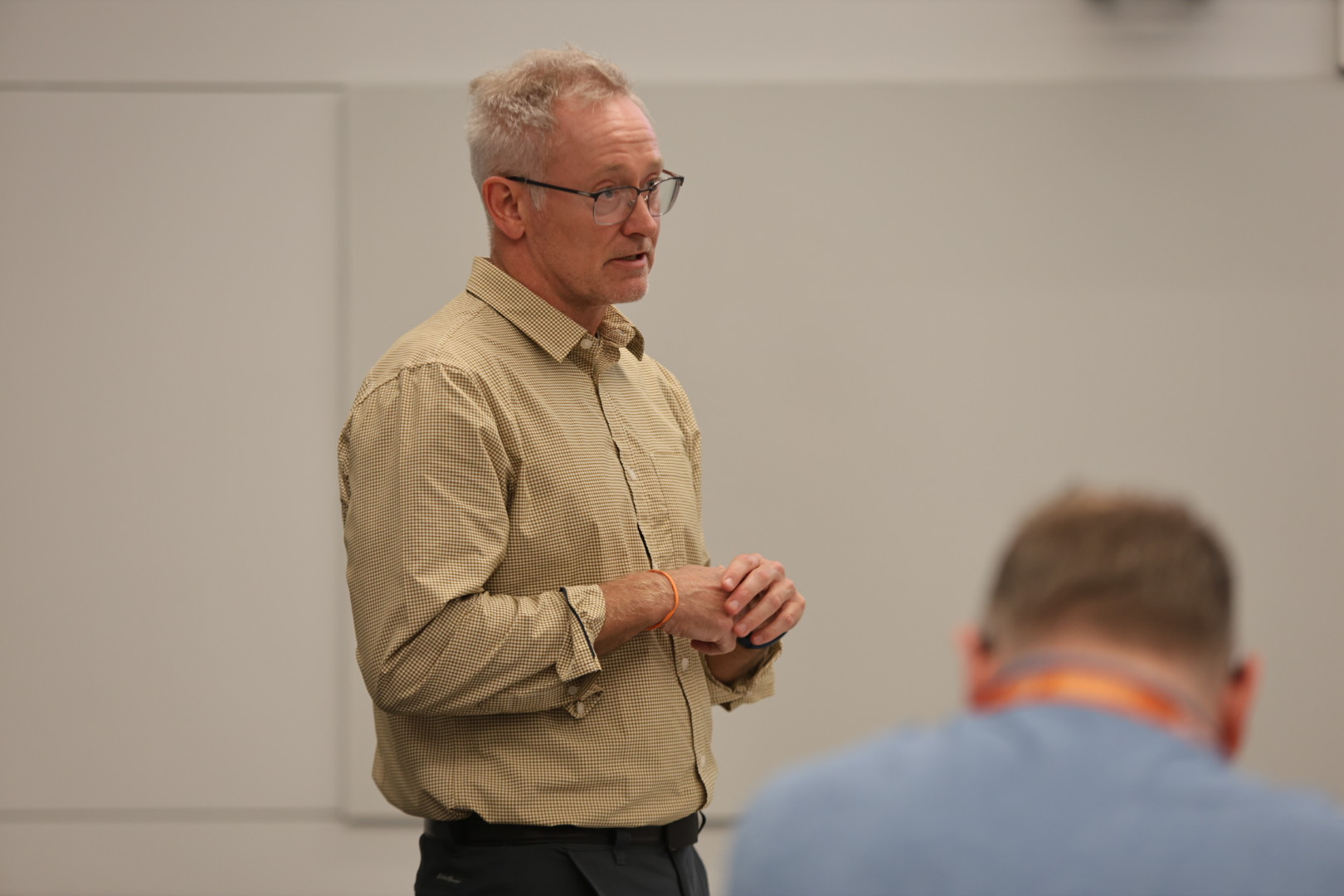
Bernadette Desario, a City of Alexandria history teacher, listens during an artificial intelligence workshop at the Virginia Tech Innovation Campus in Alexandria. (Photo by Nathaniel Cline/Virginia Mercury) David Hicks, a professor in Virginia Tech’s School of Education, is taking questions during an artificial intelligence workshop at the Virginia Tech Innovation Campus in Alexandria. (Photo by Nathaniel Cline/Virginia Mercury) Amy Allen, an associate professor in Virginia Tech’s School of Education, is taking questions during an artificial intelligence workshop at the Virginia Tech Innovation Campus in Alexandria. (Photo by Nathaniel Cline/Virginia Mercury) David Hicks, a professor in Virginia Tech’s School of Education, is taking questions during an artificial intelligence workshop at the Virginia Tech Innovation Campus in Alexandria. (Photo by Nathaniel Cline/Virginia Mercury) A laptop is open to ChatGPT during an artificial intelligence workshop at the Virginia Tech Innovation Campus in Alexandria. (Photo by Nathaniel Cline/Virginia Mercury) “All of the ideas we have, we hope are a launching point for teachers, and we’re not hoping they go back and do the same things that we’ve shown them, but we are hoping that it broadens their perspective about what can be done,” Allen said.
Hicks framed the work as helping teachers use AI thoughtfully in history and social studies, not as a shortcut or cure-all.
He also cautioned against AI simulations of historical figures.
In an example he shared with the Mercury, an Anne Frank-themed chatbot gave antiquated, inappropriate answers to a research prompt, showing how such interactions can whitewash history and downplay difficult experiences.
“(Some people) would argue you could do simulations and think about being advisers and things, but no, that is bordering on the same type of kind of simulations that we’ve seen in the press. … it gets to that same type of trivializing the experience that you’ve got to be wary of,” Hicks said.
Desario said the session changed her perspective, despite her being an AI novice. She highlighted learning how effective prompting — and drawing on available sources — can generate stronger questions and expand thinking in new directions.
“We are very thankful that we have a group of individuals that are willing to work with teachers and help us using this resource … in a way that makes the most sense and really supports our students,” Desario said.
The Center for Humanities and the Library of Congress’ Teaching with Primary Sources Partner Program made funding for the workshops possible..
Virginia Tech has been studying the use of artificial intelligence, most recently completing a review of CHATGPT Edu, a platform built by OpenAI specifically for higher education institutions to support students, faculty, researchers and campus operations.
The university is also using AI to study hemorrhagic fever viruses, predict and prevent global pandemics and make transportation safer and more efficient.
Allen and Hicks, authors of the book “Teaching History with Chatty Geeps,” will continue their workshops in Blacksburg and Abingdon through mid-November.
This post was originally published on Virginia Mercury.
Measles cases reach 4,080 for the year — the highest in decades
Measles cases for the calendar year surpassed 4,000 for the first time in decades, with as many as five deaths in Pennsylvania, as the federal government steps in with financial help for states but also fans vaccination fears and skepticism.
A weekly report from the Centers for Disease Control and Prevention showed 4,080 cases this year as of Oct. 8, up 192 cases in a week.
Pennsylvania, which has reported five confirmed deaths from measles, alone had 142 new cases for the week — for a total of 1,105 for the year. The CDC has recognized just two of the state’s reported deaths.
Pennsylvania Gov. Josh Shapiro, a Democrat, has protested the CDC’s death count; his state’s five deaths would be more than the three deaths reported in 2025 for the entire nation.
Other states with large numbers of cases, more than 200, did not see their case numbers change for the week: South Carolina (670 for the year), Utah (535) and Wisconsin (207). States with more cases included New York, which declared a measles emergency, with 19 new cases for a total of 103 this year; and Iowa, up 17 cases to 39.
Kentucky reported separately on Friday that cases there had reached 104, up 10 from last week.
Pennsylvania, which has become ground zero for this year’s outbreaks, reported this week that a new awareness and pop-up vaccine clinics are leading to more measles vaccinations.
All but five states have had at least one measles case this year. The last time the United States had this many cases was in 1991, reaching 9,643 cases as the nation still struggled to roll out vaccinations for the disease, amid budget cuts that hit programs in big cities.
Pennsylvania’s health department this week announced “a surge of interest” in vaccinations as more residents become aware of the outbreak — more than 56,000 doses were given out in September, more than twice the usual monthly volume. The state has added pop-up clinics in the most affected areas. All but four of the measles cases were among unvaccinated people.
The Lewistown Sentinel reported that an 18-year-old woman there died in September from brain swelling as a result of the measles virus after two of her brothers survived the disease.
While the federal government has offered states more funding to combat measles, Health and Human Services Secretary Robert F. Kennedy moved forward this week on plans to emphasize vaccine injury, announcing a new clinic and work to strengthen a database that tracks problems after a vaccination.
“We must listen to patients and families who report vaccine injuries — not dismiss or gaslight them,” Kennedy said in a statement.
Stateline reporter Tim Henderson can be reached at [email protected].
This story was originally produced by Stateline, which is part of States Newsroom, a nonprofit news network which includes Virginia Mercury, and is supported by grants and a coalition of donors as a 501c(3) public charity.
This post was originally published on Virginia Mercury.
In capital punishment, failure is a feature
In his 1975 book, “Systemantics,” John Gall hypothesizes that complex systems tend to fail, and not because of bad intentions, incompetent operators, or a few correctable defects. Organizations and other human-made systems develop unanticipated behaviors that often thwart their intended purposes. As we begin to recognize these tendencies toward failure, we assume that a new, more complex system will solve the problem.
Nowhere is this theory truer than in the U.S. capital punishment apparatus. As of October 7, 27 U.S. states and the federal government retain the death penalty, either actively or passively. Five of those states, now including Tennessee, have government-imposed moratoriums.
Virginia permanently dismantled its apparatus in 2021, becoming the first Southern state to do so. (The electric chair, lethal injection gurney, and numerous related implements — even a can of brass cleaner — are in storage at the Virginia Museum of History and Culture.)
Virginia abolished biased, inefficient, botched executions; more states should follow suit
On September 30, Tennessee attempted to execute Christa Gail Pike with two doses of lethal pentobarbital. She survived and was hospitalized, receiving life-saving care from the same state that just tried to kill her.
Earlier in May, Tennessee abandoned its attempt to execute Tony Carruthers after personnel could not establish the required IV access. Gov. Bill Lee halted the remaining execution scheduled for the year and ordered an independent review.
The Tennessee Department of Corrections insists that it strictly followed every step of the established protocol. Pike survived anyway. This raises a pointed question: if the prescribed steps were followed and the intended result did not occur, is the problem simply noncompliance with the protocol (human error), or the protocol’s original design?
Calling Christa Pike’s botched execution “human error” does not absolve the system that failed to kill her. Because the system depends on people, design must account for human limitations.
Nashville court rules state must preserve all records from botched Tennessee execution
Capital punishment demands that fallible institutions deliver an infallible result. Its safeguards reveal how often the system gets things wrong and how little control the state has even at the final step.
Now, the federal government plans to add yet another cog to this horrifically damaged system.
The capital punishment mechanism starts failing at the trial level. A Columbia University-led study examined capital cases from 1973 through 1995 and found serious, reversible error in a jaw-dropping 68% of judgments during this period.
The errors included egregiously inadequate defense representation, prosecutorial misconduct, and faulty, confusing jury instructions. This figure does not even account for race, gender, and class bias.
If, after the requisite two trials (one to establish guilt, the other to mete out punishment), a conviction is secured and death is ordered, the failures persist through a labyrinthine appeals system that drags on frequently for decades.
This proves that a punishment requiring repeated litigation to review and correct errors cannot be described as efficient or reliably administered. The state cannot placate those who howl for a shorter appeals process by promising a shortcut to execution while simultaneously guaranteeing exhaustive protection against its own mistakes. Appeals give the convicted a fighting chance, but also prove the original machinery is defective.
The electric chair is a dirty, dangerous, and unpredictable method of killing. History records inadequate electricity delivery, poor electrode contact, burst eyeballs, cooked organs, smoke and even heads bursting into flames, as with Virginia’s Frank Coppola and Florida’s Jesse Tafero.
The Lethal injection system (LI) was introduced in 1982 to solve the electric chair problem. It was meant to make execution resemble a medical procedure performed by medically qualified personnel.
In her 2025 book, “Secrets of the Killing State: The Untold Story of Lethal Injection,” University of Richmond Law Professor Corinna Barrett Lain describes LI as smoke and mirrors, an execution method built around questionable science, torturous drugs with unknown origins, inept executioners, and dogged secrecy. Those are interacting institutional flaws, not merely a succession of unusually sloppy employees.
Lain notes that LI has a “botch rate” of 7.3%, far higher than that of hanging and the electric chair. The most common problem with LI is a condemned inmate’s compromised vascular system. Corrections officers with little to no medical training poke and jab them with needles, sometimes for hours, hoping to find a suitable vein.
Other LI failures include illegal drug procurement, improper storage, and preparation and administration errors, drugs entering the tissue rather than the bloodstream (such as with Pike), inadequate anesthesia, and a prolonged, painfully unconstitutional death from any combination of these.
Ironically, the victim’s survival is the ultimate failure.
In 2018, Alabama attempted to address its LI problems by introducing a nitrogen gas system option. Four more states (Arkansas, Louisiana, Mississippi, and Oklahoma) have since followed suit.
Troubles with gas include an imperfect mask seal, vomiting and aspiration into the mask, the risk of oxygen deprivation for witnesses and spiritual advisors, and an uncertain assessment of suffering. Witnesses in Alabama and Louisiana reported condemned inmates convulsing and thrashing. Anthony Boyd took more than 30 minutes to die, and he reportedly gulped for breath over 200 times.
As noted, the system’s failures extend beyond the mechanics of killing. The Pentagon plans to publicly execute Nidal Hasan, convicted of killing 13 people at Fort Hood in 2009, by firing squad on December 3 and to livestream his death.
Defense Secretary Pete Hegseth says the public should be able to watch because “people need to understand that there’s [sic] serious consequences for these types of things.”
Here, the institutional failure is not an inability to carry out a sentence but, like lynching, a willingness to turn a bankrupt process into a high-tech public spectacle. A system that introduced lethal injection to make killing look like medicine now proposes broadcasting a noisy, violent firing squad execution as a lesson in deterrence and, more importantly, to showcase the state’s power to kill.
NPR reported that after South Carolina executed Mikal Mahdi by firing squad in April 2025, a state-commissioned autopsy showed that the shots had missed his heart, damaging his liver and other organs. A forensic pathologist retained by his lawyers concluded that Mahdi lived for up to one minute, experiencing “excruciating conscious pain and suffering.”
Changing the machinery of capital punishment does not remove the fallibility of the people who operate it, nor can an institution claim reliability and then dismiss foreseeable mistakes by its own personnel.
If an execution is successful and the inmate dies quickly and painlessly, it is not because of the system but in spite of it.
This post was originally published on Virginia Mercury.
Here’s where doctors diverge on Va.’s pending reproductive rights constitutional amendment
As OBGYN Dr. Christina Francis stood in Virginia’s General Assembly Building earlier this month to speak against a proposed reproductive rights constitutional amendment, she said that voters “should not look at this as a political issue.”
But the ballot referendum to enshrine reproductive rights into Virginia’s constitution — along with the surge of states enacting bans, restrictions or protections like Virginia’s proposal — has prompted doctors here and across the nation to wade into the increasingly-heated political discourse.
VCU Health fetal medicine doctor Edward Springel, who works blocks from the state Capitol, joined Francis and a handful of other medical professionals in downtown Richmond that day.
He said that he typically doesn’t get involved in politics, but that the language of Virginia’s pending reproductive rights constitutional amendment prompted him to publicly oppose it.
Doctors like Springel and Francis argue the amendment could reduce safety standards for abortions at all stages of pregnancy or make it too easy for people to get them in the first place.
Other medical professionals who support the amendment say it would cement Virginians’ reproductive healthcare rights and bodily autonomy, after the Supreme Court overturned federal protections for abortion four years ago.
Current law allows abortions to the end of the second trimester for any reason with three physicians’ needed to approve third trimester abortions should the life or health of the pregnant person be “irremediably impaired.”
With the addition of contraception and fertility treatment protections, the amendment would essentially affirm Virginia’s current law. However, the language would reduce the three-physician requirement to one.
Proponents argue this is helpful for rural patients who have to travel further for care or during dire emergencies. Opponents, like Springel, say less consultation reduces safety.
As survival rates for fetuses increase around 25 weeks of pregnancy onward, Springel suggested that premature births could be sought instead of third trimester abortions amid life-threatening complications.
“The baby could be delivered alive, and then you would have two living patients,” he said.
But Dr. Kimi Chernoby, a Northern Virginia-based emergency medicine doctor who supports the amendment, stressed that every pregnancy is different.
“People are getting third-trimester abortions for things like fatal fetal anomalies, where they know that the fetus does not have a chance of survival,” Chernoby said.
“No one,” Chernoby said for example, “is doing an induction at 17 weeks and thinking that there is going to be a survivable birth.”
Third-trimester abortions, which make up 1% of the procedure nationwide, are often due to a late-developing issue with the fetus or parent, a National Institutes of Health study found.
Such abortions also typically occur closer to the start of the third trimester than later into it, an American Medical Association study indicated, usually because the issues weren’t detected or fully diagnosed until then, according to another NIH study.
Constitutional: The amendment that could permanently protect reproductive rights in Virginia
Abortions earlier in a pregnancy can also be health-related, but may also be socio-economic or personal reasons Dr. Ramesh Shanthi, an OB/GYN with Planned Parenthood, said. She’s seen various reasons play out for her patients that have sought her care.
A pregnant patient who’d recently given birth, she said for example, who didn’t realize she could conceive again so soon may be not ready for another child.
“Others are caring for a special needs child, caring for an elderly family member, finishing school, in the military, or ending a relationship with a partner they didn’t want to parent with,” Ramesh explained.
In her outpatient care work, Ramesh regularly encounters people in earlier stages of their pregnancies that seek prenatal care or abortions.
Conversely, Springel tends to encounter patients for whom abortion is a last resort, as a high risk pregnancy specialist within a hospital setting.
Springel said he doesn’t support abortions happening “for social reasons.”
He and other doctors affiliated with the American Association of Pro-Life OBGYNs allege that the amendment could override Virginia’s existing abortion restrictions and make it too easy to obtain at all stages.
The only existing abortion restriction the amendment would alter is reducing the three-doctor requirement to one.
Francis, who helms APPLOG, said that it would also allow the procedure “to be done by unlicensed providers in unlicensed facilities,” an unproven claim that has no factual basis within the amendment’s language.
State agencies already regulate safety standards of medical facilities, a point Ramesh highlighted.
Chernoby added that “unlicensed care” is already happening in non-medical centers designed to dissuade people from abortions.
Known as crisis pregnancy centers or pregnancy resource centers, such facilities offer diapers, formula or financial assistance to distressed people and encourage them to keep their pregnancies.
Though some of these facilities offer pregnancy tests and ultrasounds, most are not medical centers. Because they don’t bill insurance for their services, they are not subject to patient privacy standards and are not treated as medical centers.
That can get risky, Chernoby said.
As conditions like internal bleeding or clotting along with ectopic pregnancies can be detected in early ultrasounds, if not interpreted properly, patients may not seek appropriate follow-up medical care.
Chernoby said she has cared for patients in the emergency department who’d previously received an ultrasound at a center and not realized they had complications.
Medical debates aside, the matter is still political and personal.
Every Republican in Virginia’s legislature voted against sending the Democrat-led referendum to ballots. The amendment cleared Virginia’s legislature for the first time in 2025 and passed again earlier this year, as required by state law to make it to ballots.
House Majority Leader Charniele Herring, D-Alexandria, said people “are tired of their freedom being a political football.”
With the matter now out of the hands of Virginia’s 140 state lawmakers, Herring said that ultimately, “the voters will decide.”
Early voting runs through Oct. 31 and Election Day is Nov. 3.
This post was originally published on Virginia Mercury.
Vindman faces crowded field and economic pressures in Virginia’s 7th District Congressional race
U.S. Rep. Eugene Vindman, D-Woodbridge, is seeking a second term in one of Virginia’s most politically astute and competitive districts, where five challengers — including Republican Douglas Ollivant — are on the ballot.
The outcome of the 7th Congressional District race could weigh heavily in determining which party will control the U.S. House of Representatives, currently held by Republicans.
Virginia’s GOP candidates are also being sized up based on how their party, which also controls the U.S. Senate and the White House, has handled the country and, specifically, the Northern Virginia district.
Mounting economic pressures, federal employment shifts, lack of affordable housing and infrastructure needs are critical concerns for voters there.
“A key issue to appreciate in the 7th District is the economic squeeze that people are feeling,” said Dr. Stephen Farnsworth, professor emeritus of political science at the University of Mary Washington. “A lot of people in this district have had to deal with very high housing prices, and the cost of living generally is quite high in Northern Virginia.”
The 7th District, which includes Prince William County and parts of Stafford and Spotsylvania counties, has grown by 5.3% over four years with an estimated 825,445 residents in 2024.
In the same year, roughly 400,000 residents voted in the 2024 U.S. House election, which Vindman won by three points over Republican Derrick Anderson.
The district has a high concentration of military personnel, veterans, and defense industry employees. There is also a partisan divide between Democratic voters in the east and Republican voters in the west.
Vindman: Addressing the pressures
After narrowly winning two years ago, Vindman faces multiple challengers as rising living and housing costs dominate voters’ concerns.
Vindman, who immigrated to the country as a child with his family from Ukraine, is a retired U.S. Army colonel and former U.S. Department of State consultant who investigated war crimes in his home country. He serves on the U.S. House Armed Services and Agriculture committees.
His campaign said he heard from over 150 Virginians through a district-wide survey on these issues and the congressman has placed the blame squarely on his colleagues across the aisle.
“Families across Virginia are being squeezed by higher utilities, groceries, and everyday essentials all thanks to Republicans’ reckless war in Iran and flawed economic policies,” Vindman said earlier this year.
He continues to push for an end to the conflict and supports bipartisan efforts to cut costs and to make life more affordable for working families, including proposing legislation to lower utility costs and grocery prices.
Still, uncertainty remains, as the median income of the area sits at roughly $468,000, and many renters spend more than 30% of their income on housing.
The district is also affected by federal downsizing and shifting government spending, following budget cuts from the Trump administration. Over 147,000 federal workers live in Virginia — 13% in the district.
Vindman opposes large-scale reductions and supports modernizing the civil service, while promoting responsible budgets.
He also backs stronger federal oversight of rapid data center development, which has fueled public frustration, especially along the I-95 corridor.
Vindman has raised over $12 million for the campaign.
Ollivant: ‘I am fighting’
A week ago, Ollivant, a retired Army lieutenant colonel and former National Security Council official, reiterated his commitment to running for office after being diagnosed with Acute Myeloid Leukemia.
“I want to be exceptionally clear: I am fighting to beat this cancer, and I am fighting to beat Eugene Vindman in November,” he wrote in a social media post. “That is my promise to you.”
Before that announcement, Ollivant addressed affordability by focusing on lower energy costs, increased energy production, expanded domestic manufacturing, reduced regulatory barriers to housing construction and higher-paying jobs.
He also supports data-center development, arguing that local governments should decide where data centers go and how much development their communities will accept.
Virginia is home to the largest concentration of data centers in the world with nearly 650 operating in the state, according to a 2025 Pew Research Center report.
The Joint Legislative Audit and Review Commission, Virginia’s legislative watchdog, estimated that, absent changes in cost allocation, data-center growth could eventually add $14 to $37 a month to a typical Dominion Energy residential customer’s generation and transmission costs.
Ollivant’s campaign has raised over $250,000 for the race.
Lopez: Prioritize affordability
Taner Lopez, a cultural advisor and former university professor, said he wants to address the district’s biggest issue: affordability.
The Libertarian said the federal government should focus its resources on Americans instead of foreign conflicts.
“My priority is simple: make government work for the people who pay for it and make life more affordable for families in the 7th District,” Lopez said.
He said families are paying more for groceries, housing, energy, healthcare, and other necessities as the federal leaders keep spending beyond their means and expanding their reach.
If elected, he would support policies to reduce unnecessary federal spending, boost tax relief, eliminate regulations that unnecessarily increase costs, and promote competition and free markets.
In addition, Lopez said he would introduce legislation that would provide tax relief to working farms and help reduce the cost of employing agricultural workers who legally immigrated to the country.
Lopez’ proposed Data Center Community Consent Act would protect property owners and prevent the infrastructure costs associated with massive data centers from being shifted onto residents.
He would also propose the Veterans 28 Act, which would require timely Veterans Administration healthcare and expand access to community care when the VA cannot provide an appointment within the required period.
“Washington should measure success by whether families can afford to live, work, raise their children, and retire with dignity—not by how much money the federal government spends,” Lopez said.
Independent challengers share economic and housing policy goals
Human Rights Advocate Alaha Ahrar, longtime political activist Randall Terry, and Joshua Ertle are all independent candidates seeking to unseat Vindman.
Ahrar, an Afghan-born American, is chief executive officer of International Kindness Sharing and a business consultant and entrepreneur with Jobenomics.
Her platform is focused on building up the district starting with the community, building a national model for locally-driven economic growth.
“The goal is not simply to create more jobs,” her campaign website reads. “It is to build an economic ecosystem in which skills lead to opportunity, opportunity leads to ownership, and ownership creates stability for the next generation.”
The Mercury contacted the three independent candidates, but did not receive a response.
Candidates share common ground on several issues, particularly housing and affordability. They broadly recognize the need to address housing costs and increase supply.
The 7th District’s housing-supply challenge is particularly acute for lower-income renters.
The district has about 291,000 housing units, but its housing stock is heavily concentrated in single-family homes, which make up roughly 84% of units, according to data from the National Low Income Housing Coalition’s annual Gap Report, which details a nationwide shortage of more than seven million affordable rental homes.
The Virginia Housing Alliance also found that at the lowest end of the income spectrum, there are 29 affordable and available rental homes for every 100 extremely low-income renter households — a shortage of roughly 71 homes for every 100 households.
Veterans’ health care and services are another area of broad agreement among the independent challengers, as are jobs, workforce development and economic opportunity.
According to the U.S. Census Bureau’s 2024 American Community Survey, veterans make up approximately 12% of Virginia’s 7th Congressional District, compared with 8.9% of Virginia’s population overall.
Key issues for veterans include access to VA healthcare, disability claim processing, and military spouse employment.
Early voting runs through Oct. 31 and Election Day is Nov. 3. Read The Mercury’s voter guide for more information on the candidates and races.
This post was originally published on Virginia Mercury.
Richmond plans to pull the plug on Flock cameras
(The Center Square) – Richmond will not renew its contract for Flock Safety license plate cameras.
Mayor Danny Avula announced the decision Saturday, following Henrico County’s move to end its agreement over privacy concerns. Richmond’s contract expires June 30.
Avula said Henrico’s departure makes Flock less useful for Richmond police because part of the technology’s value comes from working with neighboring agencies.
“Crime doesn’t stop and start at the city-county line, and part of what makes this technology a useful crime-solving tool is our ability to work together with our regional partners,” Avula said in a video announcement.
Richmond is still considering its broader use of automatic license plate readers. Avula said his team is organizing sessions to hear from residents affected by violence and those concerned about misuse or disproportionate policing.
Richmond police list 99 fixed Flock license plate readers across the city. The cameras collect information about vehicles traveling on public roads. Police say they help investigate violent crimes, recover stolen vehicles and find missing people.
In September, Avula directed police to shorten their data retention period from 21 days to seven days. He also said the city would consider other vendors and whether an independent review of its policies was needed.
Sen. Michael Jones, D-Richmond, welcomed the nonrenewal decision. His office is drafting legislation for the upcoming General Assembly session to strengthen privacy protections, increase accountability for misuse and require additional judicial oversight.
“Public safety and the constitutional rights of Virginians should never be competing priorities,” Jones said in a statement. “We can and must do both.”
Jones said residents deserve to know what information is collected, who can access it, how long it is kept and what happens when it is abused.
Henrico announced Tuesday that police would end their Flock contract within seven days. County officials said they were confident local police had used the information appropriately but remained concerned about potential misuse by others.
Henrico Communications Director Ben Sheppard said the county did not anticipate any cost to exit the contract. Its July renewal agreement included a 3% increase in the annual fee, bringing it to about $2,652 per camera.
Richmond police said a first-quarter audit found that a sergeant shared a vehicle image with an FBI agent investigating a homicide in Washington. Sharing the information violated department policy. The department removed the sergeant’s access to the system, and prosecutors declined to pursue charges.
Virginia’s statewide rules for police use of license plate readers took effect July 1, 2025. A Virginia State Crime Commission survey found some agencies reported giving out-of-state or federal agencies continuous access to their data. The commission said Virginia law prohibits that sharing.
This post was originally published on The Center Square.
Va. congregants celebrate reconstruction of one of America’s oldest Black churches, more headlines
• “After a felony, Virginia took away his vote. A court win is giving it back.” — The Washington Post
• “(Virginia) congregants celebrate the reconstruction of one of America’s oldest Black churches.” — The Associated Press
• “Northampton County shellfish farmers are reeling after algal bloom devastates oyster crops.” — WHRO
• “Trump’s memorial arch faces new lawsuit from Arlington County, Virginia.” — ABC News
• “Three of Hollywood Cemetery’s most storied sights.” — The Richmond Times-Dispatch
This post was originally published on Virginia Mercury.
Virginia panel backs proposed chatbot protections
(The Center Square) – A Virginia legislative commission backed proposed protections for artificial intelligence chatbot users Thursday.
The Joint Commission on Technology and Science accepted recommendations organized around six policy principles to guide legislation in the next General Assembly session. The proposals include parental controls, reminders to take breaks and protocols for responding to people at risk of harming themselves or others. They would require legislation before becoming law.
Costs and responsibility for enforcement remain unresolved.
Del. David Reid, D-Loudoun, asked whether assigning new duties to several agencies would require funding and review by legislative appropriations committees.
Commission Chair Del. Cliff Hayes, D-Chesapeake, said members were voting on policy principles. Any costs would be addressed when legislation comes forward.
Executive Director Jodi Kuhn said the recommendations focus on chatbot features associated with harm while allowing users to make choices about their experience.
Companies would have to establish protocols for users showing signs of self-harm, suicidal thoughts or violence. Kuhn said chatbots should direct those users to crisis resources, and companies should make their policies publicly accessible.
Operators would also need to give users a clear way to report harmful interactions. Chatbots could not be marketed or present themselves in conversations as licensed professionals.
Other recommendations call for disclosures that chatbots are not human, reminders every two hours to take a break and making it easy to leave conversations or delete accounts.
Romantic or sexual content and excessive agreement with users would be limited by default. Kuhn said users could choose to enable additional features by creating an account.
For minors, the proposals include accounts linked to parents, the highest privacy settings by default and controls for parents or guardians.
A representative of the Virginia chapter of the American Academy of Pediatrics asked for stronger protections during public comment.
The group called for independent testing of safeguards and a prohibition on romantic or sexual interactions with minors. It also urged protections against chatbots encouraging children to talk only to them or keep conversations from trusted adults.
Hayes said the recommendations were a starting point. Lawmakers could consider additional protections when drafting legislation.
The proposed rules would cover chatbots based on what they can do, rather than how companies market them.
Kuhn said a conversation that begins with homework help can move into personal exchanges. Some customer service chatbots could also be covered if they are capable of conversations involving the identified harms.
Companies would submit risk assessments to the Virginia Department of Behavioral Health and Developmental Services. They would also report harmful incidents and provide annual reports on user complaints.
The recommendations would give the attorney general authority to investigate violations and impose civil penalties.
Kuhn said Virginia does not currently have a designated technical oversight agency for artificial intelligence. Commission staff are discussing oversight options with the administration.
The recommendations also call for seeking young people’s input on draft legislation and reviewing required reports after a resulting law has been in effect for one year.
This post was originally published on The Center Square.
Stafford approves data center with reduced setbacks
(The Center Square) – Stafford County supervisors on Thursday approved a two-building data center campus and electrical substation on separate 4-3 votes, allowing reduced setbacks from residential property lines.
The decision allows Falmouth Tech LLC to move forward with the Accokeek Center project on about 121 acres between Interstate 95 and Richmond Highway in the Falmouth District. Additional site plan and utility approvals are required before the campus can operate.
The company plans up to 590,000 square feet of data center buildings. Supervisors rezoned eight parcels from agricultural, rural residential and office zoning to heavy industrial and approved a separate conditional use permit for the substation.
The project’s setback modifications reduce the county’s 750-foot residential standard to 550 feet along several boundaries and 399 feet beside a parcel the developer said would be barred from development through a restrictive covenant.
Charlie Payne, the attorney representing Falmouth Tech, said buffers, tree preservation and noise controls would mitigate effects on neighboring properties.
Residents questioned the reduced setbacks, the unresolved transmission route and potential effects on Accokeek Creek and nearby homes. Labor representatives emphasized construction jobs and opportunities for residents to work closer to home.
Payne projected about $13.5 million in annual county tax revenue. When asked whether the estimate accounted for incentive payments, he acknowledged it was gross revenue.
Supervisor Crystal Vanuch, who represents the Rock Hill District, sought to postpone action until Oct. 20 to obtain revenue estimates accounting for incentives. Her motion failed.
The county’s meeting packet lists $6.4 million in cash proffers, the developer’s commitments tied to the rezoning. The contributions support would support things such as courthouse improvements, technology infrastructure, the Belmont-Ferry Farm Trail, fire and rescue facilities, career and technical education facilities, and transportation improvements.
Those contributions are due before the first data center building receives its certificate of occupancy.
The proffers also call for at least 40% open space, at least 45 acres of tree preservation and Tier IV generators. They prohibit groundwater for data center operations and public or private potable water for industrial cooling.
Before site plan approval, the developer must provide written verification from the electrical utility identifying the expected timeline for power service. Reclaimed-water cooling would require a water services agreement with the county.
Before the vote, Payne agreed to add a commitment to use qualified local contractors where possible and revise protections for private wells affected by the project.
This post was originally published on The Center Square.
Hardywood buys Starr Hill in major Virginia beer deal and more state headlines
• “Hardywood buys Starr Hill in major Virginia beer deal.” — Axios
• “‘I don’t care if I go to jail’: Newly released video shows 6-year-old defiant after Virginia school shooting.” — NBC News
• “ICF International to lay off 82 employees.” — Virginia Business
• “Damascus cancels Flock contract, joining other Virginia localities that have recently severed ties with the surveillance company.” — Cardinal News
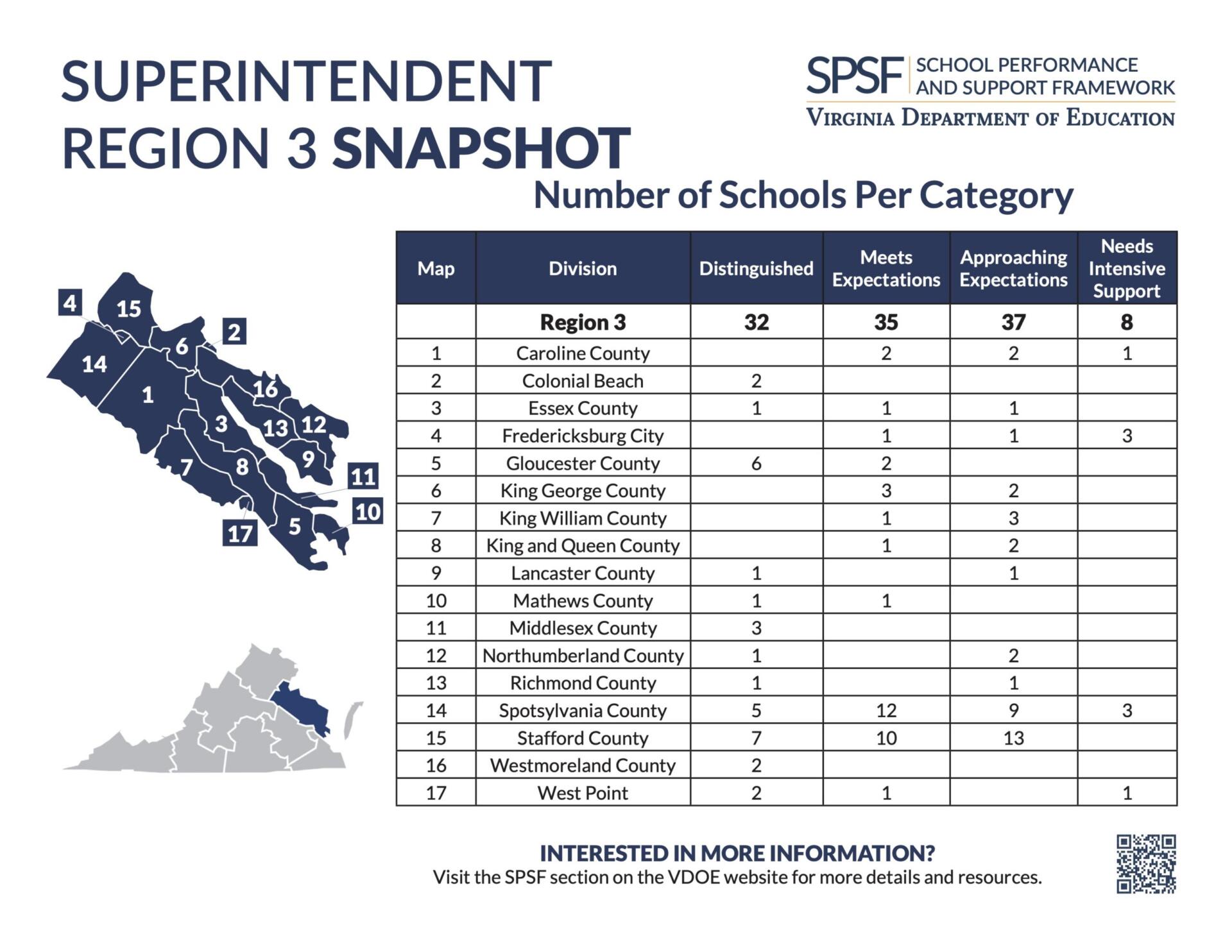
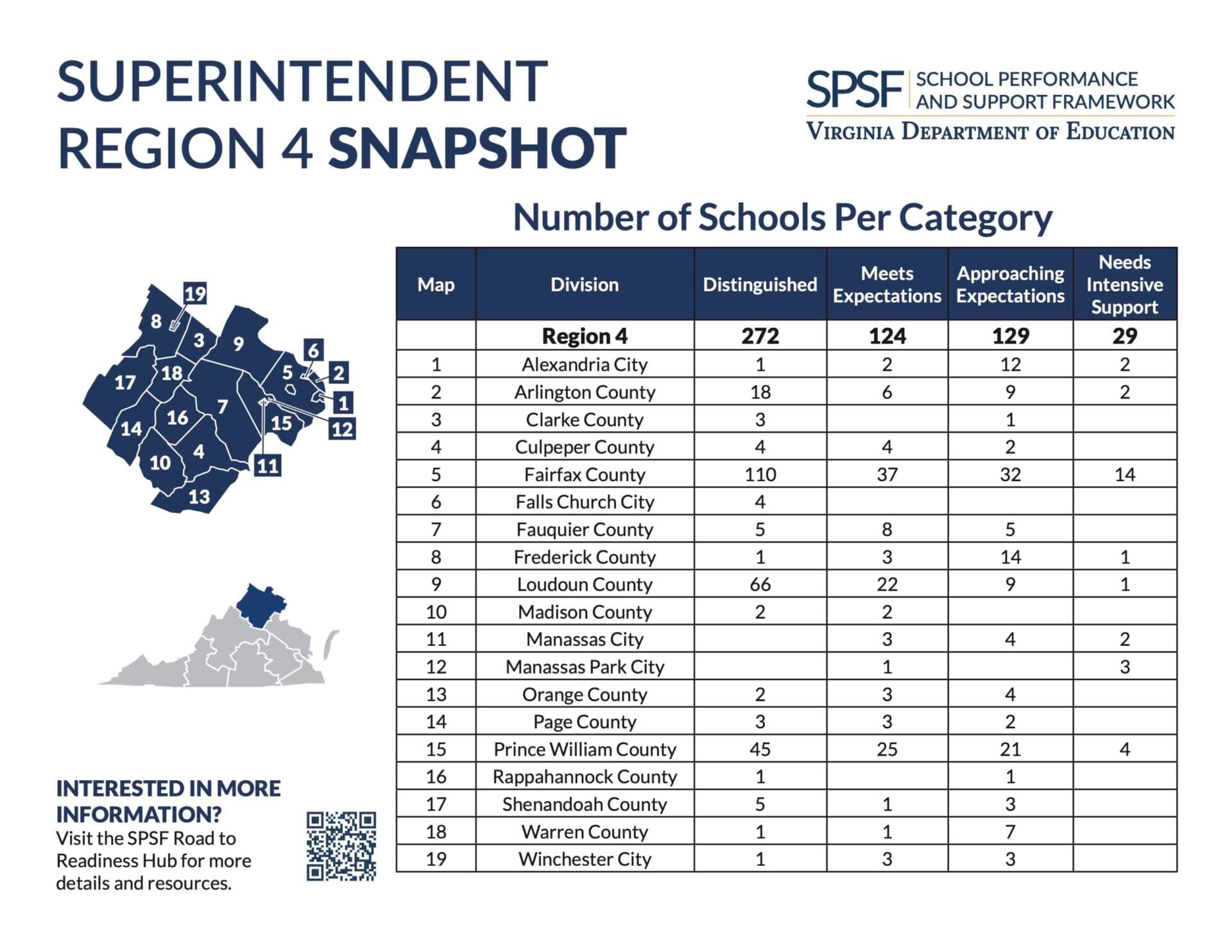
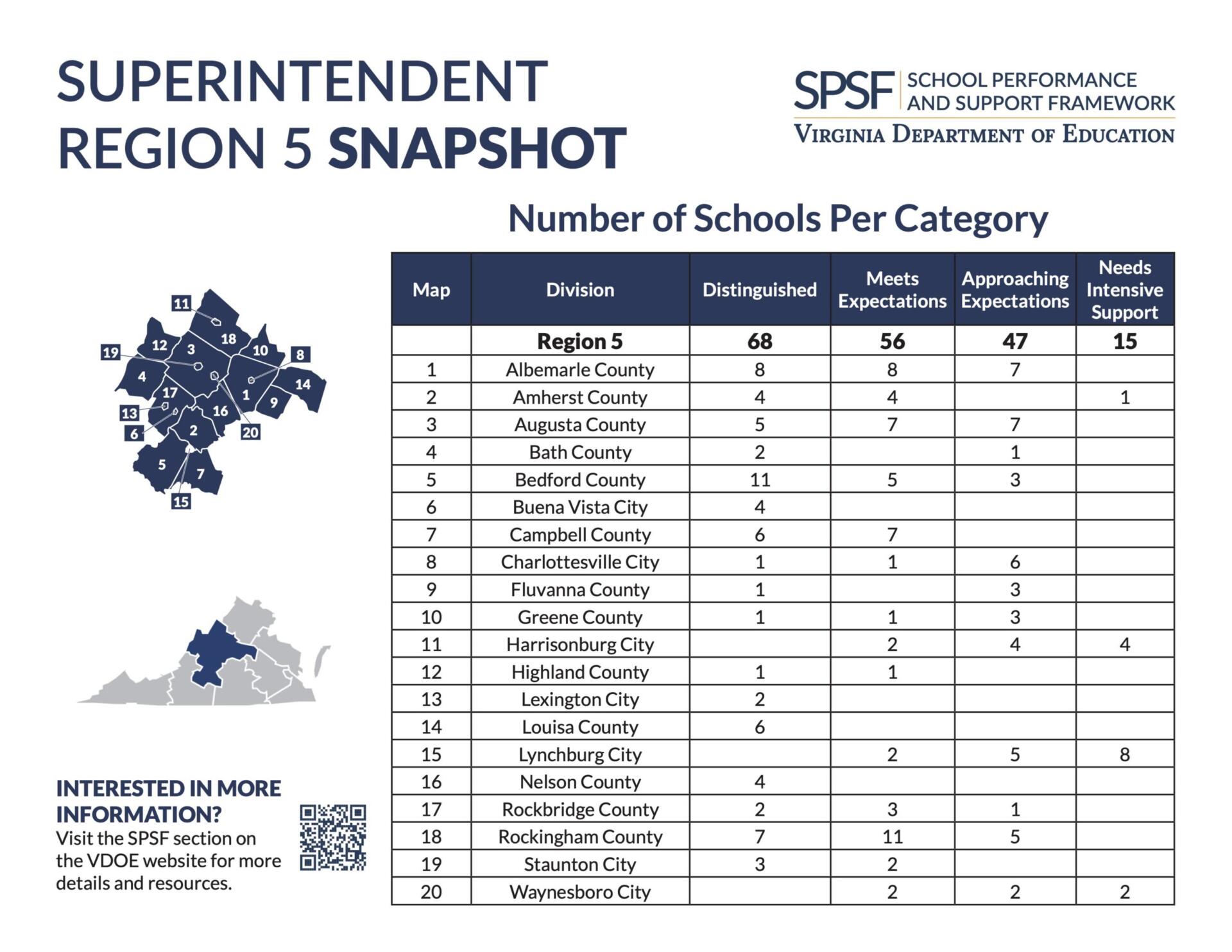
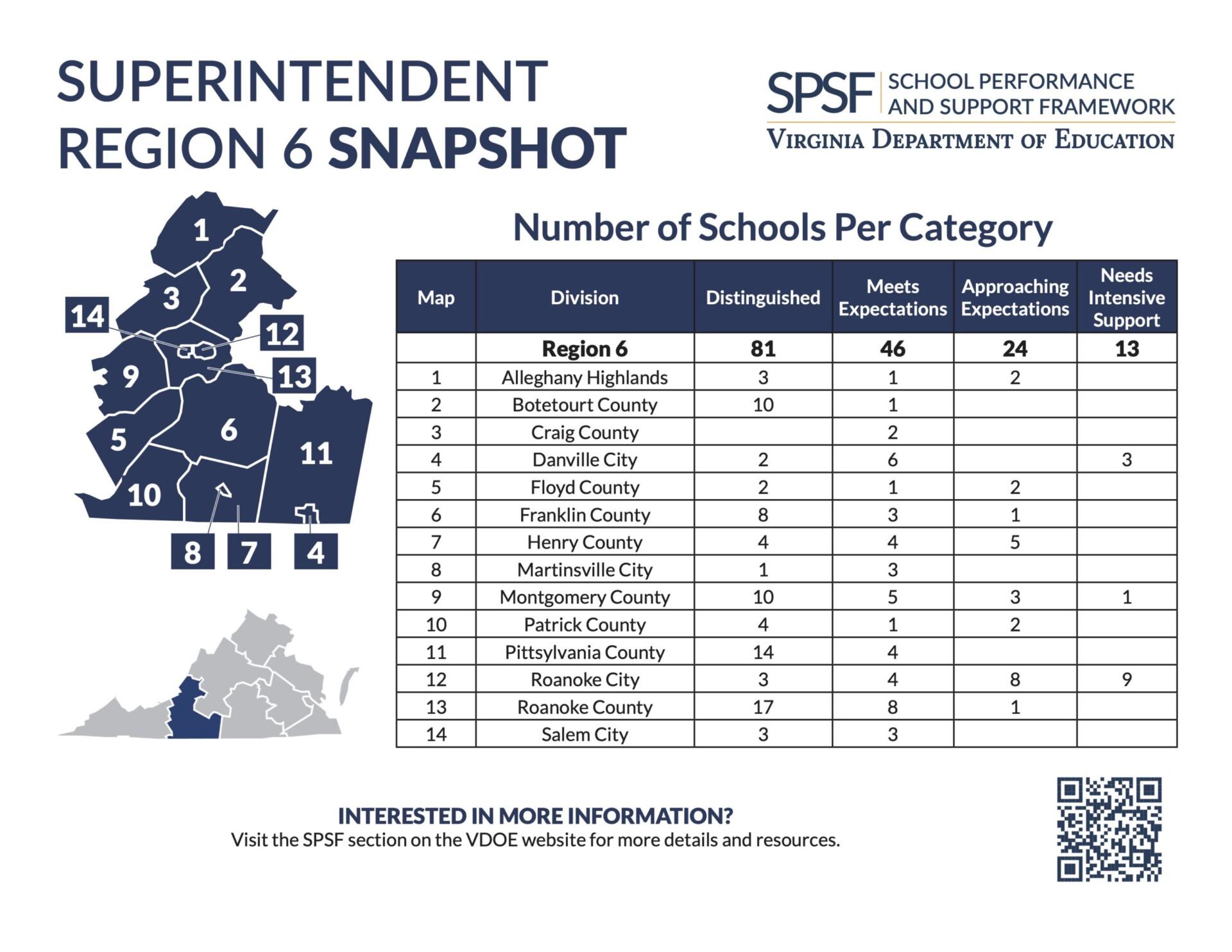
• “Louisa, Charlottesville, Albemarle ranked among Virginia’s best school districts.” — Cville Right Now
This post was originally published on Virginia Mercury.
Warner, Mizusawa outline competing approaches to disability policy
U.S. Sen. Mark Warner, D-Va., called for federal artificial intelligence regulations and stronger healthcare funding Wednesday as he and Republican challenger Bert Mizusawa outlined competing approaches to protecting Virginians with disabilities at a virtual candidate forum.
Mizusawa emphasized enforcing existing discrimination laws and cracking down on waste in federal programs.
Both candidates said they support helping people remain in their homes and improving voting access for people with disabilities. But they differed over mail voting, with Warner opposing restrictions sought by President Donald Trump’s administration and Mizusawa raising concerns about potential fraud in ballots cast outside of polling places.
The candidates answered similar questions during the 2026 Statewide Candidate Forum with the Disability Community, hosted by REV UP Virginia, The Arc of Virginia, The Arc of Northern Virginia and the Autism Society of Northern Virginia.
The nonpartisan, 80-minute program combined live and prerecorded segments, giving voters a chance to compare the candidates’ answers after AARP Virginia’s planned Oct. 7 debate in Richmond was canceled because Warner could not commit, citing uncertainty over his Senate schedule. Mizusawa had accepted the invitation.
Early voting is underway ahead of the Nov. 3 election. Organizers said people with disabilities represent about 15% of Virginia’s eligible voters. Questions addressed AI, Medicaid, education, housing and independent living.
Medicaid pays for more than health insurance, covering caregivers and community services that help people with disabilities to receive care at home. KFF estimates that the 2025 federal tax-and-spending law will cut federal Medicaid spending by $911 billion over 10 years, raising concerns over funding for those services.
Mizusawa stresses accountability and home care
A retired U.S. Army major general, Mizusawa drew on his military service and experience helping veterans navigate disability benefits, saying federal resources should prioritize Americans who need assistance.
On AI, he argued employers should remain responsible for discriminatory decisions made by software and should examine their systems for hidden bias. He emphasized enforcing the Americans with Disabilities Act rather than explicitly endorsing new federal AI regulation.
“The ADA is one of the important laws that we need to enforce,” he said.
Mizusawa’s position reflects an existing legal obligation. Federal employment guidance says discrimination protections and accommodation requirements apply when employers use AI.

Bert Mizusawa. (Photo courtesy campaign) Asked about Medicaid reductions, Mizusawa repeatedly pointed to fraud, waste and abuse, arguing that stronger oversight could free money for disability services and long-term care. However, he also acknowledged those efforts would not solve every funding problem and said broader reforms should protect people with legitimate needs.
“The reforms shouldn’t just be aimed at cutting,” he said.
Mizusawa questioned the U.S. Justice Department’s involvement in community-living policy, which he described as generally a state responsibility unless federal spending was involved. But he supported helping people receive care where they want to live.
Discussing caregiver shortages and proposed increases in federal funding, he cited his 95-year-old mother-in-law’s care at home, supporting care in comfortable surroundings when doing so is cost-neutral, without explicitly endorsing the HCBS Relief Act.
The legislation would temporarily increase federal Medicaid support for home- and community-based services.
On voting, Mizusawa said his overseas military service shaped his appreciation for ballot access. He supported reasonable accommodations, including mail voting and special opportunities at polling places, while calling for safeguards to verify voter eligibility.
Asked about federal benefit rules that penalize some people for getting married, he described existing rules as antiquated but did not specify legislation he would support.
He also backed accommodations and opportunities for students with disabilities to learn alongside their peers.
On housing, he proposed eliminating capital gains taxes on principal-home sales to encourage owners to sell, and making disability-related home modifications easier to deduct for people who do not itemize.
Mizusawa praised Virginia’s Blue Envelope Program, which helps people with autism communicate their needs during police encounters, and supported recurring training for officers.
Warner calls for AI rules and stronger federal support
Warner gave an unequivocal answer when asked whether federal AI regulation is necessary.
“Yes, we have to have federal regulations,” he said. “You wouldn’t climb on an airplane if it wasn’t checked by the industry.”
He said AI could expand opportunities but also displace workers, and pledged to ensure disability communities benefit from the technology. His proposed safeguards extend to data center impacts, children’s safety and national security.
Warner also linked AI-related job disruption to caregiver shortages, calling for technology companies and the federal government to help workers to move into healthcare and direct-care careers.
On health coverage, Warner said he would fight for universal healthcare and seek to stop Medicaid cuts, warning that reduced funding could threaten hospitals and other providers. He supported increasing the federal Medicaid matching rate for home- and community-based services.
“No Virginians should lose coverage because they lose a job,” he said. “And no one should have to choose between groceries, rent, and medicine.”

U.S. Sen. Mark Warner, D-Va. (Photo courtesy campaign) Warner criticized the Trump administration’s retreat from the ADA’s community-integration protections. A June Justice Department legal opinion concluded federal disability statutes do not impose the broad integration mandate the department previously enforced. The opinion does not overturn the U.S. Supreme Court’s 1999 Olmstead decision.
Virginia’s work to expand community services remains governed by a permanent injunction that replaced its Justice Department settlement in January 2025.
On voting, Warner said he opposed White House restrictions on mail and absentee ballots and co-sponsored the Absentee and Mail Voter Protection Act, which would repeal the administration’s election executive order.
“We should not restrict that right going forward,” he said.
When asked about marriage penalties, Warner cited his support for disability savings accounts under the ABLE Act but favored comprehensive reforms to Social Security, Medicare and Medicaid over individual benefit expansions. He did not commit to specific marriage-penalty legislation.
Warner also backed the IDEA Full Funding Act and opposed moving special education and civil rights enforcement out of the Education Department.
He supported expanding the Blue Envelope Program and federal de-escalation training.
On housing, he emphasized increasing affordable, accessible supply, including through grants to communities that remove barriers to building housing on underused religious properties. He also highlighted home-based primary care, infusion treatments and telehealth as ways to help people receive care without entering institutions.
“The hospital or nursing home is not the right option for every patient,” Warner said.
Virginians will decide which candidate will represent them in the U.S. Senate for the next six years on Election Day, Nov. 3.
This post was originally published on Virginia Mercury.
Voters in midterm elections identify a culprit for rising cost of living: Trump’s tariffs
WASHINGTON — Rebecca Myers lives in one of the nation’s most hotly contested congressional districts, and tariffs were on her mind as she voted early and in-person in Suffolk, Virginia in late September.
The 44-year-old trained social worker said she and her husband, who recently retired after 25 years in the U.S. Navy, are raising two children, ages 7 and 9, and forgoing a family vacation to save money.
“I’m an educated person, but I’m not going to pretend to be an expert in the economy. All I can say is I know my family’s finances very well and I know everything we spend money on has gone up in price.
“I understand some of it is due to the tariffs, some of it is due to the war in Iran,” Myers told States Newsroom in an Oct. 1 interview.
Myers is among a growing number of voters found to be taking their anger about affordability to the polls this midterm election and blaming President Donald Trump’s tariffs as a culprit for rising expenses. Public opinion surveys bear out Myers is far from alone in making the connection.

(Getty images) “The real top line is that for maybe the first time ever, tariffs are a salient issue at the ballot box,” said Scott Lincicome of the libertarian Cato Institute. “You know, normally trade is a boring issue that nobody really thinks about or cares about.”
Myers, who lives in Virginia’s 2nd Congressional District, voted for Elaine Luria, the Democratic candidate and former U.S. representative who is challenging the incumbent Republican, Rep. Jen Kiggans.
Kiggans, Myers said, has supported Trump’s “MAGA agenda,” including tariffs.
Kiggans’ campaign did not respond to a request for comment.
Trump opponents seize on issue
Organizers are targeting districts like Myers’, where Democrats could flip seats.
“We talk to families every day who are struggling with the things that they need to take care of themselves and their families,” said Sondra Goldschein, executive director of the Campaign for a Family Friendly Economy.
Her organization, which also has a political action committee that endorses Democrats, recently hosted a “tariff-proof” cooking class in Chesapeake, Virginia, to drive attention to the issue. Attendees received tips like substituting chicken for beef, buying domestic produce, and choosing frozen over canned goods — all which have been affected by Trump’s ever-changing taxes on imports.
Goldschein and national organizers are targeting voters not only in Virginia, but in Florida, Iowa, Maine, Michigan, North Carolina, Ohio and Pennsylvania.
“This Republican-backed Congress and all of the members that come from states like this have really turned their backs on working families,” Goldschein told States Newsroom during an interview ahead of the cooking class.
In a state-by-state breakdown of tariffs, the conservative National Taxpayers Union Foundation and Trade Partnership Worldwide found the top 10 states most affected by Trump’s tariffs — in the tens of billions of dollars — are California, Texas, Michigan, Georgia, Illinois, New York, New Jersey, Florida, Ohio and Tennessee.
Virginia, where business owners have paid a collective $6.2 billion in tariffs ordered by Trump since January 2025, ranked 18th.
Nearly all are in the midst of fierce battles for U.S. Senate or House seats as tariffs emerge as what critics predict will be a major factor in the midterm elections that will determine control of Congress.
Ever-changing tariffs
New research shows Trump’s on-again, off-again tariffs on imported goods have cost business owners and consumers billions of dollars.
“The typical estimate has it being in the neighborhood of $1,000-plus per year of additional (consumer) costs, and maybe accounting for somewhere between one-half and 1 percentage point of the inflation rate. That doesn’t sound like a lot, but if someone came along and gave you a tax increase of $1,100, which is about what this is, you’d feel it,” said Kimberly Clausing, economist and senior fellow at the Peterson Institute of International Economics.
Clausing and fellow economist Maurice Obstfeld at the nonpartisan think tank reviewed 13 academic papers from 2025 and 2026 on Trump’s tariffs and the pass-through costs to consumers and businesses.
“What makes it a little confusing and hard to measure is that there’s been a lot of uncertainty about the trade policy, and so it’s come in spurts and reversals and restarts,” Clausing said, adding that some businesses may absorb the new taxes on imports at first but then eventually raise prices later.
“It’s not like you raise the tariff on day one and (on) day two all the prices have fully adjusted. It’s a little slower than that, but you do see absolutely evidence that with time the tariffs are being passed through to consumers, and very little evidence that foreigners are bearing a significant burden,” she said.
Trump’s tariff policy has changed more than 50 times since he began his second term in January 2025, according to the Tax Foundation, a think tank that advocates for a slimmed-down tax code and “policies that lead to greater economic growth.”
As of Sept. 10, the foundation estimated that Trump’s tariffs will cost each household an average $820 in 2026.
While Trump campaigned on the promise that other countries would pay for his tariffs, and vowed the same once he took office again, the statement has always been false, economists have documented. Tariffs are taxes that American businesses and individuals pay upon retrieving their shipments of items they’ve purchased from other countries. The tariffed goods fall into hundreds of categories — anything from machine parts to food.
The president’s early round of “emergency” and “reciprocal” tariffs imposed on worldwide goods in April 2025 were struck down by the U.S. Supreme Court in February. Since then, Trump has used three other statutes to justify charging import taxes on goods.
Impact spreads across states
The breakdown produced by the National Taxpayers Union found the biggest effects in states and industries scattered throughout America.
Sectors hit hardest by tariffs in the top 10 states include automobiles and auto parts; steel, aluminum and other metals; clothes and shoes; and food and beverages.
For example, businesses in Michigan have paid an extra $23 billion on imports, largely cars and trucks. Meanwhile, the food and beverage sector was hit hardest in Florida, where importers have paid an extra $11 billion since Trump began implementing new tariffs in 2025 through Aug. 4, 2026, according to the conservative organization’s analysis that drew from Census Bureau import data.
Bryan Riley, director of the National Taxpayers Union’s free trade initiative, described Trump’s tariffs during his second term as “a very costly policy.”
“If you’re in a state like Georgia, big tariff costs are mainly because there’s a lot of auto manufacturing in Georgia, surprisingly to many people. And then that’s not going to be the case in New Mexico, which doesn’t have a lot of auto manufacturing, so (there are) less tariff costs and different categories hit in each state,” Riley said.
The analysis did not account for any court-mandated refunds the Trump administration must pay back after the Supreme Court deemed the president’s initial emergency tariffs illegal. Those refunds to businesses are not necessarily passed on to consumers.
Trump and the cost of living
Polls show voters are growing increasingly frustrated with Trump’s handling of the economy, as his approval ratings plunge, and many of those surveyed are blaming the administration’s trade policy for the rising cost of living.
Overall, 69% of American adults, and 52% of Republicans, say Trump is not meeting his promise to fix the cost of living, according to an Associated Press/NORC nationwide poll of just over 2,100 voters from Sept. 24-28.
Specifically on trade and tariffs, the survey found that overall 68% of respondents disapprove of Trump’s trade negotiations with other countries, and 64% think the tariffs have gone too far.
Lincicome of the Cato Institute said it’s a “shocker” that tariffs are becoming a mainstream concern among voters.
When surveying just over 4,100 voters in mid-August, Cato and Morning Consult found 3 in 4 participants said they will consider tariffs when casting their midterm election ballot.
Additionally, the survey revealed 74% of respondents — 66% percent of Republicans and 84% of Democrats — blamed Trump’s tariffs for increased prices on items they buy at the store.
Lincicome, vice president of general economics for Cato, pointed to his home state of North Carolina, where Roy Cooper, the former Democratic governor now vying for an open U.S. Senate seat, is making opposition to tariffs a centerpiece of his affordability agenda.
“It’s pretty clear from both the polling and Democrats in not just North Carolina but Georgia and Iowa and other places (candidates) are really chomping at the bit to run on cost of living, and to say they’re going to nix all these tariffs. … Even in places like Ohio, where Sherrod Brown is trying to win,” Lincicome said.
Brown, a Democrat who served in the U.S. Senate from 2007-2025, was “one of the most consistent protectionists” of domestic manufacturing in the upper chamber, Lincicome said.
“Now all of a sudden he’s running on nixing the tariffs,” Lincicome said. “Now he’s not nearly as vocal as somebody like Cooper or (James) Talarico in Texas or Jon Ossoff in Georgia. He’s still saying he’s going to get rid of these tariffs, and that’s a pretty shocking change.”
Trump ‘skillfully used tariffs,’ White House says
The White House defended Trump’s record on the economy and said he has “skillfully” imposed tariffs.
“President Trump signed the largest working-class tax cuts in history, lowered the cost of prescription drugs, sealed the border, drove violent crime to the lowest level in nearly a century, unleashed an energy revolution, added more than a million private-sector jobs, and sent Americans’ 401(k)s climbing to record highs.
“The President skillfully used tariffs to renegotiate almost 20 trade deals and level the playing field for American workers and businesses. The Trump administration has consistently maintained that the cost of tariffs will ultimately be borne by foreign exporters who rely on access to the American economy, the world’s biggest and best consumer market,” said White House spokesperson Taylor Rogers.
This post was originally published on Virginia Mercury.
Richmond forecast shows budget gaps ahead
(The Center Square) – Richmond could spend more than it brings in for three straight years, according to a new forecast of the city’s finances.
The outlook projects a $17.3 million general fund shortfall in fiscal 2028, which begins July 1. The gap would be $16.2 million the following year and $19.4 million in fiscal 2030.
PFM Group Consulting presented the five-year forecast to City Council on Monday. It shows what could happen under current policies before officials make changes to address the gaps.
The administration is reviewing ways to limit spending growth, including a possible hiring freeze and reductions in city positions. Its stated goal is to avoid layoffs. The presentation does not identify which positions or services could be affected.
Richmond’s annual general fund surplus has already fallen sharply.
Revenue exceeded spending by $56.3 million in fiscal 2023, compared with $6.1 million in fiscal 2024 and $1.8 million in fiscal 2025, according to PFM.
Employee compensation, pensions, school funding and debt payments are putting pressure on the city’s finances as revenue growth slows.
Mayor Danny Avula said in remarks published by the city that the revenue projection tied to the new property assessment calendar was lower than he had expected.
“What we’ve heard today is that we are entering a different fiscal environment,” Avula said.
The forecast assumes Richmond keeps its real estate tax rate at $1.20 per $100 of assessed value. It includes salary increases in existing bargaining agreements but assumes no additional salary growth beyond those agreements.
PFM cautioned that the baseline is unlikely to hold because tax rate changes are under consideration and labor negotiations will resume.
Chief Administrative Officer Odie Donald II’s presentation identifies collective bargaining agreements as the largest driver of future cost growth. All five contracts expire by the end of fiscal 2027 or fiscal 2028.
Other pressures include employee health insurance costs and infrastructure needs. PFM says pension obligation bonds will increase annual debt payments by $10 million.
PFM also calculated how lower real estate tax rates would affect the budget. A 1-cent cut would increase the fiscal 2028 shortfall to $21.9 million. A 4-cent cut would increase it to $35.6 million and leave shortfalls in all five forecast years.
PFM says those options illustrate their financial effects and are not recommendations.
Under the baseline forecast, annual surpluses would return in fiscal 2031 and fiscal 2032 as debt payments ease from their peak and real estate tax revenue grows.
Monday’s presentation was informational. Council members were asked to review the assumptions and identify options to explore before decisions during the fiscal 2028 budget process.
This post was originally published on The Center Square.
Americans’ water bills are growing faster than groceries, overall inflation
Household water bills are increasing faster than inflation and income, according to a new analysis.
The environmental advocacy nonprofit Food and Water Watch analyzed water bill data among the nation’s 500 largest community water providers. Those systems serve a collective 155 million people — nearly half the nation’s population.
Between 2015 and 2025, water bills increased by 62% on average across those water providers. That was faster than the overall inflation rate and more than two times the rate of grocery price increases over the same period. Food and Water Watch found that water bills increased 19% faster than household incomes, meaning people are spending a greater share of their earnings on water.
In Louisiana, Maryland, New Hampshire and West Virginia, water bills grew about twice as fast as household incomes, the analysis found.
Costs varied widely across the country: In Idaho, the average household spent $286 on water bills last year. In West Virginia, the average cost was $1,383. The analysis found for-profit water companies charge more than publicly owned water providers (Food and Water Watch advocates against private ownership of water systems).
The analysis projects that costs will rise further as climate-change driven drought and natural disasters threaten water supplies. It also pointed to growing infrastructure needs that are estimated to cost hundreds of billions of dollars across the country.
“Industrial pollution, aging infrastructure, and federal disinvestment are fueling a crisis for the nation’s water systems,” the report said.
The American Water Works Association, which includes more than 4,300 North American water utilities, estimates American drinking water systems will need as much as $2.4 trillion over the next 25 years to sustain and modernize infrastructure. If those costs are covered solely by users, bills could more than double by 2050, the association projected.
Aside from abandoning water system privatization, Food and Water Watch recommends that state and local governments support local control of water systems, hold polluters accountable for contamination and prevent the tech, fossil fuel and agriculture sectors from passing on costs to residential water users. The organization also calls on Congress to fund water improvement projects that can help communities meet federal water standards.
The report comes as more Americans struggle with the high costs of electricity, gas, groceries and housing.
Electric bills continued to soar and millions of families that heat their homes with oil are facing a much more expensive winter. The National Energy Assistance Directors Association, which represents state employees administering federal energy assistance programs, estimates that heating oil costs will be about 50% higher than last winter.
Though federal forecasters predict a warmer winter, wars in Iran and Ukraine have greatly disrupted petroleum markets, leading to quick price hikes.
Households in the Northeast, which use more than 80% of the nation’s heating oil, will be most affected. But the association projects American home heating costs will rise an average of 8.7% this winter — more than twice the rate of inflation.
Stateline reporter Kevin Hardy can be reached at [email protected].
This story was originally produced by Stateline, which is part of States Newsroom, a nonprofit news network which includes Virginia Mercury, and is supported by grants and a coalition of donors as a 501c(3) public charity.
This post was originally published on Virginia Mercury.
Regulator determines Google a wholesale power seller in PJM area
(The Center Square) – The Federal Energy Regulatory Commission on Thursday officially designated Google Energy as a Category 2 seller of wholesale electricity in the PJM power market, marking the tech giant’s transition from energy buyer to potential seller as the company’s total power generation capacity exceeded 500 megawatts.
Google, to meet the huge energy demands of its cloud and artificial intelligence systems, has moved from purchasing clean energy credits to contracting for utility-scale power projects that connect directly to the regional grid.
The tech giant is investing about $25 billion in data centers and power projects across PJM grid territory in Pennsylvania, Virginia, and Ohio and other northeastern states, raising concerns among consumer advocates over grid reliability and the potential long-term impacts on electricity rates.
As a Category 2 seller, Google Energy will be required to submit periodic reports detailing its activities to ensure the company does not engage in anticompetitive behavior or price manipulation in wholesale electricity markets. Every three years, the company must pass extensive federal reviews to prove its power generation activities are not stifling local competition or blocking smaller competitors from grid access.
According to the federal order, the filing underwent a public notice period but faced no formal protests or adverse comments from competing local utilities or consumer groups prior to its approval.
Earlier this week, Google signed a 20-year, $4.3 billion agreement with Constellation Energy, which will supply the tech giant with 890 megawatts of nuclear power across three PJM-interconnected states – Illinois, Pennsylvania, and New Jersey. Google is also financing a separate $3 billion deal to modernize and upgrade two aging hydropower plants in Pennsylvania. The company also contracted for 348 megawatts of new generation capacity at the Limerick nuclear plant near Philadelphia.
Competing tech giants Amazon and Microsoft are also pursuing similar corporate strategies to secure nuclear power supply agreements and behind-the-meter electricity generation in the same PJM market territories to guarantee energy for AI and data centers.
The energy regulator designated Amazon as a Category 2 electricity wholesaler in 2025 while Microsoft recently began the review process.
This post was originally published on The Center Square.
Roanoke region remains in emergency drought conditions despite rain in other areas

A map shows the Roanoke region of Virginia in emergency drought conditions in October 2026. (Department of Environmental Quality)
Despite cooling temperatures and repeated rain storms in central and northern portions of Virginia that have eased the drought conditions that were pervasive in the late spring and summer, Roanoke and the surrounding region is still experiencing emergency drought conditions.

Map shows Roanoke region of Virginia in emergency drought conditions in October 2026. (Department of Environmental Quality) According to the latest drought indicators, Campbell, Halifax, Charlotte, and Pittsylvania counties are in the red emergency category for precipitation, groundwater, reservoir levels, and streamflow. Some water systems in the area have had to implement voluntary and mandatory water restrictions to preserve accessible drinking water.
Two key reservoirs in the area provide the starkest picture of the situation. The Carvins Cove Reservoir in Botetourt County is 21.4 feet below full pond, leaving about 52% available. In Roanoke County, Spring Hollow reservoir sits at 27.5 feet below full pond level leaving about 67% available.
The Western Virginia Water Authority that oversees the reservoirs has contingency plans dictating when to implement stricter restrictions in the communities that rely on the water. Both reservoirs are almost low enough to enter the plan’s mandatory restrictions category.
“They’re doing all they can to maintain all the necessary allocations for drinking water for the folks they supply down in North Carolina, as well as out towards Virginia Beach,” said Weedon Cloe, office of water supply manager with the Department of Environmental Quality.
In July, Gov. Abigail Spanberger supported Roanoke area officials’ request for the public to curb non-essential water use and for industrial water users to reduce their withdrawals. Conditions have not noticeably improved since then.
Virginia Secretary of Natural and Historic Resources David Bulova said that these conditions are reminiscent of the 2002 drought, which led to some smaller towns in the state to completely run out of water. That drought triggered the state’s revamp of its water resiliency plans and expanded water reserves.
“We learned a lot from the 2002 drought, and it has allowed for a number of our utilities to be more resilient,” Bulova said. “That doesn’t mean that they aren’t taking proactive measures in order to make sure that they are able to stretch out their supplies as long as possible.”
Bulova added that state and federal agencies have been coordinating with the region on how to best address water needs and monitor weather conditions.
Earlier this year, over 80% of the state experienced severe drought conditions. This was partly due to the commonwealth having a drier than normal winter that did not allow for groundwater sources to replenish as they typically would in the fall and winter months.
There was also less precipitation this spring that led to deficiencies in hay supply, which drove Spanberger to sign an executive order that temporarily exempted over-width hay deliveries from certain transportation restrictions to allow farmers to feed their livestock more quickly.
The drought conditions in most parts of the state have eased with more frequent rain. But Roanoke and the nearby counties have missed many storms that have rolled through.

U.S. Drought monitor shows pervasive extreme drought conditions around Roanoke in October 2026. (U.S. Drought Monitor) With the exception of the Roanoke area, Southwest Virginia is in the best shape statewide, with all drought categories back to normal. Groundwater levels for most parts of the state remain at emergency levels.
“It just takes a long time for that groundwater to be able to bounce back,” Bulova said. “While a reservoir can get filled up with a couple of key storms, you’re not going to see that with groundwater supplies. It’s going to take some long periods of sustained rainfall to do that.”
The National Weather Service is predicting an El Niño weather pattern this winter, meaning that warmer Pacific Ocean temperatures will be carried on jetstreams to the Gulf Coast and Southeast United States, increasing wet weather. If this pattern comes to fruition, it could help replenish Virginia’s groundwater levels.
But if conditions remain dry, it could mean a tough year for some crops, especially in the Roanoke region.
“With respect to rain and snowpack over the winter … that will help to inform some of those early crops and whether this is going to continue to be a problem into 2027,” Bulova said.
Agencies remain ready to act if the reservoirs continue to drop and the predicted wet winter does not materialize. Things could turn around within the next few months, which was the case in 2002 when drought conditions had heavily ebbed by the new year.
“I can only hope that the El Nino pattern that’s supposed to come in comes in, and we can get that recharge that we need,” Cloe said.
This post was originally published on Virginia Mercury.
Spanberger announces $1.3 million in scholarships and incentives for nursing students
Three hundred and fifty prospective nursing students around Virginia will be able to tap into $1.3 million in scholarships and incentives, new funding that Gov. Abigail Spanberger announced Thursday.
The financial boost stems from the Virginia Nursing Workforce Center, which was created by state lawmakers this year to support the industry and was part of Spanberger’s legislative agenda.
Last year, an analysis from George Mason University found that Virginia had a registered nurse shortage of 17,000. It mirrors a national trend, with the U.S. Health Resources and Services Administration projecting a shortage of 267,000 full-time registered nurses across the country by 2028.
Virginia is one of ten states with the largest projected registered nurse shortages by 2038, according to the federal agency.
The new investments include financial awards between $500 and $5,000 per semester for licensed clinicians who can serve as nursing preceptors, or mentors, for nursing students that need hands-on training to earn their degree. Applications for those awards can be found here.
Nursing students can also apply for scholarship awards up to $2,000 to help offset the costs of obtaining their degrees.
Registered nurses, licensed practical nurses, and certified nurse aids may also be eligible to apply for financial awards towards student loan repayments if they commit to working in the state.
Colleges, universities, hospitals and other healthcare providers can also apply for grant funding to support participation in a two-year program called Earn to Learn, where students can earn income while they complete their clinical training.
Eligible partnerships can receive up to $400,000, Spanberger’s administration said.
The governor said nurses “are the heart of Virginia’s healthcare system.”
“At a time when the federal government is cutting funding and putting access to healthcare coverage at risk, Virginia is investing in our healthcare workforce and making sure our nurses have the support they need to care for Virginians,” Spanberger added.
The nationwide nursing workforce challenge is spurred by multiple factors: retirements of older generations of nurses, a growing number of aging adults in need of nursing care with fewer workers to handle it, COVID-19-era burnout causing some to leave the industry, and educational bottlenecks.
President Donald Trump’s administration also sought to exclude graduate nursing students from obtaining federal loans for their continued schooling, but a federal judge has temporarily blocked part of the policy.
Additionally, a reconciliation bill Congress passed last summer also places 300,000 Virginians at risk of losing their Medicaid health insurance, which means small clinics and hospitals alike will absorb uncompensated care that nurses and other healthcare workers provide when uninsured patients need services.
Some Virginian clinics have closed and hospitals have trimmed services over the past year, citing the reconciliation bill as part of the reason.
Investing in the workforce pipeline is not just critical to supporting workers, Virginia Secretary of Health and Human Resources Marvin Figueroa said, but it also supports patients.
When there are staffing shortages in clinics and hospitals, he said, patients “wait longer. They travel further. And the nurses who are already there are asked to carry even more.”
This post was originally published on Virginia Mercury.
Constitutional: The amendment that could safeguard same-sex marriage in Virginia
Rachel Leyco had to adopt her biological sons.
As she and her wife Jenn Jackson sat in their Chesterfield County living room recently, the couple recalled how their marriage and parenthood journey was complicated by state and federal legal landscapes. Their love story is why they are backing an effort to enshrine same-sex marriage protections into Virginia’s constitution.
“When I tell people I literally had to adopt my genetic children, they’re like ‘what!’” Leyco said.
The couple first met in 2009, three years after Virginians voted to place a ban on same-sex marriage in the state constitution. Their 2010 vows made in front of family in Richmond’s Forest Hill Park were not legally binding.The couple had a second ceremony the following year while visiting Vermont.
They wanted to “just have what someone considers a legal marriage somewhere,” Jackson said.
Should the majority of Virginians approve a ballot referendum this fall, the state could remove its 2006 ban and enshrine same-sex marriage protections in the constitution.
If Virginia had already protected gay marriage, Jackson and Leyco’s parenthood journey would also have been easier.
In the lead-up to their first son, Eli’s birth in 2013, the wives endured the hardship of miscarriages in their quest to become mothers. Eventually, they paired Leyco’s eggs with a donor’s sperm for Jackson to carry. But this also meant that as the birthing parent Jackson was established as Eli’s mother, while Leyco was not formally recognized as his other parent.
The couple navigated legal proceedings and traveled between Richmond and Washington D.C. before Eli’s birth. It shouldn’t have been so complicated, they said, but are grateful that they could afford their path to parenthood.
By the time the couple had Lucas in October 2015, they not only had the procedures memorized, but the U.S. Supreme Court Obergefell v. Hodges ruling on June 26 of that year made same-sex marriage legal nationwide — and rendered Virginia’s ban moot.
“There was still a lot of uncertainty,” Leyco said. “So we still went through the extra hoop, even though our marriage was suddenly legal just to make sure.”
That uncertainty about their family’s future returned in 2022 when Justice Clarence Thomas wrote that he would like to revisit Obergefell in his concurring opinion in the court’s overturn of federal abortion protections.
Thomas’s statement prompted Virginia’s state lawmakers to craft and advance a constitutional amendment that could protect same-sex marriages.
Amid the rise in anti-LGBTQ+ rhetoric in recent years, Leyco and Jackson said they’ve had frank conversations with their sons, now 11 and 13, about how states and courts have upheld and torn down civil rights.
“This has brought back a lot of fear that had not been part of our day-to-day lives for years,” Jackson said.
It’s what inspired the couple, with the backing of their children, to share their story with the Virginia Mercury.
Otherwise, their day-to-day lives are filled with both the excitement and the mundane that comes with married life and parenthood: picking up kids at school and dropping them off, spending time outdoors, cheering on student athletic events, making sure homework gets done and sharing family meals.
Jackson and Leyco stressed that they also try to role model a healthy marriage to show their sons what a loving and supportive relationship can look like.
With a grin Jackson said “we always joke that’s the ‘gay agenda’ — raising kids to be decent human beings.”
Virginia’s marriage equality amendment, which is among three civil rights proposals on statewide ballots this year, has bipartisan support. Seven Republicans voted in favor of the Democrat-led measure between the House and Senate chambers this year.
Other proposed amendments include restoring voting rights for people with felony convictions as long as they’ve completed their sentences and a proposal to protect contraception, fertility treatments like in vitro fertilization and abortion access.
The voting rights amendment saw a narrower show of bipartisan support while the reproductive rights amendment only advanced to ballots because of Democratic majorities in the legislature.
Jackson and Leyco, who intend to vote in favor of all three amendments, emphasize the role reproductive rights played in their ability to start a family.

Jenn Jackson’s father officiates his daughter’s “spiritual ceremony” to Rachel Leyco in Richmond. (Image courtesy Rachel Leyco) But both the marriage and reproductive amendments have opponents.
Former Lt. Gov. Winsome Earle-Sears launched a “Life and Marriage” tour to campaign around the state in opposition of both amendments.
Family Foundation, one of the state’s most prominent Christian lobbying organizations, has also opposed both the proposals.
The Foundation’s pending lawsuit seeks to tear down the reproductive rights provision if the majority of Virginians approve, by arguing the ballot language is misleading and that legislative procedural steps for the amendment were not properly followed.
Josh Hetzler, a lawyer with the Foundation, said over the summer that his organization doesn’t have a stance on the voting rights amendment but that it “might have incentive to file a lawsuit challenging the marriage amendment,” depending on how the reproductive rights challenge goes.
For now, Family Foundation president Victoria Cobb said that the organization has staff participating in campaign events and doing door-knocking.
It wouldn’t be the first time opponents have sought to undo marriage protections and undermine Obergefell in recent years. But those efforts have not been successful.
A handful of Republican-led states have introduced symbolic resolutions opposing such unions, while the Supreme Court rejected a petition late last year to revisit Obergefell. Additionally, Congress’ Respect For Marriage Act of 2022 offers another layer of federal protection for now.
This means that removing Virginia’s ban would be symbolic in nature for now, but could prove protective in the future.
Jackson reflected on the dignity of love and the contrast between her family’s story and that of Jim Obergefell and his husband John Arthur. The Ohio couple at the center of that case had married out of state, but Obergefell was not recognized as Arthur’s surviving spouse on his death certificate following his battle with terminal illness.
“It tears my heart out,” Jackson said. “Our story has the beginning of our children’s lives, but his story has his husband on his deathbed. I don’t want there to be any chance that when one of us passes, that we are not treated like any other married couple.”
Read part one of the Constitutional series here; the final part will be published Friday.

This post was originally published on Virginia Mercury.
Virginia plan lays out options to meet clean energy goals and rising demand and more headlines
• “Virginia plan lays out options to meet clean energy goals and rising demand.” — Bay Journal
• “Abandoned boats removal from Virginia Waterways continues.” — WAVY
• “Department of Veterans Affairs awards $114K in grants for adaptive sports programs in Virginia.” — WSLS
• “Acting Virginia Beach city attorney appointed following death of Mark Stiles.” — The Virginian-Pilot
• “Black vulture depredation permit process renewed for Virginia livestock farmers.” — WCYB
This post was originally published on Virginia Mercury.
Hashmi urges rejection of Dominion acquisition
(The Center Square) – Virginia regulators are being urged to reject NextEra Energy’s proposed acquisition of Dominion Energy over concerns about long-term electric bills and customer protections.
Lt. Gov. Ghazala Hashmi announced her opposition and released a report documenting five public listening sessions held across the commonwealth in September.
Hashmi said the companies have not offered sufficient protections for customers. She urged the State Corporation Commission to reject the transaction.
Her concerns include control over Dominion’s Virginia operations and if households could bear costs for infrastructure built to serve data centers if projected electricity demand does not materialize.
“After listening to Virginians from different backgrounds across the commonwealth and closely reviewing this proposal, I have concluded that it does not provide the protections Virginians demand and should not be approved,” Hashmi said in a statement.
Her opposition follows earlier requests for a longer review and answers to 64 questions about customer rates, competition, financing, corporate governance and potential benefits for Virginia customers.
Hashmi argued that retaining Dominion executives would not give them sufficient authority over major decisions involving rates, reliability, storm response and shareholder dividends.
She also questioned whether bill credits lasting four years would adequately protect customers from risks that would continue after the credits end.
The companies expanded their commitments Sept. 14, proposing $10 monthly residential bill credits for four years, up from two, and another $100 million for EnergyShare assistance through 2038.
At Tuesday’s Energy Commission of Virginia meeting, company executives outlined commitments for 600 NextEra jobs in Virginia, 400 supplier jobs and maintaining a minimum employee headcount for five years.
NextEra Vice Chairman Armando Pimentel said Dominion Energy Virginia would retain separate management, its current board and its own finance and treasury operations, with funds kept separate from NextEra and other subsidiaries.
Hashmi’s listening tour included stops in Loudoun County, Norfolk, Richmond, Charlottesville and Roanoke.
The report’s summary says most public comments opposed the acquisition or called for greater scrutiny and stronger customer protections. Some participants supported it, citing reliability, investment capacity, jobs and renewable energy experience.
The State Corporation Commission scheduled local public hearings Wednesday in Newport News and Friday in Fairfax County. Written comments are due Nov. 9, and an evidentiary hearing begins Nov. 17.
This post was originally published on The Center Square.
Virginia doubles ‘distinguished’ schools as state accountability results show major gains
A carpet designed with Virginia and the rest of the United States lies inside a classroom. (Photo by Nathaniel Cline/Virginia Mercury)
Forty-four percent of Virginia schools earned the “distinguished” rating for exceeding state expectations in growth, achievement and readiness, a 21% performance leap from last year, as the state continues efforts to support more than 1,000 schools that fell short.
On Wednesday, the Virginia Department of Education released its accountability results, showing how schools are performing against state expectations. The data will be used to identify schools that need additional support.
The results mark the second release under Virginia’s new School Performance and Support Framework, which replaced the state’s previous accountability system.
Most Va. schools meeting new state expectations, Va. education department reports
State results
Virginia’s share of distinguished schools jumped from 23% to 44%, while the number of schools labeled “needs intensive support,” meaning they are not meeting any of the state’s expectations, dropped from 11% to 7%.
The number of schools labeled “meets expectations” fell from 43% to 26%, while schools “approaching expectations” rose from 22% to 23%.
An agency spokesperson told reporters during a briefing on Tuesday that improvement, particularly in elementary schools, resulted from progress in the growth component, as shown by their gains in reading and math assessments. Along with growth, the accountability system measures school performance through four components: mastery, readiness and graduation.
Federal law requires states including Virginia to identify and support their lowest-performing schools. The accountability tiers are labeled “targeted support and improvement,” “additional targeted support and improvement,” and “comprehensive support and improvement.”
Schools under the federal Comprehensive Support and Improvement status, the most significant level of support and monitoring, contributed to the largest single-year decrease in Virginia.
Data shows that 16 of the 49 eligible schools exited, with six schools moving out of federal identification entirely and 10 moved into targeted support. Most of the schools had been among the lowest-performing 5% of Title I schools for all students since the first year they were identified in 2018.
VDOE also shared that 99.7% of schools are fully accredited, up from 96.8% in the fall of 2025.
Virginia also improved its chronic absenteeism rate, dropping to 11.5% from 13.3%, which is still above the pre-pandemic rate of 10.7%.
Student absences for 10% or more of the academic year — a period equal to 18 or more days — are classified as chronic absenteeism, one of the factors in determining whether a school meets the state’s educational standards.
What’s next
The agency said changes to the framework will continue over multiple years, with all changes approved by summer and implemented for the 2028-2029 school year.
Changes to the framework are tied to House Bill 643, which requires the Board of Education to consider a broader set of changes after the Joint Legislative Audit and Review Commission’s December 2025 review of the framework.
JLARC proposed the board create clearer performance labels and new scoring thresholds that better compare schools across grade levels.
The changes would also adjust how some student achievement measures are scored, account for schools with fewer English learners, and evaluate whether the state’s school improvement program is actually helping schools improve.
The agency said it is reserving $26 million for schools labeled needing “additional targeted support and improvement” and “comprehensive support and improvement.”
VDOE said it will also pilot a new improvement network for schools that need “targeted support and improvement,” and increase its focus on supporting educators serving students with disabilities in all schools.

This post was originally published on Virginia Mercury.
Kratom, 7-OH laws diverge amid the spread of potent synthetic products

Liquid kratom extracts and capsules containing 7-OH are displayed for sale at a smoke shop in Buffalo, N.Y. A growing market is prompting state lawmakers to reconsider how the substance should be regulated. (Photo by Amanda Watford/Stateline)
For years, the psychoactive compound kratom has been sold across much of the United States as an herbal supplement, available in powders, capsules and extracts with few of the restrictions applied to controlled substances.
But the market is changing. Products containing a potentially dangerous kratom derivative known as concentrated 7-hydroxymitragynine, or 7-OH, and other chemically modified kratom compounds are increasingly being sold alongside traditional kratom leaf products, prompting state lawmakers and federal regulators to reconsider how the substances should be regulated.
The evolution has put states in the middle of a difficult policy question: how to address concerns about increasingly potent kratom-related products without treating traditional kratom leaf the same way.
At least 31 states regulate kratom, according to the National Conference of State Legislatures. Some have banned or scheduled kratom, while others have imposed age limits, labeling requirements or restrictions on 7-OH and synthetic compounds.
During the 2025 and 2026 legislative sessions, lawmakers in 36 states introduced legislation to regulate kratom, 7-OH or synthetic kratom compounds, according to the Rockefeller Institute of Government. Many cities and towns nationwide have adopted sales restrictions.
Federal regulators are increasingly taking a similar approach, targeting certain high-potency and synthetic compounds while leaving traditional botanical kratom outside the latest federal scheduling actions.
The issue gained new attention recently in Mississippi, where local police found the same potent synthetic kratom-derived product while investigating the separate deaths of two University of Mississippi students last month. Authorities have not established that the product contributed to either death, and toxicology results are still pending.
Lawmakers in a growing number of states, including Mississippi, are calling on their legislatures to act swiftly against concentrated 7-OH products, commonly referred to as “gas station heroin.”
Pennsylvania lawmakers also are considering legislation that would allow registered retailers to sell natural-leaf kratom to people 21 and older while banning synthetic and adulterated products, including those containing more than 0.5% 7-OH. The bill unanimously cleared a House committee last week and now heads to the full House.
This year, lawmakers in Connecticut, Georgia, Idaho, Illinois, Iowa, Kansas, Massachusetts, Michigan, New York, North Dakota, Tennessee, Virginia, Washington and Wyoming have considered or adopted bans and regulations on kratom and its synthetic variants.
The number of kratom-related reports to U.S. poison centers has also risen sharply recently. An analysis published on the U.S. Centers for Disease Control and Prevention website in March reported 14,449 kratom exposure reports from 2015 through 2025, including 3,434 in 2025 — about 1,200% more than in 2015.
But this data does not identify whether those exposures involved traditional leaf products or newer concentrated and semisynthetic formulations such as 7-OH, limiting what researchers can conclude about the risks of particular products.
Quotation It’s easier to become dependent and more euphoric with the 7-OH, and so coming off of it is more dramatic as well.
– Dr. Alta DeRoo, chief medical officer, Hazelden Betty Ford Foundation
Poison centers have logged 3,190 reports involving kratom or its derivatives through June, according to a news release. If that pace continues, the number of reports in 2026 would be nearly 68% higher than in 2025.
Addiction medicine experts and researchers say significant questions remain about the safety and effects of these largely unregulated products, including how they affect people of different ages, what doses may be safe or effective, and whether they have potential therapeutic uses. More research is needed to better understand the risks and potential benefits of kratom and its newer formulations.
“These products are unregulated,” said Dr. Sarah Kawasaki, an associate professor of psychiatry and internal medicine at Pennsylvania State University. “There’s no quality control needed to make sure that what is stated is on the bottle is actually in the bottle.
“What we don’t know, and its accessibility, should scare us all,” Kawasaki added, referring to the lack of research on dosing and effects across different age groups.
The changing kratom market
Kratom comes from the leaves of Mitragyna speciosa, a tree native to Southeast Asia. Traditionally, the leaves have been chewed, brewed into tea or dried and ground into powder.
The plant contains dozens of alkaloids, including mitragynine and smaller amounts of naturally occurring 7-OH. Those compounds interact with opioid receptors in the brain. Kratom, which is most commonly sold as powder, capsules and tablets, can have stimulant effects at lower doses and more sedating effects at higher doses.
“With kratom, it’s weaker and it’s hitting more than just the opioid receptor. When you go with 7-OH, it’s very targeted at the mu-opioid receptor –– the same receptor that morphine or fentanyl would hit,” said Dr. Alta DeRoo, the chief medical officer of the Hazelden Betty Ford Foundation, one of the largest nonprofit treatment providers for addiction and mental health. DeRoo also is a board-certified addiction medicine physician and OB-GYN.
“It’s easier to become dependent and more euphoric with the 7-OH, and so coming off of it is more dramatic as well,” she said.People use kratom or 7-OH for a variety of reasons, according to addiction medicine experts. Some report using it for pain, energy or focus, while others use it in an effort to manage opioid withdrawal or reduce their reliance on opioids.
“7-OH products are really the first thing in almost two decades that have helped me sleep for more than about a half hour at a time, so they’ve helped me deal with that kind of chronic pain,” said Jeff Smith, the executive director of the Holistic Alternative Recovery Trust, an advocacy group that represents some 7-OH manufacturers.
Government health officials and addiction medicine experts have also raised concerns about 7-OH’s potential to cause dependence, withdrawal and other adverse effects.
Some newer products in the market may contain concentrated amounts of 7-OH and chemically modified or semisynthetic kratom-derived compounds, including mitragynine pseudoindoxyl, MGM-15, and MGM-16. These products are sometimes marketed or sold under the broad label of “kratom,” which some experts say creates a challenge for both consumers and regulators.
These types of products also are widely accessible. Concentrated 7-OH products that may also contain other kratom-derived compounds are sold online and at gas stations, convenience stores and smoke shops as tablets, capsules, extracts or shots, drinks, gummies and dissolvable strips.
Latest regulatory changes
State and local governments have taken increasingly different approaches as the market has changed.
Some have banned kratom, while others have classified it or its components as controlled substances under state law. Others have focused on sales restrictions, including minimum-age requirements, labeling rules and manufacturing standards. A growing number of states are specifically targeting concentrated 7-OH or synthetic kratom-derived compounds rather than banning traditional leaf products.
A Rockefeller Institute of Government analysis lists three states that ban or schedule non “pure leaf kratom,” 14 states that ban or schedule kratom, 13 with potency limits and 24 with sales restrictions. The categories overlap because states can impose multiple types of restrictions.
A new Tennessee law went into effect in July that prohibits the possession, sale and distribution of kratom statewide, joining the other 13 states that have chosen prohibition rather than regulation. In Massachusetts, Democratic Gov. Maura Healey issued an executive order in August temporarily placing all forms of kratom in Schedule I under state law for one year.
States taking a more targeted approach include Oklahoma, which has set a 1% ceiling for 7-OH as a share of the total kratom alkaloids in a product and bars the sale of products containing synthetic kratom-derived compounds or other contaminants. The state also requires manufacturers to disclose the amounts of total kratom alkaloids, mitragynine and 7-OH on product packaging.
Kratom alkaloids found in cat’s claw tablets linked to multiple overdoses, Utah agencies warn
But some Oklahoma officials say those restrictions do not go far enough.
Republican state Rep. Tim Turner, a former sheriff and narcotics officer, announced plans in September to introduce legislation targeting concentrated or synthetically enhanced kratom compounds, including 7-OH and MGM-15, during the 2027 session.
“It is time to stop treating this like just another product on a convenience store shelf,” Turner said in a news release. “If companies knowingly manufacture, market, distribute or sell dangerous products that are killing Oklahomans, there needs to be accountability.”
Donnie Anderson, the director of the Oklahoma Bureau of Narcotics and Dangerous Drugs Control, also said that gaps in state law make it difficult for investigators to pursue suppliers of synthetically enhanced kratom products.
Rhode Island took a different approach this year, becoming the first state to replace a statewide kratom ban with a regulated market for people 21 and older. The state still prohibits products containing synthetic kratom alkaloids or other synthetically derived compounds, including mitragynine and 7-OH.
Mississippi falls somewhere in between. A 2025 law prohibits kratom sales to people under 21 and prohibits products containing certain synthesized or semisynthesized kratom compounds. It also establishes registration requirements and preserves local governments’ ability to restrict kratom.
But state Rep. Lee Yancey, a Republican who has pushed for additional restrictions, has called for lawmakers to revisit the issue in 2027 following the Ole Miss deaths, including the consideration of a statewide kratom ban.
A public health approach
Federal regulators have also increasingly focused on the newer products.
In July, the U.S. Drug Enforcement Administration announced plans to temporarily place 7-OH above a 0.05% concentration threshold and three related compounds — mitragynine pseudoindoxyl, MGM-15 and MGM-16 — in Schedule I of the federal Controlled Substances Act. The three related compounds were placed in Schedule I effective Aug. 26 and will remain there through Aug. 26, 2028. The separate 7-OH scheduling action has not yet taken effect. The change does not apply to botanical kratom containing naturally occurring 7-OH below the threshold.
“We support what the feds are doing,” said Matthew Lowe, the executive director of the Global Kratom Coalition, an industry advocacy group representing kratom businesses and consumers. “It’s the right thing to do from a public health perspective.”
The New York Times also reported in June on efforts by kratom industry groups to build relationships with Trump administration officials and influence federal policy. The industry has sought to distinguish traditional kratom leaf from newer, more potent 7-OH products, while pushing for tougher restrictions on those synthetic products.
“This is pretty much overblown by the critics of kratom, who are saying that some in the industry are trying to buy their way in to get a policy that they’re pursuing, when in fact both sides are doing that,” said Mac Haddow, the senior fellow on public policy at the American Kratom Association, one of the nation’s leading kratom industry groups.
The authors of the CDC analysis found that 233 deaths were associated with kratom exposure reports between 2015 and 2025. In 184 cases, or 79%, more than one substance was involved. Opioids were detected in 62% of the deaths, while benzodiazepines, stimulants and alcohol also appeared in some cases. Multiple-substance exposures were more likely to result in hospitalization and serious medical outcomes than exposures involving kratom alone.
But the researchers could not determine whether people had used traditional leaf kratom or concentrated or semisynthetic products such as 7-OH. They also could not determine which substance was most responsible for a medical outcome or death when multiple substances were involved.
John Puls, a Florida psychotherapist and addiction specialist, said clinicians treating kratom or 7-OH dependence often approach detox similarly to opioid withdrawal: After assessing what a patient has been using and how much, providers may use a short taper of buprenorphine, commonly known by the brand name Suboxone.
Kellen Russoniello, the director of public health at the Drug Policy Alliance, said the organization shares public health concerns about 7-OH and other kratom derivatives but opposes criminalization as the response.
Russoniello said safety information and a regulated market could instead give consumers more reliable information through product testing, accurate labeling and limits on active ingredients.
“In a sensibly regulated model, the consumer would have much more information by being able to read the bottle and see what’s in it, what percentage of certain substances are in there,” he said. “It’s a much better approach for protecting the consumer.”
Stateline reporter Amanda Watford can be reached at [email protected].
This story was originally produced by Stateline, which is part of States Newsroom, a nonprofit news network which includes Virginia Mercury, and is supported by grants and a coalition of donors as a 501c(3) public charity.
This post was originally published on Virginia Mercury.
After statewide tour, Virginia Lt. Gov. Hashmi officially opposes Dominion-NextEra merger
The debate over whether Florida-based NextEra Energy should be allowed to acquire Dominion Energy and create the largest regulated utility in the country heated up Tuesday, with Virginia Lt. Gov. Ghazala Hashmi pledging her opposition to the $67 billion merger.
She is the first elected official at the statewide level to formally oppose the creation of the energy titan.
“After engaging in discussions with experts and industry officials, after reading analyses of the proposed merger, and after listening to the perspectives of hundreds of Virginians … I’ve concluded that the proposed takeover of Dominion Energy with NextEra is not in the best interest of Virginians,” Hashmi said at a press conference at Virginia’s Capitol in Richmond.
The lieutenant governor recently completed a five-city tour across the Dominion coverage area to hear firsthand Virginians’ concerns over the merger. The clearest feedback, Hashmi said, was that citizens are worried the deal could make their utility bills skyrocket, citing increased energy costs in recent years.
“The public wanted assurances that this most essential public good will remain safe, and will remain reliable,” Hashmi said. “They want assurances that this merger is going to bring a public benefit, rather than increased financial hardships, to our ratepayers.”
Hundreds of people at each event in Loudoun County, Norfolk, Richmond, Charlottesville, and Roanoke expressed that there are not enough protections for ratepayers who would have to bear the cost of infrastructure buildouts, Hashmi said.
The merger will allow the companies to buy energy infrastructure in bulk, which they said would save money and increase credit ratings. That alone doesn’t prove that energy rates will remain affordable, Hashmi countered Tuesday.
State Sen. Mike Jones, D-Richmond, also stated his opposition to the merger at Tuesday’s press conference. His stance, he said, is based on concerns that the utility companies’ priority is to serve data centers, not residents.
A recent amendment to the merger filing that expanded the companies’ promises to extend customers’ bill credits to four years and to build a headquarters office in Richmond – but Jones said those steps don’t guarantee long-term solutions for ratepayers.
“A promise and a press release is not protection on a power bill. When the commitments expire, it will not be the shareholders who pay, it will be everyday working Virginians,” Jones said
At the event, Hashmi released a report that summarized the comments and concerns from constituents at each of the listening tour stops.
In Loudoun, residents questioned who benefits from the energy infrastructure expansion that they see from the data center buildout and who should have to pay for it.
Norfolk residents posed queries about storm resilience and financial vulnerability. An Army Corps of Engineers study found the Hampton Roads city is at heightened risk for severe flood damage and city officials are hammering out a $6.1 billion coastal storm risk management plan.
In Richmond, residents asked about the six-month condensed timeline of the review of the merger and whether the commitments made by the two companies are enforceable.
In Charlottesville and Roanoke residents had questions about regional cost allocation and clean energy commitments.
Ahead of the official filing for the merger, Hashmi released a list of 64 questions about the project that she urged the companies to answer. The companies have not responded to those questions, with Dominion officials stating that they believed many would be answered in the case proceedings.
Energy officials, lawmakers question NextEra’s past dealings
In a hearing of the Energy Commission of Virginia on Tuesday, lawmakers questioned NextEra Vice Chairman Armando Pimentel about past failed attempts to acquire other utilities in Texas, Hawaii, and South Carolina.
Sen. Scott Surovell, D-Fairfax, brought up questions from experts that were presented to the commission in August about adequate ring fencing, or financial protections.
“One of the questions we got was that whatever the (State Corporation Commission) does, if it’s approved, it needs to make sure there’s adequate protections around things like excess dividend transfers, to make sure that NextEra or merger company affiliates don’t have undue advantage in procurement for different projects that are going to be constructed, et cetera,” Surovell said.
Pimentel responded that only one of the past acquisition attempts had questions relating to ring fencing, and that those concerns did not apply in other cases.
SCC moves forward with merger review
On Oct. 2, a SCC examiner determined that NextEra’s records concerning the company’s attempted takeover of a Florida utility company be included in the regulators official review of the case. A motion from clean energy advocacy group Clean Virginia prompted the move.
Meanwhile, several state lawmakers and Attorney General Jay Jones have called for the SCC’s review period of the merger to be extended.
Neither Gov. Abigail Spanberger nor lawmakers have called a special session to address the review timeline for the case.
Spanberger said she declined because she opted to be an official intervenor in the case, allowing her to partake in cross examinations and have access to confidential documents.
The General Assembly is technically still in a special session – which would allow them to call themselves back to Richmond to pass a policy that would allow the SCC to extend the timeline. But House and Senate leadership have not signaled that would happen.
The SCC recently responded to increased public interest in the merger case by adding three in-person hearings to obtain public testimony. That is in addition to the three days of telephonic testimony that will be collected and any written statements that are submitted.
State regulators have until Jan. 11 to approve or reject the deal, unless they opt to extend the review time period.
This post was originally published on Virginia Mercury.
Constitutional: The amendment that could restore formerly incarcerated Virginians’ voting rights
Quadaire Patterson will vote for the first time this fall, a fact that brought a smile to his face on a recent afternoon as his 1-year-old daughter Trinity frolicked around the living room of the Henrico County home he shares with his wife.
He said he has been thinking about how future elections can shape Trinity’s future. But presently, he is eager to vote for a proposed amendment that could cement voting rights for former felons, like himself, into Virginia’s constitution.
Patterson, who was incarcerated at 19 years old after committing an armed robbery, served 16 years of a 20 year sentence before being released early in 2024 through a good behavior program.
He and wife Santia Nance joined other formerly incarcerated people and their families to advocate for the law change that allowed his early release. He has frequented the state capitol in the years since to lend insight to criminal justice legislation, despite being unable to vote for lawmakers himself.
That changed this summer when Gov. Abigail Spanberger restored his voting rights along with more than 60,0000 formerly incarcerated Virginians. But the restoration process remains subjective; the amendment aims to make it a certainty.
“Voting rights have been deduced down to a privilege that can be handed out and restricted,” Patterson said. “This amendment restores it back to the people.”
Virginia’s current constitution permanently disenfranchises people with all felony convictions unless they are pardoned by a governor or successfully petition one.
Restorations trended downwards under former Gov. Glenn Youngkin. For years, it had been unclear which former felons would get their voting rights back, and the criteria guiding that decision was murky.
After trying unsuccessfully to pass the restoration amendment, lawmakers saw a new opportunity when Democrats gained majorities in the legislature in 2023 and tried again.
The current amendment had to pass the General Assembly two years in a row and will appear on statewide ballots this fall, where voters will approve or reject it.
Most Republican state lawmakers have consistently blocked the restoration amendment. Del. Mike Cherry, R-Colonial Heights, is an exception.
Cherry sponsored an earlier version of the amendment in 2022, which failed. And when the latest attempt advanced earlier this year, he joined his Democratic colleagues in voting for it.
He first offered adjustments that would have limited the measure’s scope: one to exclude people with violent offenses, and another mandating former felons pay restitution in full before getting their voting rights back.
Those efforts were unsuccessful.
In an interview with The Mercury, Cherry described his tweaks as a way “to bring some of my other colleagues along with me.”
This was in reference to GOP lawmakers who staunchly opposed restoring rights to people convicted of murder or manslaughter.
“That’s where (some of my Republican colleagues) fall on it. They want the victims to be restored,” Cherry explained. “They don’t like the fact that someone can get their rights back if they’ve disenfranchised someone else permanently.”
He said he understood their perspective but still supported the amendment, even without his proposed changes.
“If a judge didn’t give you a life sentence, we shouldn’t give you a life sentence as a society,” he said. “Once you’ve been adjudicated for your crime and you’ve served your time, then your right should be restored.”
Similarly, Patterson likened the state’s disenfranchisement to “this extra sentence that carries on.”
Other former inmates released as part of the good behavior law have gone onto serve local government commissions, become peer recovery specialists, launch nonprofit organizations, or join lobbying and advocacy groups.
Nance, Patterson’s wife, said it’s important for those experiences to gain visibility, especially for those behind bars.
“I’m big on having our story reflect what potential there is for incarcerated people currently,” she said.

A framed sketch Quadaire Patterson made of he and wife Santia Nance to celebrate his return from prison in 2024. (Photo by Charlotte Rene Woods/Virginia Mercury) Patterson said the time he spent separated from society made him eager to not just rejoin it, but help shape it.
He and Nance have supported criminal justice reform laws like visitation standards and probation reform. The couple is optimistic about Spanberger’s new standards for the state’s prisons and a community council that’s been set up to brainstorm ideas on how to improve corrections practices in the state.
About 200,000 more Virginians may also be able to vote this year, after a federal judge ruled that people with certain felony convictions should never have lost their right to vote in the first place.
A Reconstruction-era law stipulated that people convicted of felonies that were considered common law in 1870 could lose their rights.
The state now only excludes murder and manslaughter offenses from the list, the Virginia Department of Elections announced in September.
With congressional midterm elections and the voting rights amendment on ballots, Virginia voters will also have two other pending constitutional amendments to consider.
The first would permanently protect reproductive rights, including access to contraception, fertility treatments and abortion.
The second would enshrine same-sex marriage protections, ensuring gay marraige would remain legal in the state even if federal standards changed.
Though early voting has been under way since Sep. 18, Patterson plans to cast his first-ever ballot on Election Day, Nov. 3.
Concerning the amendments, Patterson said he and his wife have already made up their minds.
“It’s a ‘yes’ all the way down the ballot for us.”
This post was originally published on Virginia Mercury.
BLACK FRIDAY MEMBERSHIP SPECIAL: Two Websites. One Price.
Join WarrenCountyVA.com and we’ll also feature your membership listing and any banner advertising on Route11DJ.com at no additional charge through May 2027.