
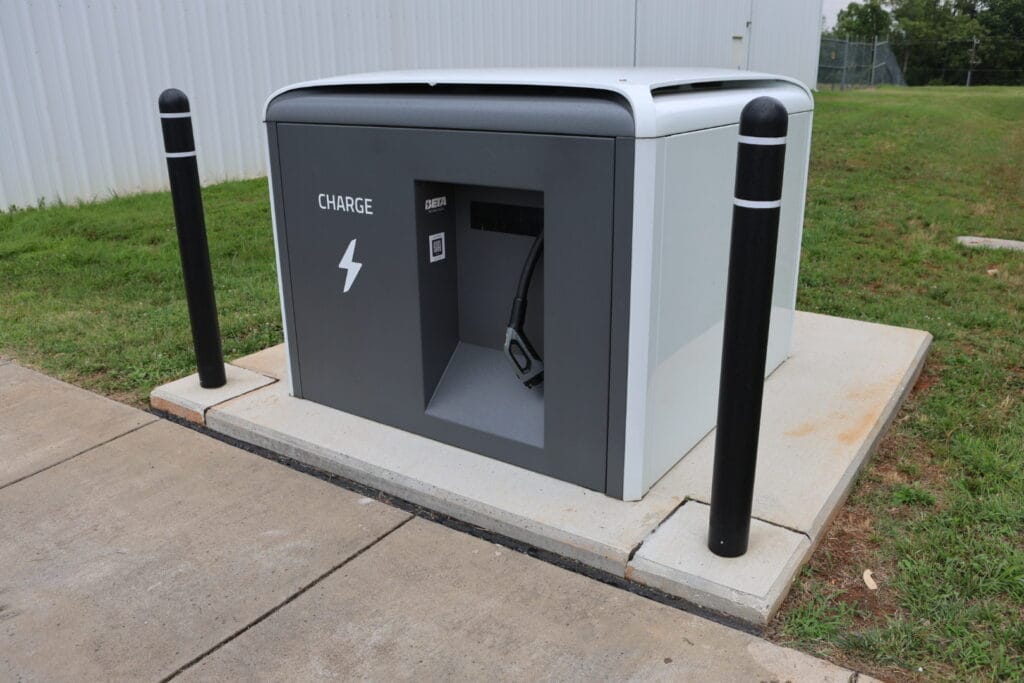
A nationwide charging system for electric and automated aircraft is underway, following the federal government’s launch of its first pilot flight in Charlottesville last week.
The Thursday announcement came as the nation prepares to expand advanced air mobility, a shift that could improve air transportation while benefiting public health and the environment
Archer Aviation, an aerospace and defense company, in partnership with BETA Technologies and Macquarie Capital, announced the formation of America’s Consortium for Electric Skyways to begin building the charging system for advanced air mobility aircraft across 250 aviation sites in the U.S. by 2030.
Feds launch groundbreaking electric plane pilot program in Virginia
Advanced air mobility refers to aircraft that are highly automated, more flexible than large commercial airplanes and usually electric. They include electric vertical takeoff (eVOTL) and landing aircraft, often referred to as air taxis.
This charging network will help meet the infrastructure needs of commercial operations, according to the announcement.
“Electric air taxi operations can’t scale without the infrastructure to charge them. That’s why we’re building the backbone to support the next 250 years of electric aviation in America,” said founder and chief executive officer of Archer Aviation, Adam Goldstein, in a statement.
Under the plan, BETA will be responsible for the charging stations compatible with most electric aircraft, while Archer will use the network for its electric air taxis to help drive adoption. Macquarie will advise on financing and securing the funding needed to develop the infrastructure.
The eVOTL program, developed by the U.S. Department of Transportation and Federal Aviation Administration, is designed to accelerate the safe integration of advanced air mobility into the country’s national airspace system.
“The eVTOL Integration Pilot Program is about more than just getting electric aircraft flying in American cities – it’s about building the infrastructure ecosystem needed to support commercial operations,” said Dan Edwards, Principal Deputy Assistant Secretary for Aviation and International Affairs at the U.S. Department of Transportation, in a statement.
Kyle Clark, founder and chief executive officer of BETA Technologies, said in a statement that the infrastructure required for advanced air mobility is a fraction of what people expect.
“By deploying interoperable chargers built on an open standard, we’re putting in place nearly all the physical infrastructure this industry needs, built so every operator can use it,” Clark said.
As the pilot program continues, Virginia will host future advanced air mobility demonstrations featuring aircraft and technologies of different sizes, transporting passengers, medical resources, and other cargo. None of them will be public, according to the Virginia Department of Aviation.
This post was originally published on Virginia Mercury.