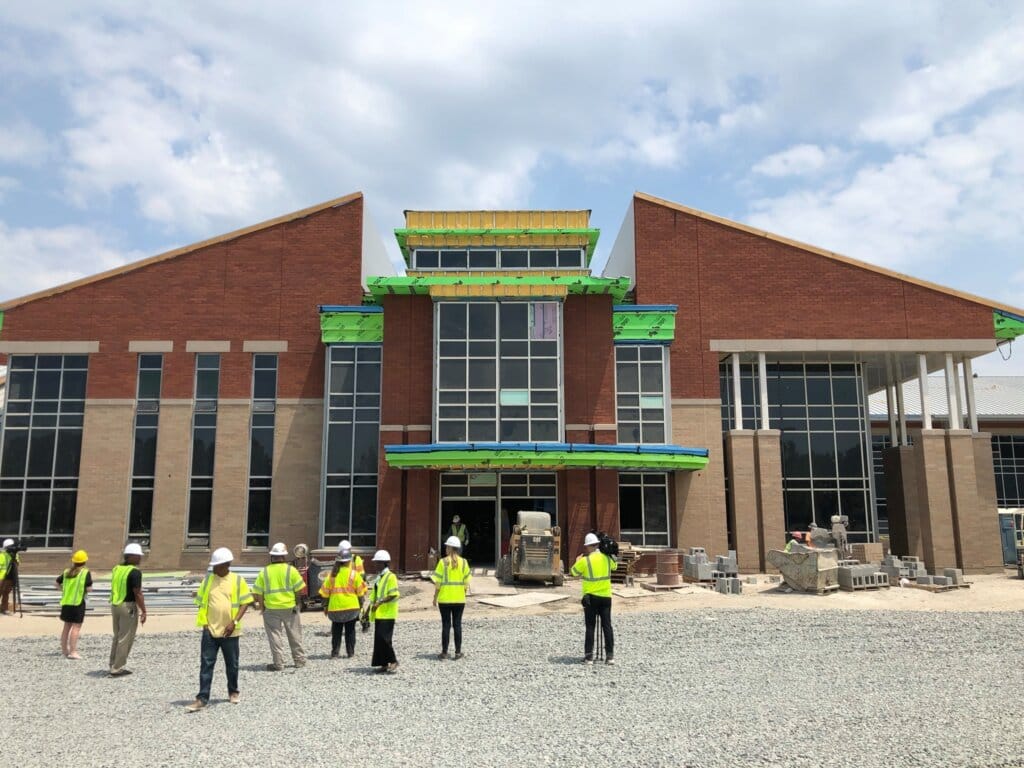
If you wondered whether localities across Virginia desperately need another way to raise money to build new schools, take a look at the dozens of communities that will hold voter referendums in November.
Cardinal News recently reported that more than 40 localities plan referendums this fall seeking a 1% sales tax increase for school construction and major renovations. Many of those school divisions are small and rural. Some are urban like Norfolk, Portsmouth and Newport News.
This is a Dillon Rule state, and some local taxes can’t be increased without the General Assembly’s blessing. Former Gov. Glenn Youngkin repeatedly vetoed similar sales tax legislation that reached his desk – his eyes more focused on his political future than fixing the state’s crumbling school buildings.
When current Gov. Abigail Spanberger signed the state budget this year, the tax increase clause – including a voter referendum – was part of the deal. The rest of the state will now enjoy an option that only nine localities previously had access to.
State lawmakers and education officials knew for years that school infrastructure statewide needed help. In 2021, the General Assembly’s own Commission on School Construction and Modernization placed the tab for new construction and major repairs at $25 billion for public K-12 buildings at least a half-century old. More than 1,000 Virginia public schools fit that category.
Recent news stories have noted the dire conditions and desired overhauls: HVAC and boiler upgrades in Franklin County. A layout design that isn’t as safe as it should be and an expensive roof replacement in Pulaski County. Broken pipes and busted air conditioning units in Newport News.
Money from the sales tax increase would put a dent in the bills for repairs and school-building.
In Norfolk, for example, “The City is estimating the additional annual revenue to be $40 million,” Kelly Straub, a city spokesperson, told me by email. The tax in Norfolk would expire in 2046.
It shouldn’t have taken so many years to give all localities this taxing tool. It would be no surprise if voters in many communities passed their referendums on Nov. 3.
This post was originally published on Virginia Mercury.