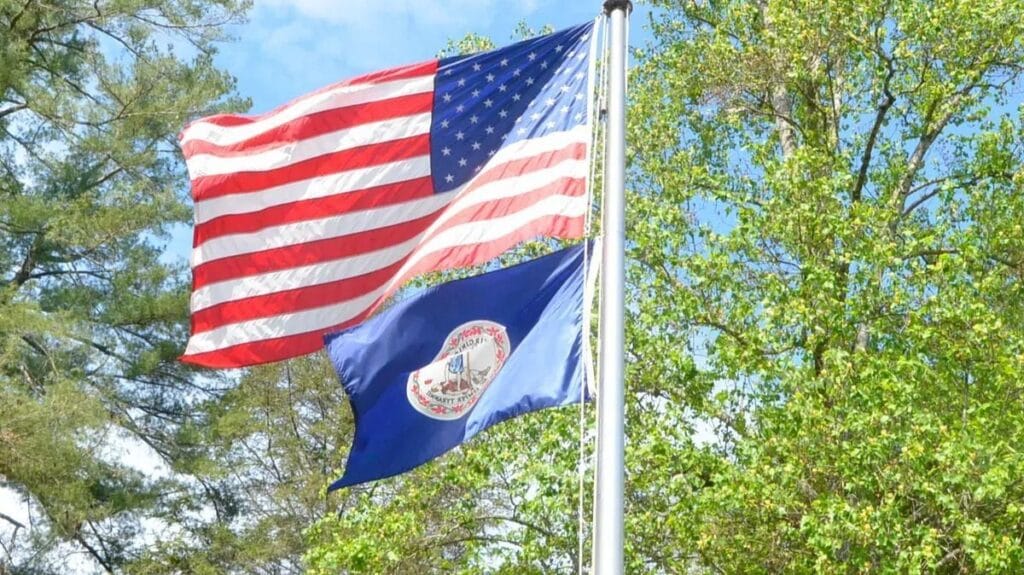
(The Center Square) – Virginia received a B for its public-sector labor laws for the second straight report as lawmakers continue pushing to expand collective bargaining for government workers.
The Commonwealth Foundation’s fifth annual 50-State Labor Report gave Virginia the same grade it received in 2024, years after the Commonwealth dropped from an A+ as its collective bargaining laws changed.
The Pennsylvania-based free-market group grades states based on laws governing public-sector unions, generally giving higher marks to states with more restrictions on collective bargaining and union activity.
Virginia received an A+ in 2017 and 2019, fell to a C in 2022 and moved back to a B in 2024.
The biggest change came after lawmakers approved legislation in 2020 allowing counties, cities, towns and school boards to authorize collective bargaining. The law took effect in 2021 but left the decision to individual local governments rather than creating a statewide system.
Lawmakers tried to go further this year.
The General Assembly passed House Bill 1263 and Senate Bill 378, which would have created a statewide collective bargaining framework for public employees and established a Public Employee Relations Board.
Gov. Abigail Spanberger proposed amendments giving localities more flexibility in setting up bargaining and clarifying that agreements with budget implications would remain subject to approval by the governing bodies responsible for those budgets.
She later vetoed the legislation after lawmakers rejected her amendments.
The issue is already resurfacing.
Senate Majority Leader Scott Surovell, D-Fairfax, the chief patron of Senate Bill 378, used Labor Day to call for another push to extend collective bargaining rights to state and local public employees.
Virginia was one of 10 states to receive a B. The report gave seven states an A+, six an A, two a C, 15 a D, four a D- and six an F.
David Osborne, the foundation’s senior director of labor policy and author of the report, said “government unions are rebounding after the 2018 Janus decision.”
In Janus v. AFSCME, the U.S. Supreme Court ruled in 2018 that public employees who choose not to join a union cannot be required to pay agency fees to support collective bargaining. The court held that requiring those payments violated the First Amendment.
The Commonwealth Foundation says public-sector unions have increasingly turned to state legislatures to rebuild membership and expand organizing rights since the decision.
Virginia still prohibits strikes by public employees and remains a right-to-work state.
The foundation lists repealing Virginia’s local-option collective bargaining law and establishing a public employees’ bill of rights among what it calls reform opportunities for the Commonwealth.
This post was originally published on The Center Square.