(The Center Square) – More than 183,000 Virginians have already cast ballots in the November election, more than double the number recorded at the same point before the 2022 midterms.
Virginia had recorded 183,217 early ballots through Sunday, compared with 75,819 at the same point in 2022, according to Virginia Department of Elections data compiled by the Virginia Public Access Project.
That puts this year’s early voting pace about 142% ahead of the comparable point four years ago.
The 1st Congressional District has recorded the most early ballots so far, with 25,774. The 5th District follows with 20,590, while the 11th District has recorded 20,002.
The 6th District had 17,394 early ballots through Sunday, followed by 16,295 in the 7th District and 15,807 in the 4th District. The 2nd District had recorded 15,073 ballots.
The numbers show where voting is occurring but do not indicate which candidates are benefiting or what final turnout will look like.
Virginia ultimately recorded 976,558 early ballots in the 2022 general election. This year’s voting period remains in its early stages, with more than a month remaining before Election Day.
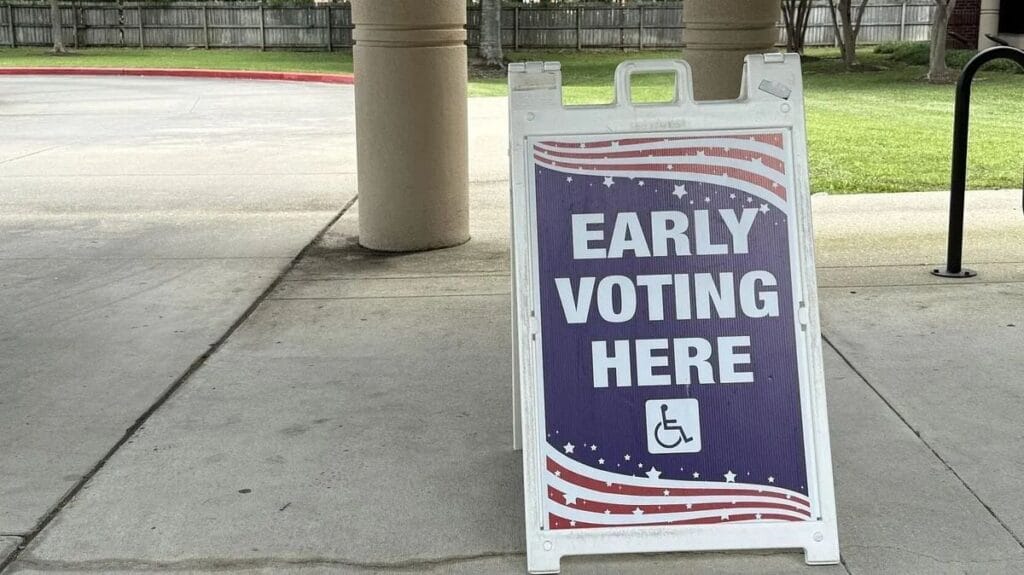
Early in-person voting began Sept. 18 and continues through 5 p.m. Oct. 31. Election Day is Nov. 3.
Oct. 23 is the deadline to register and cast a regular ballot and the deadline for local registrars to receive applications for mail ballots.
Virginians may still register after that date through Election Day and cast a provisional ballot.
Virginia voters are choosing one U.S. senator and representatives in all 11 congressional districts this year.
Voters also will decide three proposed amendments to the Virginia Constitution. The questions involve establishing a constitutional right to reproductive freedom, including abortion; removing the state constitution’s ban on same-sex marriage; and automatically restoring voting rights to people convicted of felonies after release from incarceration.
If approved by voters, the amendments would take effect Jan. 1, 2027.
Voters in 47 localities also are deciding whether to authorize a local sales tax of up to 1% for school construction and renovation, with some Northern Virginia localities also allowed to use the revenue for public transportation.
This post was originally published on The Center Square.