
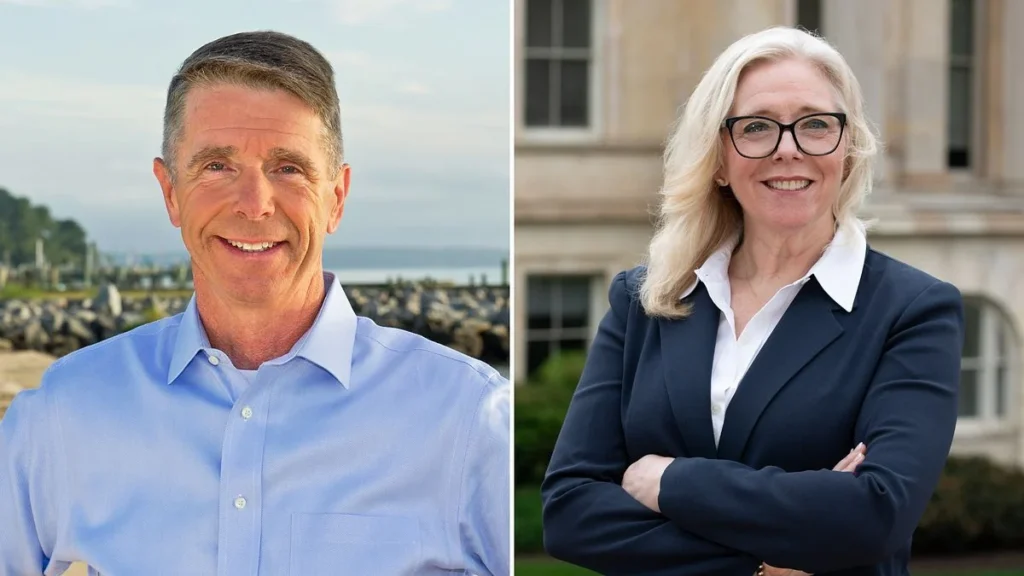
(The Center Square) – Rising electricity bills, healthcare costs and federal spending are among the issues shaping the race between Republican Rep. Rob Wittman and Democratic challenger Shannon Taylor in Virginia’s 1st Congressional District.
Wittman has represented the district since 2007 and serves as vice chairman of the Armed Services Committee in the U.S. House of Representatives. Taylor has served as Henrico County’s commonwealth’s attorney since 2012.
The district includes portions of the Richmond suburbs, Middle Peninsula, Northern Neck and Historic Triangle.
Virginia’s 1st District is among the Republican-held seats national Democrats are targeting as they seek to regain control of the U.S. House. The Democratic Congressional Campaign Committee includes Wittman’s district on its 2026 list of seats it hopes to flip.
Sabato’s Crystal Ball moved the race from leans Republican to toss-up in September. The Cook Political Report also rates the contest as a toss-up.
A Taylor victory would shift one Republican-held seat to Democrats, contributing to their effort to regain the House majority. Control of the chamber would determine which party leads its committees and has greater influence over legislation involving federal spending, taxes and healthcare.
Both candidates say lowering household costs is a priority, although their proposals and records differ.
In responses provided to The Center Square on Tuesday, Wittman identified groceries, housing, electricity, healthcare and childcare as expenses straining family budgets.
“There is no single solution to affordability,” Wittman told The Center Square. “My focus is on addressing the expenses families face every day while helping them keep more of their hard-earned money.”
Taylor has called for lowering healthcare, utility, housing and grocery costs while opposing tariffs she says increase expenses for consumers and businesses.
“Exactly one week from today, Virginians get to decide if they want more of the same, self-serving politics that’s ruined Washington – or if they choose a new path that puts people first,” Taylor wrote in a Tuesday social media post.
The Center Square was unsuccessful prior to publication obtaining responses to its questions from Taylor’s campaign.
Wittman advocates lower taxes, increased domestic energy production and fewer federal regulations as ways to address affordability.
One area of overlap is concern about electricity costs associated with data centers.
Taylor supports legislation requiring that new data center construction not increase household electricity costs.
“Electricity costs are another major concern as data centers place unprecedented demands on Virginia’s power grid,” Wittman told The Center Square.
Wittman cosponsored and voted for the Ratepayer Protection Act, which passed the House 417-3 in September. The legislation would require state utility regulators to consider standards for recovering infrastructure costs from data centers and related computing facilities with peak electricity demand of at least 100 megawatts at a single site or campus.
The bill would not automatically require states to adopt those standards.
On healthcare, Taylor supports restoring enhanced Affordable Care Act tax credits, lowering prescription drug costs, improving medical billing transparency and protecting rural hospitals.
She has criticized Wittman’s support for the One Big Beautiful Bill Act, which President Donald Trump signed into law in July 2025. The law, known also as the Working Families Tax Cut or House Resolution 1, changed Medicaid eligibility and financing rules.
Wittman supports medical price transparency, lower prescription drug costs and additional rural healthcare investments. In his response, he also cited pharmacy benefit manager reform and increased competition as ways to address costs.
He voted Jan. 8 for legislation extending enhanced Affordable Care Act tax credits through 2028, joining 16 other Republicans in supporting the measure.
On taxes and federal spending, Wittman advocates reducing wasteful spending, preventing improper federal payments and changing the congressional budget process.
Wittman, in response to The Center Square, pointed to tax provisions he supported, including increases to the standard deduction and child tax credit, tax relief for seniors and deductions for qualifying tips and overtime.
Taylor supports tax cuts for working families and small businesses and has criticized tariffs and overseas military operations for increasing household expenses.
The candidates have also proposed changes to government accountability.
Taylor has proposed banning congressional stock trading, imposing 12-year congressional term limits and prohibiting former members of Congress from becoming federal lobbyists.
Wittman voted in July for the Stop Insider Trading Act, which passed the House 232-198. The legislation would restrict members of Congress and certain family members from purchasing individual company stocks and require advance disclosure of planned sales.
This post was originally published on The Center Square.