The birds are back in town – Richmond Falcon Cam is live

File photo of Richmond Falcon Cam Biologists from the Virginia Department of Wildlife Resources (DWR) have observed peregrine falcons on camera at Riverfront Plaza in downtown Richmond. This means the time has come for DWR, in partnership with Comcast Business, to turn on the live stream for the ninth year. The popular live stream offers viewers a unique opportunity to observe peregrine falcons nesting in Richmond, Virginia. During the 2025 nesting season, more than 62,000 users logged on from countries as far as Australia and Singapore to watch the pair raise three chicks! The powerful internet connection provided by Comcast Business allows wildlife lovers to follow the falcons 24 hours a day, seven days a week at dwr.virginia.gov/falcon-cam. The camera itself is focused on a nest box atop the 21st floor of the Riverfront Plaza’s West Tower and follows the activities of a peregrine falcon pair that nest downtown each spring.
“We’re glad to continue our partnership with DWR and help bring the Richmond Falcon Cam to wildlife fans near and far,” said Holli Lloyd, Senior Director of Marketing, Comcast Business Beltway Region. “It’s a great reminder of what reliable connectivity makes possible, whether it’s a classroom in Richmond tuning in for the first time or a viewer halfway around the world watching a fledgling take its first flight.”
Peregrine falcons are listed as state-threatened in Virginia with more than 30 pairs, including the Richmond birds, nesting across the Commonwealth each spring. The camera allows viewers to follow the pair as they nest and raise offspring. And, like any TV nature show, there can be a bit of drama—including territorial disputes, chicks taking their first nail-biting flights, and even the failure of the nest. It is impossible to predict exactly what this season has in store for the birds, but there is no doubt that falcon fans will be rooting for their success.
“We’ve been monitoring the activity on camera throughout the course of the last month and have seen the same birds from the past several years on camera, daily,” said DWR Wildlife Viewing Program Coordinator Meagan Thomas. “I always get a bit anxious at the start of each year before we get confirmation as to which individual falcons it is that we are seeing – mostly just wondering if we will have the same pair or a new falcon that we haven’t seen before. This year, due to all the snow and ice in front of the box during February, it took us a bit longer to get that individual confirmation. But once things started to melt, I was happy to see that it was the same pair, back for another hopefully successful nesting season.”
The Richmond Falcon Cam will remain active through egg laying, incubation and hatching, and follows the growth of the chicks until they fledge (take their first flight).
Pending a successful nesting season, a raffle to participate in a falcon experience will be back for a second year! Stay tuned for more information on how you can enter in the coming weeks.Information from a release. Edited by Dan McDermott.
Power Blinks Explained: Why a Flicker Often Means the Grid Is Working

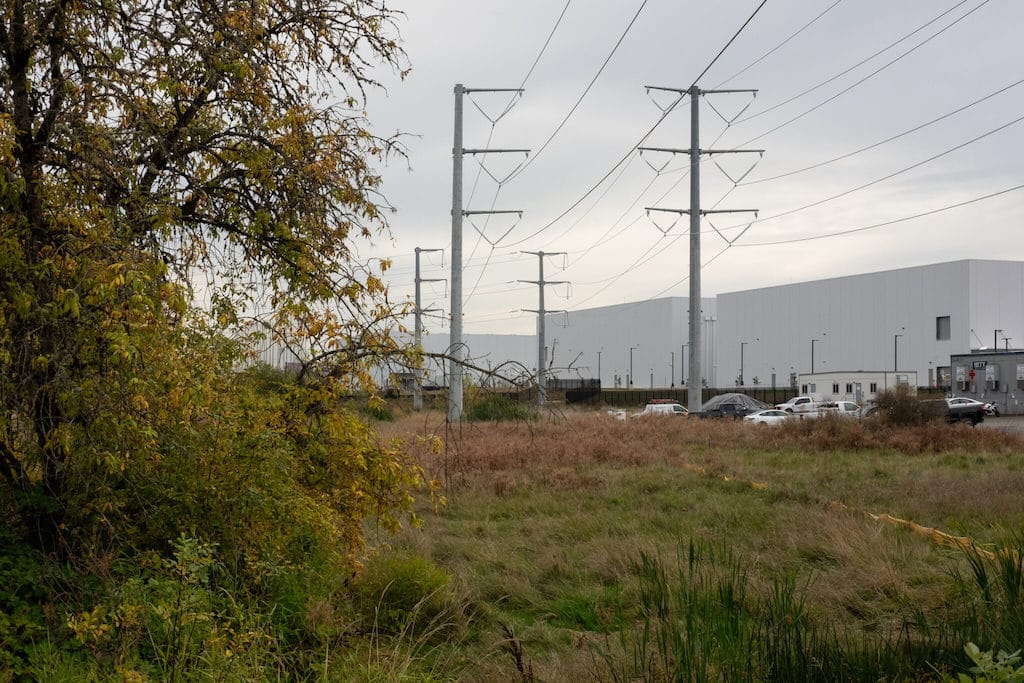
File image of debris causing power flicker. Most of us recognize a power blink when it happens. The lights flicker. The TV resets. The microwave clock starts flashing 12:00. It’s annoying and it’s easy to assume something is wrong.
Quite often though, a blink is nothing to worry about. Instead, it’s a sign the electric grid is doing what it was built to do. The behind-the-scenes reason is usually a piece of equipment called a recloser.
A recloser is a safety device on the power lines that works a lot like a fuse (or a circuit breaker). When something briefly contacts the line — like a tree limb, an animal or storm-related debris — the recloser can shut power off for a moment and then turn it back on to see if the problem cleared.
- If the problem was brief, your power comes right back on. That’s the blink.
- If the problem is still there, the recloser may try again.
- If the recloser still can’t clear the issue after a few tries, it will stay off to protect the system until crews can fix the cause.
Reclosers help keep small problems from turning into bigger outages. Without them, a brief contact with a line could shut off a larger section of the system for longer. With them, the system can quickly “check” the line and restore service if it’s safe to do so. Often, a blink just means the system prevented a longer outage.
What you can do
Most power blinks are brief, but they can occasionally interrupt electronics. Taking a few simple steps can help keep things running smoothly:
- Use a quality surge protector for computers, TVs and other sensitive devices.
- If you work from home, consider a small battery backup for your computer and internet equipment.
- If you rely on medical equipment, make sure you have a backup plan for short outages and longer outages.
Reclosers are one of the tools used to improve reliability. They’re part of REC’s broader efforts to reduce outage time and limit how many members are affected when something hits the system. Over time, upgrading and fine-tuning this equipment helps REC respond faster to everyday problems while keeping the system safer for the public and lineworkers.
About Rappahannock Electric Cooperative
Serving over 184,000 connections across portions of 22 Virginia counties, REC is a pillar in its communities, with over 18,000 miles of power lines extending from the Blue Ridge Mountains to the Chesapeake Bay. For more information about REC, please visit www.myrec.coop. Follow REC on Facebook, X, Instagram, LinkedIn and YouTube.
Early voting begins Friday for Virginia redistricting referendum

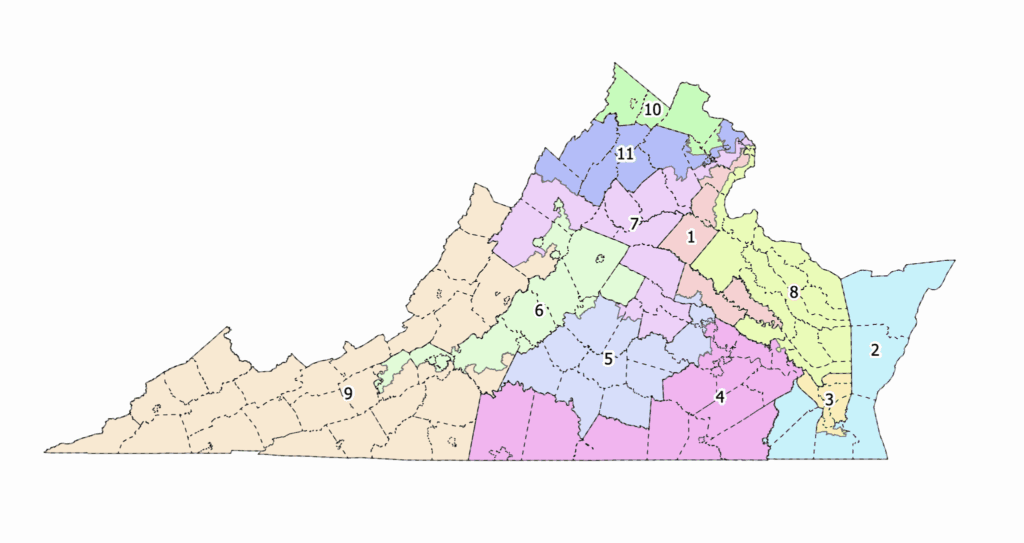
Virginia Democrats’ proposed 10-D, 1-R congressional districts map preserves the broad outlines of some existing districts but redistributes how the population is grouped across much of the state. (Photo courtesy Virginia Legislative Information System) By Markus Schmidt | Virginia Mercury
Early voting is set to begin Friday across Virginia for an April 21 statewide referendum that could allow the General Assembly to redraw the state’s congressional districts ahead of this fall’s midterm elections. If voters approve, the move would likely reshape the current 6–5 partisan split in Virginia’s delegation into a map favoring Democrats in as many as 10 of the state’s 11 districts.
The referendum comes amid an ongoing series of legal challenges and court rulings that have created uncertainty about the election’s legality, even as local election officials move forward with preparations.
One of the most significant cases stems from a lawsuit filed in Tazewell County challenging the legality of the referendum itself.
In that case, Circuit Judge Jack Hurley issued a temporary injunction blocking the Virginia Department of Elections and the State Board of Elections from taking steps to prepare for the vote, concluding that Democrats’ effort to fast-track the constitutional amendment may have violated state law.
But the Supreme Court of Virginia on Wednesday afternoon granted a stay of that order, clearing the way for the election to proceed as scheduled.
“I’m proud of the decisive action my office took to immediately bring this case before the Supreme Court of Virginia, the proper forum to consider these claims,” said Virginia Attorney General Jay Jones, in a statement.
“We moved quickly to protect the orderly administration of this election. The Court’s order is clear: the referendum election will proceed. I’m grateful to the lawyers in the Office of the Attorney General who worked swiftly and skillfully to ensure that the voices of Virginians will be heard at the ballot box.”
House Speaker Don Scott, D-Portsmouth, said the ruling confirms that voters will decide the issue. “The Supreme Court of Virginia’s decision ensures that this referendum will move forward and that Virginians will have the opportunity to make their voices heard,” Scott said. “This question has always belonged to the voters, and I’m glad the Court made clear that the people will decide.”
The referendum would determine whether Virginia temporarily suspends its bipartisan redistricting commission and instead allows the Democrat-controlled General Assembly to redraw the state’s 11 congressional districts before the Nov. 3 midterm elections.
If approved, lawmakers would regain map-drawing authority only until the next redistricting cycle following the 2030 census. State legislative districts would not be affected.
“In some respects, the question of whether to approve the constitutional referendum is really a debate over ‘fairness’ and what it entails,” said Alex Keena, an associate professor of political science at Virginia Commonwealth University, referring in part to the Democratic campaign promoting the proposal as a push for “fair maps.”
“The drama over redistricting over the last 15 years has taught us that there is no single definition of gerrymandering and no one specific way to identify it or to measure it.”
Keena said voters bring different expectations to the concept of fairness — a debate that has intensified as Republicans question whether the proposed new congressional map would be fair.
“People have lots of ideas about what is ‘fair’ in democratic elections,” he said. “They want the parties to win seats in proportion to the votes they earned. This is one criterion of fairness. People also prefer to have somewhat competitive elections, so that the maps are sensitive to shifts in voter support.”
A proposal to redraw the map
Virginia’s current congressional districts were adopted in 2022 after the state’s newly created redistricting commission failed to reach agreement on maps. Under the state Constitution, the task then fell to the Supreme Court of Virginia, which hired two independent experts — one Republican and one Democrat — to draw the districts.
The resulting map produced a congressional delegation of six Democrats and five Republicans, a split roughly consistent with the state’s recent statewide voting patterns. The Princeton Gerrymandering Project gave Virginia one of the highest ratings in the country for its maps.
Urban areas across Northern Virginia, Richmond and Hampton Roads largely elect Democrats under the current map, while rural regions such as the Shenandoah Valley and the Northern Neck tend to elect Republicans.
But the proposal before voters would create a dramatically different arrangement.
The map drafted by Democratic lawmakers would shift nearly half of Virginia residents — about 48% — into new congressional districts. With the exception of far Southwestern Virginia, most voters currently represented by Republicans would be placed in districts that favor Democrats.
The plan would attempt to limit Republicans to a single district anchored in the state’s far southwestern corner. Several new districts would extend outward from the population centers of Northern Virginia, stretching into rural areas.
Two of the proposed districts — one centered on Blacksburg, Roanoke, Lynchburg and Charlottesville and another covering parts of Hampton Roads and the Eastern Shore — are considered competitive based on recent statewide election results.
Parties look to Virginia in fight for House control
The Virginia referendum has drawn national attention as both parties look for ways to influence control of the U.S. House.
The push for mid-decade redistricting gained momentum last year when President Donald Trump urged Republican-controlled states to redraw maps to strengthen the GOP’s position in Congress. Texas lawmakers responded by adjusting their districts in hopes of adding several Republican seats.
Other states followed with similar efforts. Missouri and North Carolina both approved map changes expected to produce additional GOP seats, and Florida lawmakers are considering new lines that could further expand the Republican advantage.
Virginia became a focal point for Democrats seeking to offset those changes.
U.S. House Minority Leader Hakeem Jeffries said earlier this year that national Democrats would invest heavily in the referendum effort.
“We will spend tens of millions of dollars to make sure … that voters have all of the information necessary to make a decision around whether they want Donald Trump to rig the midterm elections and halt the ability for the American people to decide who’s in the majority,” Jeffries told CNN last month.
Advocacy groups on both sides have been organizing for the referendum campaign for weeks.
Virginians for Fair Elections, which supports the amendment, has raised nearly $20 million from Democratic-aligned organizations. Attorneys representing the group told a court last week that about 1,000 volunteers have been recruited.
According to VCU’s Keena, the financial stakes reflect more than the potential impact on House control.
“Democrats do not need Virginia to gerrymander the map in order to secure a majority in the House this fall,” he said. “My read is that most analysts agree the Democrats will almost certainly capture the House. Why is so much money pouring into this race?”
Instead, Keena suggested the redistricting proposal could reshape primary contests and favor candidates with stronger institutional backing.
“My suspicion is that moneyed interests prefer the candidates who are likely to prevail when the district lines have been disrupted,” he said, referring to Virginia lawmakers like Del. Dan Helmer, D-Fairfax, who has already launched his bid for the Democratic nomination in a redrawn 7th District.
The amendment’s opponents include Virginians for Fair Maps, a coalition that includes former Virginia Attorney General Jason Miyares, and the bipartisan group called No Gerrymandering Virginia, which says it wants to ensure there is no lapse in the redistricting commission’s authority.
Legal battles continue
The referendum has been the subject of several lawsuits since lawmakers advanced the amendment for a second time earlier this year, as required under the state Constitution.
In February, the Supreme Court of Virginia allowed the measure to proceed to the ballot, rejecting an emergency challenge filed by Republican lawmakers and the Republican National Committee.
Other cases remain pending. Two Republican members of Congress have filed a lawsuit in Richmond challenging the wording of the ballot question, while a Washington County resident has filed a separate pro se case seeking to stop the vote.
On Monday, a Lynchburg Circuit Court judge dismissed a lawsuit filed by the city seeking to halt early voting for the redistricting referendum, ruling that it was not appropriate for the court to intervene while the constitutional amendment process is already underway and leaving questions about the measure’s legality to the Supreme Court of Virginia.
Because the state’s highest court scheduled arguments after the April 21 referendum, it is unlikely to issue a final ruling on the amendment’s legality until after ballots are cast.
“The Supreme Court of Virginia has said it is going to rule on whether or not the constitutional amendment advanced by Democrats comports with the procedural standards imposed by Virginia law,” Keena said.
“But if the vote does pass, then the court will be in an awkward position if it decides to strike down the amendment. It will do what courts almost never like to do: invalidate the will of a majority of voters.”
Primary elections moved
Anticipating the possibility that congressional districts could change this year, lawmakers also adjusted the schedule for Virginia’s 2026 primary elections. The General Assembly approved legislation last month shifting the primary date from June 16 to Aug. 4, a measure signed into law by Gov. Abigail Spanberger.
The change gives candidates and voters more time to adapt if congressional district boundaries are redrawn before the midterm elections.
Even if the referendum fails or is halted by the courts, the Aug. 4 primary date will remain in place. The change applies only to the 2026 election cycle, according to the Department of Elections.
Early in-person voting for those primaries will begin June 19 and continue through Aug. 1. The deadline to request an absentee ballot by mail will be July 24.
With less than two months before the April referendum, polling suggests the outcome of the referendum remains uncertain.
A Roanoke College poll released last week found that 52% of surveyed Virginians said they would vote against the amendment, while 44% supported it.
But turnout could prove decisive, Keena said.
“This election is different because it is not concurrent with a general election. This makes it super hard to predict. Victory will be determined by which side can mobilize greater support, given the inconvenient timing of the election.”
Virginia ICE policy raised in House oversight hearing
By Shirleen Guerra | The Center Square
(The Center Square) – Warrants used, whether administrative or judicial, in the ongoing controversy of ICE cooperation in Virginia were cited Wednesday during Judiciary Committee hearing in the U.S. House of Representatives.
Homeland Security Secretary Kristi Noem told lawmakers Wednesday that federal immigration enforcement relies on administrative warrants. First-term Democratic Gov. Abigail Spanberger is requiring a judicial warrant before local officials cooperate with U.S. Immigration and Customs Enforcement.
For federal judges, warrants relate to federal crimes. However violent offenses, such as a February stabbing in Fairfax County, are violations of state laws.
Rep. Ben Cline, R-Va., said the policy of Spanberger could limit coordination between Virginia law enforcement agencies and ICE.
Cline referenced a recent arrest in Strasburg in which local law enforcement cooperated with ICE to detain what it believes is an MS-13 gang member authorities said was wanted on an immigration detainer. The capture was prior to Spanberger’s reversal of ICE cooperation.
He also cited the fatal stabbing case in Fairfax County. Cline said requiring judicial warrants before holding someone for immigration authorities could allow dangerous individuals to be released from local custody.
“Our governor now says that she demands a judicial warrant before she will cooperate with ICE on this,” Cline said during the hearing. “That is remarkable to me that she would be putting Virginians’ lives at risk.”
Cline asked Noem to explain the difference between judicial warrants issued by a court and administrative warrants commonly used by federal immigration officials.
Noem said administrative warrants are the primary tool used by federal authorities to carry out immigration enforcement.
“Administrative warrants are the legal tool that we have been given by this body to go out and do immigration enforcement,” Noem said. “And we’ve, in over 400,000 different instances, used those effectively.”
She said those warrants are rarely used to enter private homes.
Noem also criticized the Virginia policy during the exchange.
“In that situation in Virginia, the people that live there should be alarmed,” Noem said.
She said limiting cooperation with immigration detainers could affect public safety.
Spanberger’s office said in a statement Tuesday that the governor believes violent criminals who are in the United States illegally should be deported by immigration enforcement but that federal officials should obtain a signed judicial warrant. The statement added that the Department of Homeland Security “should request a signed judicial warrant to ensure this violent criminal is deported.”
The policy differs from previous guidance under former Republican Gov. Glenn Youngkin, who directed state agencies to pursue agreements allowing cooperation with ICE through the federal 287(g) program.
Some members of Virginia’s Republican congressional delegation have also raised concerns about the change in a recent letter urging the governor to reconsider the policy.
House panel halts bills tied to data center power costs
By Shirleen Guerra | The Center Square
(The Center Square) – A subcommittee in the Virginia House of Delegates on Wednesday halted two Senate bills aimed at examining whether large electricity users could shift power grid costs onto other customers.
The House Labor and Commerce Subcommittee #3 voted to continue Senate Bill 339 to the 2027 session and table Senate Bill 619, according to records from the Virginia Legislative Information System. Both bills had previously passed the Senate.
Senate Bill 339, introduced by Sen. Russet Perry, D-Loudoun, would direct the State Corporation Commission to review how certain electric infrastructure costs are allocated among different customer groups.
The legislation would require regulators to examine whether customers that are not high-load users could be subsidizing transmission, generation or distribution costs tied to facilities such as large data centers.
According to the commission’s fiscal impact statement, the agency would need to hire a consultant to assist with technical analysis to carry out the review proceedings required under the bill.
The second measure, Senate Bill 619 from Sen. Kannan Srinivasan, D-Loudoun, focused on facilities with very large electricity demand. The bill would require operations using more than 90 megawatts of electricity to obtain a certificate of operation from the State Corporation Commission before beginning service.
Under the proposal, regulators would evaluate whether sufficient electricity supply, grid capacity and infrastructure exist to support the facility and whether the project could create an unreasonable cross-subsidy among utility customers.
The commission estimated the measure could result in between 30 and 60 new regulatory proceedings annually. To handle that workload, the agency said it would need 11 additional employees, including utilities analysts, engineers and attorneys, at an estimated cost of about $1.24 million per year beginning in fiscal year 2027.
Virginia has had rapid growth in electricity demand tied to data center development, particularly in Northern Virginia, home to one of the largest concentrations of data centers in the world. The industry’s growing energy demand has drawn increasing attention from lawmakers and regulators as they examine how infrastructure costs tied to large electricity users are allocated among utility customers.
With Wednesday’s subcommittee actions, neither bill will advance further during the 2026 legislative session.
Engle’s Angle: “Oh My”
By Kevin S. Engle
“How did it happen?”
That’s what everyone wants to know.
It’s what I want to know.
Maybe when I was in the gym four hours a day, everyday, working on my abs?
Maybe when I was first on the scene of the accident and picked up the SUV all by myself so those people could get out?
Yeah, sure.
Or maybe it was what my doctor said. Guys often get these injuries because males typically have what he referred to as “naturally-occurring defects” in certain parts of the body.
And that’s where this was. In a ‘certain’ area of my body.
When I saw the doctor for the first time, I’d already had an ultrasound five days before.
I told him where it was sore.
But that’s not where he examined me.
“Ah, hey doc,” I’m thinking, “Hello! You’re too far south!”
Turns out he learned a thing or two in medical school. My pain was in one place but the source of it was somewhere else. Somewhere ‘south of the border.’
Now what?
Surgery, in seven weeks. Dang. I was hoping to get this over with as soon as possible.
I called his office a few days later and asked if they could squeeze me in if someone cancelled.
They put me on the list.
Just over an hour later, my phone rang. Amazingly, a spot had just opened up. Did I want it?
“Sure.”
“We’ll see you in two days.”
Two days? Yikes. I wasn’t quite ready for that.
We had to be at the hospital by 6AM. Surgery was scheduled for 7:30.
By 6:15, I was in a bed, practically naked, wearing only a hospital gown that tied in the back.
Don’t you love those?
A few hours later, when the procedure was done and I was back in my room, I had to face an embarrassing reality.
Several people had seen me naked!
Yeah, I know, they’re all medical professionals and that’s what they do and it’s just part of the job, and blah blah blah, but I was naked! In front of total strangers. And now I was traumatized too.
I don’t get naked in front of just anybody. My wife had to get a license to see me in the buff.
I won’t even mention the catheter.
Physically, I’m recovering.
Mentally, this could take a while.
***********************************
In the future, the author will not pick up SUVs. Only small cars.
Va. transportation board overturns decision to transfer rail and trail project

A section of abandoned freight rail proposed to be part of a new biking and walking trail in the Shenandoah Valley. (Photo by Ben Cunningham/Allegheny-Blue Ridge Alliance) By Nathaniel Cline | Virginia Mercury
In one of the quietest moves yet under Gov. Abigail Spanberger’s administration, the Commonwealth Transportation Board overturned a controversial decision made in the final weeks of former Gov. Glenn Youngkin’s tenure that would affect the future of a dilapidated 50-mile rail corridor in the Shenandoah.
The board’s Feb. 17 decision now continues the process of exploring whether the corridor will be restored with a parallel trail or remain as a trail alone.
In December, Virginia’s transportation community was surprised when former Gov. Glenn Youngkin’s administration proposed that the board advance a multi-use trail and rail corridor versus a trail-only plan. This proposal, announced in December, carried a nearly $700 million price tag and reduced opportunities for public meetings and comment.
The board’s decision last month rescinded that directive and reaffirmed prior plans to study the project’s options with a focus on public transparency.
“The goal we are seeking to achieve is to complete the public engagement process that we told the public we would do with the release of the Phase 3 report,” said Secretary of Transportation Nick Donohue at the board’s Feb. 17 meeting.
Del. Tony Wilt, R-Harrisonburg, acknowledged that timing pressures and external constraints drove the administration’s decision, but he insisted the rail-with-trail plan must continue to follow the process laid out. In 2021, Wilt carried the budget request to study the feasibility and benefits of a rail trail.
“I’m very glad to see that the initial resolution was rescinded,” said Wilt. “We’re going to go back to ground zero … and I think that’s the right move.”
How we got here
The project took an unexpected turn after former Secretary of Transportation Shep Miller broke a 6-6 board vote to transfer it from the Virginia Department of Transportation to the Virginia Passenger Rail Authority at a Jan. 6 meeting.
VPRA would have overseen $35 million in grant funding, appropriated by the General Assembly in 2022, for preservation and improvements by the Shenandoah Valley Battlefield Foundation. The board reversed that move at its Feb. 17 meeting.
The foundation has faced both criticism and questions regarding its qualifications to work on the project.
The foundation responded by highlighting its track record in managing similar projects and overseeing millions in state funds. In 1996, Congress created the foundation to preserve the region’s Civil War battlefields and related historic sites around Harrisonburg, Staunton and Winchester.
Miller had said that delaying the Youngkin administration’s plan could jeopardize the project, including the merger between Norfolk Southern Corporation, the rail line owner, and Union Pacific Corporation. He emphasized that public input would remain part of the plan.
Under the terms of the transfer, the foundation would have purchased the rail line from Norfolk Southern. The remaining funds would be used to build the trail and meet state lawmakers’ criteria.
The agreement would have entrusted the foundation with building the trail by certain deadlines. It also gave the foundation authority to preserve the rail corridor for future passenger use and clarified operational roles and risk responsibility.
Miller said the state funds only support the trail’s development, and future rail options require additional fundraising.
A new direction
More than a month after the board’s Jan. 6 decision, Spanberger’s administration shifted the commonwealth’s approach in February, prioritizing public engagement instead.
“At the end of the day, the funds we are expending here are taxpayer dollars, and I believe it’s appropriate for us to meet the commitments we provide to the public and those taxpayers as we seek to use the dollars they have paid to the state,” Donohue said.
He also added that the authority has “no role in potentially half of what we may be considering in that corridor,” emphasizing that VPRA’s purpose is to promote passenger and commuter rail.
However, VPRA Executive Director DJ Stadtler did not rule out the possibility of passenger rail still being part of the project in the future during a Dec. 17 meeting with the authority’s governing board.
This follows the recent purchase of the 24-mile Manassas Line from Norfolk Southern Corporation. The line will be used by Virginia Railway Express for commuter service between Alexandria and Manassas, as part of expanding the transit service’s operations.
Stadtler did not publicly speak on the board’s decision at the February meeting.
Board members voiced concern that the new direction could jeopardize the plan’s inclusion of rail. Donohue responded by citing the General Assembly’s mandate that any land acquisition for the trail “shall not preclude the consideration of options to maintain rail transportation in the corridor.”
Speakers on both sides of the decision weighed in, including Board member John Good, who made a motion for a partial recession. The motion failed for a lack of a second. Ultimately, the board rescinded the Jan. 6 resolution, with Good and board member Becky Norton Dunlop voting in opposition. Board member Thomas Moore Lawson abstained.
Good argued that the agricultural community was more concerned with its livelihoods than with a recreational trail.
“As long as I’m here, I’ll be reminding everybody that we need to keep those folks in mind,” Good said, adding that he believes the foundation should continue with the project and assist with fundraising.
Donohue said resending the earlier vote is not “foreclosing opportunities” to partner on fundraising.
The board’s February vote keeps funding with VDOT. This maintains opportunities for public engagement and further consideration of the corridor’s best use.
Advocates want to boost the region’s economy and promote health by building a multi-use trail. Others see similar possibilities in restoring the Manassas Gap rail line, which has been inactive for 36 years, and building a trail alongside it.
VDOT says negotiations to acquire the corridor with Norfolk Southern are ongoing.
As of Sunday evening, the transportation agency had not released any public meeting dates. The final Phase 3 Report examines the constraints and costs of the rail-to-trail alternative, and includes these hearings.
The transportation board will ultimately decide the outcome after receiving a summary of the public feedback.
Bills aimed at lowering utility bills also renew pricey power line burial program
Workers on power lines in Richmond, Va. (Photo by Parker Michels-Boyce/ For the Virginia Mercury) By Shannon Heckt | Virginia Mercury
Lawmakers say two bills working through the General Assembly will lower customers’ utility bills in the short-term by pushing more costs onto data centers. The House passed Senate Bill 253 by Sen. L. Louise Lucas, D-Portsmouth, Tuesday and the Senate Finance committee advanced House Bill 1393, by Del. Destiny LeVere Bolling, D-Henrico.
But advocates challenge the reality of those projected savings, saying the extension of an expensive power line burial program included in the measures could lead to bills rising in a few short years, a claim one of the state’s main power providers refutes.
SB 253 originated as a weatherization program for utilities but was beefed up to include a cost shift onto data center customers.
The measure now stipulates that data center companies take on capacity auction costs, the price of distribution lines, and some of the financing charges for substations that mainly provide power to the industry, pending State Corporation Commission approval.
If the commission agrees, the measure could save the average residential customer about $5.52 a month.
Dominion Energy backs the plan
The utility at the center of the measure, Dominion Energy, supports its plan to tip more costs onto data centers.
“There is the cost just to connect the data centers to the system, which is hundreds of millions of dollars. Over time, they’ll start paying for those costs,” Joe Reid, an attorney for Dominion, said in a Feb. 9 hearing. “They’re going to pay a little bit more for the next few years, so that the rest of the customers’ share of the pie will get smaller.”
“We have all heard about affordability and energy costs. There are more than 200 energy bills this session and as far as I am aware this is the only proposal to reduce rates in the near term,” Lucas said in a February hearing for her bill.
Underground lines, above ground costs
An extension of Dominion’s Strategic Undergrounding Program (SUP) is also included in the bill. At present, the program identifies and buries power lines in the most power outage-prone areas, and adds $4.88 a month to residential bills.
The company may spend only a certain amount per mile when constructing the buried powerlines; SB 253 would increase the cap to $900,000, while reducing the annual total price cap from 5% to 4%.
The program started in 2014; by May of this year, 2,900 miles of distribution lines will have been buried. When the latest phase of the program is completed this spring, $1.4 billion will have been spent in burying lines.
The SCC estimates that by May, just 6.44% of Dominion’s retail customers will have directly benefitted from the undergrounding. The extension of the program, while not a new cost for customers, is estimated to total $3.8 billion, including financing costs.
“It significantly reduces storm-related outages, and it gets everyone’s power back on sooner after major storms. It makes a positive difference, and the results keep getting better as we reach more outage-prone areas,” Dominion spokesman Aaron Ruby said in a statement.
The program was set to sunset in 2028 and those costs would eventually be rolled off of monthly bills. SB 253 extends the program through 2033, a key point of concern for consumer advocates who say it only benefits a small portion of Dominion’s customers and could lead to an increase to its monthly cost for customers as additional phases of projects are added to the queue and mandated to be approved by the SCC.
“We would prefer that the language be changed in both of those bills to say that the commission is the one who decides, and it’s not automatically in the customer’s interest,” said Dana Wiggins, the director of the Center of Economic Justice with the Virginia Poverty Law Center.
“In some cases, it is indeed cheaper to just reconstruct a pole or put up the pole and send somebody out to do that, then to underground it,” Wiggins added. “It’s a case-by-case basis. Our preference is that the SCC decides.”
With the increased cap and timeline extension, the SCC has predicted that the power line burial program cost will gradually increase – leading to totals over $5.69 per month for customers. That’s more than the estimated savings from the other cost-shift portion of the bills, and could take effect as soon as 2031.
But if the SUP program was allowed to sunset in 2028, it would not mean an immediate drop of the $4.88 from bills, Dominion said.
“These are assets that are depreciated over about 30 years. The cost would gradually decrease until the assets are fully depreciated,” Reid said in a Feb. 9 hearing.
Lawmakers, such as Sen. Scott Surovell, D-Fairfax, supports the program – stating in a Feb. 9 hearing that reducing the amount of power lines that go offline and need to be repaired after storms will ultimately save the public costs in the long-run.
Surovell spoke in favor of the measure in committee, saying it would allow people in the state’s most outage prone areas to save money when they don’t have to throw out food due to long power outages. He went on to say that having reliable power will help people run their businesses and get work done.
Prior to 2018, the SCC had a history of criticizing proposed undergrounding riders by Dominion, which are individual costs for certain projects tacked onto monthly bills. When legislation passed nearly 10 years ago, lawmakers took away the commission’s authority to deny undergrounding lines under the cap of $750,000 per mile.
The commission stated in the rider cases for the first few phases of the current power line burial program that the company needed more proof that it would have state and local benefits. Some groups agree.
“I think it really should be for the commission to decide if it’s cost effective or not. They’re the ones that have the expertise, have all of the data and the knowledge,” Wiggins said.
“Regardless of whether it’s strategic undergrounding or a new power plant, those staff and a proceeding can happen to make sure that the commission is deciding on the merits,” Wiggins added. ”We socialize costs all the time, but is it worth it to cover those 6.44% of the customer base? I don’t know. But it should be for the commission to decide.”
The SCC recently created a new class of customers, GS5, to encapsulate the high-load power users which are mainly data centers. The new class created 14-year contracts where they have to pay a specific percentage of transmission, distribution, and generation costs.
Representatives for the data center industry said it is too soon to see the full impact of this new rate class and it is premature for the General Assembly to make changes to that group of customers through legislation like SB 253.
“If the General Assembly decides to order changes to the SCC’s decision and the way the SCC sets rates, we hope to work with legislators to ensure the final product furthers our shared goals of responsible operations and economic competitiveness,” Nicole Riley with the Data Center Coalition said in a statement.
The two bills will likely be sent to conference once they pass their respective chambers to bring them into compliance with each other. Then, the measure will be sent to Gov. Abigail Spanberger for approval, amendment or veto. The General Assembly session is scheduled to conclude March 14.
Army Corps plans to fast-track infrastructure priorities, including in Virginia

The Norfolk Floodwall, constructed by the Army Corps of Engineers in 1971. The wall is being expanded in a $2.6 billion project led by Norfolk leaders and the Army Corps of Engineers. (Photo by Jim Morrison/Virginia Mercury) By Jim Morrison | Virginia Mercury
The U.S. Army Corps of Engineers on Monday unveiled a new initiative aimed at delivering critical national priority projects faster and cheaper.
It’s a potential breakthrough for the Corps — which has long been accused of being slow to get projects off the ground and completed, causing skyrocketing costs — and could fast-track some of Virginia’s coastal resilience projects.
“The Army Civil Works’ ‘Building Infrastructure, Not Paperwork” initiative will enable the U.S. Army Corps of Engineers to deliver critical projects and programs for the nation more efficiently, sooner, and at less cost than the current ways of doing business,” said Assistant Secretary of the Army for Civil Works Adam R. Telle in a press release.
The plan’s initiatives include overhauling the regulatory process to eliminate delays in permitting projects; empowering commanders to “take informed risks” to advance key water resources programs so they can be completed faster and at less cost; and consolidating decision-making about some projects at the national level, not local districts.
The plan also aims to contract out feasibility studies rather thad doing them in-house and to cancel contracts that are “not in the interest of the American taxpayer,” the release said, shifting resources to the most critical water projects.
Army Corps’ projects have long experienced delays, cost overruns and, in many cases, planning and design that never led to construction. Critics of the Corps are skeptical about whether the changes can be made and whether the agency’s core mission to protect the environment will remain a priority.
Still, they agreed reforms are necessary to address the Corps’ logjam of projects that has persisted for decades.
Overcoming a history of held-up projects, including in the commonwealth
In Congressional testimony last year, Telle said the Corps had $78 billion in projects authorized but not yet appropriated and about $44 billion that has been appropriated but not spent, including $12 billion that has been sitting idle for more than five years.
Threatened cities along the Atlantic Coast in recent years have seen their storm risk plans delayed after issues and challenges arose to their designs, which were completed only to 10%.
The new initiative seeks to make the analysis of a project proportional to its scope and cost, calls for flexibility in making changes, and appears to back more complete designs before projects are authorized.
One of the held-up projects is the $2.66 billion Norfolk Coastal Storm Risk Management plan, the largest infrastructure in the city’s history with nine miles of floodwall. It’s now projected for completion in 2037, five years after originally scheduled. The cost likely will skyrocket when a new estimate is released.
The Norfolk plan is just one of several billion-dollar storm risk projects in major cities including Miami, New York, and Charleston that have endured delays or pauses.
During testimony Tuesday before the House Transportation and Infrastructure Committee, Telle described visiting a California dam project where a local official said he hoped his grandchildren would benefit.
“He had a realistic perspective on our program, which is it takes generations, quite often, to deliver,” Telle said. “It was a sad moment for me, because we’ve almost conditioned our stakeholders out in the field to think that our work is going to take generations, and it shouldn’t be that way.”
That, he said, was the impetus behind the initiative.
“We need to empower commanders to determine what is their priority, and then hold them accountable from year to year about how they’re cutting red tape and delivering on those projects, whether it’s funding, but more importantly, process and effort, rather than expecting them to inch every project down the field one inch at a time,” he said.
A spokesman for the Norfolk District office of the Corps said it was working to implement the initiatives “and ensure alignment with the President’s priorities.”
Feasibility studies for other storm risk plans in Virginia Beach and Newport News and Hampton are in the works; it’s unclear what effect the new initiative will have on those.
In response to questions about those projects, the Norfolk district spokesman said that “USACE will be focused on strategically allocating available resources to prioritize the most pressing infrastructure needs across the country.”
To academic and environmental observers, the Corps’ initiative, while short on details, represents much needed-progress and reforms. But its language is worrying, some cautioned.
Rob Young, director of a program studying developed shorelines at Western Carolina University, was struck by the vagueness.
“There’s glittering language there about all the wonderful ways they’re going to streamline the way the Corps delivers projects. But, I mean, it’s pretty pie in the sky,” he said.
He also pointed out how often the new initiative states the goal is to meet the president’s priorities. Congress, he noted, authorizes civil works projects.
“The legislative branch is supposed to be driving this bus,” he added. “I got the sense from reading that document that somehow they were going to constrain the Corps to focus on executive branch priorities, and I find that to be a little bit concerning.”
In October during the government shutdown, Russell Vought, the Trump administration’s budget chief, paused $11 billion in U.S. Army Corps water infrastructure, flood control, and environmental restoration projects for “lower priority projects” in cities including New York, San Francisco, Boston, and Baltimore — all Democratic strongholds.
Democratic senators protested after being told the Office of Management and Budget “indicates that projects will be paused in an effort to “reorient” how the federal government prioritizes Corps projects.”
Melissa Samet, the National Wildlife Federation’s senior water resources counsel who follows Corps policies, is worried that foundational environmental policy like the Clean Water Act may be pushed aside.
“A lot of the provisions seem focused on beating stuff up without any backstop for making sure that what’s actually happening is the best project on the ground, using the best solutions. I think that is a huge problem,” she said. “And then, there’s what are the priorities?… Are you actually designing projects to protect the environment, as the Corps is supposed to do?”
William “Skip” Stiles, a longtime Congressional staffer who recently stepped back from heading Norfolk-based nonprofit Wetlands Watch, has similar concerns.
“This attempt at reform is a blinking yellow light, because you wonder, what’s the real agenda here?” he asked. “Is it to speed the Corps up or is it to decimate the environmental review pieces of Corps projects?”
He noted that past reforms — like a post-Hurricane Sandy move to require feasibility studies of plans like Norfolk’s to be completed in three years for $3 million — was a transparent process that included Congressional hearings and ran through the regulatory process.
Conversely, the new initiative was announced without transparency about how it was developed. “What’s the real agenda here?” Stiles added.
That reform, requiring only three years for feasibility plans, proved impossible to meet in cities like Miami, New York, and Virginia Beach. In 2024, it expanded to four years and $5 million, but even that goal won’t be met in some cities.
But “faster is not always better,” noted Samet. “There’s been clearly this focus on speed. But these are big complex projects, and big complex projects need to be properly planned, and if they’re not meaningfully planned and designed, you have no idea what the ultimate cost will be or what the implications of what you’re doing will be. Will it actually make people safe? They don’t know.”
Samet, Young, and Stiles said there are opportunities within the revamped guidelines.
“Can they be more effective and efficient? Absolutely,” Samet said. “Is it a good thing to contract out on some of these more complex projects? Maybe so, and that could be a very good thing,” depending on who is doing the outside work, she said.
They expressed concern that in the drive to move faster, environmental guardrails will be ignored.
Dredging projects in Virginia, which include the James River, the Atlantic Ocean Channel off Virginia Beach, and the Nansemond River, were highlighted as an example of how the new policies will increase capacity.
“To do so, USACE will work with Endangered Species Act resource agencies to significantly expand the seasonal windows for dredging within ports,” the release said.
Young said whether the initiatives will yield results depends on the details and public input.
“We spend a huge amount of time on paperwork justifying projects that we know people want to get done,” Young added. “There absolutely is room for reforming this process if it could be done in an organized way with lots of good input from communities and engineers and scientists and geologists and the environmental community.”
Transparency is key, Stiles said, adding that the new policies reflect Department of Government Efficiency (DOGE) cuts.
“This is probably also a consequence of Trump having decimated the ranks of the Corps of Engineers,” he said. “There just aren’t enough people left to do the work.”
The Norfolk District did not respond directly to a question about staffing, but a spokesman emailed that the Corps’ work has expanded beyond its initial mission. By refocusing on core mission areas, reducing, or eliminating projects, and eliminating red tape, he said, the agency will return to delivering projects faster and cheaper.
“Now more than ever, the nation needs the U.S. Army Corps of Engineers to deliver – for resilient infrastructure, and for the economic vitality that depends on reliable navigation, flood risk management and efficient permitting,” said Col. Sonny Avichal, Norfolk District commander, in a press release.
USDA to give up massive DC office building as shift of staff to states begins

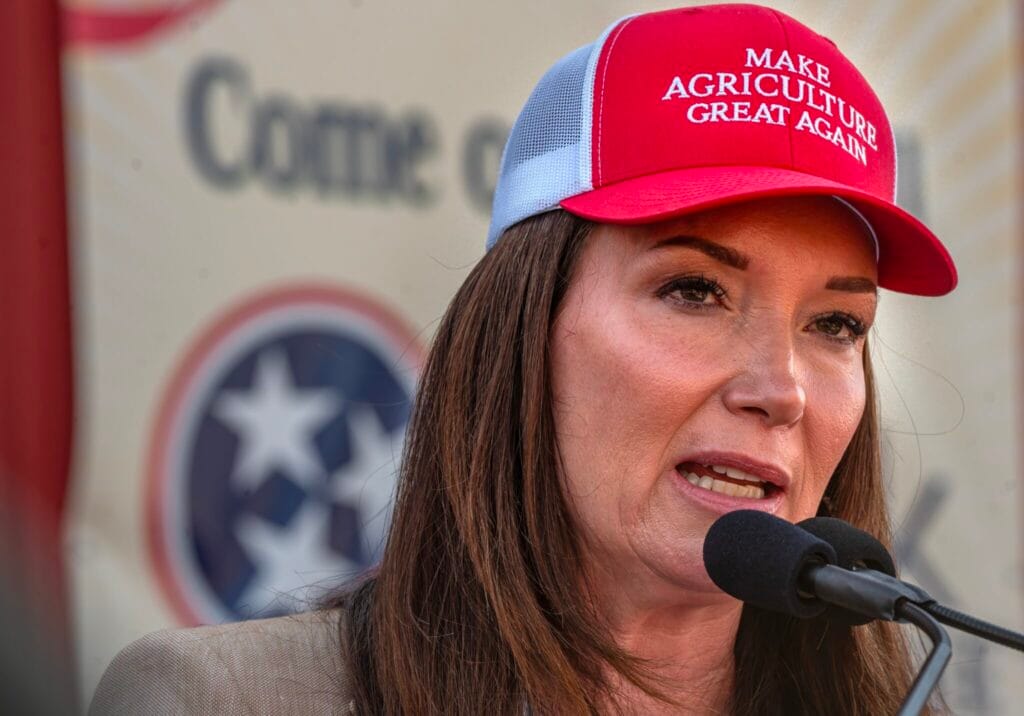
U.S. Agriculture Secretary Brooke Rollins, speaking at a Future Farmers of America event Aug. 18, 2025 at the Tennessee State Fair. (Photo by John Partipilo/Tennessee Lookout) By Jacob Fischler | Virginia Mercury
The U.S. Department of Agriculture will transfer a large office building to the General Services Administration in a step toward shrinking the department’s footprint in and around Washington, D.C., Secretary Brooke Rollins said Wednesday.
More than 70% of offices at the USDA’s South Building, in Washington, sit empty on any given day, while deferred maintenance costs have piled up past $1 billion, Rollins said at a press conference in front of the building.

The Department of Agriculture South Building at 1400 Independence Ave. SW in Washington, D.C., was designed by the Office of the Supervising Architect of the Treasury and built between 1930 and 1936. (Photo courtesy of the General Services Administration) “Behind me, along this entire city block in bricks and mortar, is what government that has grown too big, too bloated and too disconnected from its citizens looks like,” Rollins said. “That all changes starting today, because today we are officially starting the process of turning the South Building back over to the General Services Administration.”
The department will also vacate leased space at an office in Alexandria, Virginia, USDA Deputy Secretary Stephen Vaden said.
The moves are part of a plan the department outlined in July 2025 to shift its workers out of the capital region, reducing the workforce in D.C., Maryland and Virginia from 4,600 to around 2,000 while expanding regional hubs throughout the country.
Rollins said Wednesday the move was the “next step to right-size our federal real estate footprint to root out waste, fraud and abuse.”
Sen. Joni Ernst, an Iowa Republican who has long advocated for shrinking the federal government, applauded the move and urged department officials to consider her state as a target for relocation.
“Let’s just keep on draining the swamp, and, Secretary Rollins, moving our federal workers closer to the people that they represent,” Ernst said. “And I would say that the great state of Iowa is a good place to start.”
Workforce to relocate
Workers in the department’s Food and Nutrition Service who currently report to the Virginia office will relocate to Washington, D.C., Vaden said.
The broader reorganization would ramp up over the summer, allowing employees with school-aged children to finish the academic year in the capital area and complete their relocation in time for the next school year, he said.
That will require a series of steps required by laws, regulations and union contracts, Vaden said.
The July plan said the effort to spread the USDA workforce out from D.C. would take years. It included expanded regional offices in Raleigh, North Carolina; Kansas City, Missouri; Indianapolis; Fort Collins, Colorado; and Salt Lake City.
The department would also maintain administrative support locations in Albuquerque, New Mexico, and Minneapolis and agency service centers in St. Louis; Lincoln, Nebraska; and Missoula, Montana, according to a July 24 memo.
South Building future unclear
GSA Administrator Edward Forst said the move represented “a very preliminary stage” and declined to provide a timeline for the transfer to be complete.
“I don’t want to commit to a time frame other than I have two years and 10 months left in this job,” he said. “And we’re going to get a lot done in that time frame.”
Vaden said the USDA reorganization would be complete by the end of 2026.
Forst said USDA’s transfer of the South Building triggered a long and comprehensive process to find a new use. The agency would consult with stakeholders, including the private sector, and that the district’s prosperity was among its priorities.
“We’re committed to economic prosperity for D.C.,” he said. “That’s one of our initiatives. We also talk to the private sector and others about the best case use and how we also deliver the best results for the American taxpayer. So it is a long, it’s a comprehensive process. We want to be good listeners, and then we’ll execute on this.”
Detainer dispute follows Fairfax murder charge
By Shirleen Guerra | The Center Square
(The Center Square) – A Virginia homicide suspect remains held without bond in Fairfax County as federal immigration officials and state leaders debate how immigration detainers should be handled in a county that has faced prior scrutiny over similar cases.
Abdul Jalloh, 32, was charged Wednesday of last week with second-degree murder in connection with the fatal stabbing of 41-year-old Stephanie Minter at a Hybla Valley bus stop, according to Fairfax County Police. Detectives identified Jalloh through surveillance footage and interviews.
He is being held at the Fairfax County Adult Detention Center.
U.S. Immigration and Customs Enforcement confirmed it lodged an immigration detainer against Jalloh the same day as the arrest. The Fairfax County Sheriff’s Office told The Center Square it has received what it described as “an informal request” from ICE in the case.
An immigration detainer asks a local jail to notify federal authorities before releasing an individual and to hold the person briefly so ICE can assume custody.
In a Saturday release, the Department of Homeland Security said Jalloh is illegally in the country and has more than 30 prior arrests. The agency also said ICE previously lodged a detainer in 2020 and that he was granted a final order of removal.
“We are calling on Virginia Governor Abigail Spanberger and Virginia’s sanctuary politicians to commit to not releasing this murderer and violent career criminal from their jail without notifying ICE,” Homeland Security Deputy Assistant Secretary Lauren Bis said in the release.
In response, a spokeswoman for Gov. Abigail Spanberger, a first-term Democrat who took office Jan. 17, said violent criminals in the United States illegally “should be deported by immigration enforcement,” but added that Homeland Security should obtain a signed judicial warrant.
“As a former federal law enforcement officer who conducted joint search and arrest warrants alongside state and local officers, Governor Spanberger firmly believes that violent criminals who are in the United States illegally should be deported by immigration enforcement,” the statement said. “DHS should request a signed judicial warrant to ensure this violent criminal is deported.”
In an emailed response to The Center Square, the Fairfax County Sheriff’s Office said ICE has been notified of Jalloh’s location at the Adult Detention Center and would be able to act on its detainer if and when he is ordered released. In Virginia, sheriffs are independently elected and are not under the governor’s authority.
Fairfax County Commonwealth’s Attorney Steve Descano’s office was the subject of a preliminary investigative report issued in 2025 after then-Gov. Glenn Youngkin asked then-Attorney General Jason Miyares to review what the administration described as a “pattern of failure” to prioritize protecting victims and law-abiding citizens.
The report examined charging and plea practices, including in cases involving noncitizen defendants.
Descano’s office disputed aspects of the report at the time. In this case, Chief of Staff Laura Birnbaum told The Center Square prosecutors secured Jalloh’s 2023 malicious wounding conviction and have sought to hold him accountable in subsequent proceedings.
Birnbaum said that in other prior malicious wounding cases, prosecutors were unable to move forward because victim participation is required and did not occur in some instances. She said some of those cases were nolle pross’d, a legal term in Latin meaning the charges were dropped but could be refiled if circumstances change.
She added that immigration detainers and physical custody decisions are “the purview of the Sheriff’s Office.”
The Fairfax County Sheriff’s Office states in a July 25, 2024, policy statement that it will not detain an individual based solely on an ICE detainer and requires a judicial warrant authorizing custody.
The statement cites a Jan. 5, 2015, advisory opinion from the Virginia attorney general concluding that an ICE detainer is a request and does not create a legal obligation to hold an inmate beyond a scheduled release date.
Senators need delegates approval to get all significant pay raises

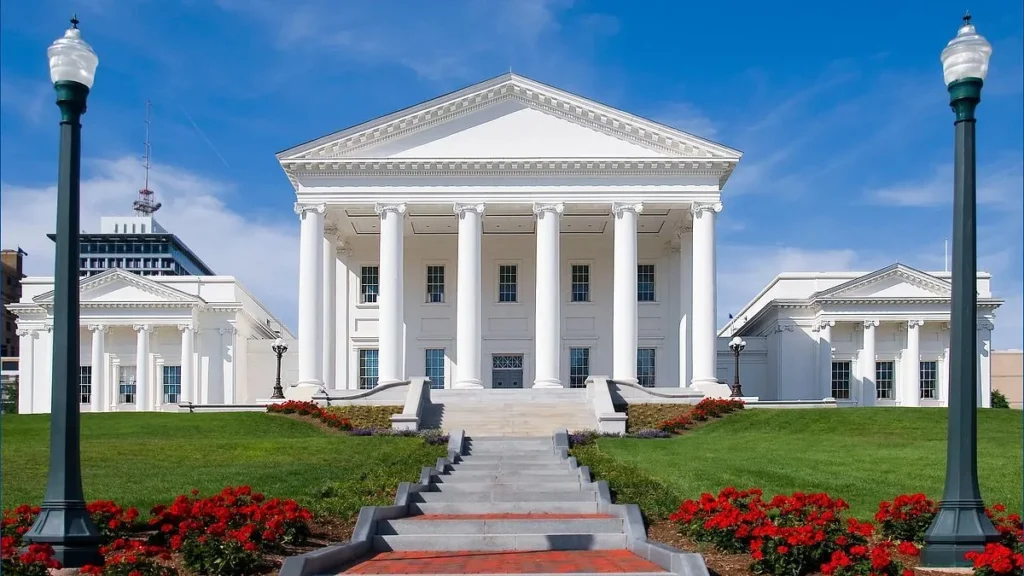
The Virginia State Capitol stands in Richmond. Photo: Ron Cogswell / Flickr / CC BY-SA 2.0 / Cropped from Original By Alan Wooten | The Center Square
(The Center Square) – Senators in Virginia, majority Democrats, are seeking annual pay of $50,000 for themselves and members of the House of Delegates in the budget negotiations as first-term Gov. Abigail Spanberger awaits a bill to sign.
For nearly 38 years, since 1988, the rate has been $18,000 for the upper chamber and $17,640 for the lower. That’s a 177.8% increase for senators, 183.4% for delegates.
Across many outlets, the new rate is framed as 300% of the original.
Bottom line in the budget is $2.9 million in general funds the second year to support the increase. And, the raises are dead if the House of Delegates does not amend its budget with the inclusion.
Virginia lawmakers are scheduled for 60 days in Richmond in the years when a biennial budget is due, 45 days in the other year. The per diem is $237 a day for each, along with mileage reimbursement, office, meeting and other expenses.
Spanberger and other Democrats waged campaigns last fall to secure their seats around the idea of affordability. Since taking office, however, household purchases, paychecks, transportation costs and everyday services have been subject of impact from by a broad slate of tax increase proposals.
Virginia’s Senate Minority Caucus, speaking on the raises, said in part, “The affordability hoax just gets worse and worse.”
For context, state lawmaker pay varies as significantly as the length of sessions. New York ($142,000 plus), California ($114,000 plus) and Pennsylvania ($90,000 plus) are full-time, positions – meaning, they’re in session about all 12 months. Part-time states like South Carolina ($10,400 plus), Nebraska ($12,000 plus) and North Carolina ($13,951 plus) have much shorter annual schedules.
House panel carries over artificial intelligence bills to 2027
A close-up image shows a computer chip labeled “AI” connected to a circuit board illuminated with green light. Photo: Immo Wegmann / Unsplash By Shirleen Guerra | The Center Square
(The Center Square) – Two Senate-approved artificial intelligence bills were delayed Monday by a committee in the Virginia House of Delegates after members raised concerns that advancing new state regulations could affect federal broadband funding.
The House Communications, Technology and Innovation Committee voted to carry Senate Bill 796 and Senate Bill 269 over to the 2027 session.
Before discussion, the committee adopted a substitute to SB796. The changes were made at the request of the attorney general’s office to align the bill’s investigative authority with existing processes under the Virginia Consumer Protection Act and the Virginia Consumer Data Protection Act. The substitute also replaced the word “solely” with “primarily” to address concerns from businesses that feared their AI-assisted services could be inadvertently swept into the measure.
SB796, sponsored by Sen. Tara Durant, R-Stafford, would create the Artificial Intelligence Chatbots and Minors Act. The measure applies to chatbot operators with at least 500,000 monthly active users worldwide and excludes internal workplace tools, clinician-supervised systems and customer service platforms.
The bill would require companies to implement safeguards when users show signs of emotional dependence or suicidal ideation, provide crisis resources and, when practicable, attempt to notify emergency services within 24 hours if a user appears to face imminent harm. Operators would also be required to report deaths, suicide attempts or psychiatric emergencies to the attorney general within 15 days.
Violations could carry civil penalties of up to $50,000 per violation, and harmed users or parents could bring civil actions. Chatbots would also be required to disclose that they are not human and provide periodic notices during extended engagement.
Durant said the bill was prompted by incidents involving teenagers and AI companion platforms.
“And I don’t think that our children, these teenagers particularly that are vulnerable, can wait,” she said.
During committee discussion, members referenced a December executive order directing federal agencies to review and potentially challenge state AI laws deemed inconsistent with federal policy. The order also allows broadband funding eligibility under the Broadband Equity, Access, and Deployment program to be conditioned on states not enforcing certain AI regulations.
Del. Michelle Maldonado, D-Manassas, called it “the chilling effect of the AI executive order on state actions.” She said the bills fall within carve-outs listed in the order, including child safety protections, but warned that other states have faced federal scrutiny even when acting within those exceptions.
Maldonado said lawmakers are being placed in an untenable position, weighing broadband connectivity against efforts to safeguard data privacy.
The committee voted to carry SB796 to 2027 and refer it to the Joint Commission on Technology and Science for further study.
Senate Bill 269, sponsored by Sen. Barbara Favola, D-Arlington, would allow licensed mental health providers to use AI to assist in therapy with patient consent while prohibiting AI from independently diagnosing or treating patients.
That bill was carried over without extended discussion after the chairman noted it was cognate to a House bill introduced by Maldonado.
According to fiscal impact statements, SB796 could require hiring one assistant attorney general at an estimated annual cost of $135,766 beginning in fiscal year 2027. SB269 was projected to have minimal absorbable impact.
The carryover delays further consideration of both bills until the 2027 session.
House, Senate split on data center tax break
By Shirleen Guerra | The Center Square
(The Center Square) – Virginia lawmakers on Sunday unveiled competing budget proposals, with the Senate calling for an end to the state’s sales tax exemption for data center equipment.
The plans, released during the General Assembly’s traditional “Budget Sunday,” highlight differences between the House and Senate on taxes, education, reserves and how the Commonwealth treats its rapidly growing data center industry.
One of the most significant differences involves sales tax exemption for data center equipment.
Because Virginia hosts one of the world’s largest data center markets, changes to the exemption carry significant revenue implications.
Under the Senate proposal, that exemption would expire Jan. 1, 2027. Once the tax break ends, data centers would begin paying sales tax on computer hardware and software purchases.
That shift is projected to generate $317.1 million in new general fund revenue in fiscal year 2027 and $778.2 million in fiscal year 2028.
The jump between years is largely a timing issue. Because the exemption would end midway through fiscal year 2027, the state would only collect sales tax for part of that year. Fiscal year 2028 would mark the first full year of collections.
The House budget takes a different path, relying on revenue growth, balances and other adjustments without tying major spending changes directly to the exemption’s expiration.
Education spending represents another major focus in both proposals.
The House plan includes $1.7 billion in new elementary and secondary education spending. That package features $400.4 million in one-time flexible payments for school divisions, $382.9 million for two 2% compensation increases, and $137.6 million to expand child care subsidy slots.
The Senate proposal emphasizes salary-driven funding adjustments, allocating $190.8 million in fiscal year 2027 and $385.3 million in fiscal year 2028 to support 3% salary increases for funded instructional and support positions.
Senators also link an additional $161.4 million in school funding to projected revenue from the data center exemption ending, reducing the local share of certain K-12 costs.
Higher education funding priorities also differ between the chambers.
The Senate amendments set aside $100 million over the biennium to help institutions limit tuition increases, along with $50 million for undergraduate need-based financial aid. The House budget directs $276.2 million toward affordability, workforce initiatives and institution-specific programs.
Budget negotiators will now work to reconcile differences between the two plans. A final budget must pass both chambers before heading to the governor for consideration.
Bill to bolster school AI safety education advances to Senate
By Kacy Lee | Capital News Service
RICHMOND, Va. — Lawmakers want to strengthen internet safety education in public schools with the addition of artificial intelligence risk management.
Del. Alex Askew, D-Virginia Beach, introduced House Bill 171, which would update the current internet use policy to include instruction on online scams, misinformation and content generated by artificial intelligence.
Current policy restricts the distribution or viewing of illegal content online and broadly requires the inclusion of “a component on Internet safety for students that is integrated in a division’s instructional program.”
Former Gov. Glenn Youngkin issued Executive Order 30 in 2024, which included guidelines for AI integration in education, to equip students with the skills needed to harness AI responsibly and effectively.
Askew stated that while the current Virginia law covers basic requirements for instruction on internet safety in Virginia schools, students frequently encounter AI scams and cyberbullying incidents.
“With these emerging threats, we need to continue to teach our kids to be safe online from harm and the more specific these algorithms get, the more potential harm they can face,” Askew said.
Representatives from the Virginia PTA and the Virginia Education Association testified in support of the bill at the K-12 subcommittee meeting. They emphasized the importance of staying informed about online threats targeted at students.
VEA lobbyist Meg Gruber, the organization’s former president, spoke to the importance of the bill ensuring students are able to recognize AI-generated content, and discouraging extended use of AI in academic settings.
“It’s getting to the point that unless you take the time to really do some deep dives, you can’t, no matter whether you trust the person who shared it or not, you can’t necessarily trust that it’s accurate, that it isn’t AI generated,” Gruber said.
Gruber also said students often do not know how to tell if a video or clip is AI-generated, and need the education to help them differentiate between content.
Bill advocates are concerned with how the applications can affect adolescent mental development as they become more prevalent.
Meghan Puglia, an associate professor of neurology at the University of Virginia, said that an important part of a child’s learning process involves allowing them to “figure things out on their own.”
“We have to have a moderate amount of hardship and challenge to overcome in order to actually learn,” Puglia said. “So when AI takes that away, there’s a big concern for, you know, how does that impact cognitive development, learning, creativity, certainly.”
Puglia expressed support for educating students as early as possible about AI-generated content, noting that age-appropriate conversations regarding technology use are always helpful.
The measure passed in the House with bipartisan support and has since been referred to the Senate Education and Health Committee for further deliberation.
Capital News Service is a program of Virginia Commonwealth University’s Robertson School of Communication. Students in the program provide state government coverage for a variety of media outlets in Virginia.
Unclear dress codes at correctional facilities leave some unable to visit
By Stef Anderson | Capital News Service
RICHMOND, Va. — House lawmakers advanced a bill to create a clear, statewide dress code for visitors to state correctional facilities, to help reduce confusion and denied visits.
Del. Holly Seibold, D-Fairfax County, introduced House Bill 296 because she said she noticed a decline in visits due to visitors being denied access over clothing. The intent of the bill is to create transparency and consistent guidelines for visitors so they have more time with their loved ones, the delegate said.
“Many people drive far to go see their loved ones in prison,” Seibold said. “They have children with them, so we want to do whatever we can to make sure that they have access to their loved one.”
Current Virginia Department of Corrections guidelines prohibit certain items, including wearable technology such as watches or Google smart glasses. Clothing must cover the neck to the kneecaps, according to the VDOC website.
The bill requires the VDOC to establish an “objective dress code” and post the policy in the lobby of every state correctional facility and on its website.
VDOC’s new policy can set limitations on attire, undergarments, shoes, nail polish, makeup, jewelry or hair. Specifically, VDOC can limit colors or materials of attire, nail polish or makeup. It can state specific, measurable lengths on clothing and require certain body parts be covered, as well as prohibit specific types of jewelry, makeup or shoes. Religious dress that meets the code’s requirements cannot be prohibited.
The bill creates a process for visitation denial at the facility, which must be reviewed by an on site administrative duty officer and approved by a regional administrator or superior. VDOC will be required to submit an annual report to the General Assembly and the governor with information regarding the number of visitors denied entry and reason for denial.
Nicole Deyo is CEO and executive director of Bending the Bars Foundation, an advocacy group involved in policy development and legislative recommendations for the incarcerated.
Deyo became involved in prison advocacy after her child’s father died from a fentanyl overdose six years ago at Lawrenceville Correctional Center. The facility was privately operated at the time, she said.
Her family’s massive loss made her wonder what was happening within the prison.
“Specifically for him, because when he was out here on the street, he never had a substance abuse issue,” Deyo said. “So for his last chapter to end due to a fentanyl overdose, it really made me think: ‘How is this happening?’”
Visitors need a blueprint that creates consistency in the dress code, Deyo said. Shift and staff members may enforce dress in different ways, since there is not a specified code. Visitors have to be prepared that their outfit might be rejected by staff, according to Deyo.
“Seasoned individuals who have been dealing with visitation for a while, we usually come with two or three changes of clothes, which still, in itself, is very inconvenient because it takes away the potential time that you could be in there visiting with your loved one,” Deyo said.
When contacted for comment about the impact of the bill, spokesperson Carla Miles said VDOC does not comment on pending legislation.
The bill passed the House with near unanimous support and was referred to the Senate Rehabilitation and Social Services committee.
Capital News Service is a program of Virginia Commonwealth University’s Richard T. Robertson School of Communication. Students in the program provide state government coverage for a variety of media outlets in Virginia.
Virginia could soon require permit to hunt with dogs
File photo of hunting dog By Elle Cota | Capital News Service
RICHMOND, Va. — A House bill is headed to the Senate that would create and require a $19 permit from the Virginia Department of Wildlife Resources for hunters who use dogs.
Del. Marty Martinez, D-Loudoun, introduced House Bill 1396, which would require individuals or organizations to obtain a permit to hunt game animals, fur-bearing animals or nuisance species, with dogs.
Hunting with dogs has deep roots in Virginia, but the practice has fueled decades of disputes over property rights between hunters and landowners. The state law permits hunters to enter private property, without weapons, for the limited purpose of retrieving hunting dogs.
Beginning July 1, 2027, it would be unlawful to release a dog to hunt, pursue or chase any game animal, on any tract of land without the permit.
The bill directs the DWR to establish procedures for issuing and renewing permits, set identification standards for hunting dogs, and outline enforcement, suspension and revocation guidelines. It also implements measures intended to prevent hunting dogs from entering private property without written or verbal permission.
HB 1396 has some exceptions. It does not apply to mounted fox hunting, which is done on horseback with dogs hunting waterfowl, migratory or upland game birds. People are allowed to use tracking dogs to recover wounded deer, bear or turkey. No permit is needed for dogs kept within a hunter’s immediate sight and control, or for hunting on public lands where it is allowed.
“This bill, by no means, bans hunting,” said Del. Nadarius Clark, D-Chesapeake, co-patron of the bill. “It’s just putting guard rails on it.”
DWR will have a registry of hunters who use dogs while preserving their right to retrieve dogs or game, noting that firearms must be unloaded when doing so on another person’s property, according to Clark.
Lawmakers sought input from both hunters and landowners to address concerns while developing the bill, which Clark said resulted in “peace in the valley.” He said the bill regulates dog hunting practices, not firearms.
“We’re not in the business of trying to hurt the Second Amendment, but just making sure we do have responsible gun ownership and also protecting our land owners while also honoring the culture of dog hunting,” Clark said.
Supporters of HB 1396 urge lawmakers to support the bill, claiming the state needs stronger oversight. One supporter, Chris Patton, a retired U.S. Marine Corps colonel, said a permit system is increasingly relevant.
“Last year there were 1,276 complaints in Virginia related to deer dog hunting,” Patton said in his testimony in the House Agriculture subcommittee. “That’s up 19% from the year before and every single year in the last 10 years, there’s been an increase in complaints.”
The department acknowledged the growing problem in 2016 and indicated Virginia would likely need a permit system similar to those used in other southeastern states within a decade, according to Patton.
Opponents argue the bill ignores past recommendations and adds an unnecessary burden on hunters while failing to address rural concerns.
“Yes, this issue’s been around a long time,” testified Kirby Birch of the Virginia Hunting Dog Alliance. “It’s been studied, cussed and discussed. The reality of it is, if people don’t want to hear the solutions, if people don’t want to live with them, they’re going to continue to fight with us.”
A stakeholder advisory committee met for more than a week with representatives from local government and other organizations and developed recommendations to address conflicts. The group did not recommend a permit requirement, Birch said. Instead, members called for additional training and staffing for conservation police officers and increased funding for the DWR.
DWR has a collection of studies on “hunting with hounds in Virginia” going back to 2008 on potential solutions to help resolve the ongoing conflicts. Lawmakers also have previously attempted to address the matter. In 2024, amendments to Senate Bill 30 directed the DWR to develop a free permit for hunting with dogs through the budget rather than amending the state code. The same year, Senate Bill 712 sought to penalize the release of hunting dogs on public roads but failed in the Senate.
Under the current proposal, violations would carry a civil penalty up to $50 for a first offense, and between $100 and $250 for subsequent offenses within three years. Revenue from the fines would be deposited into the state’s Game Protection Fund. Repeat violations could result in permit suspension or revocation.
The bill passed the House on a 55-39 vote, with a few Democrats voting against the measure and some not voting.
Capital News Service is a program of Virginia Commonwealth University’s Richard T. Robertson School of Communication. Students in the program provide state government coverage for a variety of media outlets in Virginia.
In Democratic rebuttal, Spanberger accuses Trump of driving up costs and chaos
By Markus Schmidt | Virginia Mercury
Virginia Gov. Abigail Spanberger, just weeks after being sworn in as the commonwealth’s 75th governor, delivered a sharp Democratic rebuttal Tuesday night to President Donald Trump’s 107-minute State of the Union address, accusing him of driving up the costs of housing, health care, energy and groceries, unleashing chaos in American communities and deepening instability abroad — all while enriching himself and his allies.
Speaking from Colonial Williamsburg’s Historic Area, Spanberger in her 12-minute speech posed three questions to viewers across the nation.
“Is the president working to make life more affordable for you and your family? Is the president working to keep Americans safe — both at home and abroad? Is the President working for you? We all know the answer is no,” she said.
Congressional Democrats announced Thursday that Spanberger, 46, would deliver the party’s response, elevating the first woman to serve as Virginia’s governor to a national stage heading into the midterm elections.
She is the first Democratic Virginia governor to give the rebuttal since then-Gov. Tim Kaine in 2006. The following year, U.S. Sen. Jim Webb delivered the Democratic response to President George W. Bush’s address. In 2010, Republican Gov. Bob McDonnell gave the GOP response to President Barack Obama’s State of the Union.
Trump touts strength; Spanberger cites rising costs
The White House criticized Spanberger’s rebuttal in a prepared statement released Tuesday afternoon.
“Spanberger, like the rest of the radical left lunatics in her party, is fully against President Trump’s agenda of lowering costs, bringing back manufacturing, and securing our borders — instead favoring a return to the Biden-era carnage she was ‘proud’ to support,” the statement said.
Trump, addressing a joint session of Congress for the second time since assuming office last year, declared the nation “strong,” highlighting job gains, rising incomes and a booming stock market even as many voters continue to express economic anxiety.
He defended his administration’s record on border security and immigration, called for tighter voting rules and restrictions on mail-in ballots, and underscored efforts to curb federal spending.
The president also introduced what he described as a “rate-payer protection plan” aimed at addressing rising electricity costs tied to data centers.
But Spanberger said the president’s economic message does not reflect what she heard from Virginians during her campaign.
“As I campaigned for governor last year, I traveled to every corner of Virginia, and I heard the same pressing concern everywhere: costs are too high,” she said. “In housing, healthcare, energy, and childcare. And I know these same conversations are being had all across this country.”
She argued that Trump’s trade policies have increased household expenses.
“Because since this president took office last year, his reckless trade policies have forced American families to pay more than $1,700 each in tariff costs,” she said. “Small businesses have suffered. Farmers have suffered, some losing entire markets. Everyday Americans are paying the price.”
Although the Supreme Court struck down the tariffs days ago, she added, “the damage to us, the American people, has already been done.”
And Republicans in Congress, she said, remain unwilling to assert their constitutional authority to stop the president. “They’re making your life harder. They’re making your life more expensive. They’re even making it more difficult to see a doctor.”
Spanberger pointed to what she called the consequences of the reconciliation bill that Congress passed last year.
“Rural health clinics in Virginia are already closing their doors thanks to the so-called ‘One Big Beautiful Bill’ championed by the president and Republicans in Congress,” she said.
“And tonight, the president celebrated this law — the one threatening rural hospitals, stripping healthcare from millions of Americans, and driving up costs in energy and housing. All while cutting food programs for hungry kids.”
She then shifted to what she described as corruption at the highest levels of government.
“He’s enriching himself, his family, his friends. The scale of the corruption is unprecedented,” Spanberger said, citing “the cover-up of the Epstein files,” “the crypto scams,” “cozying up to foreign princes for airplanes and billionaires for ballrooms,” and “putting his name and face on buildings all over our nation’s capital.”
“This is not what our founders envisioned,” she said.
Governor argues Trump policies undermine safety
Drawing on her background as a former federal law enforcement and CIA case officer, Spanberger argued that the Trump administration’s actions have made Americans less safe.
“I began my career by following in my father’s footsteps as a federal agent working money laundering and narcotics cases. I worked side by side with local and state police to keep our communities safe and to uphold and enforce the law,” she said.
“And yet, our president has sent poorly trained federal agents into our cities, where they have arrested and detained American citizens and people who aspire to be Americans — and they have done it without a warrant,” she said.
Spanberger added that federal Immigration and Customs Enforcement agents “have ripped nursing mothers away from their babies, they have sent children — a little boy in a blue bunny hat — to far-off detention centers, and they have killed American citizens on our streets. And they have done it all with their faces masked from accountability.”
On foreign policy, the governor said Trump is weakening America’s standing in the world.
“As the president spoke of his perceived successes tonight, he continues to cede economic power and technological strength to China, bow down to a Russian dictator, and make plans for war with Iran,” she said.
“Here’s the truth: over the last year, through DOGE, mass firings, and the appointment of deeply unserious people to our nation’s most serious positions, our president has endangered the long and storied history of the United States of America being a force for good.”
In choosing Colonial Williamsburg as her backdrop, Spanberger invoked the site’s role in the nation’s founding.
It was there in 1776 that delegates voted to instruct Virginia’s representatives to propose independence and later adopted the Virginia Declaration of Rights, which helped shape the Declaration of Independence and the U.S. Bill of Rights.
On Tuesday, Spanberger tied that legacy to civic engagement today.
“But here is the special thing about America: On our 250th anniversary, we know better than any nation what is possible when ordinary citizens — like those who once dreamed right here in this room — reject the unacceptable and demand more of their government,” she said.
“And Americans across the country are taking action. They are going to the ballot box to reject this chaos. With their votes, they are writing a new story. A more hopeful story.”
Spanberger closed by quoting George Washington’s warning about “cunning, ambitious, and unprincipled men” and urging Americans to unite “in ‘a common cause’ to move this nation forward.”
“Because ‘We the People’ have the power to make change, the power to stand up for what is right, and the power to demand more of our nation,” she said.
‘Crazy’: Trump blasts Dem policies, SCOTUS tariff ruling in wide-ranging State of Union
By Sarah Roderick-Fitch | The Center Square
(The Center Square) — The economy, immigration and patriotism took center stage Tuesday night as President Donald Trump delivered his second State of the Union Address of his second term.
Flanked by members of his cabinet, Supreme Court justices, military leaders and members of Congress, the president spoke for over an hour and a half.
Upon entering the chamber, the president was greeted with Republicans chanting, “USA, USA…”
“Our nation is back, bigger, better and richer and stronger than ever before,” Trump began his address, calling this time the “golden age of America.”
The president quickly compared the successes of his presidency to the Biden administration.
“Today, our border is secure, our spirit is restored. Inflation is plummeting, incomes are rising fast. The roaring economy is roaring like never before, and our enemies are scared. Our military and police are stacked, and America is respected again,” Trump said.
Trump touted his immigration policies, arguing the border is the “most secure border in American history.” In one year, illegal border crossings dropped by 96% at the southwest border, from the record highs during the Biden administration, The Center Square reported earlier Tuesday.
The president also cited the decline in the murder rate, lower gas prices, lower inflation, and lower mortgage rates.
In addition, he credited his administration with creating thousands of new jobs, underscoring that most have been in the private sector.
“The state of our union is strong,” the president said.
Many in the chamber erupted in loud applause and chants of “USA, USA…” as the president introduced the U.S. Olympics men’s hockey team that just won the gold medal.
The president credited his fellow Republicans in Congress for passing his “Big, Beautiful Bill,” while chastising Democrats for voting against the legislation that he credits for lowering taxes.
Among the economic incentives the president touted was the Trump Accounts set up for children.
In an uncomfortable moment, the president criticized some members of the U.S. Supreme Court that ruled Friday against his tariffs, vowing to continue to pursue them.
Trump took aim at Democrats in the room for allowing open borders, higher inflation and skyrocketing health care costs.
The president countered by citing his plan to lower health care costs by promoting price transparency and reducing prescription drug costs.
Trump called on Congress to codify his favorite nation program into law to lower the cost of medication.
The president also announced that AI tech companies will be obligated to build their own power plants.
He also highlighted his recent executive order banning large Wall Street investment firms from buying single-family homes, while calling on Congress to codify his executive action.
In addition, he announced a plan to give the private sector access to similar retirement plans “offered to every federal worker,” adding that it will be matched by $1,000 in federal taxpayer dollars.
The president also urged Congress to pass legislation to stop insider trading, specifically calling out former Democratic House Speaker Nancy Pelosi, who has been accused of using her position to increase her family’s wealth through stock trading.
Trump pointed to allegations of fraud, spotlighting Minnesota, California, Massachusetts and Maine, announcing that Vice President JD Vance will lead the “war on fraud.”
The president called out Democrats for their open border policies, while highlighting angel families and victims of illegal immigration, “to remind everyone in this chamber exactly why we are deporting illegal alien criminals.”
Trump called out Democrats for cutting off funding for the Department of Homeland Security through the ongoing partial government shutdown. Democrats have blocked funding for the agency as they demand restrictions on enforcement of federal immigration laws.
The president demanded Democrats end “deadly sanctuary cities” while enacting “serious penalties for public officials who block the removal of criminal aliens.”
Trump then called on Congress to pass his SAVE America Act, which would secure voting by requiring voter ID. He noted New York City demanded identification for snow removers present ID to apply for jobs after the recent winter storm under self-declared socialist Mayor Zohran Mamdani.
“Congress should unite and enact this common-sense country-saving legislation right now and it should be before anything else happens,” the president demanded.
Trump also highlighted Sage Blair, a Virginia student, who school officials “sought to socially transition her” without her parents’ consent or knowledge.
When Trump said that shoud never happen, Republicans stood up and cheered whilre Democrats remained seated and silent.
“Nobody stands up. These people are crazy,” Trump said, staring down the Democrat side of the aisle.
The president also criticized no cash bail policies, calling on Congress to pass “tough legislation to ensure that violent and dangerous repeat offenders are put behind bars.”
He touted his efforts to reduce crime in major cities, such as the District of Columbia, Memphis, and New Orleans.
The president also honored the two West Virginia Guardsmen shot blocks from the White House on the eve of Thanksgiving, including Spc. Sarah Beckstrom, who was killed. Trump introduced Staff Sgt. Andrew Wolfe, who was also shot and seriously injured during the attack. Wolf was awarded the Purple Heart during the address.
In addition, Trump touched on his international accomplishments over the past year, ending several wars and conflicts, calling Secretary of State Marco Rubio one of the best secretaries in history.
Many Democrats managed to stand and applaud the president for working to bring home Israeli hostages.
Trump highlighted Operation Midnight Hammer, striking Iran’s nuclear program. He underscored the atrocities carried out by Iran as he is weighing another operation against the Islamic Republic. He warned that Iran has developed missiles “that can threaten Europe and our bases overseas, and they’re working to build missiles that will soon reach the United States of America.”
The president said he would prefer diplomacy, but “will never allow the world’s number one sponsor of terror, which they are by far, to have a nuclear weapon.”
“I will never let the world’s number one sponsor of terror have a nuclear weapon,” the president vowed.
Trump shifted to his policies to prioritize dominance in the Western Hemisphere by targeting narco-terrorists and foreign interference, spotlighting the capture of former Venezuela President Nicolas Maduro.
Trump used the address to award the Congressional Medal of Honor to Chief Warrant Officer Eric Slover for his heroic actions in Venezuela, and to 100-year-old Ret. Navy Captain Royce Williams, who served in World War II, Korea and Vietnam – drawing massive applause from both Democrats and Republicans in the chamber.
The president concluded his address by highlighting the nation’s 250th birthday and its achievements since its birth.
“And these first 250 years were just the beginning, from the rugged border towns of Texas to the heartland villages of Michigan, from the sun-kissed shores of Florida to the endless fields of the Dakotas, and from the historic streets of Philadelphia to right here in our nation’s capital, Washington, D.C., the golden age of America is upon us. The revolution that began in 1776 has not ended. It still continues because the flame of liberty and inpendence still burns in the heart of every American patriot, and our future will be bigger, better, brighter, bolder and more glorious than ever before,” the president concluded.
Front Royal Man Barricades Himself, Throws Burning Objects at Officers Before Arrest
A domestic assault call on South Shenandoah Avenue in Front Royal escalated into an hours-long standoff Monday afternoon after a suspect armed himself with a knife, threatened officers and began setting objects on fire inside the residence.
Front Royal Police responded to the 100 block of South Shenandoah Avenue around 3:46 p.m. on February 23 and found an adult male victim inside with facial injuries. The victim was taken to Warren Memorial Hospital for treatment.
The suspect, identified as 33-year-old Drew Richard Winder of St. Louis, Missouri, fled to an upstairs bedroom where he armed himself with a knife and other objects, threatened to harm officers and barricaded himself inside. Police evacuated other occupants of the home as well as residents from neighboring properties.
Negotiators from the Front Royal Police Department and the Warren County Sheriff’s Office attempted to communicate with Winder, but he refused to cooperate. As specialized units continued trying to talk him out, Winder lit objects on fire and threw them down the stairwell toward officers. Personnel on scene quickly removed and extinguished the burning items.
After obtaining a search warrant and multiple arrest warrants, and following repeated unsuccessful attempts to get Winder to surrender voluntarily, officers deployed gas canisters into the residence. Winder exited seconds later and was taken into custody without injury.
He was transported to Warren Memorial Hospital for precautionary evaluation before being taken to RSW Regional Jail, where he is being held without bond. Charges include malicious wounding, four counts of threatening bodily harm to law enforcement, assault and battery on a law enforcement officer, and burning or destroying a dwelling.
The Front Royal Police Department credited the Warren County Sheriff’s Office and Warren County Fire and Rescue for their assistance during the incident.
Information from a release.
Road Rage Shooting Near Winchester Leads to Arrest of Harpers Ferry Man
A road rage confrontation at a busy Frederick County intersection turned violent last week when a 19-year-old West Virginia man fired multiple shots at another driver before fleeing north on Interstate 81, according to the Frederick County Sheriff’s Office.
The incident unfolded around 2:13 p.m. on February 20 near the intersection of Martinsburg Pike and Welltown Road, in front of a Wawa convenience store. Deputies say Elijah Stout-Griffin of Harpers Ferry exited his vehicle at a red light, approached the other driver’s car and brandished a firearm. When the victim attempted to drive away, he struck Stout-Griffin with his vehicle, knocking him to the ground. Stout-Griffin then fired several shots at the moving vehicle before getting up, returning to his brown Jeep SUV and fleeing northbound on I-81.
Frederick County deputies collected shell casings, obtained video from witnesses and nearby businesses and began searching the interstate and Route 11. They also alerted West Virginia authorities to be on the lookout for the armed suspect.
Shortly before 4 p.m., Berkeley County, W.Va. authorities located the suspect vehicle at an address in Bunker Hill. Working together, Frederick County and Berkeley County personnel took Stout-Griffin into custody at that location. The vehicle and the firearm believed to have been used in the shooting were also recovered.
Stout-Griffin faces felony charges of attempted aggravated malicious wounding and malicious shooting at an occupied vehicle, along with a misdemeanor brandishing charge. He is being held by Berkeley County authorities pending extradition to Virginia.
Information from a release. Edited by Dan McDermott.
Heavy Marijuana Use Sending More Virginians to the ER With Severe Vomiting, New Data Shows
If you’ve never heard of cannabinoid hyperemesis syndrome, you’re not alone — but Virginia hospitals are seeing it more and more.
A new analysis by the Virginia Hospital and Healthcare Association found that emergency room visits linked to a condition that causes uncontrollable nausea, vomiting and abdominal pain in long-term marijuana users increased nearly 29 percent in Virginia between 2020 and 2024. In total, nearly 25,000 Virginians visited an emergency room for the condition — known as CHS — over that five-year period, climbing from about 4,000 visits in 2020 to more than 5,100 in 2024.
CHS is not widely understood by the general public, and many sufferers don’t immediately connect their symptoms to marijuana use. The condition tends to affect people who have used cannabis heavily for an extended period of time and causes recurring bouts of severe vomiting that can be serious enough to require emergency care.
The Virginia numbers are part of a broader national trend. A study published in the Journal of the American Medical Association found CHS cases rising in U.S. emergency rooms from 2016 through 2022, with the heaviest concentration among adults aged 18 to 35. Research out of Northern California documented a 134 percent increase in CHS-related ER visits over an 11-year period. A Colorado study found a 46 percent increase in related hospitalizations in just four years.
Zooming out further, Virginia emergency rooms saw nearly 173,000 visits related to cannabis abuse, dependence or poisoning between 2020 and 2024 — more than 31,000 per year, with a peak of nearly 38,000 in 2022.
The VHHA analysis was based on all-payer emergency department and hospital discharge data for the five-year period.
Information from a release. Edited by Dan McDermott.

Virginia emergency rooms logged more than 172,000 visits related to cannabis abuse, dependence or poisoning over five years, peaking at nearly 38,000 in 2022 before declining slightly. Source: Virginia Hospital & Healthcare Association 
Virginia emergency room visits for cannabinoid hyperemesis syndrome — the severe vomiting condition linked to heavy marijuana use — jumped 27 percent between 2020 and 2024, peaking at 5,345 visits in 2022. Source: Virginia Hospital & Healthcare Association Lord Fairfax Health District Expands WIC Services, Adds Clinic Days

Courtesy photo of current Women, Infants and Children (WIC) team including the WIC coordinator, nutritionists, nutrition associates, office service specialists, and breast-feeding peer counselors. The Lord Fairfax Health District has announced an updated schedule and expanded staffing for its Women, Infants, and Children program, known as WIC, with the goal of serving more families and reducing wait times across the region.
WIC is a federally funded program that provides nutrition education, healthy food benefits, breastfeeding support and referrals to health and social services. It serves pregnant and postpartum individuals, infants and children up to age five who meet income guidelines.
“The WIC Program is excited to add more available clinic days,” said Alyssa Brown, the Lord Fairfax Health District WIC Coordinator. “This marks a step forward to serve more families in need.”
For Warren County residents, WIC services are available at the local health department on Wednesdays and Thursdays from 8 a.m. to 4:30 p.m.
The updated schedule across the district is as follows: Frederick and Winchester locations are open Monday through Friday, 8 a.m. to 4:30 p.m.; Page County is open Mondays and Tuesdays; and Shenandoah County is open Mondays, Wednesdays and Thursdays, all from 8 a.m. to 4:30 p.m.
Families interested in applying or learning more about eligibility can call their local health department during staffing hours. Community organizations and health care providers are encouraged to refer eligible families to the program.
More information is available at the Lord Fairfax Health District’s website at vdh.virginia.gov/lord-fairfax.
Information from a release.
Valley Health Wellness Festival Returns Feb. 28 at Apple Blossom Mall
Valley Health will host its 32nd annual Community Wellness Festival on Saturday, Feb. 28, from 10 a.m. to 5 p.m. at the Apple Blossom Mall in Winchester. The event is free and open to the public.
Now in its fourth decade, the festival has offered health education and screenings to the region since 1995. This year’s event features more than 80 exhibitors covering a wide range of health topics, along with children’s activities and fitness demonstrations.
Free and low-cost screenings available on site will include blood pressure checks, blood glucose testing, cardiovascular disease screening, body mass index screening, hearing screening, stroke risk factor screening, vein screening and low-cost blood testing.
Many Valley Health programs and services will have a presence at the festival, including Heart and Vascular Services, Oncology, the Metabolic and Bariatric Program, Palliative Care, Valley Health Fertility, Gastroenterology, Urology and the Center for Advanced Wound Care and Hyperbarics, among others.
For a full list of participating exhibitors and more information, visit valleyhealthlink.com/wellnessfestival.
Information from a release. Edited by Dan McDermott.
Woodstock Fire Chief Named Virginia’s Volunteer Chief Officer of the Year

At center is Woodstock Fire Chief Zach Hottel. Courtesy photo. Woodstock Fire Department Chief Zachary Hottel has been named Virginia’s Volunteer Chief Officer of the Year, one of the state’s highest honors in the fire service.
Governor Abigail Spanberger announced Hottel and other recipients of the 2025 Governor’s Fire Service Awards at the annual Virginia Fire and Rescue Conference in Virginia Beach earlier this week.
“These award recipients embody excellence, dedication, and leadership in the fire service,” Spanberger said. “I am honored to recognize their commitment to protecting the lives and safety of our fellow Virginians.”
Hottel, who was elected to his fully volunteer position in January 2025, has nearly two decades in the fire service. Under his leadership, the Woodstock Fire Department completed its first comprehensive strategic plan and has grown significantly at a time when many volunteer agencies across Virginia are struggling to recruit and retain members. His recruitment and retention efforts increased active volunteers by roughly 15 percent, bringing 19 new members into the department over the past three years.
WFD President Phyllis Fleming credited Hottel’s persistence in securing grant funding and advocating with local government for resources including protective equipment, apparatus and training.
“While many volunteer agencies across Virginia are challenged with recruitment and retention, Chief Hottel has helped WFD emerge as an example for strategic growth,” Fleming said.
Virginia Department of Fire Programs Executive Director Brad Creasy praised all award recipients for their service. “Their tireless commitment to protecting our communities and bravery in the face of danger is inspiring,” Creasy said.
Information from press releases. Edited by Dan McDermott.
VDOT Crews Working to Patch Potholes Across Virginia Roads
Pot hole repair file photo The Virginia Department of Transportation says crews are actively working to find and repair potholes across the state following a winter season of freezing temperatures, heavy snow and rain — conditions that accelerate pavement deterioration.
Potholes form when moisture seeps into pavement, freezes and expands, then thaws. The repeated cycle weakens the road surface, and traffic gradually loosens and breaks apart the pavement. VDOT says residents should expect more potholes than usual given the weather Virginia has experienced this winter.
“We know you see them and don’t like them, and we don’t like them either,” said Kevin Gregg, VDOT’s Chief of Maintenance and Operations. “Motorists can help ensure that potholes are identified and repaired as quickly as possible by reporting them through our Customer Service Center.”
When a pothole is reported, VDOT communicates it to local crews, who then inspect the damage and schedule repairs based on location, traffic volume and severity. During winter months, crews use cold-patch materials as a temporary fix. Permanent repairs require warmer temperatures.
VDOT is also asking drivers to slow down and move over when passing repair crews working on the roadway.
Residents can report potholes and other road problems through VDOT’s online form at my.vdot.virginia.gov or by calling 800-367-7623 (800-FOR-ROAD), available 24 hours a day.
VDOT handles repairs on state-maintained roads, including interstate highways and most primary and secondary roads. Potholes on city streets are the responsibility of local governments. Residents of Arlington and Henrico counties should also contact their local government for pothole repairs, as those jurisdictions maintain their own roads.
Information from a release. Edited by Dan McDermott.
Stay safe from utility scams, in-person, online or on the phone
It can start three different ways: a sudden phone call about your bill, an email that looks like routine account business, or a stranger at your door claiming to be from your electricity provider. Unfortunately, these three different approaches may signal the same bad intent: scammers trying to catch Rappahannock Electric Cooperative (REC) members off guard and push them into handing over money or personal information.
REC encourages members to stay alert for scams received by email, by phone and in person. If something feels off, the safest move is to pause, end the interaction or close the text message, and contact REC directly using a trusted number.
Email scams: what you can do to avoid getting hooked
REC has seen scam emails designed to divert payments intended for the Cooperative into fraudulent accounts. These messages can look professional and feel routine, which is why it’s worth slowing down and checking the details before you respond.
- Check the sender’s email address carefully. Look for swapped letters, extra characters or unusual domains that mimic REC.
- Treat any request to change where or how you pay — or claims that a payment process has changed — as a warning sign. If an email directs you to a different payment method, stop and verify through REC.
- Do not share personal or financial information by email. That includes your Social Security number or bank account information.
- Watch for quality issues. Noticeable grammar mistakes, strange phrasing or inconsistent formatting can signal a scam.
- Avoid unusual payment methods. Do not make payments using gift cards, prepaid debit cards or wire transfers.
Phone scams: what you can do to avoid falling for a scam call or text
Phone scams often follow a familiar playbook: a caller claims to represent REC and demands immediate payment, sometimes threatening disconnection if you don’t comply.
REC may notify members when payment has not been received and disconnection is pending, but REC’s member service representatives do not demand immediate payment.
- If you’re unsure, end the call and contact REC directly using a trusted number.
- Never agree to meet someone to make a payment. REC would not request that a member meet an employee to pay a bill.
- Be cautious if a caller claims REC is using a collection agency to contact you by phone. REC does not use collection agencies to contact members by phone.
- Do not provide personal or financial information over the phone unless you initiated the call and trust the number.
In-person scams: what you can do if someone shows up at your door
In the past, REC received reports of individuals coming onto members’ property and posing as REC representatives. In some cases, scammers requested access to property, claimed REC would cover solar panel installation costs, or presented information related to a non-REC transmission line.
- Be cautious of anyone claiming REC will pay for or provide solar panel installations. REC does not pay for or provide solar panel installations; it provides guidance on solar energy for residences and businesses.
- Verify identity before allowing access. REC personnel and contractors use clearly marked vehicles, wear uniforms and carry proper identification.
- If you feel uncertain, do not engage further. Report suspicious visits to local law enforcement.
How to report a scam
If you receive a suspicious email, phone call, text message or in-person visit from someone claiming to be from REC, do not click links, share personal information or send payment. End the call or interaction, then contact REC directly at 1-800-552-3904 to confirm whether the contact was legitimate. If you believe you have been scammed, report it to the cooperative and local law enforcement. Report attempted scams to REC here: www.myrec.coop/report-scam.
About Rappahannock Electric Cooperative
Serving over 184,000 connections across portions of 22 Virginia counties, REC is a pillar in its communities, with over 18,000 miles of power lines extending from the Blue Ridge Mountains to the Chesapeake Bay. For more information about REC, please visit www.myrec.coop. Follow REC on Facebook, X, Instagram, LinkedIn and YouTube.
Information from a release.
Virginia DMV Expands Mobile ID Program to Northern Virginia

Virginia Mobile ID file photo The Virginia Department of Motor Vehicles is rolling out its Mobile ID program across Northern Virginia, allowing residents to store a state-issued driver’s license or ID on their smartphones at no cost.
The expansion follows a successful launch in the Richmond area. The digital credential can be used at DMV customer service centers, TSA checkpoints at more than 350 U.S. airports — including Reagan Washington National and Washington Dulles — 16 pilot Virginia ABC stores in Northern Virginia, and a growing number of restaurants, wineries and breweries across the state.
Virginia Secretary of Transportation Nick M. Donohue said the rollout reflects the state’s push toward modernizing how residents interact with government services. “The future of identification is now in the hands of Virginians,” Donohue said. “The more we use Virginia Mobile ID, the more businesses and organizations will see the value and convenience and will start accepting it themselves.”
To get started, residents download the Virginia Mobile ID app from the App Store or Google Play, scan their physical license or ID, complete a face verification and can begin using the mobile credential immediately. DMV officials are advising residents to continue carrying their physical ID card as a backup, particularly when driving.
The app gives users control over what personal information they share during verification. Someone purchasing alcohol, for example, can confirm they are over 21 without disclosing their name and address or handing over their phone.
Virginia DMV Commissioner Dr. Gerald Lackey said the program is designed with both convenience and security in mind. “Virginia Mobile ID is made for Virginians, and we encourage everyone to give it a try. It’s free, secure and right in the palm of your hand.”
Businesses can accept the mobile ID through a free Virginia Mobile ID Verifier app. A QR code scan transmits customer data securely between devices, and DMV says no data is stored or tracked on its end. More than 100 businesses and organizations statewide currently accept the credential.
Virginia DMV said it is working to expand acceptance locations and make the ID available through digital wallets. The Virginia ABC authority plans to bring the program to additional stores once the current pilot is complete.
More information is available at the Virginia DMV’s website.
Information from a release. Edited by Dan McDermott.
Data center tax breaks are on the chopping block in some states
QTS Data Centers Hillsboro 3 Data Center in Hillsboro, OR, October 11, 2024. By Madyson Fitzgerald | Virginia Mercury
After years of states pushing legislation to accelerate the development of data centers and the electric grid to support them, some legislators want to limit or repeal state and local incentives that paved their way.
President Donald Trump also has changed his tone. Last year he issued an executive order and other federal initiatives meant to support accelerated data center development. Then last month, he cited rising electricity bills in saying technology companies that build data centers must “pay their own way,” in a post on Truth Social.
As the momentum shifts, lawmakers in several states have introduced or passed legislation that aims to rein in data center development by repealing tax exemptions, adding conditions to certain incentives or placing moratoriums on data center projects. Virginia lawmakers, for example, are considering ending a data center tax break that costs the state about $1.6 billion a year.
“Who is actually benefiting from these massive data centers that, in many cases, are the size of one or two shopping malls combined?” asked Michigan Democratic state Rep. Erin Byrnes, who introduced a proposal to repeal the state’s data center tax exemptions. “They have a large footprint in terms of land and energy usage. And by and large, it’s not going to be the average resident who lives near a data center who’s going to benefit.”
Over the past few years, more data centers have been built in an effort to meet the demand for digital processing power, which has rapidly increased as more artificial intelligence systems come online. Data centers house thousands of servers that are responsible for storing and transmitting data required for internet services to work.
But as local communities voice growing outrage over rising electricity prices and environmental concerns brought by data centers, such as water and energy use, lawmakers in several states are hoping to slow data center development. By limiting incentives or placing moratoriums on new projects, state legislators are hoping to give themselves more time to determine whether the massive facilities are worth losing millions or more in tax revenue each year.
Some experts also say that developers and tech companies have exaggerated some of the benefits they bring to local communities. While the promise of new jobs sounds attractive, local leaders may face other concerns, such as the effects of diverting construction resources away from other purposes and higher energy costs caused by AI, said Michael Hicks, an economics professor at Ball State University in Indiana.
“A lot of households — and the people that are elected by households — and local governments are becoming more unnerved by the public pushback to data centers,” Hicks said.
Tech developers and data center operators are concerned, however, that the changes could hurt the rapidly growing industry. And most states and localities already require developers using incentives to follow certain requirements, said Dan Diorio, the vice president of state policy for the Data Center Coalition, a lobbying group for the data center industry.
State lawmakers have to consider how changes to incentive programs could upend years of construction, which has long-term business impacts, Diorio said.
“I think data centers are very much the backbone of the 21st-century economy,” he said. “We’re generating economic activity in states, contributing to state-level GDP, contributing significantly to labor income and state and local tax revenue, and creating significant amounts of jobs. I mean, we’re just jumping into something preemptively here.”
Incentives granted
At least 37 states offer incentives that are available to data centers, including sales tax exemptions and property tax abatements, according to the National Conference of State Legislatures. Sales tax exemptions, the most common incentive, allow data center developers to buy computers and other equipment at a much lower cost.
“I think these are one of many factors that the data centers are looking at, along with the cost of electricity, the cost of construction, land and things like that,” said Nicholas Miller, a policy associate at NCSL. “These incentives are one way that states are trying to pitch themselves as competitive to this industry.”
In 2020, Maryland implemented a program that exempts data centers from sales and use taxes if they provide at least five jobs within three years of applying to the program and invest at least $2 million in data center personal property. The first four years of the program cost the state $22 million — but $11 million of that came in 2024 alone, as the costs grew, Democratic state Del. Julie Palakovich Carr said.
Concerned about this and the impact of data centers on residents’ electricity bills, Palakovich Carr introduced legislation this year that would repeal the state’s sales and use tax exemptions for personal property used at data centers. The measure, which is under consideration in the House, would also restrict localities in the state from eliminating or reducing assessments for personal property used in data centers, which drew opposition from the Maryland Association of Counties.
The amount of money states are forfeiting to provide tax breaks for data centers is increasingly concerning, Palakovich Carr said.
“Unfortunately, that’s the turn we’re seeing across many other states,” she said. “The price starts out maybe in line with what we think it’s going to be. But over time it just costs more and more.”
Similar bills that would repeal or halt state incentives for data centers have been filed in Arizona and Georgia.
“When we look at potential subsidies for businesses, I’m really looking at it from a frame of incentivizing new behavior rather than just giving away money for things that the companies were going to already do anyways,” Palakovich Carr said. “I think it’s really important that once these things get put in place, we look at the data and see what’s happening on the ground.”
In 2024, Michigan enacted sales and use tax exemptions on certain data centers through at least 2050.
Now, with developers looking at more than a dozen sites for potential data centers, public sentiment has soured, said Byrnes, who had voted against the measure. Communities across the state began organizing in an effort to stop data centers from coming to their neighborhoods because of environmental concerns and energy costs, she said.
The outcry prompted Byrnes to co-sponsor a bipartisan package of three bills that would repeal the 2024 law.
“We’re taking a stand with this legislation to say that we don’t believe data centers should be offered these exemptions,” she said. “I believe it aligns with public sentiment.”
Lawmakers in a handful of states — including New York, Oklahoma and Vermont — have filed bills that would place a temporary moratorium on all data center projects and require studies of their impacts.
Georgia Democratic state Rep. Ruwa Romman introduced a measure this session that would put a moratorium on new data center projects until March 2027. The proposal would give the legislature time to study the impact of data centers on the state’s natural resources, environment and other areas.
“We have such a beautiful state and it would be a damn shame to completely and utterly wreck it and its landscape for short-term gain,” Romman said. “These data centers aren’t bringing jobs. They’re saying they’re bringing the revenue, but there’s a ton of fine print on the revenue that’s coming in. So, I’ve been urging my colleagues from every side of the political spectrum to just take a beat.”
In 2021, the Oklahoma legislature approved a measure from current Republican House Speaker Kyle Hilbert that excludes new data centers from qualifying for an exemption program that allows certain manufacturers not to pay property taxes for their first five years in business. Any data centers that qualified for the program in the five years prior to the law, however, can continue to apply for exemptions.
This year, as more project proposals were made, Hilbert introduced legislation to ensure no data centers could “slip through the cracks.”
“These aren’t the days of being able to build a data center, cut deals with NDAs, then start turning dirt before the constituents even know what’s happened,” Hilbert said. “Those days are over, and data centers need to be proactive in their messaging and talking to people about their concerns.”
Costs vs. benefits
Last year, Virginia, home to the most data centers in the country, gave up $1.6 billion in sales and use tax revenues from data centers, state data shows. That’s a 118% increase from the previous year, according to a report from Good Jobs First, a watchdog group that focuses on economic development incentives. Another report from the group said Georgia is expected to lose at least $2.5 billion to data center sales tax exemptions this year, 664% higher than the state’s previous estimate.
Virginia state lawmakers are considering legislation that would require data centers to achieve high energy efficiency standards and decrease their use of diesel backup generators in order to be eligible for the state’s sales and use tax exemption. The measure, which passed the House, is now moving through the Senate.
Before the end of his term, former Virginia Gov. Glenn Youngkin, a Republican, suggested a provision in his proposed state budget that would extend the data center tax incentive from 2035 to 2050. The Senate’s budget bill, however, would end the incentive altogether on Jan. 1, 2027. It’s not clear if state leaders, including current Democratic Gov. Abigail Spanberger, support the measure.
While states can put a specific number on the tax losses, it’s much more difficult to determine how much data centers contribute to local communities and the state, Miller said.
Virginia brings in a significant amount of revenue from the property taxes for each facility. Local construction firms, restaurants and other small businesses also benefit from ongoing projects, he said.
“This is the big question,” Miller said. “With all economic development projects, it’s generally a lot easier to measure the cost of the incentive directly versus the benefits.”
The changing incentive landscape may cause instability within the data center industry, said Diorio, of the Data Center Coalition. Data center projects are large-scale capital investments that play out for several years, but changing policies could upend that progress.
“When states look at these policies or consider abrupt ends to programs, that creates significant market uncertainty,” Diorio said. “It will have a significant long-term impact on the viability of that market for data center development. Industries are very responsive to market signals, and any kind of uncertainty will bring up a red flag because you’re looking to invest for the long haul.”
Stateline reporter Madyson Fitzgerald can be reached at [email protected].
This story was originally produced by Stateline, which is part of States Newsroom, a nonprofit news network which includes Virginia Mercury, and is supported by grants and a coalition of donors as a 501c(3) public charity.
Lawmakers reshape Youngkin’s final budget with focus on affordability, no new taxes
The General Assembly Office Building in Richmond’s Capitol Square. (Photo by Graham Moomaw/Virginia Mercury) By Markus Schmidt | Virginia Mercury
The Virginia General Assembly’s money committees on Sunday rolled out sweeping amendments to former Gov. Glenn Youngkin’s proposed two-year, $212 billion state budget, with both the House and Senate advancing plans that emphasize affordability, backfill federal funding gaps and avoid new taxes as they reshape the Republican’s final spending blueprint.
The Senate Finance Committee’s Senate Bill 30 would end a data center sales tax exemption and set the stage for the state to potentially reap millions in revenue from the industry.
The spending plan would also deliver $100 in tax rebates to individual filers and $200 to joint filers, raise the standard deduction, protect Medicaid, fund 3% annual teacher raises, invest $50 million in affordable housing and provide $205.7 million for Metro over the biennium.
The House Democratic plan, branded the “Affordable Virginia Budget,” similarly prioritizes housing, health care and education, but diverges in some spending details — including larger direct investments in the Virginia Housing Trust Fund and a broader package of worker protections and labor initiatives.
Both chambers are expected to pass their respective proposals next week — the House on Thursday — before negotiators reconcile differences in a conference committee in the coming weeks.
Notably, neither plan includes new taxes, which prompted Sen. Richard Stuart, R-King George, to vote for the Senate budget in committee, while three of his Republican colleagues abstained.
“I can’t tell you how much I appreciate the fact that there are no tax increases in this budget, that you’ve kept a very conservative forecast of revenues going forward, that we have not built the base budget, but we’re using one-time monies,” Stuart told Senate Finance Committee Chair Louise Lucas, D-Portsmouth.
“But more than that, I’ve been here for a long time, and you are the first Finance chair that I remember that actually took and listened to our considerations and our suggestions, and I very much appreciate that. And I just wanted to say that, Madam Chair.”
Lucas, visibly surprised, replied: “Thank you very much, I really appreciate that compliment, I didn’t see that one coming. Where are the tissues?”
Reworking Youngkin’s final budget
Youngkin on Dec. 17 unveiled his final proposed budget, pitching a plan he said built on record revenue growth and sustained his administration’s tax-relief priorities as Democrats prepared to take control of both the General Assembly and the governor’s office.
The proposal anticipated continued economic strength, with what Youngkin described as a “prudent” revenue forecast rooted in job and business growth. It preserved reserve balances while advancing nearly $730 million in new, ongoing tax cuts and maintaining income tax conformity with recent federal policy changes.
On the spending side, Youngkin targeted public safety, health care and education, including bonuses and salary increases for teachers and state employees, while projecting a balanced budget over the six-year forecast window. He acknowledged at the time that his successor and the Democratic-led legislature would ultimately reshape the plan.
Senate Democrats argued Sunday that his outgoing proposal left “significant structural deficiencies,” particularly by not planning for new federal cost shifts under HR1, including potential state matching requirements for food assistance.
Lucas said the Senate amendments were built around affordability and long-term fiscal balance.
“It’s the entire mantra of this session,” she said. “The committee has delivered a budget focused on affordability, while still maintaining structural balance.”
Data centers and tax cuts
A central change in the Senate plan would allow the data center sales and use tax exemption to end on Jan. 1, 2027. Originally projected to cost $1.54 million annually, the exemption now forgoes roughly $1.6 billion per year in revenue, according to Senate Democrats.
“In the most recent fiscal year alone, they benefited from more than $33.2 billion dollars in tax-free computer equipment purchases,” Lucas said. “We’re asking data centers to pay their fair share in sales tax to help deliver our core services — education, transportation, and social services.”
By ending the exemption, the Senate would direct nearly $300 million to transportation across all modes and make one-time investments in water infrastructure, Lucas said, while avoiding additional tolls or fees.
The Senate plan also includes a one-time tax rebate to be issued around Oct. 15 and increases the standard deduction by $450 for individuals and $900 for married filers.
“By exempting more income from taxation, Virginians get immediate relief in their paychecks. That’s affordability,” Lucas said.
Health care and federal uncertainty
Health and Human Resources Subcommittee Chair Creigh Deeds, D-Charlottesville, said the Senate confronted rising Medicaid costs projected at $3.2 billion in general fund spending through fiscal 2028.
Medicaid and the Children’s Health Insurance Program cover 1.8 million Virginians, he said. The subcommittee adopted $591.2 million in savings strategies and set aside a $90 million reserve while restoring the prenatal care program.
With enhanced federal Affordable Care Act tax credits having expired Dec. 31, Deeds warned that up to 100,000 Virginians could lose coverage. The Senate includes $200 million in the first year to subsidize premiums.
The House proposal similarly emphasizes backfilling federal reductions.
Health and Human Resources Subcommittee Chair Rodney Willett, D-Henrico, said the House recommends $79.1 million to reduce premium spikes, $45 million to restore federal reductions for core public health services and more than $211 million to cover new state cost shares for SNAP benefits.
“We feel it is a prudent and responsible decision to act now,” Willett said, to ensure uninterrupted access to food benefits.
The House plan also includes $11.1 million for a sickle cell disease package and funding to improve maternal and infant health programs.
House Appropriations Committee Chair Luke Torian, D-Prince William, said his chamber’s budget “backfills those holes, not out of politics, but out of prudence.”
“This is a balanced budget,” Torian said. “It is built on conservative revenue assumptions, maintains healthy reserves, and prepares us for continued uncertainty ahead.”
Education and housing
On education, the Senate proposes 3% raises each year for teachers and state employees, along with $50 million for a childcare pilot to match employer contributions.
Education Subcommittee Chair Mamie Locke, D-Hampton, said the Senate plan adds more than $627 million in general fund support over the biennium, including increased funding for at-risk students, special education and school construction through a 1% local option sales tax for renovation projects, pending local referendums.
In higher education, the Senate recommends $159.4 million in additional funding, including $65 million for need-based financial aid and $32.5 million for workforce credential grants.
The House budget also invests heavily in K-12 and early childhood education.
Elementary and Secondary Education Subcommittee Chair Delores McQuinn, D-Richmond, said it includes $400 million in one-time flexible funding for school divisions and $160 million in additional special education support, along with $160 million for early childhood education to clear childcare waitlists for families earning below 85% of the state median income.
On housing, the Senate wants to invest $50 million in its housing trust fund and $13 million for eviction prevention, while the House directs $187.5 million to the Virginia Housing Trust Fund, establishes a $25 million revolving loan fund for mixed-income housing and provides $17 million for eviction prevention.
Balancing new revenues
Anne Oman, staff director for the House Appropriations Committee, said the caboose budget signed by Gov. Abigail Spanberger on Friday increased current-year general fund resources by $3.1 billion, leaving $2.3 billion to carry into the new biennium.
The proposed budget assumes modest 3% to 3.5% annual revenue growth, though year-to-date collections are running at 6.9%.
Adjustments eliminate Youngkin’s proposed tax cuts, capture nearly $80 million from a business-ready site acquisition fund and recognize potential revenue from skill games legislation, projected at about $176 million annually if enacted.
After accounting for $1.8 billion in additional spending, the House plan leaves an unappropriated balance of $15.2 million at the end of the biennium, Oman said.
Despite bipartisan moments, some Republicans voiced caution.
“I want to say thank you to you,” Senate Minority Leader Ryan McDougle, R-Hanover, told Lucas. “This has been a challenging process, and I appreciate the fact that you and I can have candid conversations as we’ve worked through this.”
He added: “Today, I am going to vote to abstain, because of some of the significant physical impacts that I’m concerned about in Virginia as we continue to discuss. This budget has a significant amount of additional revenues up and above the proposed budget, and I think we need to have a serious conversation about where those revenues come from, how they impact Virginians, and continue to discuss them as we go forward.”