A new analysis shows that Virginians are drinking less than they did a decade ago, part of a broader national trend away from alcohol.
According to data from the Substance Abuse and Mental Health Services Administration (SAMHSA) compiled by the food and beverage software company Trace One, 54.2% of adults in Virginia reported drinking alcohol in the past month in 2023. That’s down from 59.5% in 2012, the state’s peak year, representing a 5.3 percentage point decline.
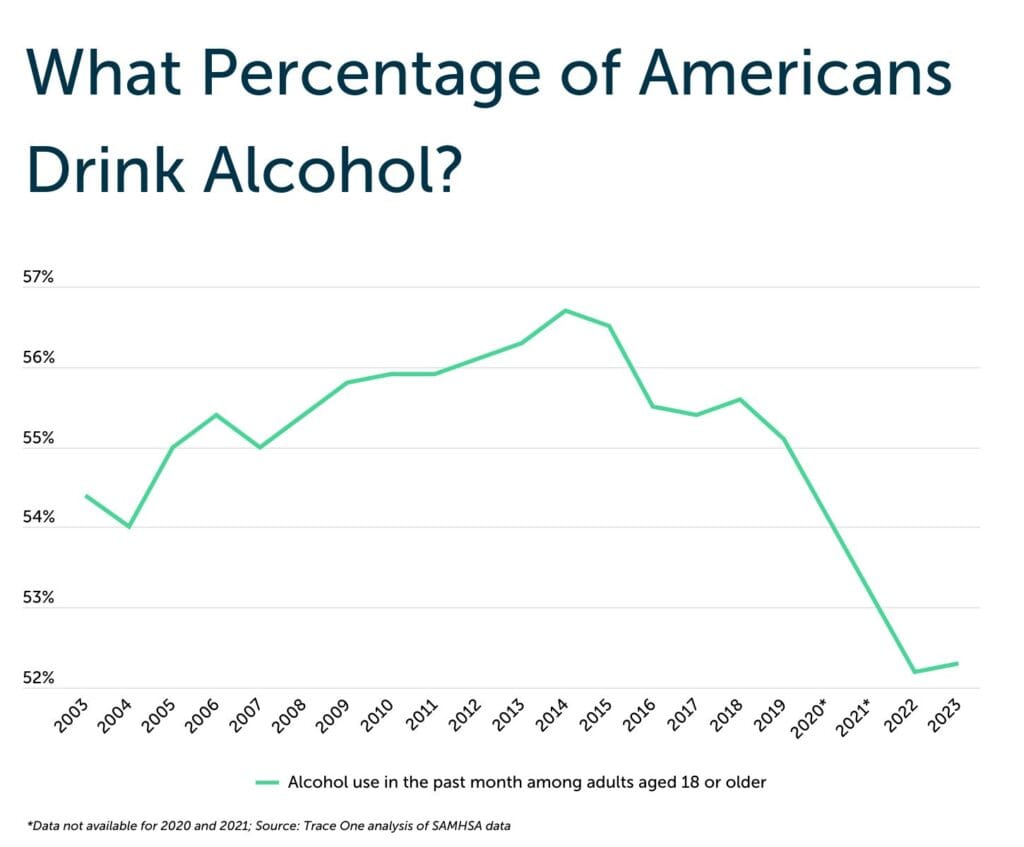
The findings mirror national trends. Across the U.S., 52.3% of adults reported drinking in 2023, down from a high of 56.7% in 2014. That decline translates to nearly 2 million fewer Americans drinking alcohol compared to a decade ago.
Shifting habits and cultural change
Experts attribute the drop in drinking to multiple factors, including heightened awareness of alcohol’s health risks, expanded legalization of cannabis, and changing social patterns—especially among younger people who are more likely to socialize online. A growing cultural focus on wellness and new labeling requirements for alcoholic beverages have also influenced consumer behavior.
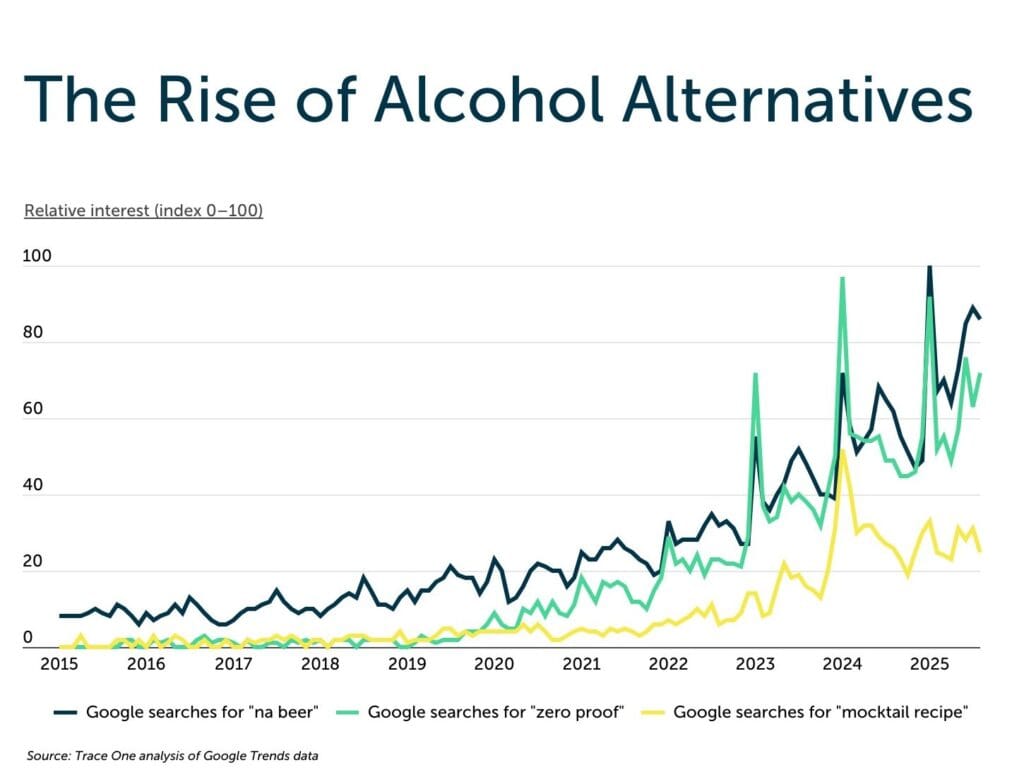
At the same time, the alcohol-free beverage market has exploded. Google search trends show dramatic increases in interest for non-alcoholic beer, “zero proof” cocktails, and mocktail recipes. Once niche, these products are now mainstream, with both craft brewers and global companies like Heineken, Budweiser, and Guinness offering alcohol-free options.
Regional differences
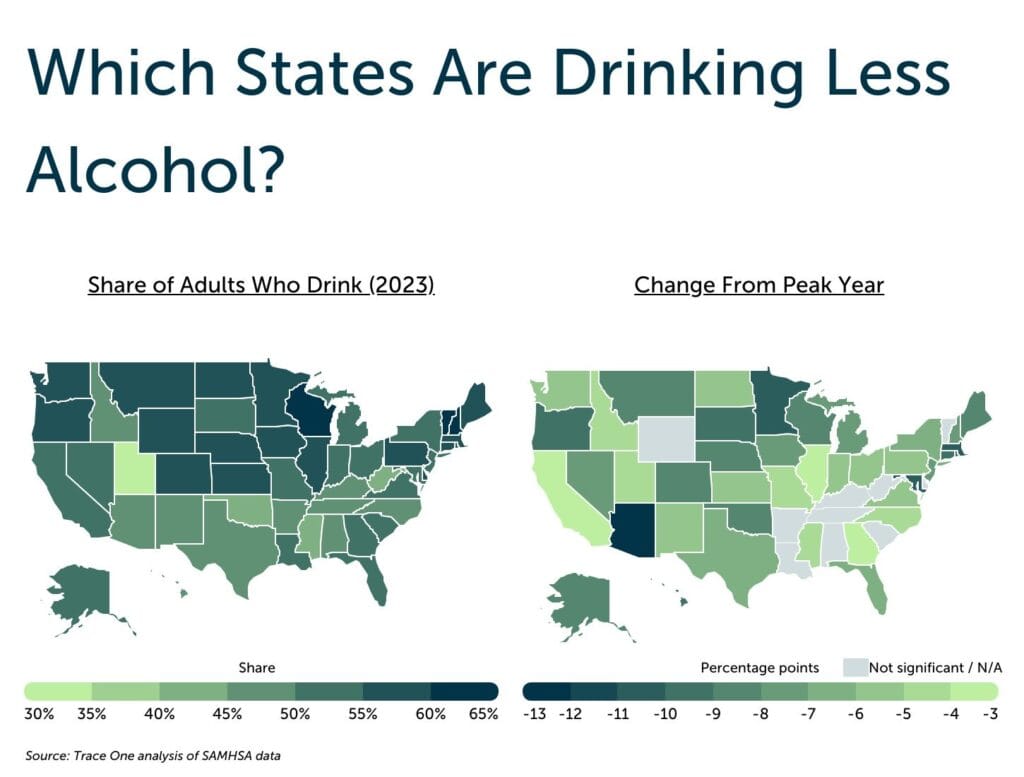
While Virginia’s decline is significant, the state still reports a higher rate of alcohol use than the national average. In 2023, just over half of U.S. adults drank alcohol compared with more than 54% in Virginia.
Nationally, northern states tend to drink more, with Vermont and New Hampshire leading at 63%, while Utah, West Virginia, and Mississippi report the lowest rates, all under 43%.
Some states have seen double-digit declines since their peaks, including Minnesota (-11 points), Maryland (-10.3), and Arizona (-12.8). By contrast, many Southeastern states—including Alabama, Kentucky, and West Virginia—have shown little or no statistical change over the past decade.
Looking ahead
With consumer demand shifting, beverage makers are increasingly treating alcohol-free products as a category of their own rather than a substitute. For Virginians, the numbers suggest fewer people are choosing alcohol compared to the early 2010s, in line with changing national preferences.
Source: Trace One analysis of SAMHSA data
Information from a release. Edited by Dan McDermott.