The Virginia Department of Wildlife Resources is reminding residents not to feed deer during winter weather, warning that the practice can harm animals, increase disease spread and, in many areas, violate state law.
Wildlife officials say recent ice and extreme cold may prompt well-meaning people to put out corn, grain or other food for deer. However, biologists stress that deer are naturally adapted to survive winter conditions without human feeding.
Deer grow thick winter coats made of hollow, insulating hair and build fat reserves in the fall, largely from acorns and other natural foods. During winter, they lower their metabolism and shift to a diet of woody browse and other low-quality natural forage. Their digestive system relies on bacteria suited to that seasonal diet.
A sudden change to foods such as corn or grain can overwhelm that system, officials say, leading to rumen acidosis, bloat and potentially death. “A deer’s stomach in winter is not equipped to handle large amounts of grain,” the department said in public guidance.
Feeding also creates broader problems, according to wildlife managers. Concentrating deer around homes and roads increases the risk of vehicle collisions and residential plant damage. Animals that become accustomed to people can lose their natural wariness, which can lead to aggressive encounters. Officials note that more people nationwide are injured each year by habituated deer than by bears.
Artificial feeding sites can also speed the spread of disease. Gathering deer in close quarters has been linked in other states to the transmission of tuberculosis and chronic wasting disease, a fatal neurological illness affecting deer and related species.
There are also concerns about feed quality. Corn sold as “deer corn” may contain aflatoxin, a mold-produced toxin that can poison wildlife, officials say.
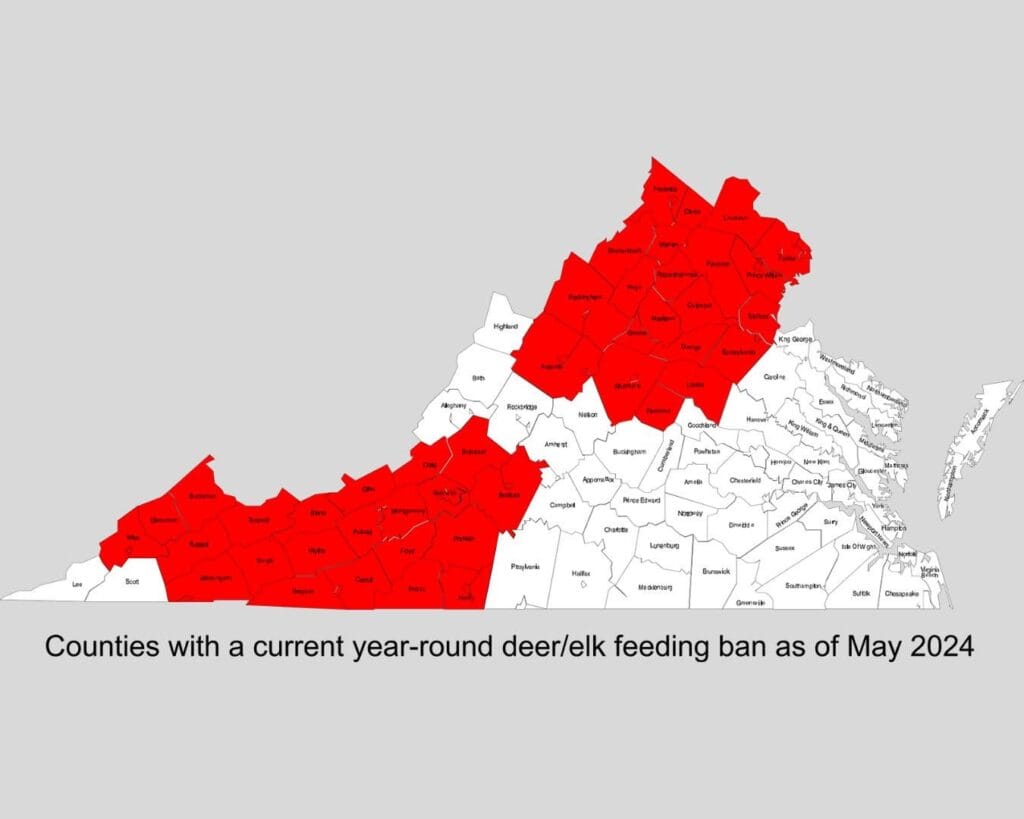
State law further restricts feeding. In Virginia, feeding deer is illegal statewide from Sept. 1 through the first Saturday in January. In addition, feeding deer is prohibited year-round in dozens of counties and the cities and towns within them, including Warren, Shenandoah, Frederick, Clarke, Fauquier, Loudoun, Prince William, Rockingham, Albemarle, Augusta and others.
The definition of feed or bait includes corn, grain, pelleted feed, mineral or salt licks, apples or other fruit and bird seed placed to attract wildlife. If deer are eating from a bird feeder, officials say, that can qualify as illegal feeding.
The rules do not apply to wildlife food plots, normal agricultural operations such as crop plantings or livestock feeding, or wildlife management activities authorized by the department.
While winter can be a stressful time for wildlife, the department says deer populations range from South Texas to Maine and are built to handle seasonal hardship. The best way for residents to help, officials say, is to avoid feeding and allow deer to rely on natural food sources.
Information from a release. Edited by Dan McDermott.