
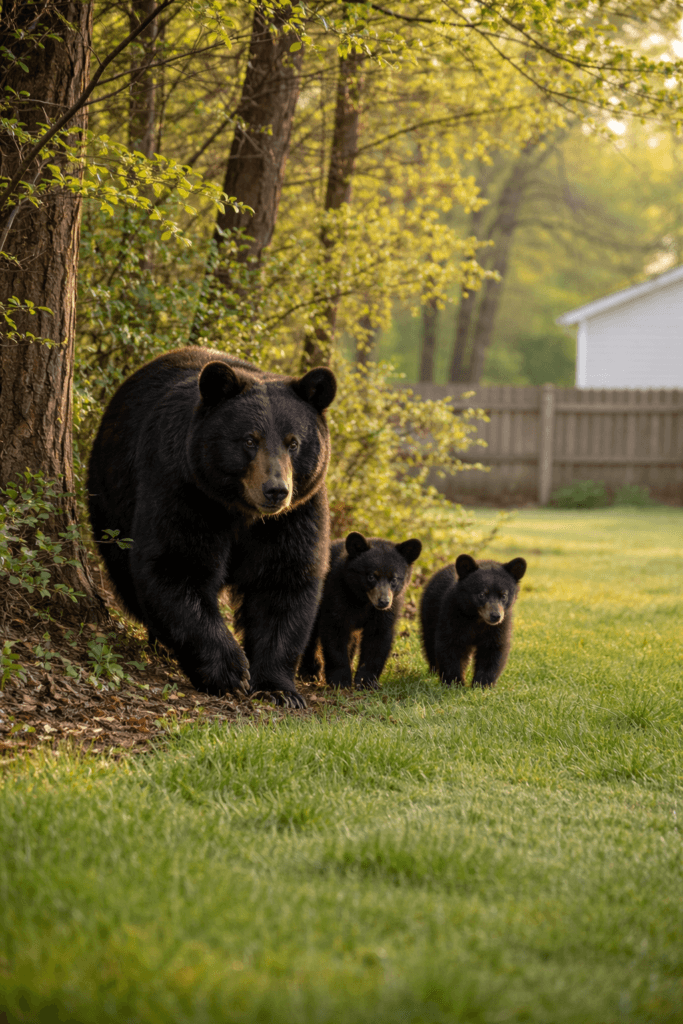
RICHMOND — Black bears are emerging from their winter dens hungry and in search of an easy meal, and Virginia wildlife officials are reminding residents to secure potential food sources and reduce the chances of human-bear conflicts near their homes.
Natural foods can be scarce during early spring, leading bears to seek out easy alternatives such as garbage, compost piles, barbecue grills, birdseed and pet food stored outside. Keeping those items secured encourages bears to move along and continue foraging for natural foods.
Bears are naturally cautious of humans, but they can overcome that wariness if people — intentionally or not — reward them with food. Unsecured garbage, pet food or other food sources can condition bears to associate neighborhoods with meals, increasing the likelihood of conflict.
The Virginia Department of Wildlife Resources recommends the following steps to avoid attracting black bears:
Secure garbage in a locked shed or inside until collection day, or use a bear-resistant container. Take down bird feeders; tips on attracting birds without attracting bears are available on the BearWise website. Store pet and livestock feed in bear-resistant containers or locked sheds. Clean grills and remove any potential food sources from porches and decks, keeping in mind that a screened-in porch is not a secure storage area from a bear’s perspective. Never leave food, trash or pet and livestock feed inside a vehicle.
In 2025, the DWR Wildlife Conflict Helpline received nearly 2,300 bear conflict calls. Unsecured trash accounted for 41% of those calls, and bird feeders accounted for another 10%. As backyard chicken flocks have grown in popularity, conflicts related to chickens and chicken feed have also increased, making up nearly 7% of all conflict calls in 2025.
In addition to increased adult bear activity, spring is also when females with cubs begin emerging from their winter dens. Bear cubs can become separated from their mothers for short periods during this time, but in almost all cases no intervention is necessary. Cubs should be left alone.
When a female bear perceives a threat — from barking dogs, nearby people or other disturbances — she will often “tree” her cubs, sending them scrambling high into the treetops while she circles the area and waits for conditions to feel safe. Though cubs may weigh as little as 5 pounds or less, they are capable climbers. The female will periodically return to check the area and will call her cubs down, often at night, once she feels the threat has passed.
If you see cubs in a tree with no female visible nearby, leave the area immediately. Keeping the area free of disturbance — especially from humans and dogs — is critical to allowing the female to return and retrieve her cubs.
Residents should never attempt to handle or capture a black bear cub found on their property. If a cub has a visible injury, appears lethargic or has remained in the same location for more than 24 hours, contact the DWR Wildlife Conflict Helpline at 1-855-571-9003.
For more information on black bears in Virginia, visit the DWR website at dwr.virginia.gov. Residents can also call the Wildlife Conflict Helpline at 1-855-571-9003 to report concerns about bears or get additional advice on preventing and mitigating wildlife conflicts.
Information from a release. Edited by Dan McDermott.