By Madison Lee | VCU Capital News Service
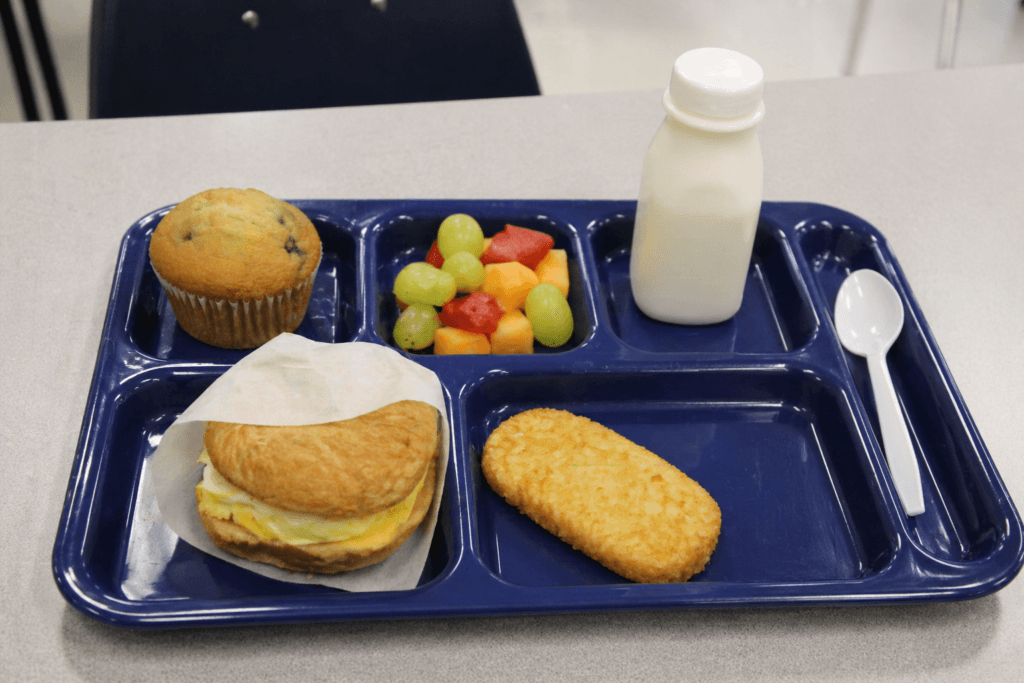
RICHMOND, Va. — Virginia lawmakers continued a bill to the 2027 session that would provide free breakfast to all public school students in an effort to prevent hunger and improve classroom performance.
House Bill 96, introduced by Sen. Elizabeth Bennett-Parker, D-Alexandria, would require all state public schools to participate in federal meal programs such as the Community Eligibility Provision program and the National School Lunch Programs.
These programs provide nutritional meals at no cost to students and have served over 27 million children as of 2025. These programs remove income-based eligibility requirements to help make food more accessible for students.
A recommendation from the Virginia Commission to End Hunger would reimburse public elementary and secondary schools for each breakfast served to a student. The reimbursements would be provided by the Virginia Department of Education.
“Schooling, buses, books and more are available for free to students and families,” Bennett-Parker said during a K-12 subcommittee meeting. “School meals are a school supply just as important to our kids getting the education they need and deserve.”
Instead of relying on traditional cafeteria lines, Virginia schools can choose to implement “grab-and-go” breakfast, according to the bill. Students would be allowed to eat their meals in classrooms to ensure late arrivals still had access to a meal.
Students who eat breakfast have better attendance, test scores, improved comprehension and are more likely to continuously eat healthier, according to the VDOE.
“I think free breakfast and lunch would benefit every child to ensure consistent and repeated access to nutrition,” said Patricia Mines, a Richmond resident.
The VDOE estimates an additional cost of at least $37.35 million per year to reimburse schools beginning next year, according to the bill’s fiscal impact statement. A one-time cost of $50,000 and an ongoing cost of $95,800 will be made by the VDOE to implement provisions as well.
“We estimate that this bill would save Virginia families an average of $315 each school year,” said Liz Nigro, director of research for Voices for Virginia’s Children in a K-12 subcommittee. “Which equals roughly two months of diapers and one month of electric bills.”
Finn Vollenberg, who recently emigrated from the Netherlands, said he has noticed junk food is the cheapest nutritional option.
“Nowadays … the most affordable is junk food,” Vollenberg said. “Healthy food is getting more expensive and sort of harder to find.”
HB 96 is a companion bill to Senate Bill 4, introduced by Sen. Danica Roem, D-Manassas. This measure was also continued to 2027.
Roem has advocated for free school meals and ending food insecurity since 2019, with several measures passed over the years. She has passed bills such as HB 1426, which expanded access to daily meals by allowing schools to participate in the National School Lunch Program and School Breakfast Program. Senate Bill 1016 established the Hunger-Free Campus Food Pantry Grant Program to address food insecurity in public higher education.
Nearly 8% of Virginians, over 700,000, face food insecurity, according to research done by the Virginia Department of Social Services. Over 214,000 Virginian children have experienced limited availability of nutritious food at some point during the year, as stated by Voices for Virginia’s Children.
“We saw over 70% of Virginia families responding that they are in that position of having to make tough trade-offs between buying medicine, fixing their car, or paying a utility bill in order to continue buying food,” said Sarah Steely, the director of No Kid Hungry.
In a 2025 No Kid Hungry survey, 48% of people reported their physical health had suffered due to the cost of food, while 61% say their mental health had suffered.
Parents would have the option to withhold these meals from the student with written permission to the school board, according to HB 96.
“School nutrition departments in other states that have expanded their school meals programs have found it easier to recruit and retain staff,” Bennett-Parker stated in an email.
California, Colorado, Maine, Massachusetts, Michigan, Minnesota, New Mexico, New York and Vermont have permanently implemented free breakfast and lunch programs statewide for students, according to the Food Research and Action Center. Families do not need to apply for access to the food programs in any of the nine states, according to Newsweek.
Capital News Service is a program of Virginia Commonwealth University’s Richard T. Robertson School of Communication. Students in the program provide state government coverage for a variety of media outlets in Virginia.