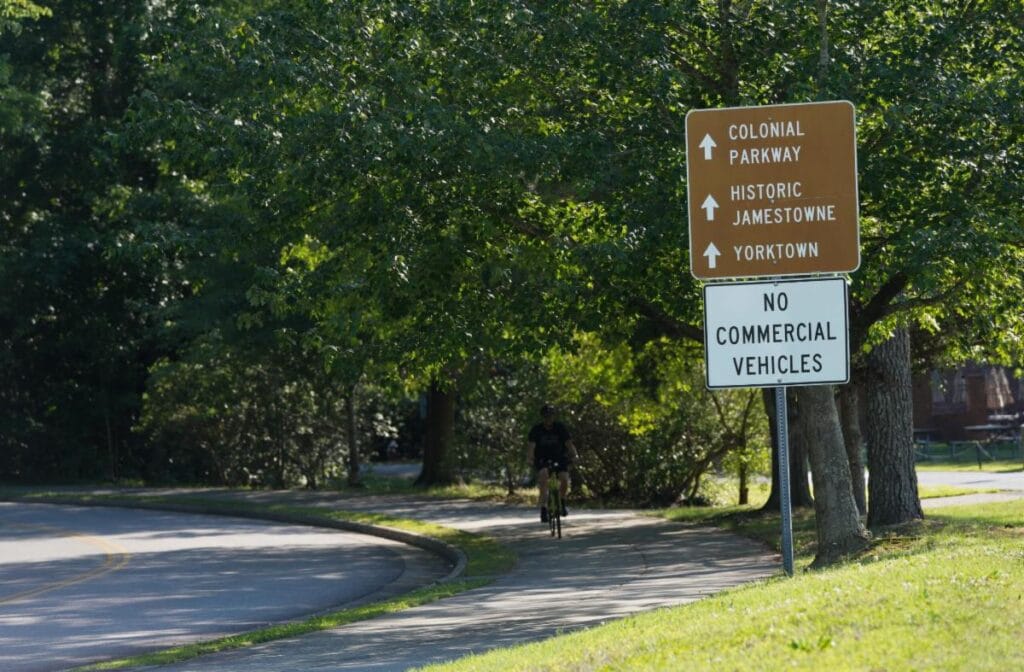
RICHMOND, Va. — Even as more drivers rely on phones and in-vehicle navigation systems, the Virginia Department of Transportation says roadside signs remain an important tool for directing travelers to historic sites, attractions and other destinations.
VDOT maintains more than 5,600 Supplemental Guide Signs across the state as part of its Integrated Directional Signing Program.
The signs use different colors depending on the type of destination. Brown signs point travelers toward cultural and historic sites, blue signs direct motorists to tourist information centers, and green signs identify nearby government facilities and educational buildings.
VDOT officials said the signs can be particularly useful for travelers visiting Virginia historic sites, including those taking part in events tied to the nation’s 250th anniversary.
“Virginia’s roads take you to destinations, and the sign program helps guide you,” said Rick Burgess, manager of the Integrated Directional Signing Program.
Burgess said the signs help visitors find destinations ranging from Yorktown Battlefield to Monticello, Mount Vernon, Montpelier and Highland.
The Integrated Directional Signing Program also includes signs for essential services, businesses, attractions and tourist destinations along Virginia’s state-maintained highways. Some display business names or logos, while others use standardized symbols.
VDOT said directional signs remain useful even when electronic navigation is available, particularly in places where cellular service may be limited.
Information from a release. Edited by Dan McDermott.