
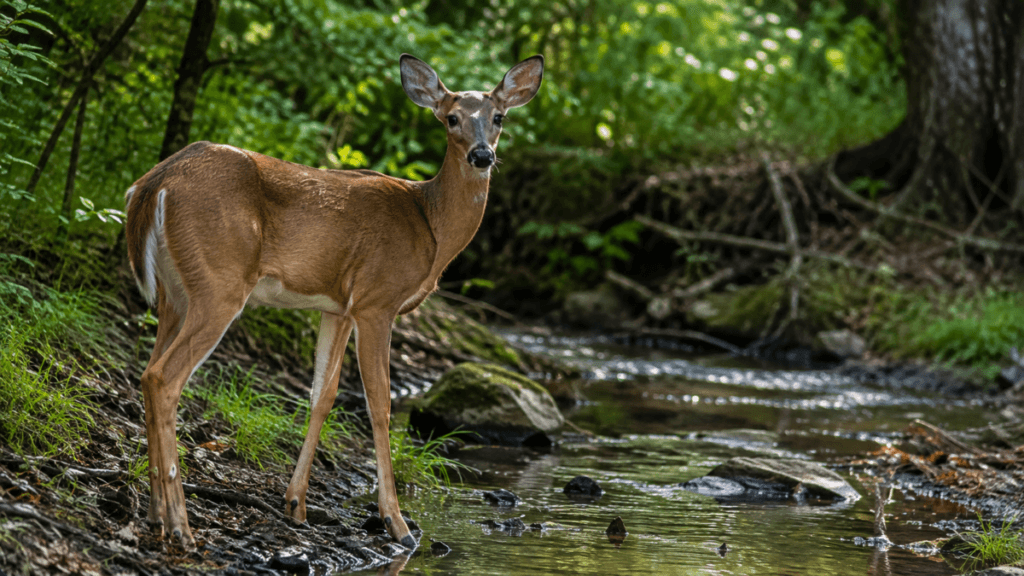
Virginia wildlife officials say they have received several credible reports of deer deaths consistent with hemorrhagic disease, a seasonal viral illness that affects white-tailed deer and can cause localized die-offs in late summer and early fall.
The Virginia Department of Wildlife Resources said the reports have been sporadic so far. Hemorrhagic disease, commonly referred to as HD, occurs nearly every year in Virginia and other parts of the Southeast. It is caused by two closely related viruses — epizootic hemorrhagic disease virus and bluetongue virus.
The disease is spread by tiny biting midges rather than through direct contact between deer. Cases typically begin appearing from mid-August through October and usually end abruptly after freezing weather kills the insects that transmit the viruses.
One of the most recognizable signs of an outbreak is finding dead or dying deer near ponds, creeks, rivers or other water sources. Infected deer can develop high fevers and often seek cool, wet areas before dying.
Other symptoms can include swelling of the head, neck, tongue or eyelids, difficulty breathing, loss of appetite and lameness. In severe cases, deer can die within one to three days of becoming ill.
DWR said localized outbreaks can result in dozens of dead deer being found in a relatively small area over a short period. The severity of outbreaks varies substantially from year to year and by location.
Historically, hemorrhagic disease has been more common in Virginia east of the Blue Ridge. DWR says it occurs annually in the Tidewater and Piedmont regions but has also been documented west of the Blue Ridge.
Even significant local outbreaks generally do not wipe out deer populations. DWR says losses in affected areas are usually well below 25% of the local population, although losses of 50% or more have occurred in some cases. No Virginia deer population has been eradicated by the disease.
The disease does not infect humans, and people are not considered at risk from handling infected deer, eating venison from infected animals or being bitten by infected midges. DWR nevertheless advises hunters not to eat deer that appear obviously sick, because other illnesses or secondary infections could be present.
Dogs and other domestic pets are not threatened by the disease. Some livestock, particularly cattle and sheep, can become infected with the viruses, although most infections in cattle cause mild symptoms or none at all.
People who find a sick or dead deer they suspect may have hemorrhagic disease should not touch, move or attempt to kill the animal, according to DWR.
Reports can be made to the Virginia Wildlife Conflict Helpline at 855-571-9003 or by email at [email protected]. DWR asks residents to include the county, general location and approximate number of deer involved.
The department tracks reports each year to document the location and severity of outbreaks, although individual reports do not necessarily result in an on-site investigation.
There is currently no practical way to stop an HD outbreak once it begins. Cold weather ultimately ends transmission by killing the biting midges responsible for spreading the virus.
Information from a release. Edited by Dan McDermott.