
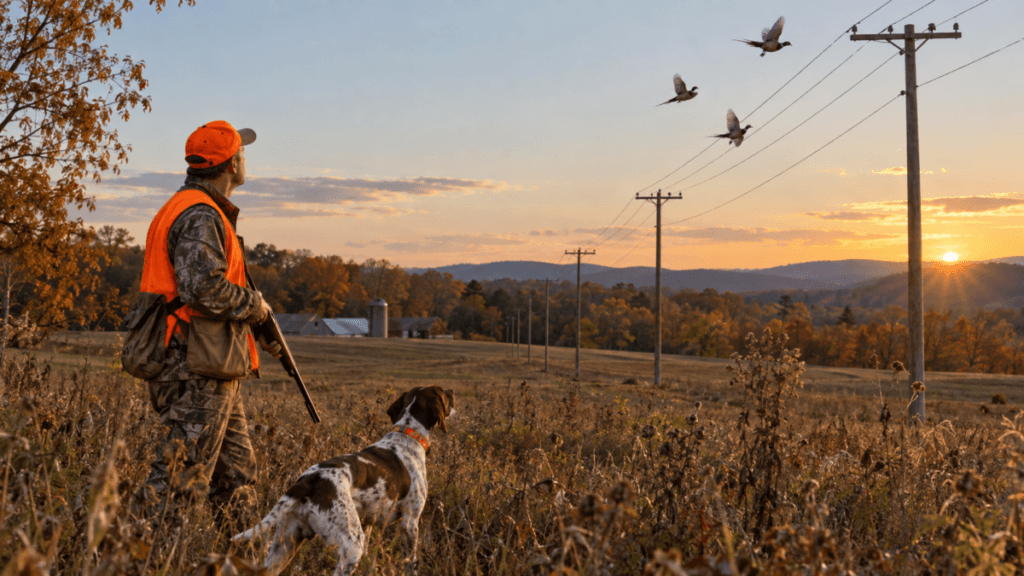
One unsafe shot near an overhead line can do more than knock out electric or internet service. It can damage critical infrastructure, disrupt emergency communications and leave the person responsible facing criminal charges and costly repairs. Before firing the first shot, hunters should know exactly where overhead lines are and make a clear plan to avoid shooting near them.
Rappahannock Electric Cooperative (REC) urges hunters to include overhead lines and utility equipment in their safety planning this hunting season.
“Fiber is critical infrastructure. It’s no longer just nice-to-have internet service,” said Mark Ponton, REC’s Senior Director – Broadband and Fiber Services. “These fiber-optic and communication lines are critical to 911 centers, and police, fire and rescue services rely on them.”
Most hunters already take safety seriously. They check firearms, wear appropriate gear, identify safe shooting lanes and stay aware of nearby homes, roads, livestock and people. But overhead hazards can be easy to overlook, especially once birds are in flight.
Utility poles often carry much more than electric lines. In many rural areas, poles may also support fiber optic broadband, phone lines and other communications infrastructure. What looks like a simple wire could be carrying internet and phone service to hundreds of homes, farms, schools, small businesses and emergency responders.
Gunfire can damage those lines. Birdshot may strike electric equipment, puncture protective coverings or break the glass inside fiber optic cable. A single shot can interrupt service to neighboring homes and businesses, disrupt schoolwork and affect people who rely on internet or phone service for work, health care or emergency communication.
Repairs can also be expensive. According to the Virginia Department of Wildlife Resources, repairs to damaged cables can cost thousands of dollars, with the average repair costing approximately $25,000 this year. The person who fired the shot, and possibly the landowner, may be held financially responsible for the damage.
Before the hunt:
- As you scout for bird activity, cover and safe shooting lanes, add overhead hazards to your checklist.
- Note where electric, fiber-optic, phone and other communications lines run along or across the field.
- Check tree lines, fence rows and open areas where birds may cross near wires.
- Establish no-shot zones where a shot could travel toward poles, lines, equipment, homes, roads, livestock or people.
- Avoid positioning hunters under lines or where birds may cross in front of utility equipment.
During the hunt:
- Keep poles, wires and overhead equipment in mind as birds move.
- Do not shoot at a bird sitting on, flying near or crossing in front of a line.
- Alert others when birds are moving near overhead lines or no-shot zones.
- If a line is struck or appears damaged, stay away and contact REC or emergency services immediately.
- Never approach, touch or attempt to move a damaged or downed line.
A safe hunt requires a clear target, a clear background and a clear path — including the sky above.
About Rappahannock Electric Cooperative
Serving more than 185,000 connections across portions of 22 Virginia counties, REC is a pillar in its communities, with over 18,000 miles of power lines extending from the Blue Ridge Mountains to the Chesapeake Bay. For more information about REC, please visit www.myrec.coop. Follow REC on Facebook, X, Instagram, LinkedIn and YouTube.